More than 31 million people in the United States claim Irish ancestry — nearly six times the population of Ireland itself. When St. Patrick’s Day — a Catholic feast day originally honoring Saint Patrick, a missionary who brought the Gospel to the island in the 5th century, but is now more widely celebrated with parades and pints of beer — rolls around, Americans go hard.
Read MoreYoung men in America are redefining adulthood, prioritizing personal responsibility and financial independence over traditional milestones like marriage and parenthood. Many face economic uncertainty, mental health struggles and doubts about college’s value — yet remain hopeful about meaningful work and family. Trade careers are gaining appeal as paths to stability and adulthood.
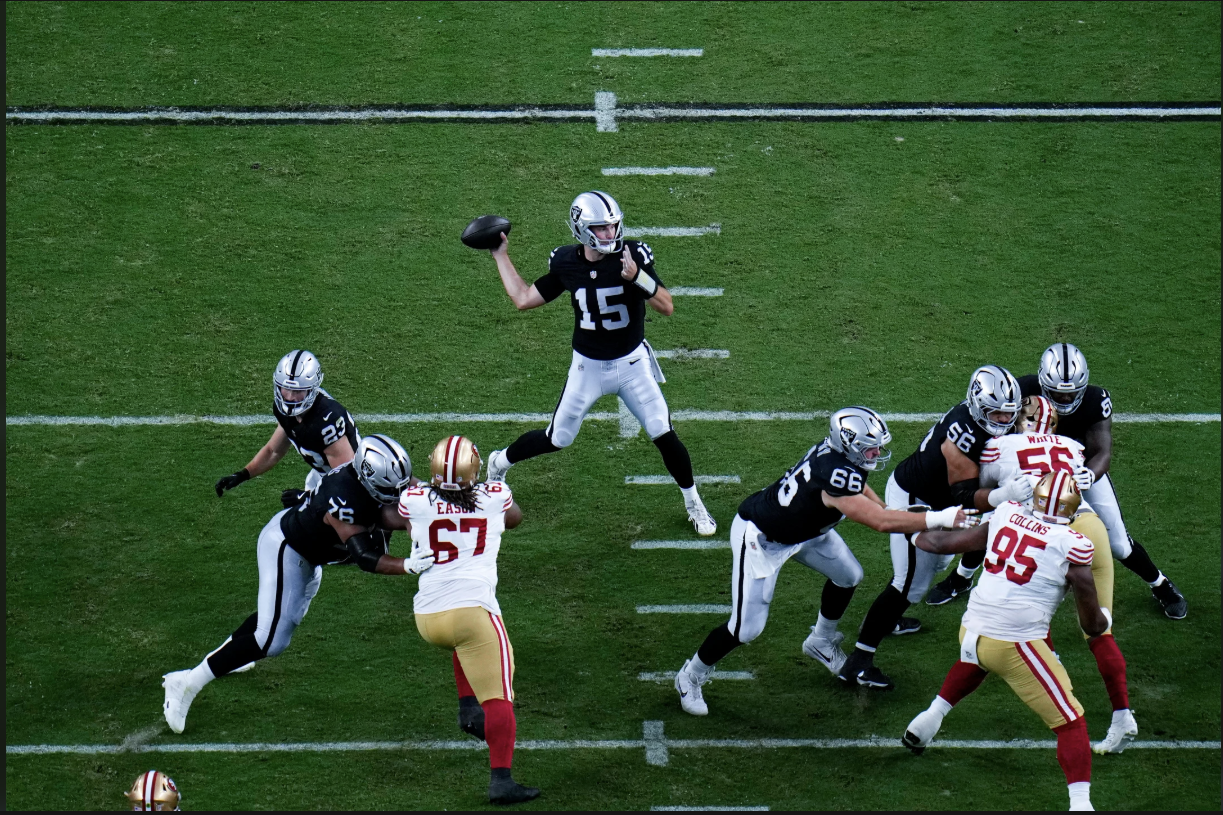
Read MoreSports gambling doesn’t have a specific season, but certain times of the year are considered to be its Super Bowl or March Madness. Crowning the National Football League champion remains the biggest single-game bet among Americans. The next few weeks, however, bring a tsunami of gambling due not only to March Madness’ popularity, but also the sheer number of games on which to wager.
Read More(ANALYSIS) As the American and Israeli war with Iran unfolds, some American Christians are speaking of the conflict in biblical terms — mapping end-time prophecies on to current events in the Middle East. In a sermon on March 1, for example, John Hagee, founder of Christians United for Israel, described the war as part of a divine plan.
Read MoreEvery morning begins the same for Paul Ridlon, who also goes by Magnus de Rhuddlan. No matter the weather, he steps out of the round yurt where he lives in Portland, Maine, and lights incense at his southern altar, a tree stump topped with two crane statues and a figurine of the Egyptian god Horus.
Read More(ANALYSIS) “Write what you know,” is advice given to many who feel inspired to take up the pen — or, these days, sit at a computer. When it comes to writing about religion, though, including the Catholic Church, it’s amazing how little some writers know (including those who are Catholic themselves). This is evident, where scenes depict liturgies or other expressions of faith and get them wrong.
Read MoreAs you approach Iranian houses of worship, you’ll hear it: Locals striking their chests and rhythmically chanting laments to grieve the recent death of Supreme Leader Ali Khamenei’s death. Each movement carries a dual meaning — expressing both personal grief while signaling loyalty to both a religious leader and a totalitarian state.
Read MoreIt’s a modern solution to an age-old issue. Many centuries-old monasteries are turning to Etsy-style e-commerce and renovating their convents to appeal to the growing Airbnb crowd. Like other religious establishments in Spain, Catholic nuns have had to think of new ways to generate income in the face of skyrocketing maintenance costs.
Read MoreServing God and others is one of eight key signposts measuring distinct characteristics for believers progressing in their spiritual maturity, according to the Lifeway Research State of Discipleship study. The average U.S. Protestant churchgoer scores 73.1 out of 100 in serving God and others, placing it third among the signposts.
Read More(ANALYSIS) The appointment of Mojtaba Khamenei as Iran’s new supreme leader on Sunday marks a pivotal moment for the country’s political and religious future — and for the religious minorities who have long lived under the constraints of the Islamic Republic’s theocratic government. As the war rages on, it remains to be seen what his elevation means for Iran and the region.
Read More(ANALYSIS) Following the killing of Iran’s Supreme Leader, Ayatollah Ali Khamenei, the country has begun a rare leadership transition overseen by an interim council and the Assembly of Experts. As clerics consider successors such as Mojtaba Khamenei and Alireza Arafi, the process highlights how political loyalty often outweighs religious credentials in selecting Iran’s supreme leader.
Read MoreThe Pew Research Center surveyed thousands of adults in 25 countries and found that 53 percent of Americans said their fellow countrymen had “somewhat bad” or “very bad” morals. Those findings broke with the international trend: In every other country surveyed, the majority said that others in their country have “somewhat good” or “very good” morals.
Read MoreThe summit unfolded against a backdrop of escalating geopolitical tension, coinciding with U.S.-Israeli airstrikes on Iran that resulted in the death of Supreme Leader Ayatollah Ali Khamenei and the prospect of regime change in a country gripped by Shi’a rule for nearly 50 years. For many of the attendees who flew to Malta, regime change in Iran is the start of a new era.
Read MoreOver 1,000 years ago, Norse gods like Odin, Loki, Thor and Freya were worshipped across Scandinavia. Now there are indications that Norse Paganism is becoming a significant force once again. The number of believers is steadily rising, with new temples and dedicated cemeteries appearing across northern Europe.
Read More(ANALYSIS) Understanding this distinction can help get past oversimplified narratives. The Middle East’s conflicts are not simply ancient religious feuds. They are modern political struggles shaped by history, identity and political interests. Here’s what you need to know about Sunni and Shia Islam — and how it impacts Iran and the current situation there.
Read More(ANALYSIS) Three rounds of nuclear talks between the U.S. and Iran failed to persuade President Trump that a solution to the nuclear impasse lay in diplomacy, rather than military action. A perceived lack of progress on Feb 26, was enough to prompt Trump to green-light a massive onslaught of missiles that has degraded Iran and killed Ayatollah Ali Khamenei.
Read MoreWith a U.S.-Israel bombardment underway and President Donald Trump and Prime Minister Benjamin Netanyahu openly pressing for regime change, related questions now loom large: What are the Iranian people prepared for — and who, exactly, is positioned to lead them if the Islamic Republic falls?
Read More(ANALYSIS) Imagine a world where crimes are stopped before they even take place. Science fiction has imagined this world, most famously in the 2002 film “Minority Report,” where society can predict criminal acts and allow authorities to intervene in advance. Thanks to AI, this dystopian reality could be coming to your neighborhood in the not-so-distant future.
Read MoreThe assassination — announced by President Trump hours after Saturday’s airstrikes — is expected to throw the Islamic Republic of Iran’s future into doubt and raises the prospect that the country’s theocratic government could be overthrown after nearly five decades. Trump said the airstrikes and Khamenei’s death is “the single greatest chance for the Iranian people to take back their country.”
Read MoreLewis’s 1945 novel “That Hideous Strength” was marketed as fiction, but it read like more like a prophecy. Lewis’ warning at the time cuts deep for modern-day readers. The danger is not artificial intelligence itself. The danger, Lewis argues, is what happens when humans regard tech tools as oracles. It’s about what happens when humanity stops kneeling before God and starts bowing to its own tools.
Read More