It isn’t normal for the New York Times to publish a Bible study about a huge story in American politics.
Read More
It isn’t normal for the New York Times to publish a Bible study about a huge story in American politics.
Read More(ANALYSIS) As both parties begin positioning themselves for the 2028 presidential election, faith could become one of the defining factors in determining which candidates connect with voters. The lesson from the midterms is that religious voters should no longer be viewed as a single political constituency.
Read MoreFaith emerged as one of the defining storylines of this election, influencing how candidates presented themselves, how voters understood issues and how young people connected their personal beliefs with their political choices. From James Talarico’s progressive interpretation of Christianity to Abdul El-Sayed, a practicing Muslim, religion became more than personal identity.
Read MoreThe results demonstrate that faith and politics often intersect in various ways. Moral questions are often put to voters, candidates’ interpretations of religious teachings and debates over the constitutional place of religion in public life were all on the ballot this year. These results are a prelude as voters prepare for the 2028 presidential race.
Read MoreSharia, often called Islamic law, is a system of religious guidelines that inform how Muslims understand their responsibilities to God, themselves, their families and society. The Arabic word — sharia — is commonly translated as “the way” or “the path.” It refers to a way of life rooted in Islamic teachings rather than simply a collection of laws enforced by a government.
Read More(ANALYSIS) Long considered politically marginal, mainline protestantism is unexpectedly prominent in 2026 Democratic campaigns. Clergy candidates James Talarico in Texas, Adam Hamilton in Kansas and Sarah Trone Garriott and Lindsay James in Iowa are competing in closely watched races, reviving questions about mainline Christianity’s enduring political influence.
Read More(ANALYSIS) Is it conceivable that the 2026 and 2028 election cycles will erode the Democratic Party’s lock on Jewish voters, one of the iron laws of American politics? Or instead, will Jewish Democrats increasingly turn against support for Israel? The results of the upcoming midterm elections could give us a glimpse of what’s to come.
Read MoreThe political time machine has now landed in similar journalism terrain. During this week’s “Crossroads” podcast, we discussed several important news reports, including this Religion News Service feature: “‘They’re not real pastors’: As clergy run as Democrats, Republicans question their faith.”
Read More(ANALYSIS) If one were to ask 100 informed voters about the types of issues at the center of the Culture War debate, I think that 20 years ago two would clearly be the front runners: Gay marriage and abortion.
Read MoreJackson Lahmeyer and Frederick D. Haynes III couldn’t be any more different politically. But both are pastors. Both are running for Congress. And both could win in November.
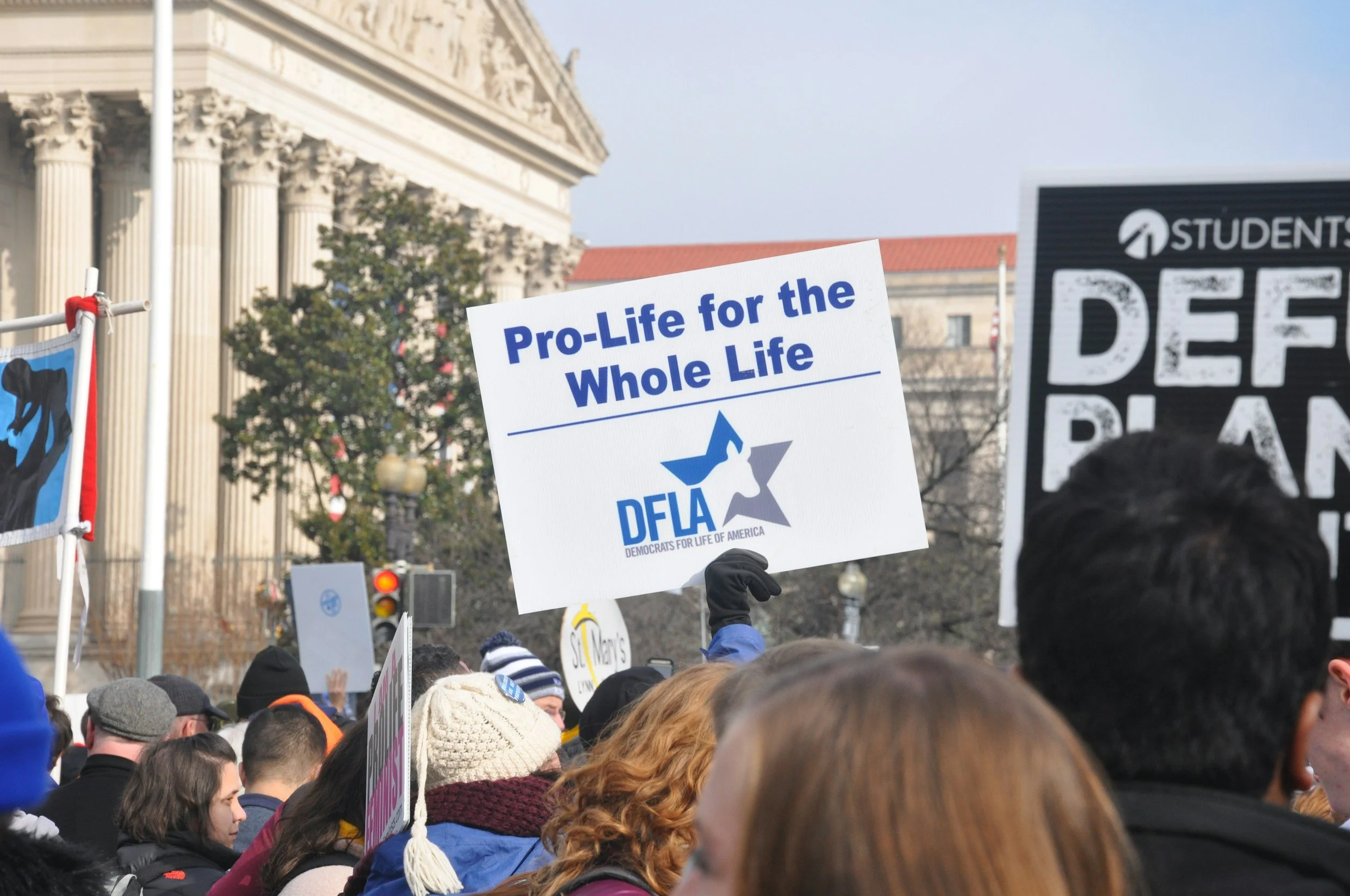
Read More(ANALYSIS) Abortion has become a defining partisan issue, with Republicans generally anti-abortion and Democrats pro-abortion rights. Yet lawmakers like Charlie Baker, Susan Collins and Bob Casey show exceptions can succeed in some states. At the same time, long-term polling reveals growing support for abortion access across most religious groups.
Read More(ANALYSIS) One of the central stories of that work is that white Christianity has become noticeably more conservative. That’s not just the case in white evangelicalism (which most people know about), but it’s also true among white Catholics. It has become increasingly the case that to be white and Christian is to support the Republican Party.
Read More(ANALYSIS) President Trump’s deportation drive is reshaping the 2026 battle for Congress, but celebrity protests and mass demonstrations show little evidence of moving voters. The real test may come in churches, especially among Catholics, whose leaders condemn mass deportations and whose increasingly fluid voting patterns could decide close races.
Read More(ANALYSIS) The most important piece of data analysis in that post came from the Nationscape survey — a weekly study conducted between 2019 and early 2021. The total sample size was over 477,000 respondents, which means there were nearly five thousand Latter-day Saints in the dataset.
Read More(ANALYSIS) Boy, do I have a treat for you all today! Do you ever wonder how the partisanship of people who work for religious organizations varies compared to folks who work in other industries?
Read More(OPINION) Among humanity, the opportunities for offense are endless. But if you don’t want to get trapped in this habit of spreading bile, you don’t have to. Pastor Paul Prather gives practical tips to have more peaceful, loving relationships.
Read MoreThe bottom line: There have been important, newsworthy trends taking place on the “religious left” as well as the “secular left.”
Read MoreZohran Mamdani, the 34-year-old democratic socialist whose campaign was powered by youthful energy, a surge of new voters and a promise of unconventional change, completed his yearlong journey with a decisive victory — to be elected mayor of New York City and the first Muslim to hold the office.
Read More(ANALYSIS) As media pundits over-interpret the nationwide impact of elections in New York City, New Jersey, Virginia and California, let’s contemplate this: What do the data on religious dynamics say about prospects for a rather demoralized Democratic Party in 2026-2032, and whether a more centrist strategy might help?
Read MoreIn big cities and tiny towns across the U.S., Christians are working to feed hungry people — including seniors, families and the working poor — poised to lose food benefits.
Read More