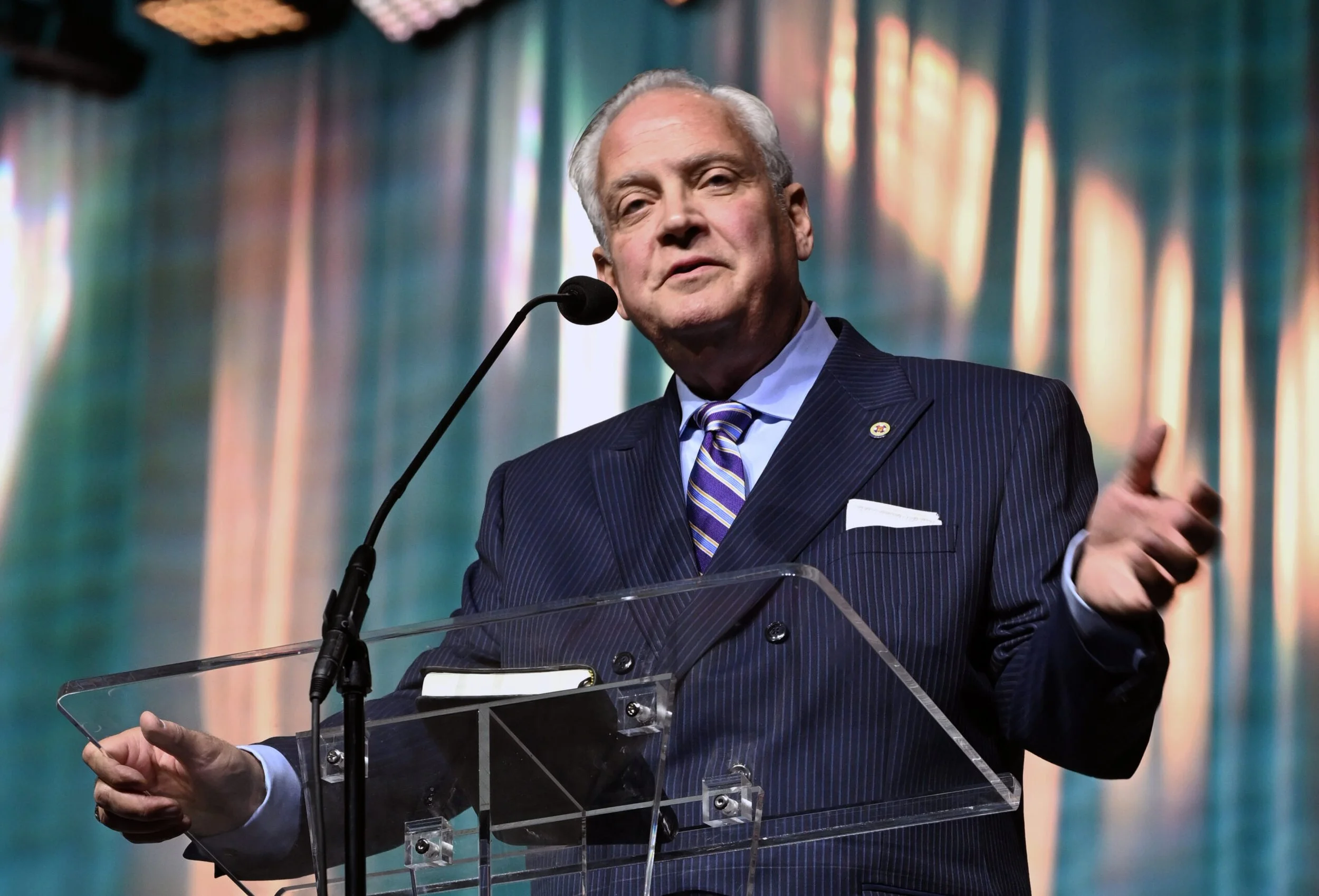
(ANALYSIS) As the American and Israeli war with Iran unfolds, some American Christians are speaking of the conflict in biblical terms — mapping end-time prophecies on to current events in the Middle East. In a sermon on March 1, for example, John Hagee, founder of Christians United for Israel, described the war as part of a divine plan.
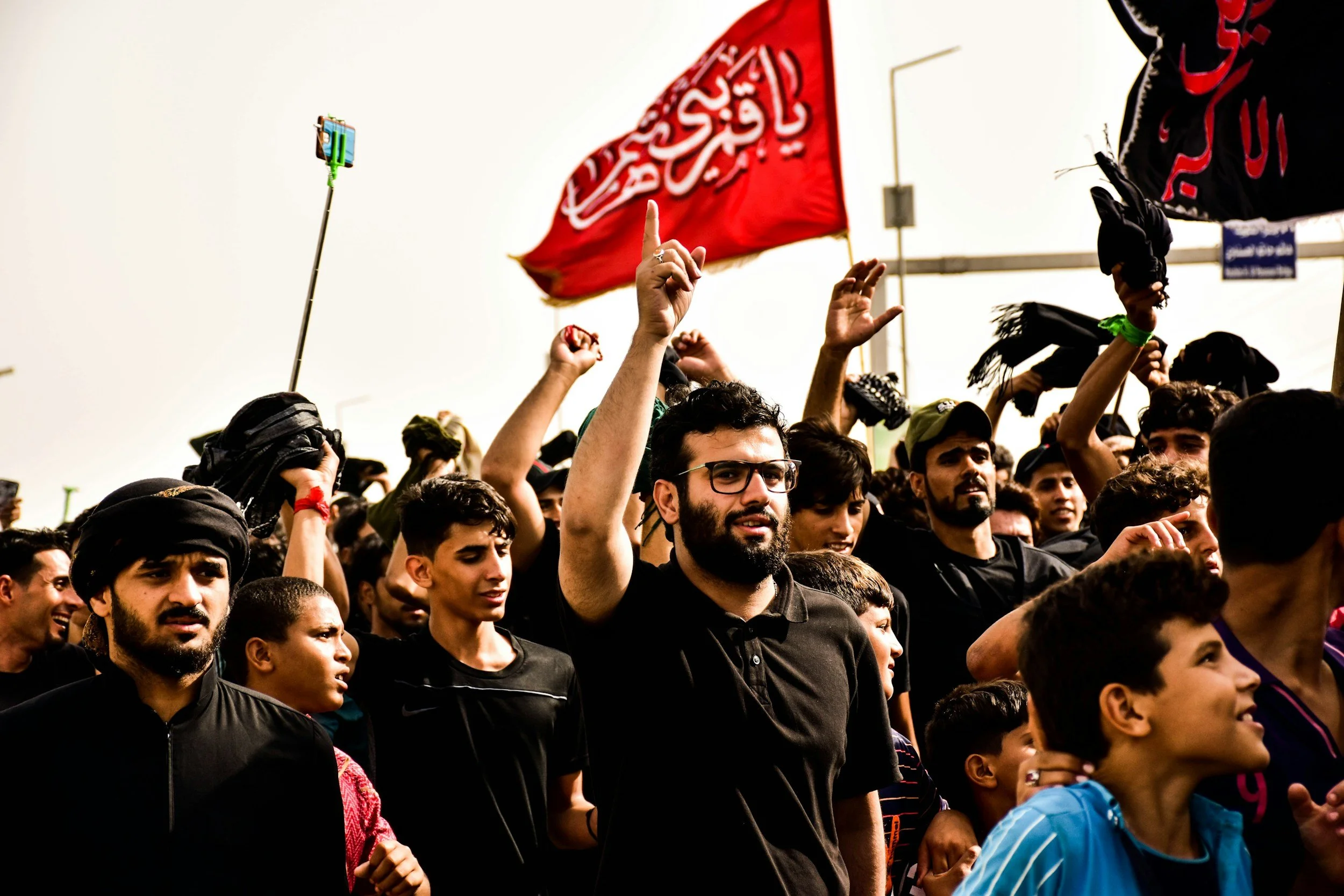
Read MoreAs you approach Iranian houses of worship, you’ll hear it: Locals striking their chests and rhythmically chanting laments to grieve the recent death of Supreme Leader Ali Khamenei’s death. Each movement carries a dual meaning — expressing both personal grief while signaling loyalty to both a religious leader and a totalitarian state.
Read MoreUntil recently, DNA technology was not widely available in most African countries. However, in the past few years, it has not only become widely available but also increasingly affordable for many. At the same time, various social media platforms are abuzz with cases of ‘paternity fraud’, creating increased demand for these tests.
Read MoreThe report critiqued other branches of the U.S. government that have undercut protections for religious freedom. It criticized, for example, cuts to USAID programs, since many of those programs were specifically aimed at protecting religious freedom.
Read More(ANALYSIS) The appointment of Mojtaba Khamenei as Iran’s new supreme leader on Sunday marks a pivotal moment for the country’s political and religious future — and for the religious minorities who have long lived under the constraints of the Islamic Republic’s theocratic government. As the war rages on, it remains to be seen what his elevation means for Iran and the region.
Read MoreThe residents of Jeju Island remember what it is like to resist imperialism and outside interests. Groups that were formed to protest the U.S. naval base construction have now shifted their focus to seek peace in Palestine following the year-long Israel-Gaza war.
Read MoreThe summit unfolded against a backdrop of escalating geopolitical tension, coinciding with U.S.-Israeli airstrikes on Iran that resulted in the death of Supreme Leader Ayatollah Ali Khamenei and the prospect of regime change in a country gripped by Shi’a rule for nearly 50 years. For many of the attendees who flew to Malta, regime change in Iran is the start of a new era.
Read More(ANALYSIS) Understanding this distinction can help get past oversimplified narratives. The Middle East’s conflicts are not simply ancient religious feuds. They are modern political struggles shaped by history, identity and political interests. Here’s what you need to know about Sunni and Shia Islam — and how it impacts Iran and the current situation there.
Read MoreIn Kenya, you may often encounter religious sisters in classrooms, hospitals or churches. But Sister Immaculate Muthoni occupies a different space. She is a Catholic nun and a practicing lawyer of the High Court of Kenya, working within the country’s formal legal system while drawing firm limits around the kinds of cases she will handle.
Read MoreThe assassination — announced by President Trump hours after Saturday’s airstrikes — is expected to throw the Islamic Republic of Iran’s future into doubt and raises the prospect that the country’s theocratic government could be overthrown after nearly five decades. Trump said the airstrikes and Khamenei’s death is “the single greatest chance for the Iranian people to take back their country.”
Read More(ANALYSIS) The joint U.S.–Israeli strike on Iranian targets on Saturday marked a dramatic escalation in the decades-long confrontation with the Islamic Republic — and raised two profound questions: Is this a real attempt at regime change? What would that mean for religious freedom inside Iran?
Read More(ANALYSIS) Recent events in Minnesota have exposed a thin understanding of religious freedom, reducing it to boundary enforcement rather than sustaining institutions that form moral life. The moment calls for deeper discernment: protecting worship without criminalizing dissent.
Read MoreGreenland, a remote, ice-covered territory three times the size of Texas, has just one Catholic church, Christ the King, in Nuuk, where Pastor Tomaz Majcen serves a tiny, mostly immigrant congregation. Amid harsh conditions, social struggles and global attention, the Catholic community provides faith, support and connection in the world’s least-Catholic land.
Read MoreIn a profoundly positive appraisal of the Protestant Reformation, high-ranking Vatican officials are championing the Augsburg Confession — a pivotal Lutheran text — highlighting it as a shared basis for Christian unity, as the 500th anniversary of the document approaches in 2030. It would be a profound shift should Pope Leo decide to embrace the centuries-old document.
Read MoreReligious minorities in Iran are facing more persecution, human rights watchdog organizations warned in a report released on Thursday. Some policy analysts said last year’s conflict with Israel and the U.S. may have pushed the regime to look for a “scapegoat” to blame — and found it in religious and ethnic minorities.
Read MoreSince Frederick Chiluba declared Zambia a Christian nation in 1991, religious rhetoric has shaped governance and elections in the African nation. Despite widespread faith, political corruption, poverty and inequality persists — leading some critics to argue the declaration remains largely symbolic rather than transformative in practice today.
Read More(ANALYSIS) Former Irish President Mary McAleese argues that infant baptism violates children’s human rights by imposing church membership without consent. Critics respond that parents possess religious freedom in child-rearing, note historical and biblical defenses of infant baptism, and compare similar birth rituals across Christianity, Judaism, Islam, Hinduism, Buddhism and Sikhism.
Read More(ANALYSIS) Fifteen years ago, Egyptians from all walks of life took to the street to demand “bread, freedom, social justice.” They were protesting the oppressive 30-year rule of Hosni Mubarak. Egypt had been under martial law for 31 years. This meant that political opposition was silenced, and opponents were often imprisoned and tortured. Police brutality was the norm.
Read MoreOn Jan. 22, pastor Carlos Nzolameso received a call from a member of his congregation who was searching for a roommate. Evaristo Kalonji had not shown up to work. Several congregants also reached out to Nzolameso, concerned that Kalonji, an asylum seeker from Angola, was missing. Nzolameso, who leads Maine’s Rehoboth Christian Church, said Kalonji, is like a son.
Read More(ANALYSIS) Beyond the debate over who is polarized in the U.S., there’s an adjacent, and perhaps more critical, discussion I want to tackle today: What drives polarized views? There is ample reason to think that religiosity impacts views on topics like abortion, same-sex marriage, and gender identity.
Read More