Posts in Middle East
Iran’s Future And The Test Of Freedom

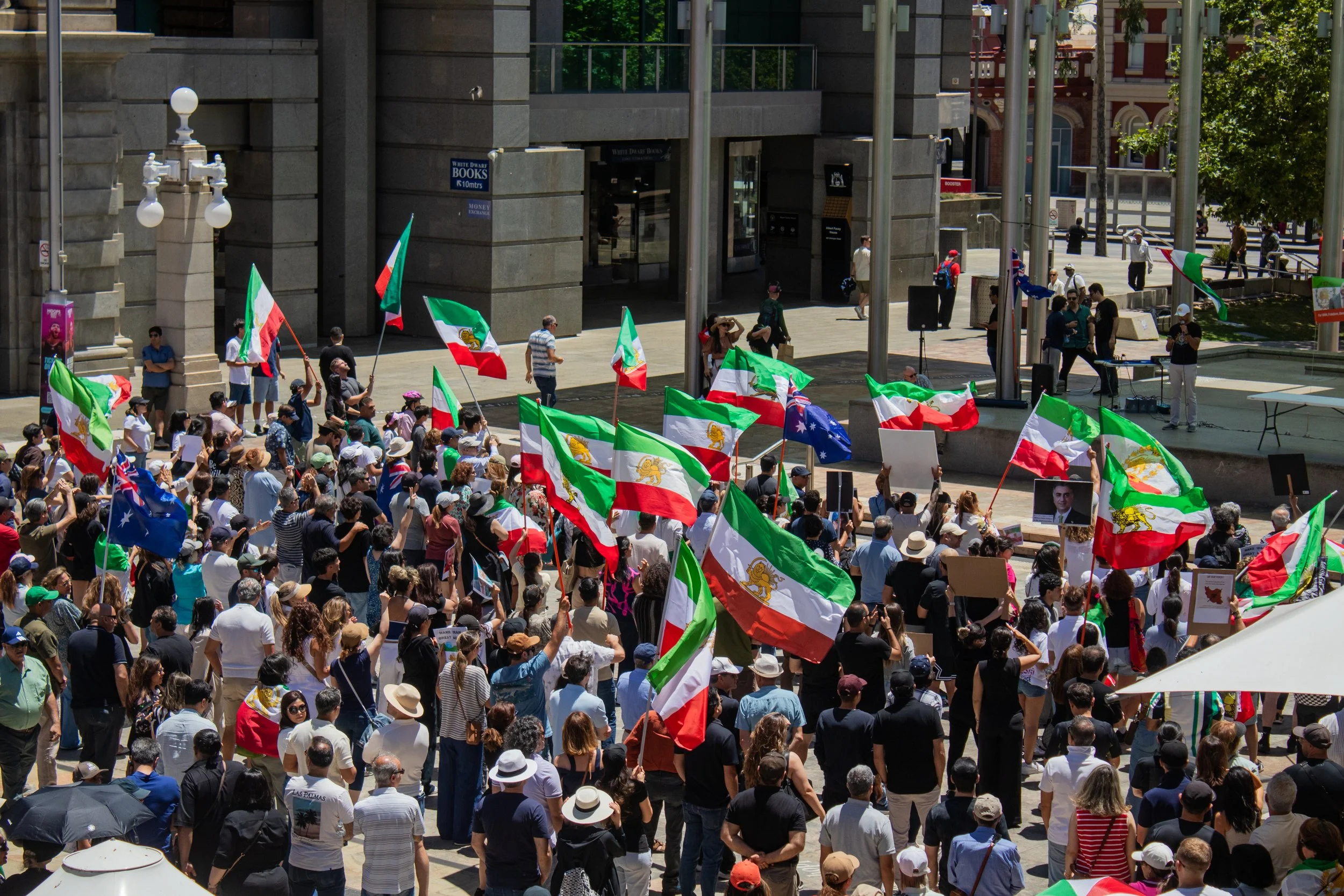
(ANALYSIS) For millions of Iranians — especially religious minorities — the central political question is no longer simply whether the Islamic Republic can reform itself. After decades of repression, including the criminalization of peaceful religious expression and the systematic restriction of independent faith communities, the deeper question is what kind of political future could realistically secure freedom of religion or belief (FoRB) for all Iranians.

Read More
As Iran War Expands, Some Christians See The Conflict Through Biblical Prophecies

(ANALYSIS) As the American and Israeli war with Iran unfolds, some American Christians are speaking of the conflict in biblical terms — mapping end-time prophecies on to current events in the Middle East. In a sermon on March 1, for example, John Hagee, founder of Christians United for Israel, described the war as part of a divine plan.

Read More
From Shock To Ritual: Inside Iran’s 40 Days Of Mourning After Khamenei’s Killing

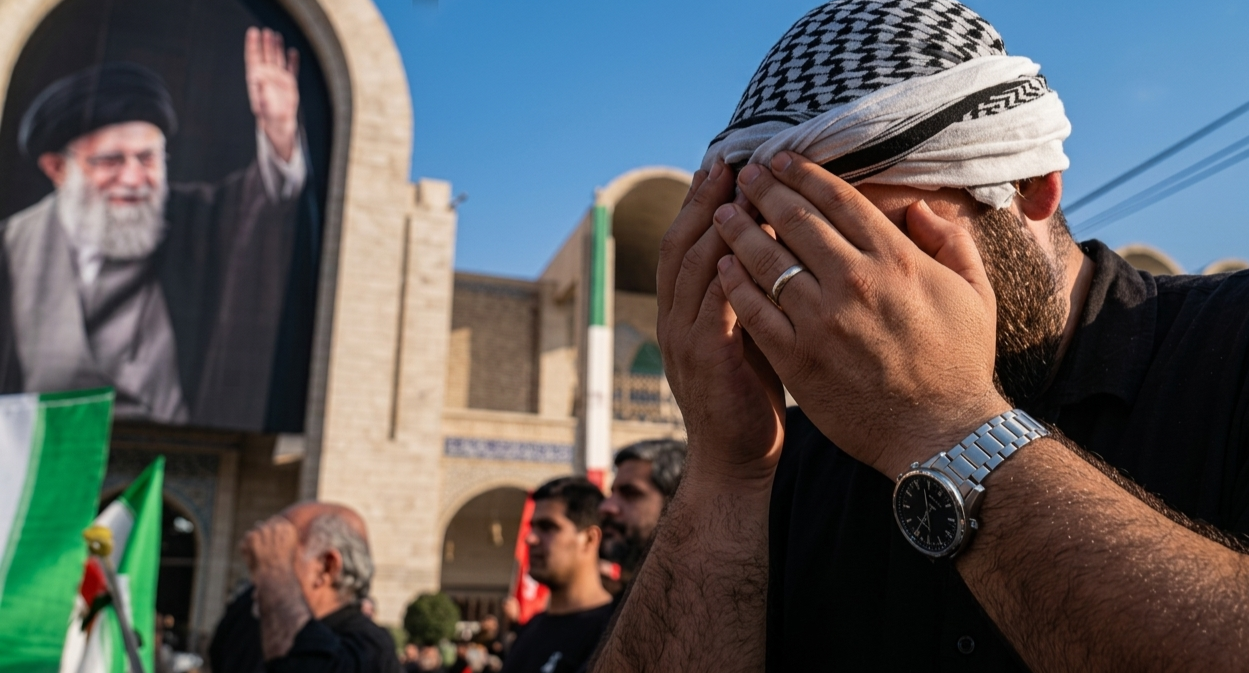
As you approach Iranian houses of worship, you’ll hear it: Locals striking their chests and rhythmically chanting laments to grieve the recent death of Supreme Leader Ali Khamenei’s death. Each movement carries a dual meaning — expressing both personal grief while signaling loyalty to both a religious leader and a totalitarian state.

Read More
USCIRF’s Religious Freedom Report Sparks Dispute Over US Policy Critique

The report critiqued other branches of the U.S. government that have undercut protections for religious freedom. It criticized, for example, cuts to USAID programs, since many of those programs were specifically aimed at protecting religious freedom.

Read More
A New Supreme Leader: What Mojtaba Khamenei’s Rise Means For Iran

(ANALYSIS) The appointment of Mojtaba Khamenei as Iran’s new supreme leader on Sunday marks a pivotal moment for the country’s political and religious future — and for the religious minorities who have long lived under the constraints of the Islamic Republic’s theocratic government. As the war rages on, it remains to be seen what his elevation means for Iran and the region.

Read More
Inside Iran’s Secretive Race To Replace Ayatollah Ali Khamenei

(ANALYSIS) Following the killing of Iran’s Supreme Leader, Ayatollah Ali Khamenei, the country has begun a rare leadership transition overseen by an interim council and the Assembly of Experts. As clerics consider successors such as Mojtaba Khamenei and Alireza Arafi, the process highlights how political loyalty often outweighs religious credentials in selecting Iran’s supreme leader.

Read More
Most Americans Think Their Fellow Citizens Are ‘Morally Bad’

The Pew Research Center surveyed thousands of adults in 25 countries and found that 53 percent of Americans said their fellow countrymen had “somewhat bad” or “very bad” morals. Those findings broke with the international trend: In every other country surveyed, the majority said that others in their country have “somewhat good” or “very good” morals.

Read More
Women At Malta Summit Urge New Conversations On Iran’s Future

The summit unfolded against a backdrop of escalating geopolitical tension, coinciding with U.S.-Israeli airstrikes on Iran that resulted in the death of Supreme Leader Ayatollah Ali Khamenei and the prospect of regime change in a country gripped by Shi’a rule for nearly 50 years. For many of the attendees who flew to Malta, regime change in Iran is the start of a new era.

Read More
The Sunni-Shi’a Muslim Divide: Why It Matters In The Iran War

(ANALYSIS) Understanding this distinction can help get past oversimplified narratives. The Middle East’s conflicts are not simply ancient religious feuds. They are modern political struggles shaped by history, identity and political interests. Here’s what you need to know about Sunni and Shia Islam — and how it impacts Iran and the current situation there.

Read More
Iran Out Of Time: Does Regime Change Create Too Many Dangerous Unknowns?

(ANALYSIS) Three rounds of nuclear talks between the U.S. and Iran failed to persuade President Trump that a solution to the nuclear impasse lay in diplomacy, rather than military action. A perceived lack of progress on Feb 26, was enough to prompt Trump to green-light a massive onslaught of missiles that has degraded Iran and killed Ayatollah Ali Khamenei.

Read More
Iran’s Exiled Crown Prince Reza Pahlavi Has A Plan For His People’s Future

With a U.S.-Israel bombardment underway and President Donald Trump and Prime Minister Benjamin Netanyahu openly pressing for regime change, related questions now loom large: What are the Iranian people prepared for — and who, exactly, is positioned to lead them if the Islamic Republic falls?

Read More
Iran’s Supreme Leader Killed By US-Israeli Strikes: What Now For Religious Minorities?

The assassination — announced by President Trump hours after Saturday’s airstrikes — is expected to throw the Islamic Republic of Iran’s future into doubt and raises the prospect that the country’s theocratic government could be overthrown after nearly five decades. Trump said the airstrikes and Khamenei’s death is “the single greatest chance for the Iranian people to take back their country.”

Read More
US-Israeli Airstrikes Take Aim At Iran’s Theocracy: 3 Future Outcomes

(ANALYSIS) The joint U.S.–Israeli strike on Iranian targets on Saturday marked a dramatic escalation in the decades-long confrontation with the Islamic Republic — and raised two profound questions: Is this a real attempt at regime change? What would that mean for religious freedom inside Iran?

Read More
How The Apocrypha Shaped Christian Tradition For Centuries

(ANALYSIS) Of Jesus’ 12 disciples, Saint Peter is one of the most important. In the Book of Matthew, Jesus declares that Peter is the “rock” on which “I will build my church.” Catholic tradition considers him the first pope. Martyred in the first century, Peter asked to be crucified upside down so he would not die the same way as Christ. That story, however, is not in the Bible.

Read More
Iran’s Religious Minorities Face Escalating Persecution

Religious minorities in Iran are facing more persecution, human rights watchdog organizations warned in a report released on Thursday. Some policy analysts said last year’s conflict with Israel and the U.S. may have pushed the regime to look for a “scapegoat” to blame — and found it in religious and ethnic minorities.

Read More
Should Religions Have Rituals Such As Baptism For Infants?

(ANALYSIS) Former Irish President Mary McAleese argues that infant baptism violates children’s human rights by imposing church membership without consent. Critics respond that parents possess religious freedom in child-rearing, note historical and biblical defenses of infant baptism, and compare similar birth rituals across Christianity, Judaism, Islam, Hinduism, Buddhism and Sikhism.

Read More
Indians Claim To Be A Lost Jewish Tribe — And Now They Can Finally Go Home

A group of people living in India claims to be Israel’s long-lost tribe of Manasseh. After centuries of displacement, they finally have their chance to migrate back to Israel and eventually claim citizenship status. But it remains unclear if the Jewish state will become the accepting, stable home they’ve always wanted.

Read More
Iran Survives The Uprising — But The Islamic Republic Is Hollowing Out From Within

(ANALYSIS) You’ve seen the headlines about Iran’s uprising, but there is a deeper story: Two-thirds of the nation’s mosques, 50,000 out of 75,000, have been closed due to declining worship attendance, according to a high-ranking cleric. What does that mean for Iran and for Islam?

Read More
Violence Against Christians Reaches All-Time High In 15 Nations

Violence against Christians has reached an all-time high in 15 countries, with 388 million people facing severe persecution worldwide, Open Doors reported. Nigeria remains the deadliest nation, while Syria saw the largest single-year rise amid instability. Other dangerous parts of the world include North Korea, Somalia and Yemen.

Read More
How Iran’s Ethnic Provinces Reshaped The Protest Movement

(ANALYSIS) When protests began in Tehran’s Grand Bazaar in December, authorities misjudged them as limited economic unrest. Instead, demonstrations spread nationwide, killing thousands and drawing in ethnic minorities. The uprising exposed deep divides over change, revealing that centralized opposition visions failed to address Iran’s ethnic diversity adequately.

Read More