What can news consumers learn from this complicated drama? Surely it is a commentary on the age in which we live that many Americans laughed when they read the early New York Times headline about the terrorist attack that fizzled near the New York home of Mayor Zohran Mamdani.
Read More(ANALYSIS) Political scientist Ryan Burge warns the aging Episcopal Church faces steep membership decline, with two-thirds of members over 60 and few young adults joining. Leaders acknowledge shrinking numbers but reject predictions of institutional collapse, urging renewal and outreach as part of a broader decline among America’s mainline Protestant denominations.
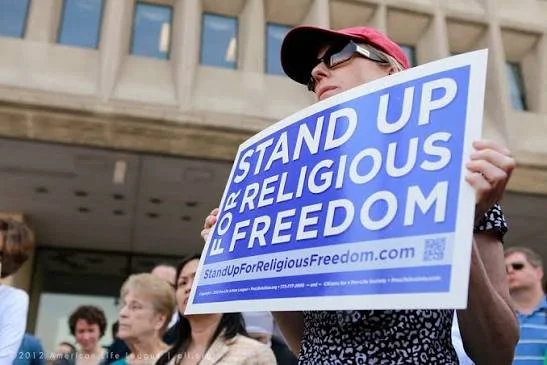
Read MoreCoverage of a Supreme Court decision blocking a California policy on student gender identity reveals starkly different media frames. Some outlets emphasize protecting transgender students from being “outed,” while others stress parental rights and religious liberty. The contrasting headlines highlight how newsrooms shape public understanding of contentious legal and cultural debates.
Read More(ANALYSIS) The actor visited many churches. Research with believers immediately bled into the screenplay he wrote for “The Apostle,” which Duvall directed and financed. The movie earned him another Academy Award acting nomination, one of seven during a career that ended on Feb. 15, when the 95-year-old screen legend died at home on his Virginia horse farm.
Read MoreIt’s also important that this unconventional religious leader’s social ties to Epstein continued long after the financier became a convicted sex offender, after he pled guilty in 2008 to soliciting prostitution from an underage girl.
Read MoreFormer U.S. Sen. Ben Sasse reflects on his pancreatic cancer diagnosis and limited prognosis. In a Hoover Institution interview, Sasse speaks candidly about pain, mortality and Christian hope, urging believers to face death without despair while serving others with whatever time remains.
Read MoreWhile most “Crossroads” podcasts focus on religion angles in major news stories, this week’s episode focused, you guessed it, on a short news “brief.” The problem is that we are talking about a brief about a Lutheran Church-Missouri Synod story that, if the details had been accurate, was worthy of an A1 feature.
Read MoreAs the Diocese of Jackson advances Sister Thea Bowman’s cause for sainthood, Catholics reflect on her prophetic witness. A Mississippi teacher, scholar and evangelist, she challenged the church to recognize Black faith and everyday holiness — urging believers to see saints not only in Rome’s past, but in their own families.
Read MoreWhile reading some of the outraged commentary about the spectacular staff cuts at The Washington Post, I keep thinking of the immortal words of King Theoden of Rohan, when facing dark waves of evil during the Battle of Helm’s Deep. All together now: “How did it come to this?”
Read MoreTennessee Gov. Bill Lee reflected on faith and redemption after reconnecting with singer Jelly Roll, whom he had met years earlier while speaking in prison. At a divided National Prayer Breakfast, Lee avoided politics, sharing how personal tragedy reshaped his life, as other speakers highlighted religious freedom.
Read MoreFor Don Lemon, here’s the bottom line: He says he was a journalist “on the front lines,” embedded with protestors whose actions were the subject of his reporting. In addition to the coffee and donuts, the lifestream suggests that he took part in discussions of which church to invade and the details of what to do during the protests.
Read More(ANALYSIS) Pope Leo warned that, “The stakes are high. The power of simulation is such that AI can even deceive us by fabricating parallel ‘realities,’ usurping our faces and voices. We are immersed in a world of multidimensionality where it is becoming increasingly difficult to distinguish reality from fiction.”
Read MorePope Leo XIV cautioned against “overly affectionate” AI chatbots, warning they can manipulate emotions and blur lines between humans and machines. The discussion, covered by CNN and explored in the “Crossroads” podcast this week, raises broader questions about AI as quasi-divine. A “Harry Potter” quote underscores the perils of trust and unseen entities.
Read MoreAllen was a journalist who was a Catholic and an active Catholic who was a real journalist, and he fought to balance that equation in his daily reporting. His death on Jan. 22, after a long battle with cancer, left a strategic hole in Catholic life.
Read MoreDuring this tense moment in journalism, will Southern Baptist leaders return telephone calls from elite newsrooms or will they choose to speak to “conservative” and “religious” publications, alone?
Read More“It is painful to see how, especially in the West, the space for genuine freedom of expression is rapidly shrinking," said Leo.
Read More(ANALYSIS) Let’s start with a question: Have you heard leaders in your congregation discuss any of this information in a setting that will reach active members, as opposed to special events that draw the “usual suspects” in the flock (maybe 10-20% of members) that attend just about everything?
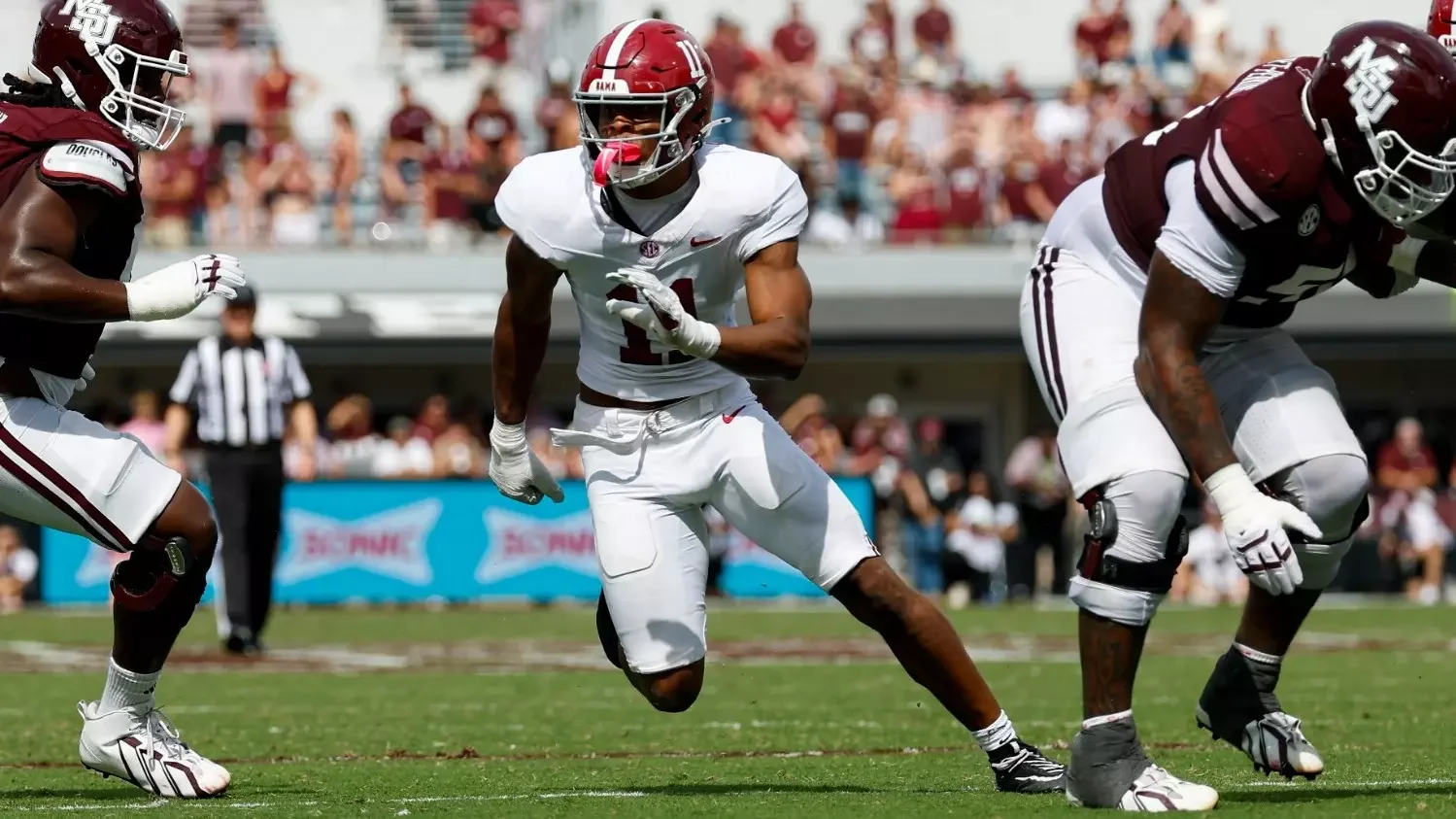
Read MoreA recent New York Times feature noted that quarterback Fernando Mendoza, before helping change University of Indiana football history, excelled at Belen Jesuit, an all-boys Catholic school in Miami, and then Miami Columbus High, another all-boys Catholic school. Oh, and his mother was a star athlete at Lourdes Academy, an all-girls Catholic school.
Read More(ANALYSIS) Philip Yancey, a bestselling evangelical author known for emphasizing grace and compassion, retired after confessing to an eight-year adulterous relationship. His fall has sparked renewed debate within evangelical Christianity about sin, forgiveness, accountability and the dangers of weaponizing grace, especially amid broader concerns over moral failures.
Read MoreAnyone who has followed religion news published by the Gray Lady in the years since January 22, 1973, knows that when debates linked to evangelicalism must be covered, The New York Times knows how to tell “good” evangelicals from “bad” evangelicals, as in the evangelicals who are worthy of respect and those whose moral, cultural and theological views are considered extreme, if not dangerous.
Read More