(ANALYSIS) When MLK said character should be a goal of education, he presumably meant that moral intelligence should be developed. Everyone (except the psychopath) has a sense of morality. That’s what Jefferson meant when he declared that all men are created equal. But how to develop moral intelligence is much debated.
Read MoreThe final months of 2025 brought another dimension to the ongoing discussion about AI among church leaders as a music “artist” named Solomon Ray climbed the charts. It came as another AI artist, Breaking Rust, did the same on the country digital charts. AI can help generate ideas, it cannot be a final source for the music sung during worship
Read More(ANALYSIS) With 2025 now behind us, it was a year filled with significant developments in religion, faith and spirituality — and 2026 is likely to be just as eventful. Here are five key religion-related issues and trends to watch for over the next 12 months in the U.S. and throughout the world.
Read More(ANALYSIS) Late in the movie “Shadowlands,” the C.S. Lewis character describes the role that books can play in real life. The famous Oxford don and author, played by Anthony Hopkins, notes, “We read books to know that we are not alone.” But Lewis never wrote those memorable words.
Read More(ANALYSIS) In the most talked-about film from the final year of the 20th century, “The Matrix,” a computer hacker named Neo finds that the world he lives and works in isn’t real. It’s a virtual reality, created by artificial intelligence.
Read MoreA recent study on AI’s reliability to answer theological questions reminds users that answers don’t come without human influence.
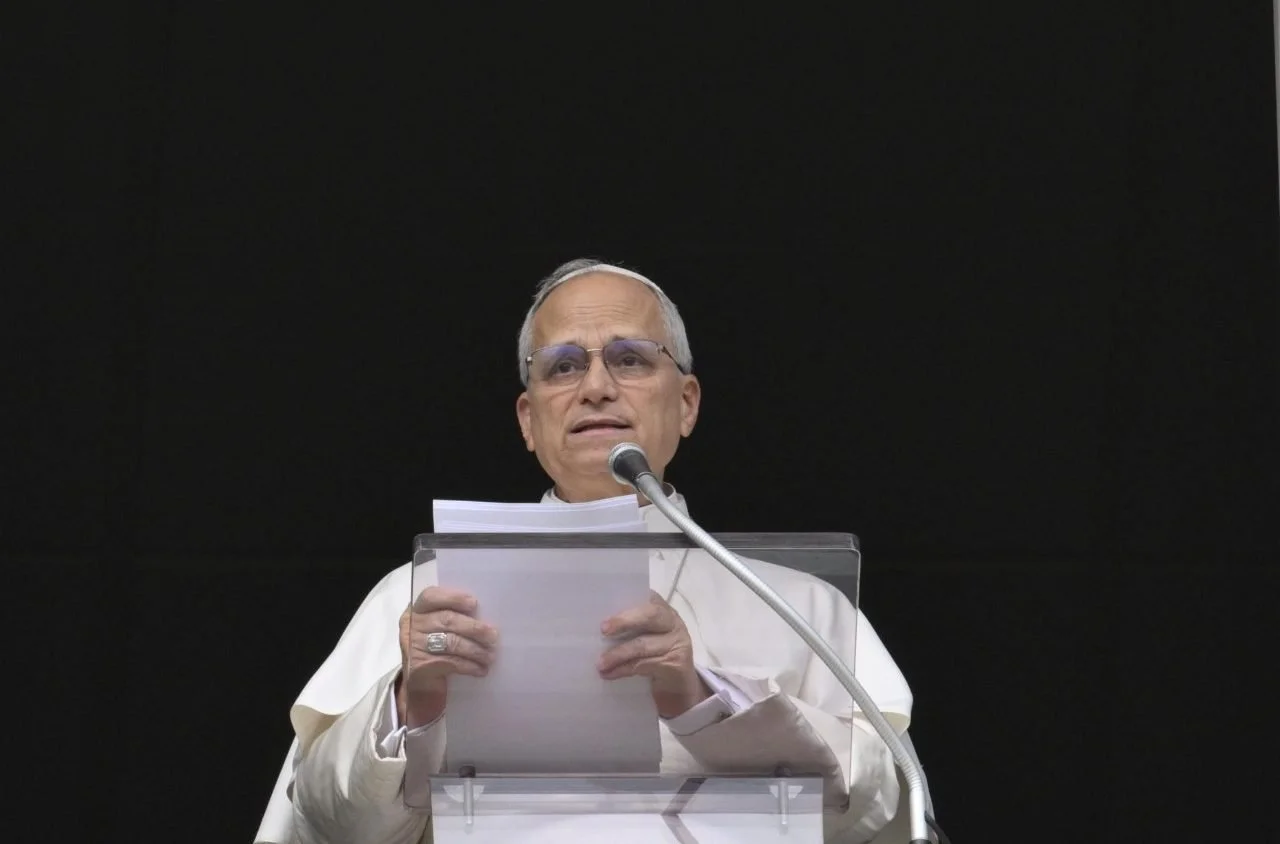
Read More(ANALYSIS) In his first major interview as pope, Leo XIV offers a glimpse into a papacy shaped by his American identity and a diplomatic, morally grounded approach. Speaking to Crux for an upcoming biography, the first U.S.-born pontiff addressed global issues including President Trump, artificial intelligence, and the crisis in Gaza.
Read More(REVIEW) The book presents a Christian framework for everyday life that may resonate with readers of various faiths. However, the writing quality is uneven; while some chapters are accessible, others use complex language that may be challenging for some readers. Despite its limitations, this collection is worth reading in an age marked by AI, anxiety and burnout.
Read More(ANALYSIS) Every time that I turn on YouTube to check the channels that I follow, it’s impossible to miss the growing spectre of AI junk. Let’s say that you are interested in the controversies swirling around superstar Caitlin Clark and the WNBA leadership’s attempts to figure out (Welcome to red v. blue America) how to minimize the impact of her massive fanbase on their league. Clark v. Nike is another popular topic for gossip, mixed with tiny amounts of real news.
Read MoreThe use of artificial intelligence to “reanimate” the dead for a variety of purposes is quickly gaining traction. Over the past few years, we’ve been studying the moral implications of AI at the Center for Applied Ethics at the University of Massachusetts, Boston, and we find these AI reanimations to be morally problematic.
Read MoreSuper-intelligent computers that go bad isn’t a new concept, as fans of the “Terminator” franchise know all to well. However, when I think about digital evil, I remember the haunting voice of the HAL 9000 supercomputer in 1968 sci-fi classic “2001: A Space Odyssey.” Think about this: That was a voice that Sir Anthony Hopkins heard in his head as he prepared to play the brilliant serial killer Hannibal Lecter in “The Silence of the Lambs.”
Read More(ANALYSIS) The Bible has lots of things to say about lying. You can look it up. It’s clear that lying is a sin. This brings us to an increasingly relevant question: Can a computer lie? That leads directly to another hot-button question: Can a computer sin?
Read More(ANALYSIS) Press freedom continues to be under threat globally, with journalists being killed or injured, others being censored, and media outlets being closed down, among others. According to the United Nations, since January 2025, at least 20 people who work in the media have been killed.
Read MoreAs the U.S. church continues to navigate a changing cultural and technological landscape, Pushpay’s new report makes it clear: Digital tools are no longer optional — they’re essential. Whether through AI, streaming, mobile apps, or giving platforms, technology is reshaping how ministry happens, making it more accessible, inclusive and responsive to the needs of congregations.
Read MoreReligion News Association members gathered this week just outside the nation’s capital for their annual meeting. They discussed topics ranging from AI to reporting on religion in small markets.
Read MoreFormer Intel CEO Pat Gelsinger has joined Gloo, the technology platform that serves churches and ministries, as its executive chair and head of technology. Gelsinger has been an investor and board member for Gloo for 10 years but now will take on the expanded role of leading the Gloo product and engineering efforts, including Gloo AI.
Read More(OPINION) Call it God’s work, but a world without art is a world without humans. Irish poet and playwright Oscar Wilde knew it, “What art seeks to disturb is monotony of type, slavery of custom, tyranny of habit, and the reduction of man to the level of a machine.” I took a course on artificial intelligence to keep abreast of the world and was unsurprised to learn that a machine is not “intelligent.”
Read More(ANALYSIS) Imagine attending a funeral where the person who has died speaks directly to you, answering your questions and sharing memories. This happened at the funeral of Marina Smith, a Holocaust educator who died in 2022.
Read MoreIt may be the start of a new year, but many of the same issues and concerns will dominate the news cycle in 2025. From Pope Francis’ health from the erosion of religious freedom in many parts of the globe to the moral implications that come with the widespread use of AI, here’s what to watch for in the new year.
Read More(ANALYSIS) Technology, AI and social media have been developed for the common good, to make our lives easier, one way or another. However, they can also be abused — and this is precisely what we have seen across contemporary cases of genocide.
Read More