
Women At Malta Summit Urge New Conversations On Iran’s Future
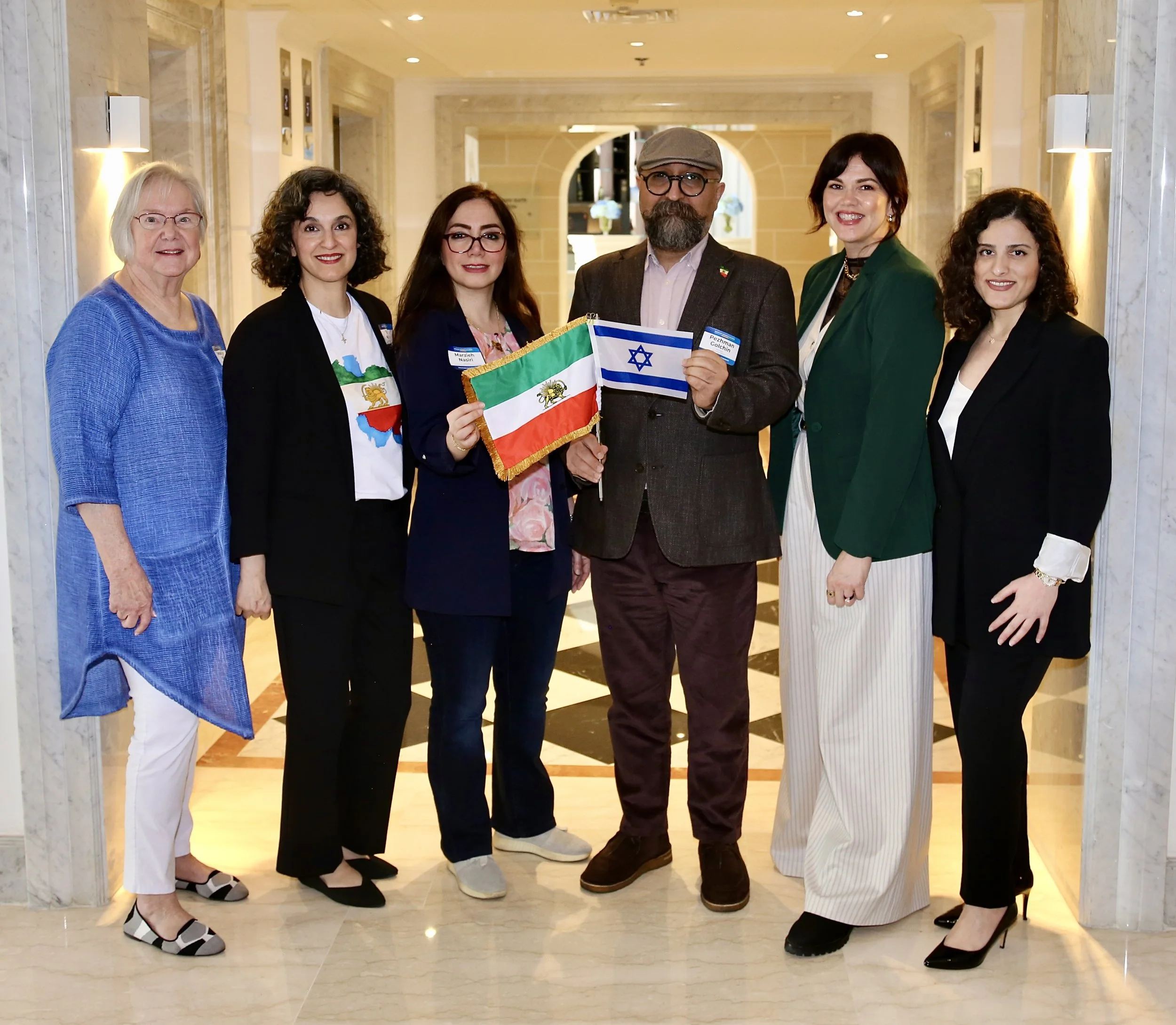
Malta Multi-Faith Leadership Summit attendees celebrate the U.S.-Israeli airstrikes on Iran. (Photo courtesy of Oscar-Luigi Veronese/www.OLVPhotography.com)
ST. JULIAN’S, Malta — Inside the Hilton Malta’s waterfront conference halls, dozens of women sat at large roundtables draped in black tablecloths to hear and discuss topics including how to counter religious extremism in the Middle East.
In a week marked by the shockwaves of U.S. military escalation in the region, the Malta Multi-Faith Leadership Summit offered a contrasting narrative — one rooted in dialogue, shared values and the conviction that religious pluralism can be strengthened even amid widespread uncertainty.
The summit, hosted by Empower Women Media and the Abraham Women’s Alliance, unfolded against a backdrop of escalating geopolitical tension since it coincided with U.S.-Israeli airstrikes on Iran that resulted in the death of Supreme Leader Ayatollah Ali Khamenei and the prospect of regime change in a country gripped by Shi’a rule since the 1979 Islamic Revolution.
“Being at this conference while everything is unfolding back in Iran feels surreal. When we first envisioned expanding the idea of religious freedom to the Middle East — especially to women in Muslim-majority countries — it felt like building a wall brick by brick,” said Saghar Erica Kasraie, who left Iran for the U.S. when she was just six years old. “You may not see change tomorrow, but you are affecting change one relationship at a time.”
Kasraie, a Middle East expert and activist, said her preparation for the conference included “convening Iranians from different political backgrounds — journalists, filmmakers, scholars — to imagine what a future democratic Iran could look like.”
“These were aspirational, hypothetical conversations with policymakers and leaders,” she said. “[After the airstrikes], what felt hypothetical started to feel possible.”
Kasraie, a Christian, said Iran needs the help of policymakers to ensure that a transition involves separating religion from the government — something that was never done in Afghanistan and Iraq following U.S. intervention in both countries after the Sept. 11 attacks.
“Religious freedom may not be at the top of immediate emergency priorities, but it must be part of the long-term rebuilding,” she said. “Being at this conference helped because it brought together people willing to have these hard conversations.”
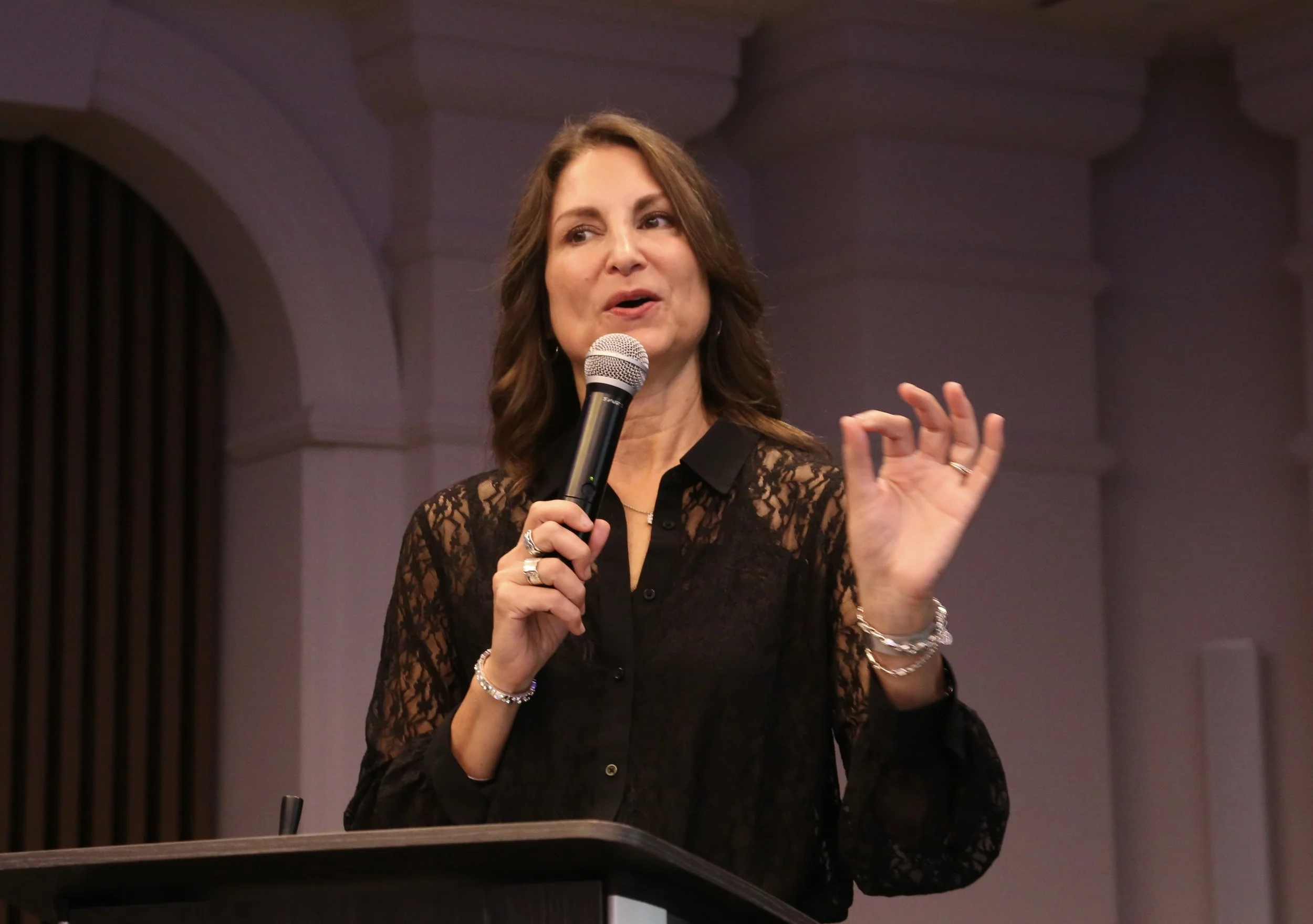
Shirin Taber, founder and executive director of Empower Women Media, opens the 2026 Malta Multi-Faith Leadership Summit. (Photo courtesy of Oscar-Luigi Veronese/www.OLVPhotography.com)
The two-day conference started on March 2 and brought together women who work as policymakers, academics, entrepreneurs and youth advocates committed to fostering dialogue among Jewish, Christian and Muslim communities. Due to the ongoing airstrikes, some attendees could not make the trip after the airspace was closed to commercial planes.
Organizers described the timing of the conference as both sobering and urgent.
“We were going to highlight Iran, just as we always have [at past conferences], but we didn’t realize this was the week that the war would begin,” said Shirin Taber, founder and executive director of Empower Women Media. “We had no idea that everything would coincide.”
The summit’s stated goal is to equip and mobilize women to foster peaceful relations. Over two days, attendees participated in expert panels, strategy workshops and small-group discussions designed to provide what organizers called a “tool kit” for advancing pluralism in measurable and sustainable ways.
A significant component of the summit focused on women’s leadership between Jews, Christians and Muslims. Taber emphasized the unique role women often play in peacebuilding efforts, particularly at grassroots levels where trust-building is essential. This took on greater importance given the events of the last week.
“I do feel like we’re at a major shifting point and I’m incredibly hopeful [about Iran’s future],” said Taber, who was born in the U.S. to an Iranian Muslim father and an American Christian mother. “We feel like we’re right in the center of the storm.”
Malta was intentionally chosen as this year’s host. Located halfway between Italy and North Africa, the island nation’s proximity to the Middle East — combined with its reputation for stability and hospitality — made it an ideal setting for open and meaningful dialogue. News alerts throughout the conference reported that U.S. and Israeli forces continued to launch airstrikes on Iranian targets that many attendees acknowledged carried added emotional weight.
Taber said the events of the last few days in Iran “feel like an out-of-body experience.”
“I have only dreamed about this,” she added, “but you really don’t know that it could happen in my lifetime.”
As for a future summit potentially taking place in Iran’s capital, Tehran, Kasraie said, “For so long that idea would have seemed impossible. Now, suddenly, anything feels possible.”
Clemente Lisi is executive editor at Religion Unplugged.