
Religion And The Changing Face Of Democratic Politics
WACO, Texas — Democrats won control of the U.S. House and Senate on Tuesday night, with young voters playing an important role in several key races.
In Kansas, Methodist pastor Adam Hamilton became the first Democrat elected to the Jawhawk State in 94 years. In Michigan, Democrat Abdul El-Sayed became the first Muslim elected to the Senate.
In Texas, meanwhile, James Talarico defeated Republican Ken Paxton by at least 1.2 million votes for 55 percent of the vote (to Paxton’s 43 percent), becoming the first Democrat elected to the Senate from Texas in 38 years. Flipping Texas to the Democrats was the biggest sign that a blue tsunami had taken place during these midterms.
READ: 5 Faith Issues That Emerged From The 2026 Midterm Elections
Faith emerged as one of the defining storylines of this election, influencing how candidates presented themselves, how voters understood issues and how young people connected their personal beliefs with their political choices. From Talarico’s progressive interpretation of Christianity in Texas to El-Sayed's historic candidacy as a Muslim, religion became more than a personal identity.
Religion also became part of a larger conversation about representation, values and the future of the Democratic Party. Alongside community organizing and social media, faith helped shape how young voters engaged with the election.
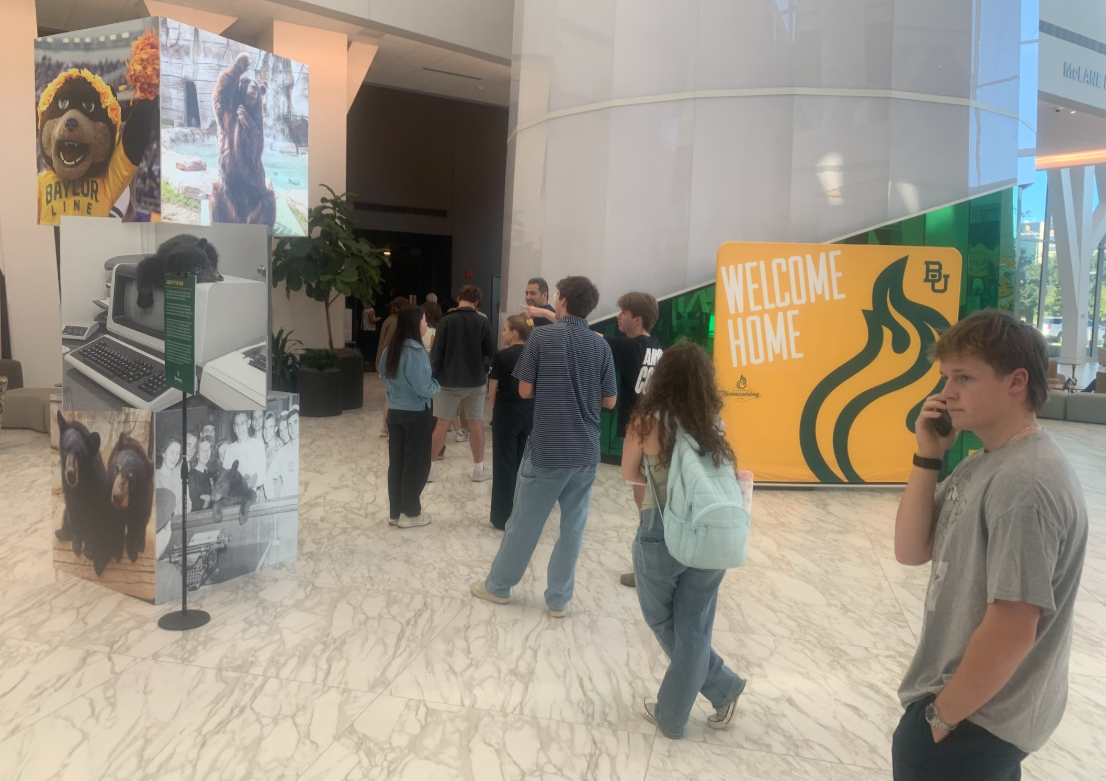
Voters line up at Baylor University on Nov. 3 during the 2026 midterm elections. (Photo by Luke Reinkensmeyer)
Young voters side with Democrats
Young voters sided overwhelmingly with Democrats in this election, according to exit polls. Community efforts, faith-based discussions and social media also all played a part.
In Texas, Talarico won alongside Gina Hinojosa, who became the first Democratic governor since 1995, a Religion Unplugged reporter visited a polling site on Baylor University’s campus, where many students are Christian. Talarico had visited the campus back in September.
Students lined up to vote throughout the day. The crowd featured many first-time voters. To them, voting was exciting as they discussed the candidates and made predictions as they walked to get a spot in line.
One voter, who did not want to be identified by name, said she thinks social media ads caused people to take a bigger interest in this election.
“Although people are on all parts of the political spectrum, we can agree that these ads are annoying,” she said.
The voter also said faith played a big factor in the Texas Senate race.
“This is an interesting election because religion has come more into it,” she added. “It’s very interesting to see someone like Talarico who is in seminary school and who has work on an academic campus. We have had political candidates who expound about religion, but don’t have the knowledge to back it up.”
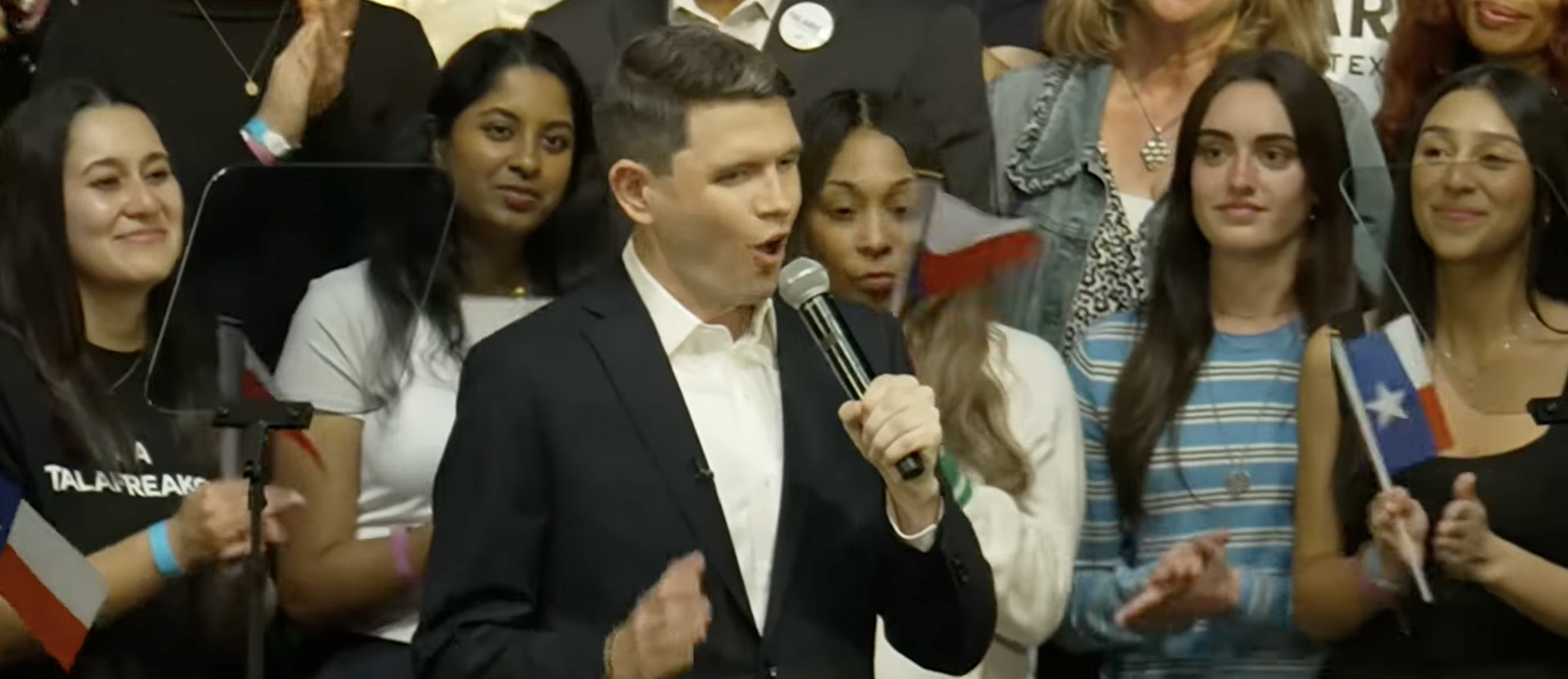
James Talarico, surrounded by young voters, during his victory night speech. (YouTube screenshot)
Slaying Goliath
Talarico’s campaign made faith a particularly significant part of the race. A seminarian and former public school teacher, he has championed a progressive interpretation of Christianity, highlighting Jesus’ passion for the poor and needy, while supporting LGBTQ rights and advocating for abortion rights.
Talarico’s positions challenged the assumption that Christian voters would automatically align with GOP candidates, particularly on issues of sexuality and reproductive rights. His candidacy also resonated with younger Christians who saw an opportunity to connect their religious values with progressive politics.
“In this race, we went up against our own Goliaths: The richest man in the world, the most powerful man in the world and the entire Washington D.C. establishment,” he said during his victory speech, referring to the multibillionaire Elon Musk and President Donald Trump.
“The people of Texas were my slingshot and tonight we defeated Goliath,” he added.
The Texas Senate race was very expensive this year. Talarico spent $102.4 million, while Democratic PACs doled out $30.6 million. At the same time, Paxton spent $21.9 million, with Republican PACs kicking in another$251.7 million. Every night leading up to the election, strongly worded campaign ads littered social media pages and TV screens in Texas. As a result, it became the most-expensive Senate race in American history.
Talarico’s victory, however, signalled a willingness among some Christian voters to reconsider traditional political alliances. Rather than viewing Christianity exclusively through the social issues emphasized by conservative politicians, these voters prioritizes messages about compassion, economic inequality and caring for marginalized communities.
Democrats like Talarico have argued that Republicans embrace certain Christian teachings while overlooking others.
“You can't love God and abuse the immigrant. You can't love God and bully the outcast,” he said in a recent message posted on TikTok.
While Talarico’s campaign emphasized how Christian teachings could inform progressive politics, El-Sayed’s candidacy highlighted the importance of religious diversity in the U.S. Both races challenged traditional expectations about the relationship between religion and political identity. Together, they demonstrated that faith does not necessarily dictate a particular party affiliation and that religious communities are not politically monolithic.
In his victory speech, El-Sayed did not shy away from his Muslim faith. For example, he opened by noting that he had said “inshallah” — or “God willing” in Arabic — whenever the outcome of the race came up.
“Today, tonight, we can turn that ‘inshallah’ into an ‘alhamdulillah,’” he said, adding that it means “praise be to God.”
Luke Reinkensmeyer is a student at Baylor University and an intern at Religion Unplugged.