
How A Michigan Church Embraces Its Muslim Neighbors
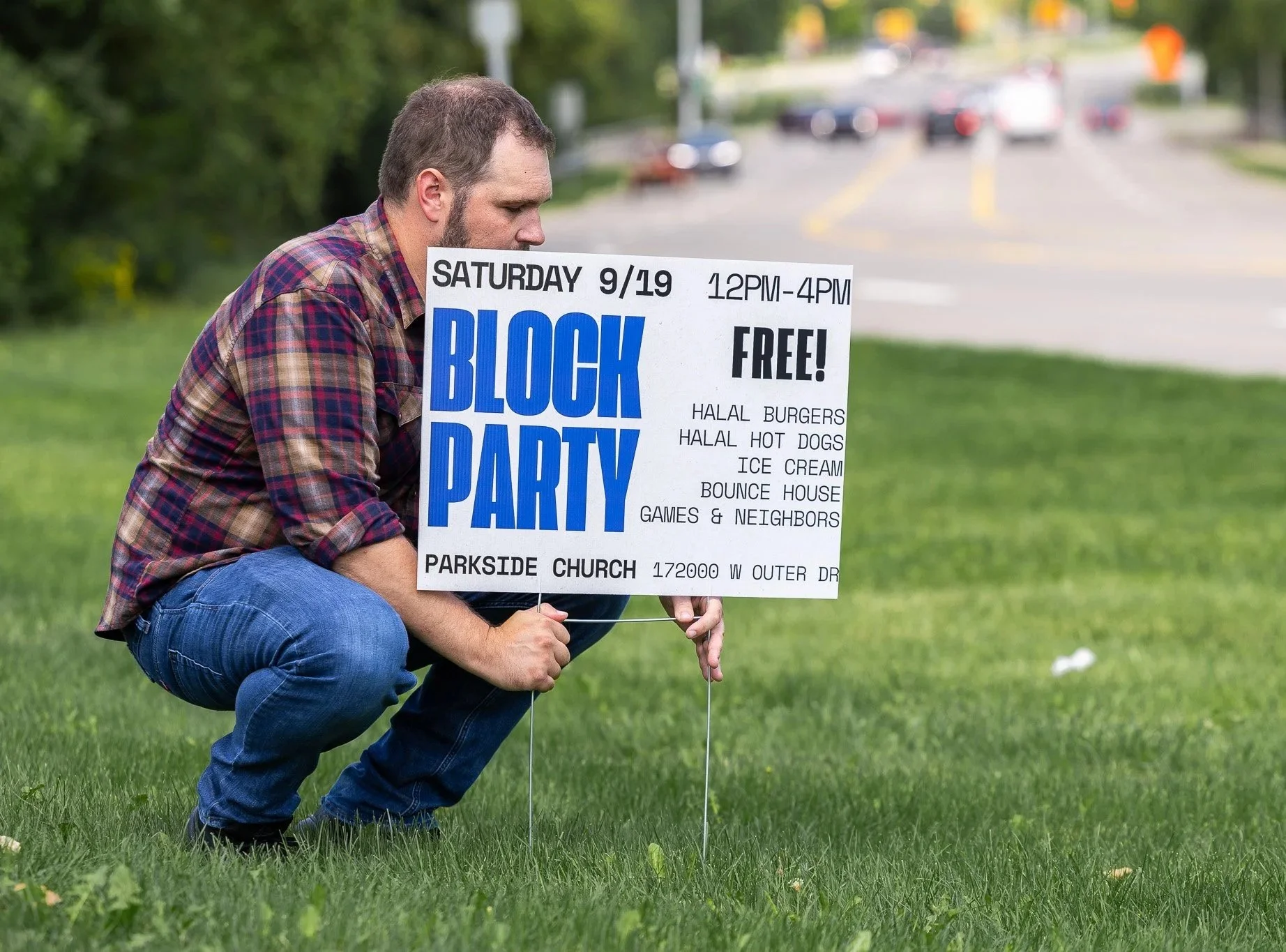
Christian minister Wayne Beason places a sign by a roadway in Dearborn Heights, Michigan, inviting neighbors — including Muslims — to attend a church block party. (Photo by Hannah Mitkus)
DEARBORN, Mich. — An anti-Islam rally promoted as a “Christian Crusader March” drew hundreds of demonstrators and counterdemonstrators to this majority Arab American city of 110,000.
A few participants carried assault rifles as police in riot gear patrolled.
The Sunday after the recent protest, minister Wayne Beason felt compelled to speak up for his Muslim neighbors.
READ: Inside America’s Ongoing War Of Words Over Muslims
“There’s a lot of talk about Muslim Americans and Arab immigrants right now, and a lot of it is pretty hurtful and deceptive,” said Beason, who preaches for the Parkside Church of Christ in Dearborn Heights, a Detroit suburb that borders Dearborn.
Dearborn Heights' population exceeds 60,000 — with about 2 in 5 residents of Middle Eastern or North African descent, most of them Arab.
Beason, a 39-year-old Michigan native, told his congregation he’d heard from out-of-state Christians concerned about the disturbing images on the news.
“I have a hunch,” he said, “that many of us are wondering what we can do, how we can respond to the fear and hatred that’s being directed at our neighbors by people claiming to follow the same Jesus we follow.”
For years, the Parkside church has worked to share the love of Jesus with Muslims.
Members have organized English as a second language classes. They’ve helped sell immigrant-made goods at a community farmers market. They’ve grilled halal hamburgers and hot dogs — in keeping with Islamic dietary laws — at the church’s annual block party
“It’s a situation where God is doing a work,” Anita Roosa, 63, a longtime Parkside member and former church secretary, said of the relationships built. “We don’t know where he is in that work with each individual, so I’m excited to see what he does in these lives.”
In the anti-Islam rally’s wake, Beason urged the congregation to pray for peace, healing and safety for Muslim neighbors.
He encouraged members to pray, too, “for our fellow Christians, locally and nationally, to be filled with God’s wisdom, hospitality and grace.”
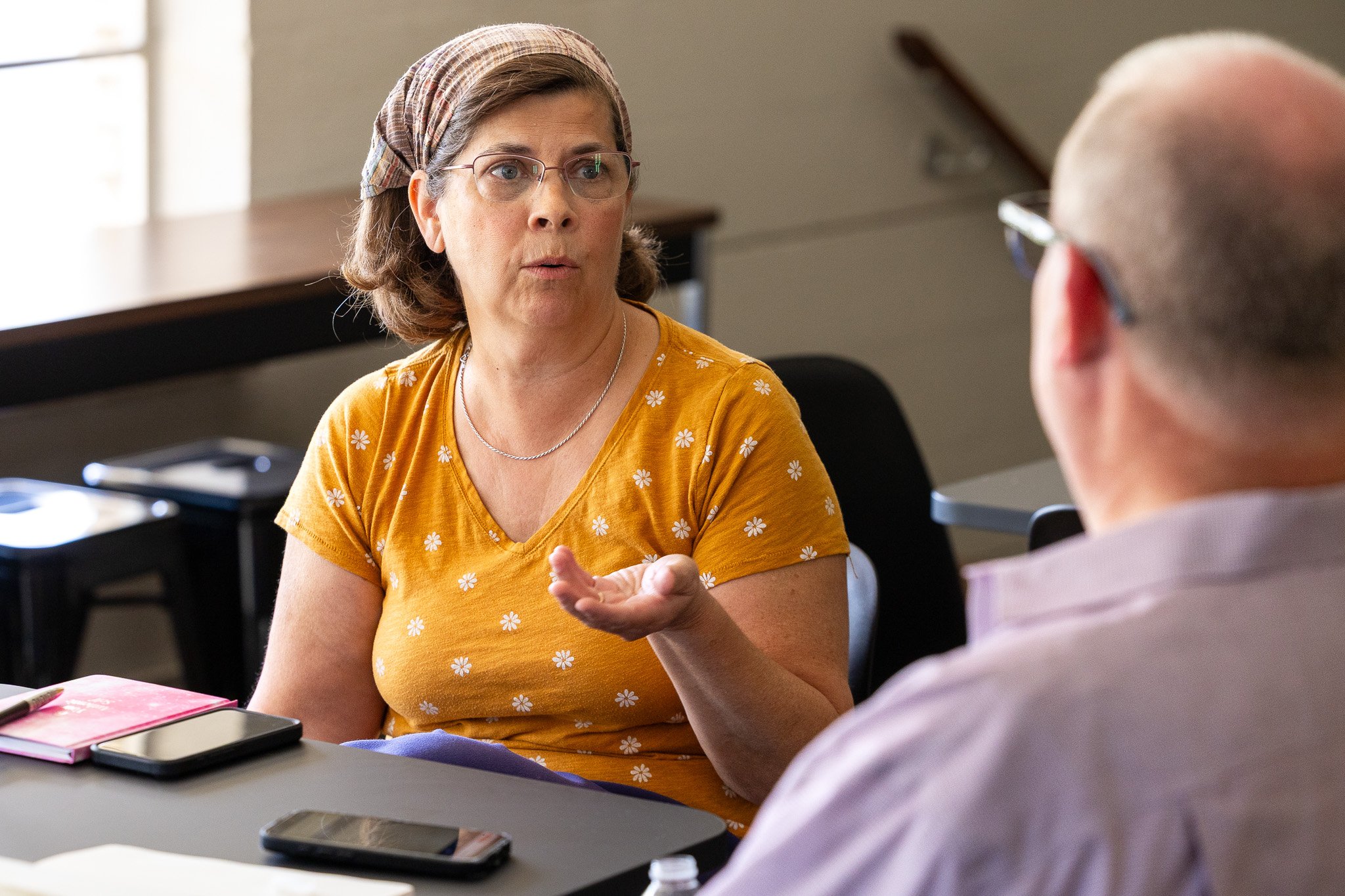
Anita Roosa, a longtime Parkside Church of Christ member and former church secretary, reflects on building relationships with Muslim neighbors. (Photo by Hannah Mitkus)
War of words
The Dearborn area — home to the nation’s largest concentration of Arab Americans — has become a flashpoint in America’s war of words over Muslims and their place in U.S. society.
Twenty-five years after the Islamic extremist group al-Qaida perpetrated 9/11, public attitudes toward Muslims have grown even more negative — by some measures — than immediately after the terrorist attacks, according to the Pew Research Center.
In March 2002, six months after 9/11, 25 percent of U.S. adults said Islam is more likely than other religions to promote violence, Pew reported. This year, double that number — 51 percent — said Islam encourages violence more than other religions.
Pew also points to increased political polarization on Islam, with Republicans and independents who lean toward the GOP far more likely than Democrats and Democratic leaners to say Islam encourages violence (76 percent to 29 percent). Right after 9/11, the partisan gap was much smaller, according to Pew (32 percent to 23 percent).
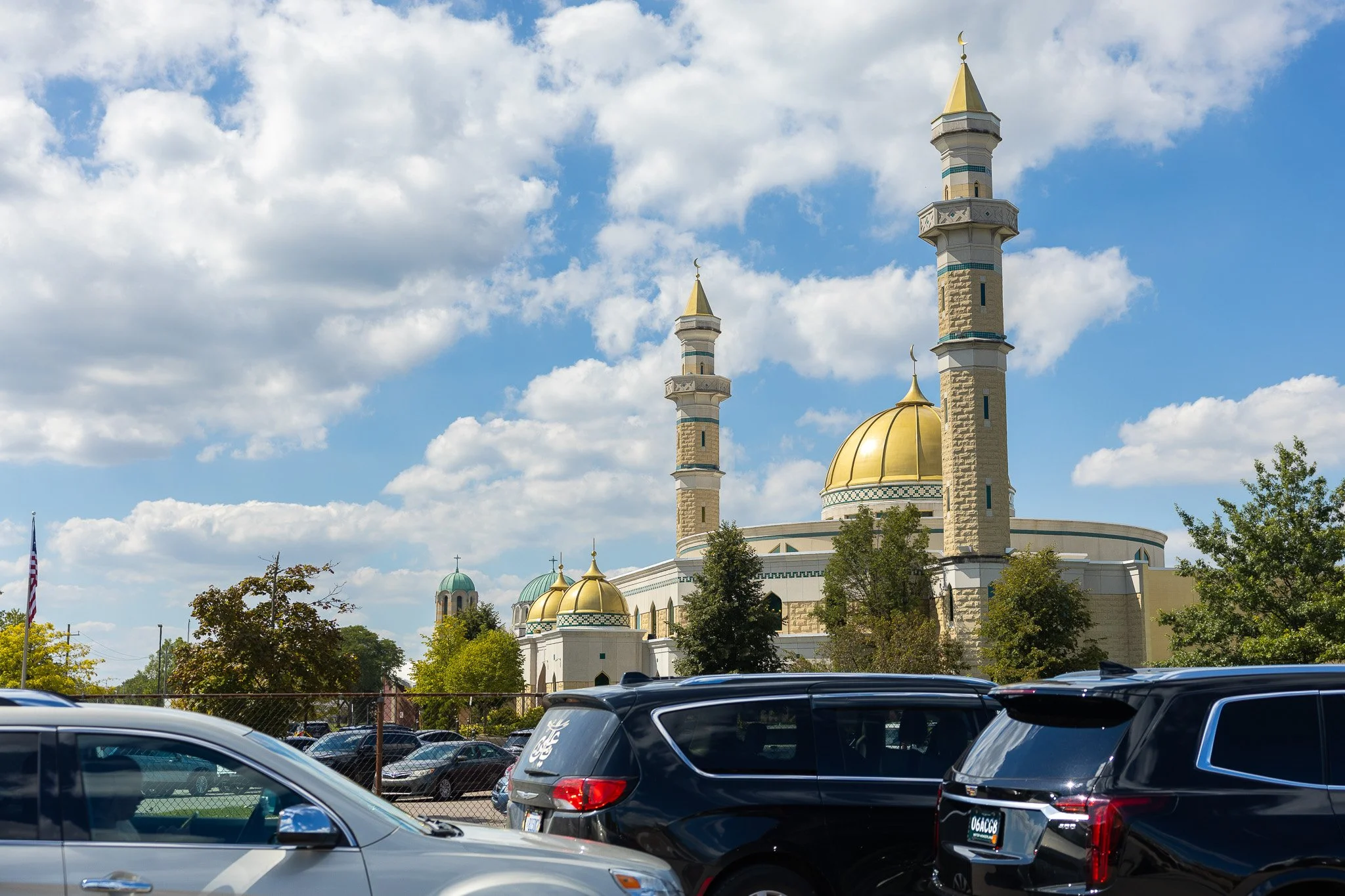
Muslim drivers leave a Dearborn, Michigan, mosque after a Friday prayer service. (Photo by Hannah Mitkus)
James Moore, a retired longtime minister and Christian school president, attends the Orange Avenue Church of Christ in Eustis, Florida, northwest of Orlando.
He’s among those worried about Islam’s growth in the U.S. and around the world.
“Most Muslims are gracious, hospitable, generous and work hard to provide and care for their families,” said Moore, director of the SonQuest Youth Conference and founder and board member of the EQUIP Conference, both in Orlando.
“However, people must be informed about ‘all of Islam’ in order to understand the teachings and practices of Islam and Sharia law,” he added. “Americans must become more informed about Islam.”
On the other hand, Sammie Berry, minister and elder of the Dallas West Church of Christ in Texas, said he’s not afraid of Muslims or Sharia law.
“Through my work on the Dallas Mayor’s Anti-Hate Advisory Council, I work alongside Muslim American citizens for the common good of everyone,” Berry said. “At the same time, my own faith remains central to who I am, and I will always share the message of Jesus Christ and his church.”
Anti-Muslim rhetoric
Here in Michigan, Democrat Abdul El-Sayed’s bid to become America’s first Muslim U.S. senator has emerged as a major part of the campaign’s storyline.
El-Sayed has said his faith instructs him to do good and seek justice. But his Republican opponent, Mike Rogers, has characterized El-Sayed’s identity as a hindrance and possibly even a danger to America. President Donald Trump has described Democratic candidates in the midterm elections as “jihadists.”
Across the nation, anti-Muslim rhetoric and debate over alleged attempts to enact Sharia law — Islam’s religious code based on the Quran — proliferate.
But Monte Cox, dean of the College of Bible and Ministry at Harding University in Searcy, Arkansas, pleads with fellow Christians not to buy into stereotypes about Muslims.
Muslims in America don’t want to impose Sharia law, said Cox, an elder of the Downtown Church of Christ in Searcy.
“That’s a boogeyman,” Cox said.
For over a quarter-century, the former missionary to Kenya has taken students in his world religions course to visit a variety of houses of worship — from mosques to synagogues to Sikh and Hindu temples.
Cox has developed close friendships with leaders of other faiths, including Nabil Bayakly, director of a Muslim student community center in Memphis, Tennessee.
Bayakly would love for Cox to recite the Shahada, the Islamic confession of faith, and become a Muslim, the Bible professor noted. Cox would love for Bayakly to declare that Jesus is the son of God, not just a prophet as Islam characterizes him.
But even though Cox said he doesn’t expect to baptize Bayakly in the Harding fountain anytime soon, the two maintain a cordial relationship.
“It’s not like we’re playing down the differences,” Cox said. “We know that about each other, but we can sit together as friends.”
Battles over mosques
In multiple cities across the nation — including McKinney, Texas, and Broken Arrow, Oklahoma — battles have erupted over the construction of new mosques.
Brad Cox, senior minister for the High Pointe Church of Christ in McKinney, north of Dallas, said people inside and outside the church seem to fall into three main camps.
“There are some that are angry and some that are fearful and some that just want to love whoever their neighbor is around them,” said Brad Cox, who is not related to Monte Cox. “And those that are angry are wanting to sign petitions and stuff … over allowing this mosque to be dropped in our backyard.
“There are a bunch that are fearful,” he added. “I would just say that it’s not just the Muslim community, but through the H-1B visa program and other things that are happening around us, just the demographics have changed very rapidly in the past decade.”
The H-1B visa program is a U.S. government initiative that lets American companies hire foreign workers in specialized fields that require a bachelor’s degree or higher.
“But the lion’s share of folks that I interact with,” Brad Cox said, “just want to love their neighbor and just want to share the Good News of Jesus with whoever they’re around.”
Tim Pyles serves as the preaching minister for the Broken Arrow Church of Christ, southeast of Tulsa.
“While I have not addressed the Islamic worship center controversy directly, I seek whenever I can to lovingly yet pointedly challenge us to broaden our thinking and open our hearts and attitudes toward our religious neighbors,” Pyles said, “while simultaneously challenging us to look inwardly at how well we as Christians are living out our convictions and modeling the love and Gospel of Jesus.”
Beyond stereotypes
Back in Michigan, Beason began work with the Parkside church in 2013 after earning bachelor’s and master’s degrees in ministry from Rochester Christian University, north of Detroit.
Raised in metro Detroit, he grew up hearing “all of the stereotypes and rumors about Dearborn, to the point that I didn’t know if it was safe to visit,” he recalled.
“I hate to admit this now,” added Beason, who later earned a Doctor of Ministry degree from Lipscomb University in Nashville, Tennessee.
He and his wife, Stephanie, lived in Dearborn for over a decade. The preacher found himself surprised at how normal Muslim families seemed once he got to know them.
He often took his son, Isaiah, now 4, to a neighborhood park where many Arab American children play.
“One of my favorite things that would happen at the park here is families, especially Arab Muslim families, would come have picnics,” Beason said. “Three moms with six kids maybe, and they’d just roll in and just load it up with the most delicious-smelling food. And almost without fail, they would just kind of call us over and insist that we try what they had.”
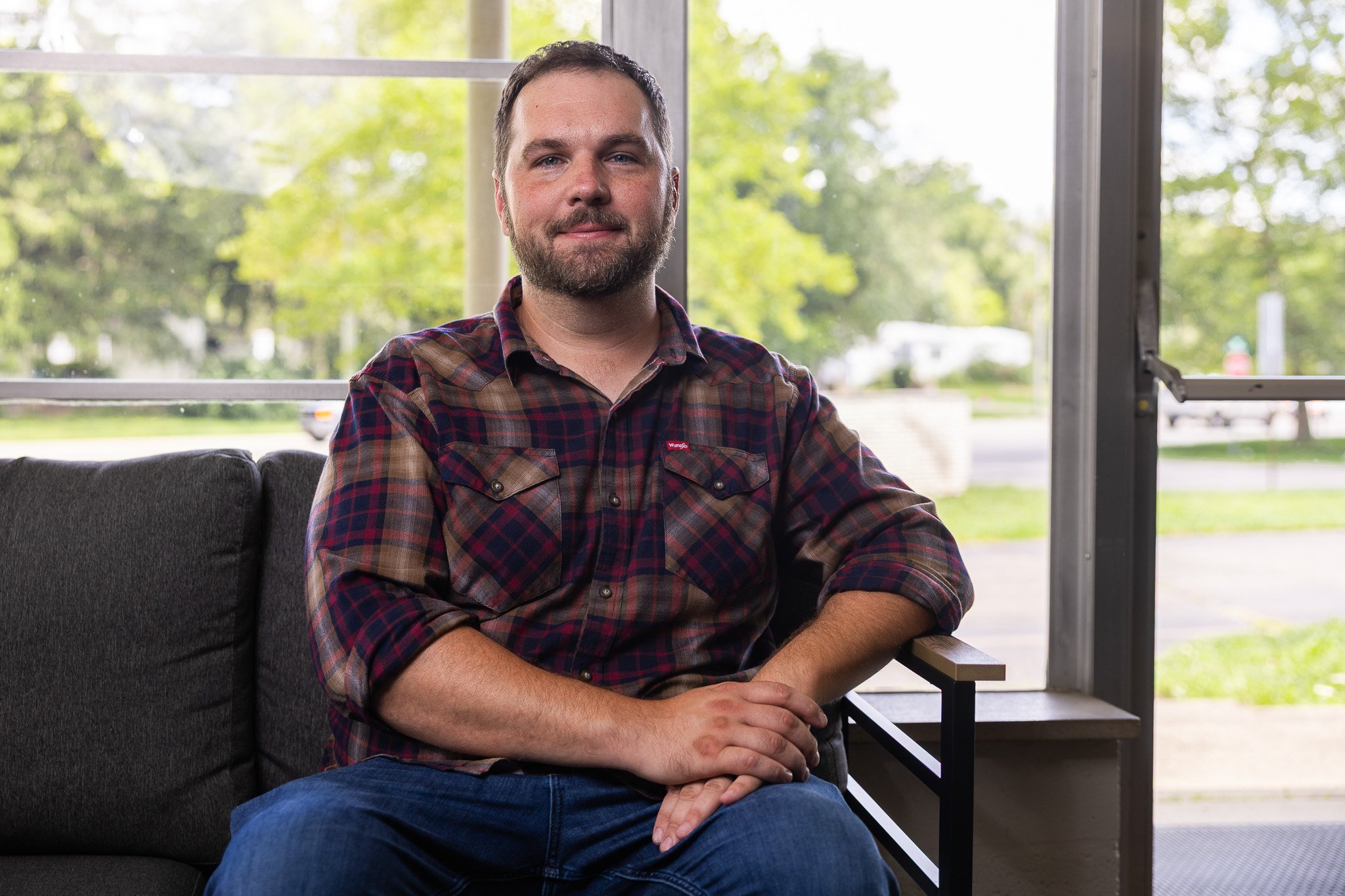
Wayne Beason preaches for the Parkside Church of Christ in Dearborn Heights, Michigan. (Photo by Hannah Mitkus)
Community resource
Decades ago, the Parkside church drew as many as 450 worshipers on a Sunday. Like many congregations nationwide, the church has shrunk in recent times — down to an average attendance of about 40.
Parkside leaders point to many members moving away or dying, along with lingering effects of the COVID-19 pandemic, as reasons for the decline.
Still, the church has facilities designed to accommodate hundreds.
To help connect with neighbors, Parkside decided to make its building available to the community.
For six years, that has meant housing a weekday preschool directed by Jennifer Danclovic, who is Catholic, and Nina Alaouieh, who is Muslim.
A 2024 Wall Street Journal opinion article referred to Dearborn as “America’s Jihad Capital” — but both Danclovic and Alaouieh brush aside such characterizations.
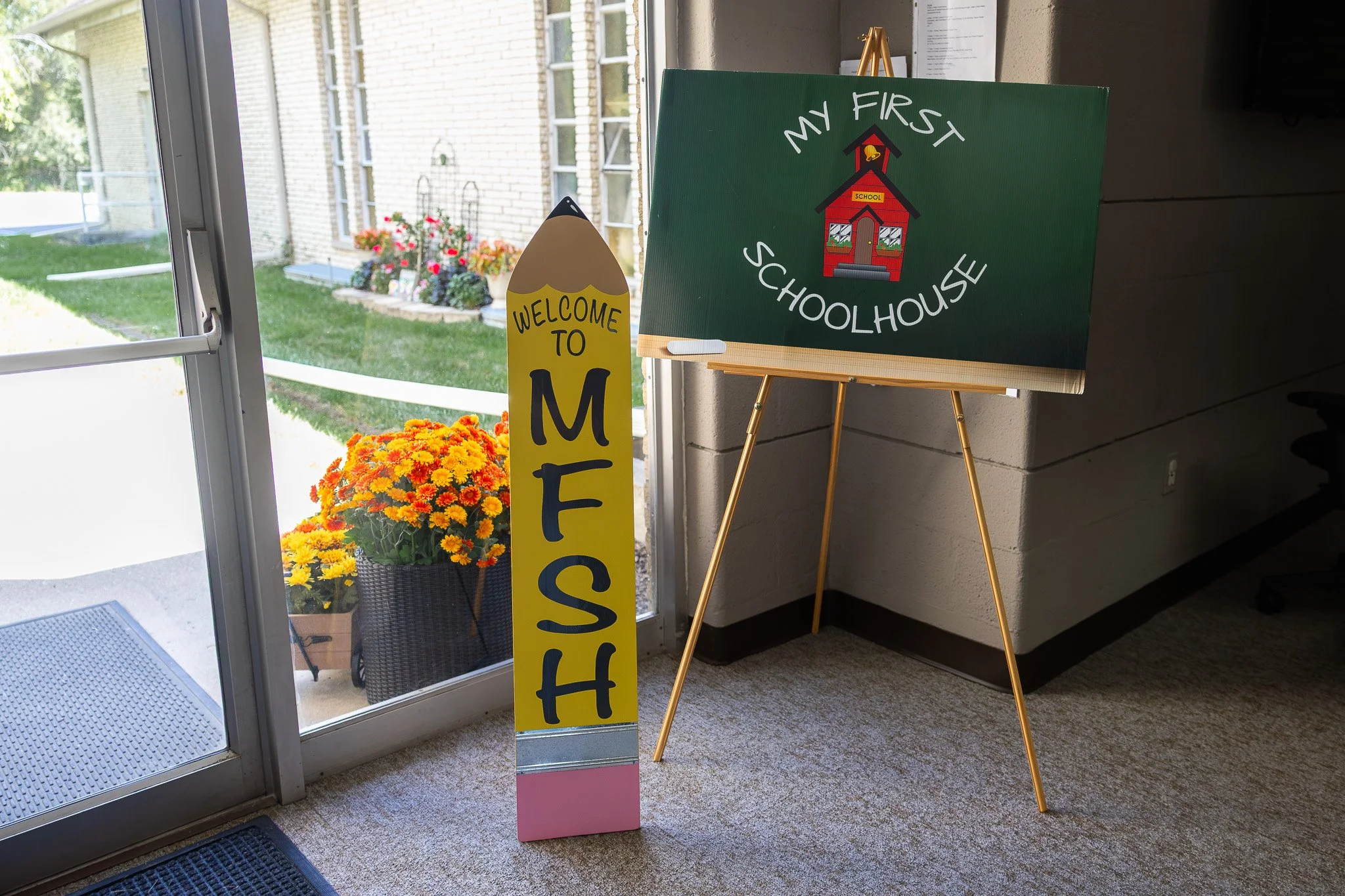
My First Schoolhouse, a preschool directed by a Muslim and a Catholic, uses the Parkside Church of Christ building. (Photo by Hannah Mitkus)
A lawsuit filed recently in federal court accuses the city of celebrating Muslim holidays, while ignoring Christian and Jewish observances. However, city leaders issued a statement saying Dearborn ““has a longstanding commitment to serving all residents fairly and equitably, regardless of faith or background.”
“What is said in the media and what people perceive outside of Dearborn is not at all what Dearborn is,” said Danclovic, a 52-year-old mother and grandmother. “Not even close.”
Alaouieh’s parents immigrated to the U.S. from Lebanon. Like a number of Arab Americans, her father came to Dearborn to work for Ford Motor Co.
“You need to kind of be here and kind of see the day in and day out of the community to really get the feel,” said Alaouieh, a 46-year-old mother. “Like, I just feel like everyone’s willing to help out everyone else. I feel like people are very generous in our community.”
The preschool serves about 65 children, most from Muslim families.
“This is a 4,400-square-foot room with 40-foot ceilings — like, it’s so beautiful,” Danclovic said of the church’s main auditorium, where five days a week, kid-sized tables and chairs replace the church’s cushioned seats.
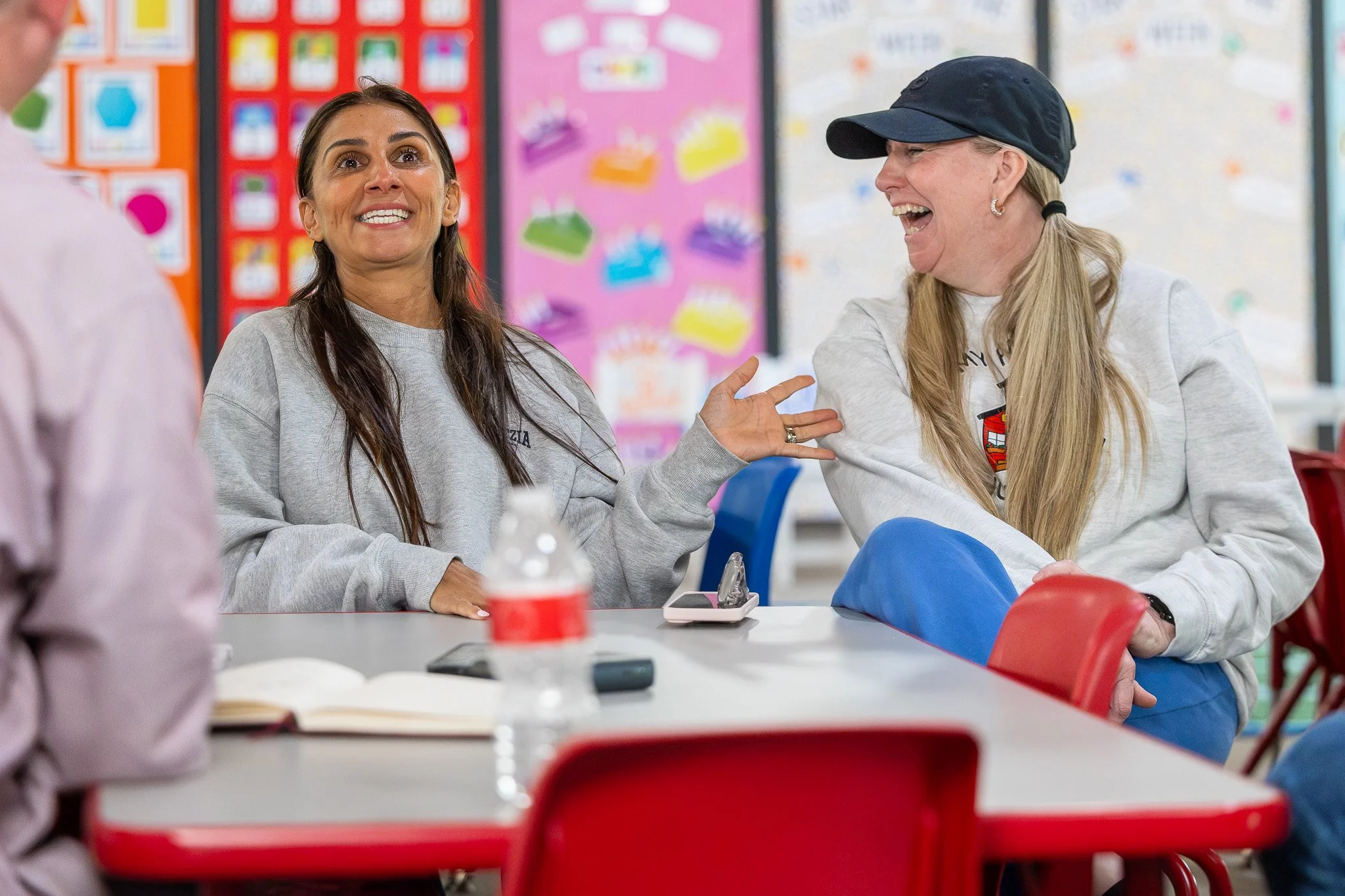
Preschool directors Nina Alaouieh, who is Muslim, and Jennifer Danclovic, who is Catholic, discuss their friendship and life in the Dearborn, Michigan, area. (Photo by Hannah Mitkus)
Beason runs the soundboard for the preschool’s graduation.
“Graduation is just incredibly sweet,” the minister said. “I tear up almost every time.”
Throughout the school year, Parkside makes sure to invite the children to special events such as the church’s block party and its Halloween trunk-or-treat event, the directors said.
“It’s extended to our students and their families, and they show up,” Alaouieh said.
Simple lessons
When asked to name the most important commandment, Jesus replied, “Love the Lord your God with all your heart and with all your soul and with all your mind and with all your strength.”
Then he added a second: “Love your neighbor as yourself.”
To 83-year-old elder Bob Jones, the Lord’s words provide a simple explanation for Parkside’s outreach efforts.
Interacting with Muslim neighbors has taught Jones — a Parkside member since its 1972 founding with the merger of the West Dearborn and Dearborn Valley congregations — a few simple lessons.
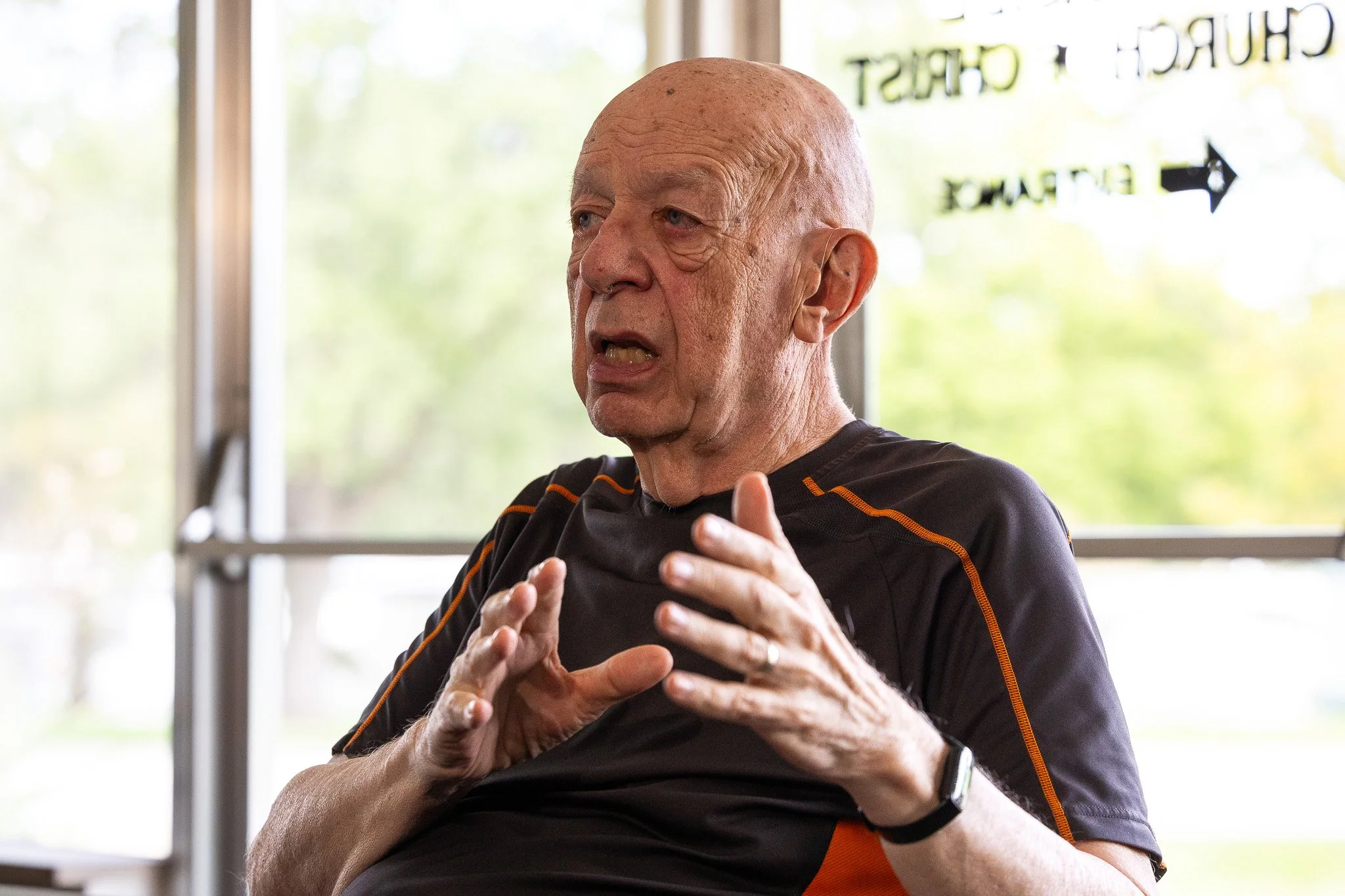
Bob Jones, an elder of the Parkside Church of Christ in Dearborn Heights, Michigan, talks about interacting with Muslim neighbors. (Photo by Hannah Mitkus)
“They’re people like you and I,” Jones said. “The men put their pants on the same way you and I do. We want the same things for our families and our kids. We want safety. We want somebody caring about us when we’re ill.”
As Beason sees it, even a gesture as small as inviting Muslims to the church’s block party can make all the difference in the world.
In his remarks after the anti-Islam rally, he put it this way:
“Sharing an afternoon and a halal cheeseburger, exchanging names and stories, watching our kids jump together in the bounce house, intentionally welcoming and being welcomed by our neighbors in all their diversity — to me, that all sounds a lot like the kingdom of God we’re longing for, the sort of neighborhood God desires for us to be.”
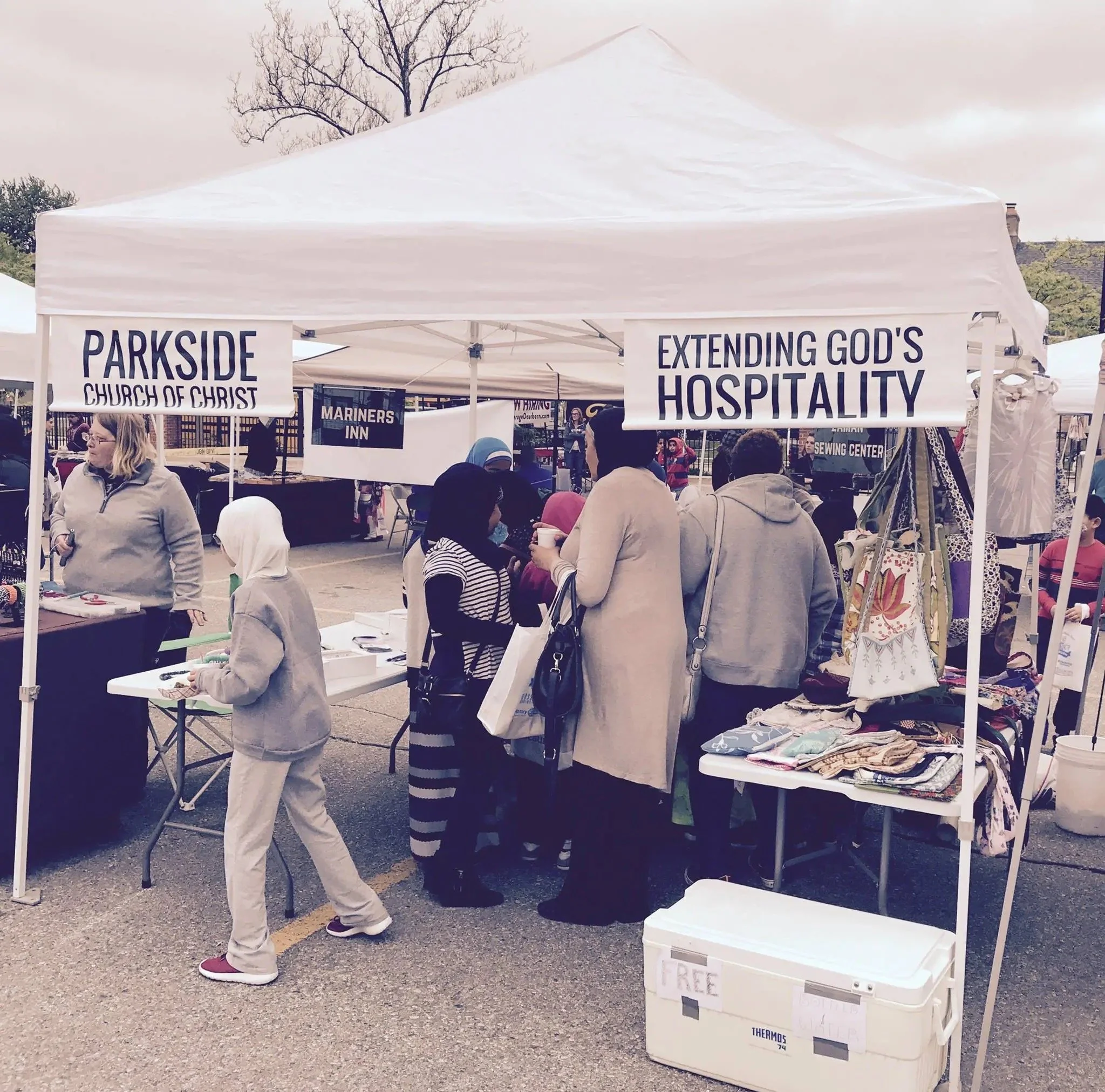
Muslim neighbors attend a block party organized by the Parkside Church of Christ in Dearborn Heights, Mich. (Photo provided by Wayne Beason)
Where does the Gospel fit into that approach?
Beason told The Christian Chronicle he longs for his Muslim neighbors to find life in Christ.
But he believes that will happen only when those neighbors receive the Good News “in the context of loving, long-term relationships of mutual hospitality.”
“This feels particularly relevant when it comes to our Muslim neighbors, who’ve encountered plenty of ‘Christian’ messages that undermine the Gospel of God’s loving welcome,” the minister said. “In our context especially, loving our neighbors is evangelism.”
This article was originally published in The Christian Chronicle.
Bobby Ross Jr. writes the Weekend Plug-in column for Religion Unplugged and serves as editor-in-chief of The Christian Chronicle. A former religion writer for The Associated Press and The Oklahoman, Ross has reported from all 50 states and 20 nations. He has covered religion since 1999.