
☪️ Inside America’s Ongoing War Of Words Over Muslims 🔌

Weekend Plug-in 🔌
Editor’s note: Every Friday, “Weekend Plug-in” meets readers at the intersection of faith and news. Click to join nearly 10,000 subscribers who get this column delivered straight to their inbox. Got feedback or ideas? Email Bobby Ross Jr.
DEARBORN, Mich. — On the 25th anniversary of 9/11 last month, I found myself in this Detroit suburb.
I came to work on a story related to America’s ongoing war of words over Muslims and their place in U.S. society.
While coincidental, the timing struck me as ironic.
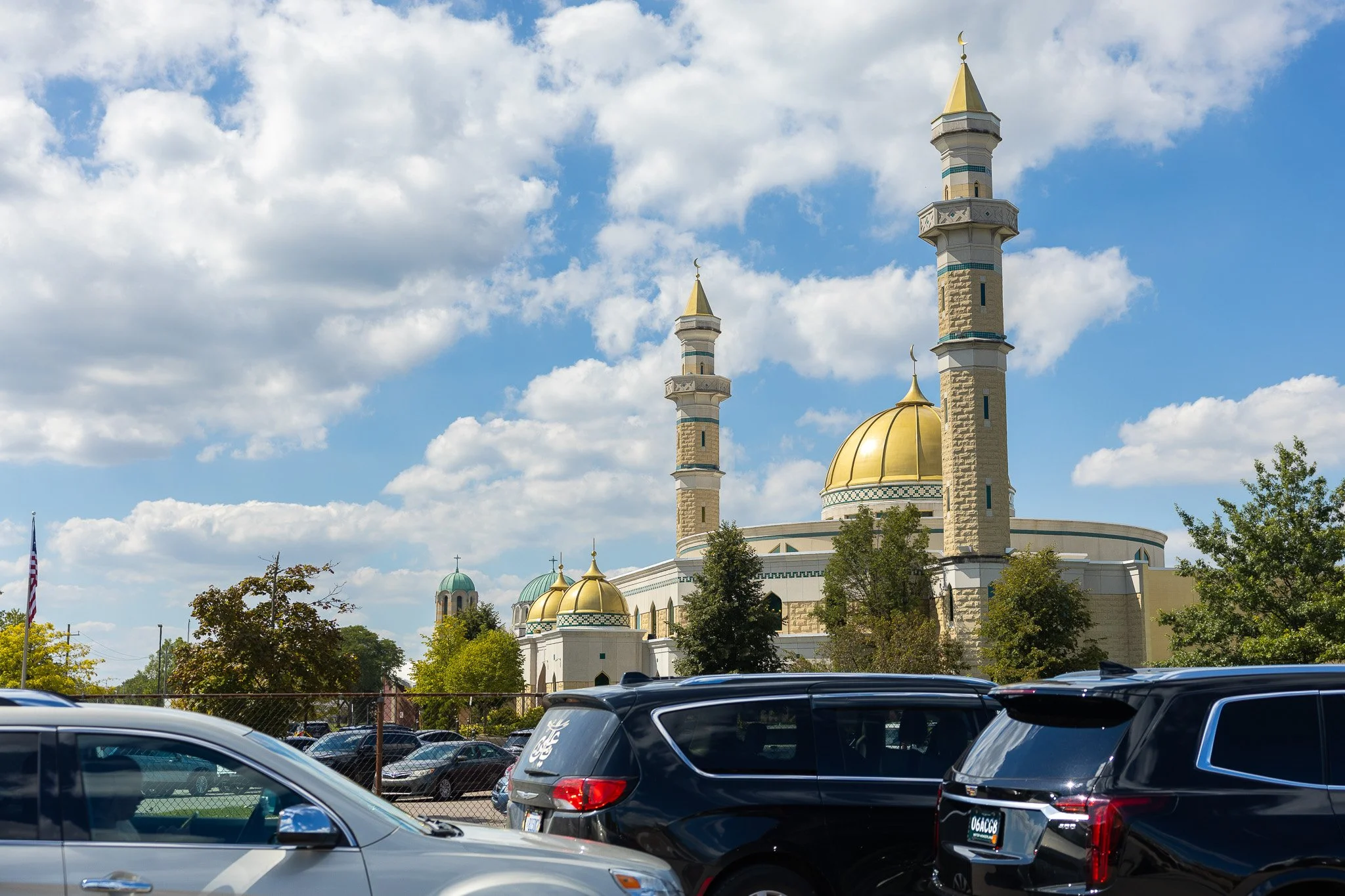
Muslim drivers leave a Dearborn, Michigan, mosque after a Friday prayer service. (Photo by Hannah Mitkus)
That’s because — on the day of the Sept. 11, 2001, terrorist attacks — I wrote a story for The Oklahoman, where I then served as religion editor, on Muslims’ fears of a backlash:
A distraught Muslim woman called the Islamic Society of Greater Oklahoma City on Tuesday morning as terrorist attacks rocked the nation.
“She’s completely terrified,” said Suhaib Webb, imam of the society’s mosque. “She’s a single woman. She’s like, ‘What if someone tries to kill me?’
“She’s worried that society is going to blame her for this killing.”
American Muslim groups rushed Tuesday to condemn the attacks on the World Trade Center and the Pentagon. They cautioned other Americans not to blame followers of Islam until investigators determine who was responsible.
As we all know now, the Islamic extremist group al-Qaida perpetrated 9/11.
But President George W. Bush refused to cast blame on all Muslims, calling Islam a religion of peace.
Since that time, though, public attitudes toward Muslims have grown even more negative — by some measures — than immediately after 9/11, as the Pew Research Center notes.
I explore that trend in my story from Dearborn, published today and focusing on how one Christian congregation embraces its Muslim neighbors:
DEARBORN, Mich. — An anti-Islam rally promoted as a “Christian Crusader March” drew hundreds of demonstrators and counterdemonstrators to this majority Arab American city of 110,000.
A few participants carried assault rifles as police in riot gear patrolled.
The Sunday after the recent protest, minister Wayne Beason felt compelled to speak up for his Muslim neighbors.
“There’s a lot of talk about Muslim Americans and Arab immigrants right now, and a lot of it is pretty hurtful and deceptive,” said Beason, who preaches for the Parkside Church of Christ in Dearborn Heights, a Detroit suburb that borders Dearborn.
Dearborn Heights’ population exceeds 60,000 — with about 2 in 5 residents of Middle Eastern or North African descent, most of them Arab.
Beason, a 39-year-old Michigan native, told his congregation he’d heard from out-of-state Christians concerned about the disturbing images on the news.
“I have a hunch,” he said, “that many of us are wondering what we can do, how we can respond to the fear and hatred that’s being directed at our neighbors by people claiming to follow the same Jesus we follow.”
I’d invite you to check out the full story.
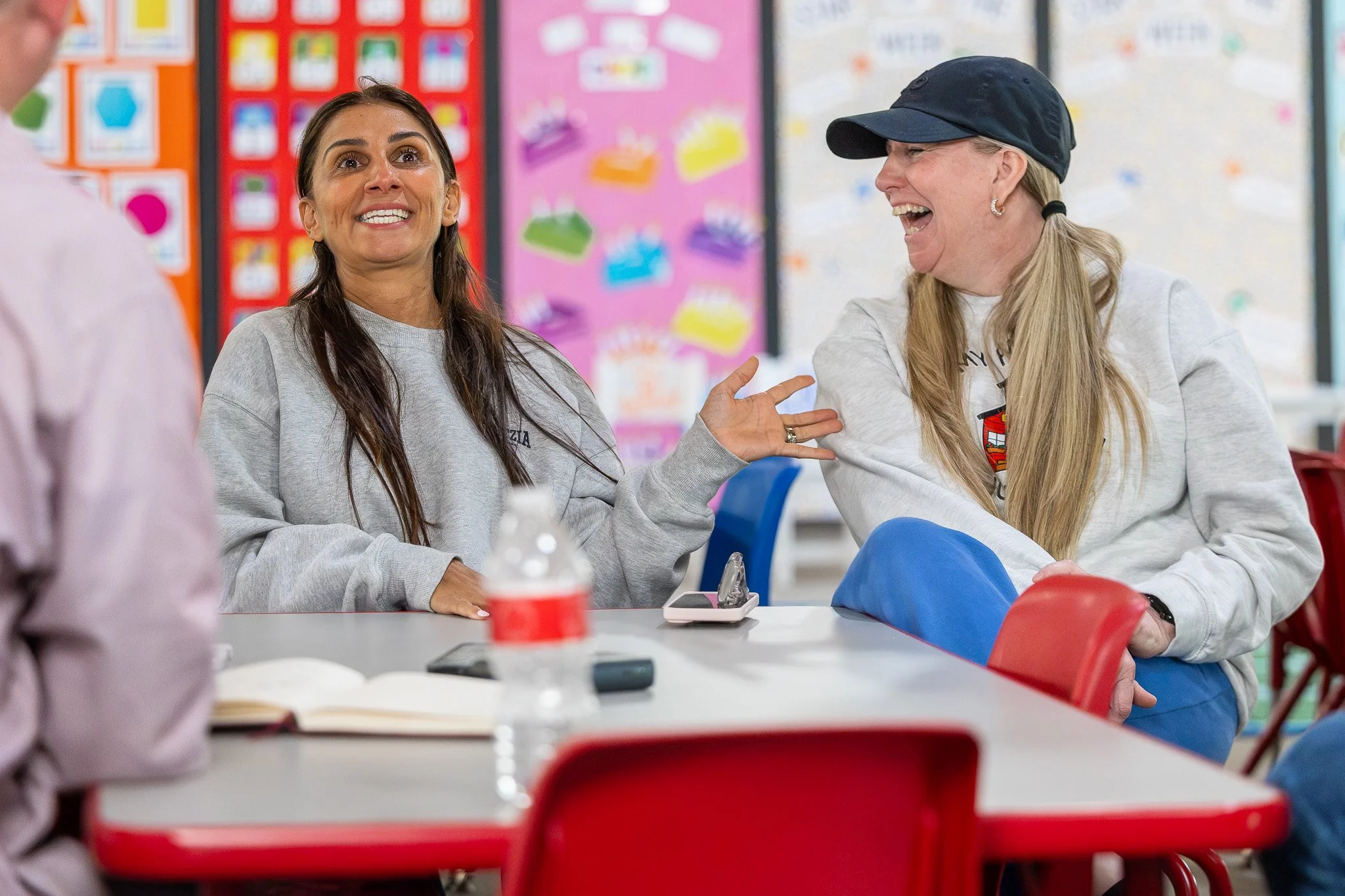
Preschool directors Nina Alaouieh, who is Muslim, and Jennifer Danclovic, who is Catholic, discuss their friendship and life in the Dearborn, Michigan, area. (Photo by Hannah Mitkus)
Besides my piece, delve deeper with these recent informative reads:
— Here at Religion Unplugged, Umar Ibrahim Agaie reports on “How American Muslims are responding to rising hate.”
— 25 years after 9/11, Besheer Mohamed, a senior researcher for the Pew Research Center, provides “a portrait of Muslim Americans.”
— The Associated Press’ David Crary details the pushback from Muslim Americans as “Republican politicians stoke anti-Sharia rhetoric.”
— The New York Times digs into what it characterizes as “Islamophobia’s rise in Texas.”
I will say that Islamophobia is a loaded word, in my opinion.
Merriam-Webster defines it an “irrational fear of, aversion to, or discrimination against Islam or people who practice Islam.”
My preference would be that journalists save “Islamophobia” for direct quotes by named sources and not take it upon themselves to characterize people or groups as Islamophobic.
My advice: Simply report what people or groups do or say — and let readers decide if that terminology fits.
Inside The Godbeat
Do any Christian billionaires happen to read this column?
If so, MinistryWatch’s Warren Cole Smith has a request: He’d like you to endow a journalism school.
“A Ph.D. program in journalism at a Christian college would help repair a major cultural breach,” Smith writes in a column republished by Religion Unplugged.
In a related note on LinkedIn, Phil Cooke of Cooke Media Group suggests: “Christian universities are dropping the ball on journalism. We don’t just need Christians going to Hollywood; we need them going to The New York Times and The Washington Post. I think Christian journalists could play a much greater role in shaping culture today than Christian film directors. And yet, Journalism programs at Christian schools are shrinking or disappearing…”
The Final Plug
I left a $20 tip at Waffle House over the weekend.
Partly for the extraordinary service and partly because my mom worked at Waffle House to help support our family while my dad finished his Bible degree in the early 1980s — and I remember how much a little extra meant.
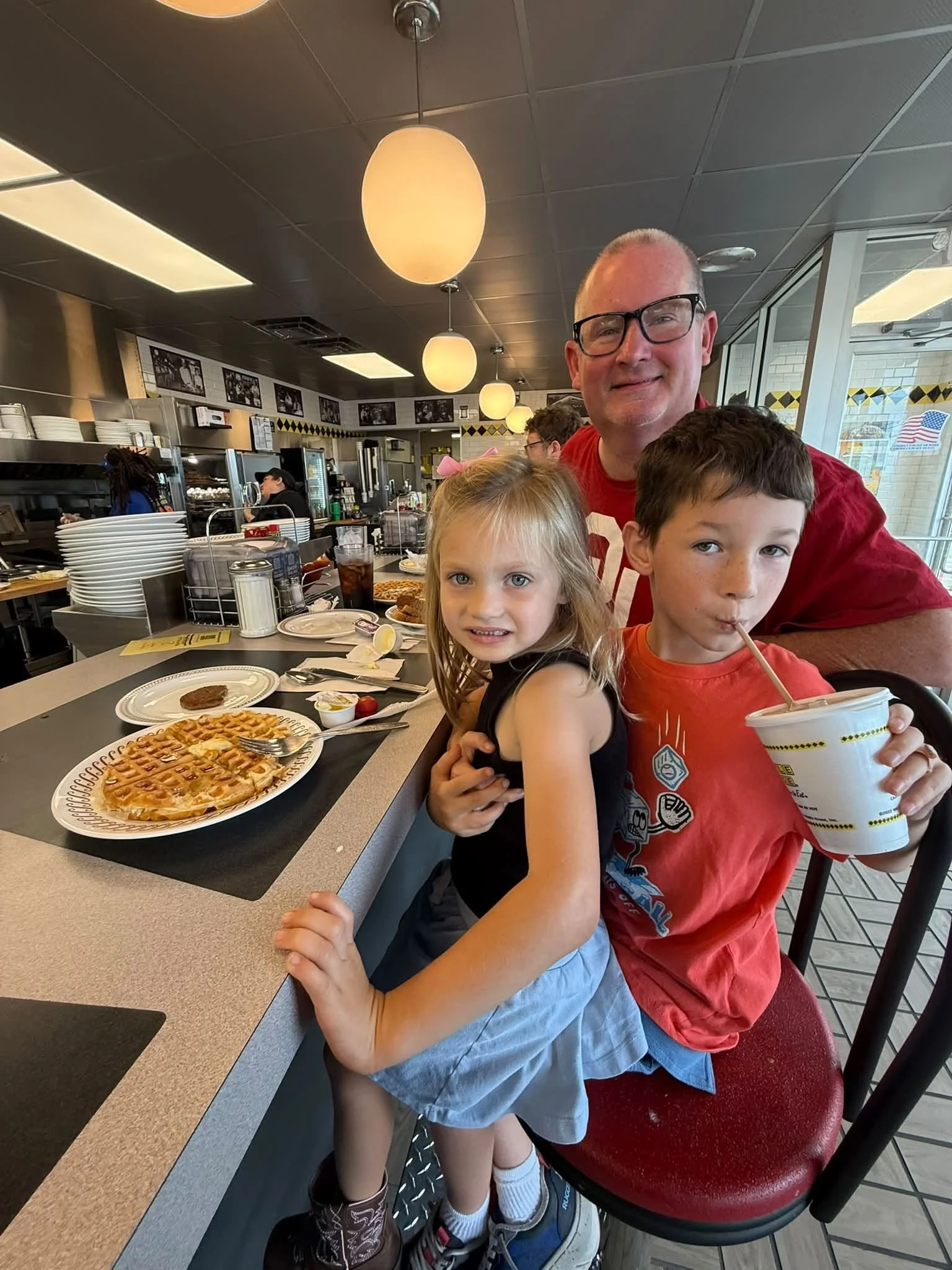
Bobby Ross Jr., enjoys a visit to Waffle House with his grandchildren, Norah and Bennett. (Photo by Tamie Ross)
Happy Friday, everyone! Enjoy the weekend.
Bobby Ross Jr. writes the Weekend Plug-in column for Religion Unplugged and serves as editor-in-chief of The Christian Chronicle. A former religion writer for The Associated Press and The Oklahoman, Ross has reported from all 50 states and 20 nations. He has covered religion since 1999.