
Orban’s Defeat Signals A Turning Point For Hungary: What You Need To Know
(ANALYSIS) In a big electoral upset, Hungarian voters ousted long-serving Prime Minister Viktor Orban after 16 years in power — rejecting the authoritarian policies and the right-wing movement he embodied in favor of a pro-European challenger.
Orban, in conceding defeat, told supporters: “The responsibility and opportunity to govern were not given to us” — but added that he was “not giving up. Never, never, never.”
It was a stunning defeat for Orbán — a close ally of President Donald Trump and Russian President Vladimir Putin — who quickly conceded defeat on Sunday after what he called a ″painful″ election result.
Election winner Peter Magyar, a former Orban loyalist who campaigned against corruption, has pledged to rebuild Hungary’s relationships with the European Union and NATO — ties that frayed under Orban.
Here’s what you need to know about the Hungarian election and the fallout.
What does Orban’s defeat mean for Hungary?
The electoral defeat by Viktor Orban is a decisive break after 16 years in power and a major turning point in Hungarian politics. The opposition victory led by Peter Magyar reflects voter frustration with corruption, economic stagnation and democratic backsliding.
The country’s new leadership, however, is expected to emphasize the restoration of institutional checks, improve relations with the European Union and pursue reforms. However, dismantling entrenched systems built under Orban could take years.
What does the electoral outcome mean for right-wing populism in the United States and the rest of Europe?
Orban had become one of the most prominent international symbols of right-wing populism, so his defeat is widely interpreted as a setback for that movement. His loss demonstrates that long-standing populist governments can be electorally defeated, particularly in Europe.
At the same time, some have cautioned that this is not a wholesale rejection of populism globally, but shows its limits under certain economic and political conditions. The implications for the United States are indirect, mainly removing a high-profile governing example often cited by populist leaders.
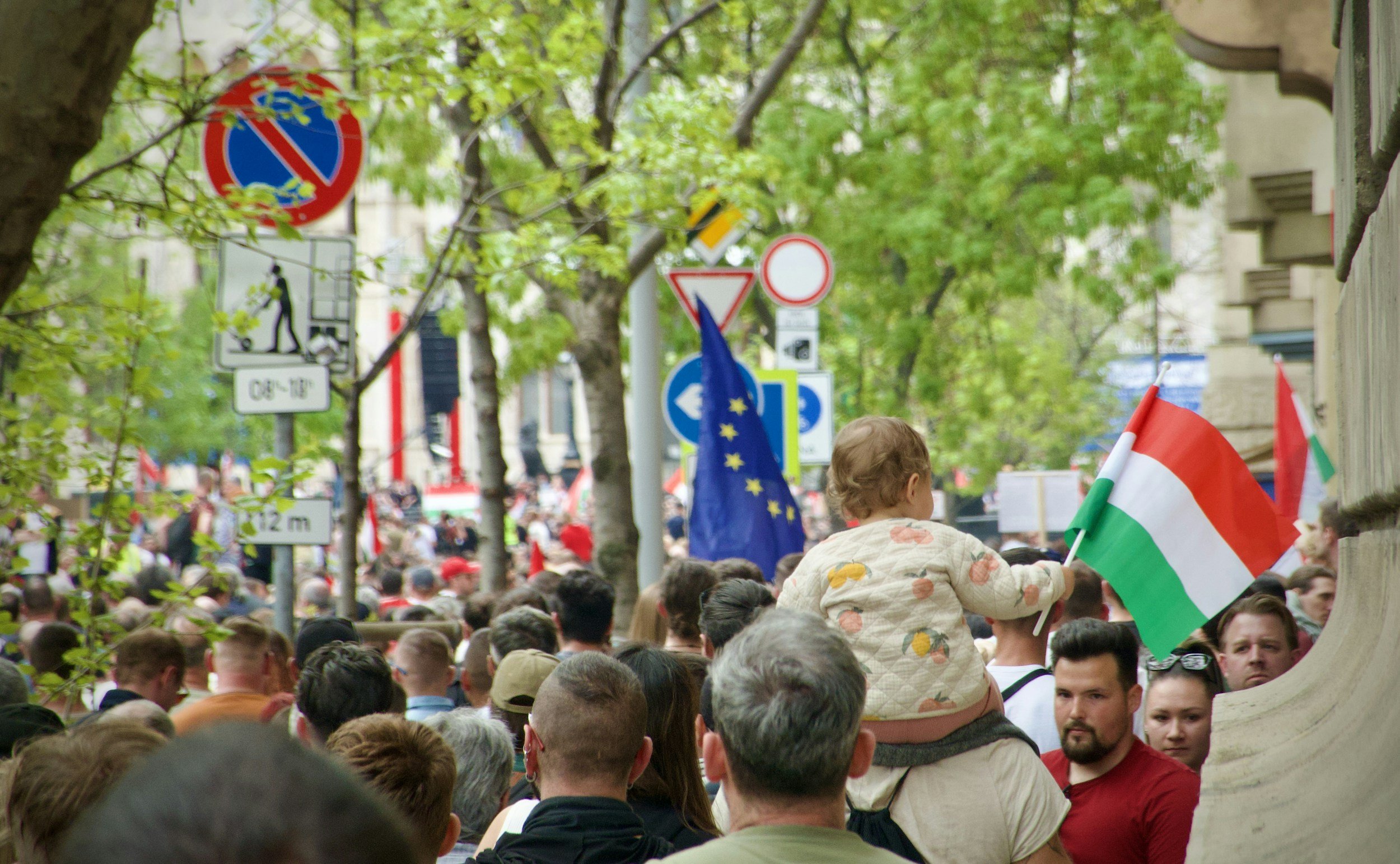
Hungarian voters — many of whom want to remain in the E.U. — hit the streets against Orban. (Unsplash photo)
What religious tradition does Orban belong to and how did that influence his politics?
Orban is associated with Hungary’s Reformed Calvinist tradition and frequently invoked Christianity in political terms. He has framed Hungary as a “Christian nation,” using that identity to justify restrictive immigration policies, opposition to multiculturalism and support for traditional families. It is a concept some have called Christian nationalism. Orban’s government also promoted what he called “illiberal Christian democracy,” blending religious identity with nationalist and conservative political goals.
What does Orban’s defeat mean for religious freedom in Hungary?
While definitive policy changes have not yet been enacted, Orban’s system favored certain Christian institutions and centralized influence over civil society. His defeat is therefore expected to open the possibility of a more neutral and pluralistic approach to religion.

A view of Hungary’s capitol Budapest. (Unsplash photo)
How did various religious groups vote in this most recent Hungarian election?
A detailed breakdowns of voting by religious affiliation has not yet been widely made public following Sunday’s vote. What is clear is that the opposition coalition attracted a broad cross-section of voters, including some who had previously supported Orban, while his base continued to include more conservative and religious constituencies. A majority of the country — about 50% — are Catholic.
Can Orban run again or is there someone else who will pick up the mantle?
Hungary does not impose term limits on prime ministers, so Orban can legally run again. He remains an influential figure within his Fidesz party and has not announced any retirement from politics. At the same time, his defeat raises questions about whether a new candidate can emerge in the future.
Clemente Lisi serves as executive editor at Religion Unplugged.