
Netflix’s ‘Stranger Things’ Turns Biblical Imagery Into Spiritual Warfare
(ANALYSIS) The hit Netflix series “Stranger Things” has consistently woven religious symbolism into its supernatural horror storytelling.
Nowhere is this more striking than in the way the villain Vecna functions as a dark, inverted reflection of Jesus — especially in the show’s fifth and final season.
This is essentially a show about spiritual warfare and good versus evil. The final episode that dropped on Dec. 31 — whether you enjoyed it or not — was essentially about those two subjects.
READ: Ranking The Top 10 Faith-Based Movies Of 2025
In fact, by casting Vecna as a warped messianic figure, the series highlighted a moral contrast: Salvation does not come from power that’s seized, but from community and the willingness to suffer for others.
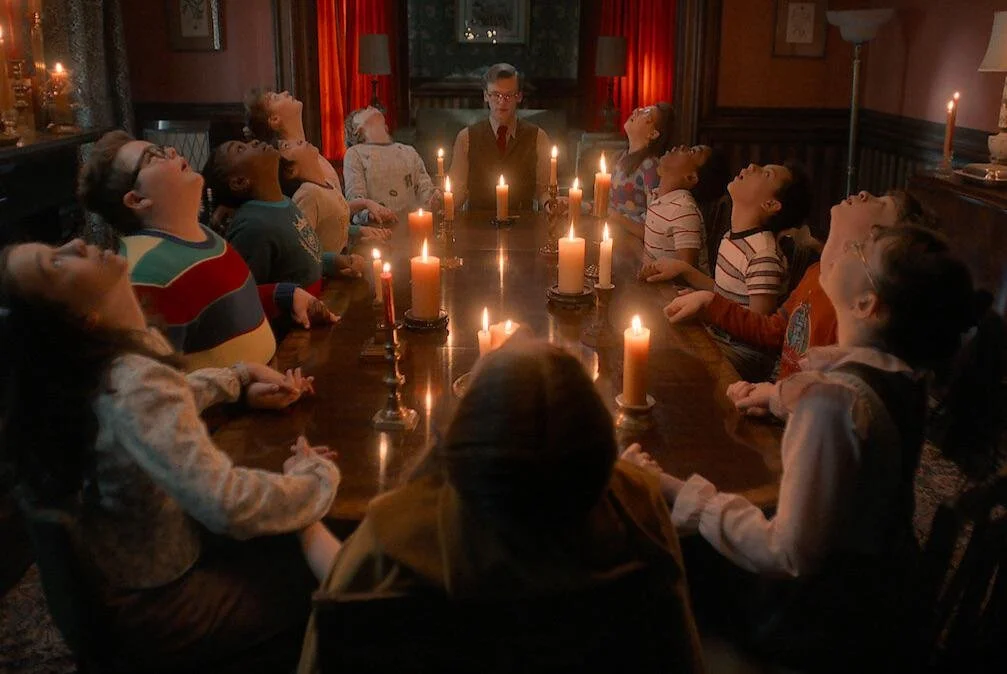
Twelve children were recruited by Vecna in the final season of “Stranger Things.” (Photo courtesy of Netflix)
Vecna’s ‘apostles’
Rather than presenting Vecna as a straightforward monster, the series frames him as an Antichrist figure — one who mimics the language and imagery of Christianity while turning its moral meaning upside down. Through Vecna, the series explored how salvation can be corrupted, setting him in direct opposition to Eleven’s traditionally Christ-like role.
At the core of this epic struggle is Vecna’s false message. Jesus represents love, redemption and the transformation of suffering into hope. Vecna, however, preaches a nihilistic philosophy that human morality is a lie, love is equal to weakness and that freedom comes through destruction. He has a chance at reedemption, but ultimately chooses evil instead.
He frames death not as tragedy, but as a release that gives his victims an escape from pain by erasing them altogether. Jesus, on the other hand, promises eternal life and the restoration of creation in the Gospels.
But Vecna promises peace through nothingness. In Season 5, this ideology positions him as a fallen angel or false prophet — someone who uses the structure of religious truth to deliver spiritual destruction.
He furthers this narrative by recruiting 12 followers in a twisted version of Jesus’ apostles, replete with a scene that resembles the last supper. Instead of disciples spreading a message of love, Vecna’s followers are traumatized children whose fear and pain he exploits. He does not heal them. On the contrary, Vecna consumes them. This inversion suggests that his power grows not through faith freely given, but through domination and manipulation.
Furthermore, the notion of betrayal — central to the story of Judas — also comes to fruition when one of Vecna’s victims (Holly) ultimately turns against him. She is a reverse Judas in this case.

Millie Bobby Brown plays Eleven in “Stranger Things.” (Photo courtesy of Netflix)
Eleven as Christ
Vecna’s origin story further deepens the religious symbolism. As Henry Creel, later known as One, he begins as a gifted but deeply alienated child who comes to see himself as superior to others.
When Eleven banishes him to the Upside Down, his transformation mirrors that of Satan as a fallen angel — someone cast out of heaven and reborn as a ruler of a corrupted realm. From this perspective, Eleven functions as a Christ-like figure in the moment of banishment, unknowingly creating the devil she will later have to fight.
Biblical imagery sprinkled throughout the series also appears in the use of crucifixion and resurrection motif. Even the way Vecna stands suspended in midair resembles a crucifixion scene.
In the finale, death does not get the final word (or does it in the case of Eleven?), undermining Vecna’s claim that annihilation is inevitable.
Clemente Lis serves as executive editor at Religion Unplugged.