
🇨🇺 Feeding Bodies And Souls: Faith Sustains Cuban Farmer During Time Of Crisis 🔌

Weekend Plug-in 🔌
LIMONAR, Cuba — It’s a tough time for Christian farmer Jorge Sánchez.
A U.S. blockade on oil shipments to this Caribbean island nation has exacerbated Cuba’s deepening humanitarian crisis.
“People are worried a lot about the stuff that they have to add to their crops, like insecticides, because they can’t find it,” Sánchez said, speaking through a Spanish-language translator.
But Sánchez relies on a special means of keeping the bugs away.
“I do pest control at night,” he said. “What I do is, I come and pray in my fields, and God takes care of all of that stuff.”
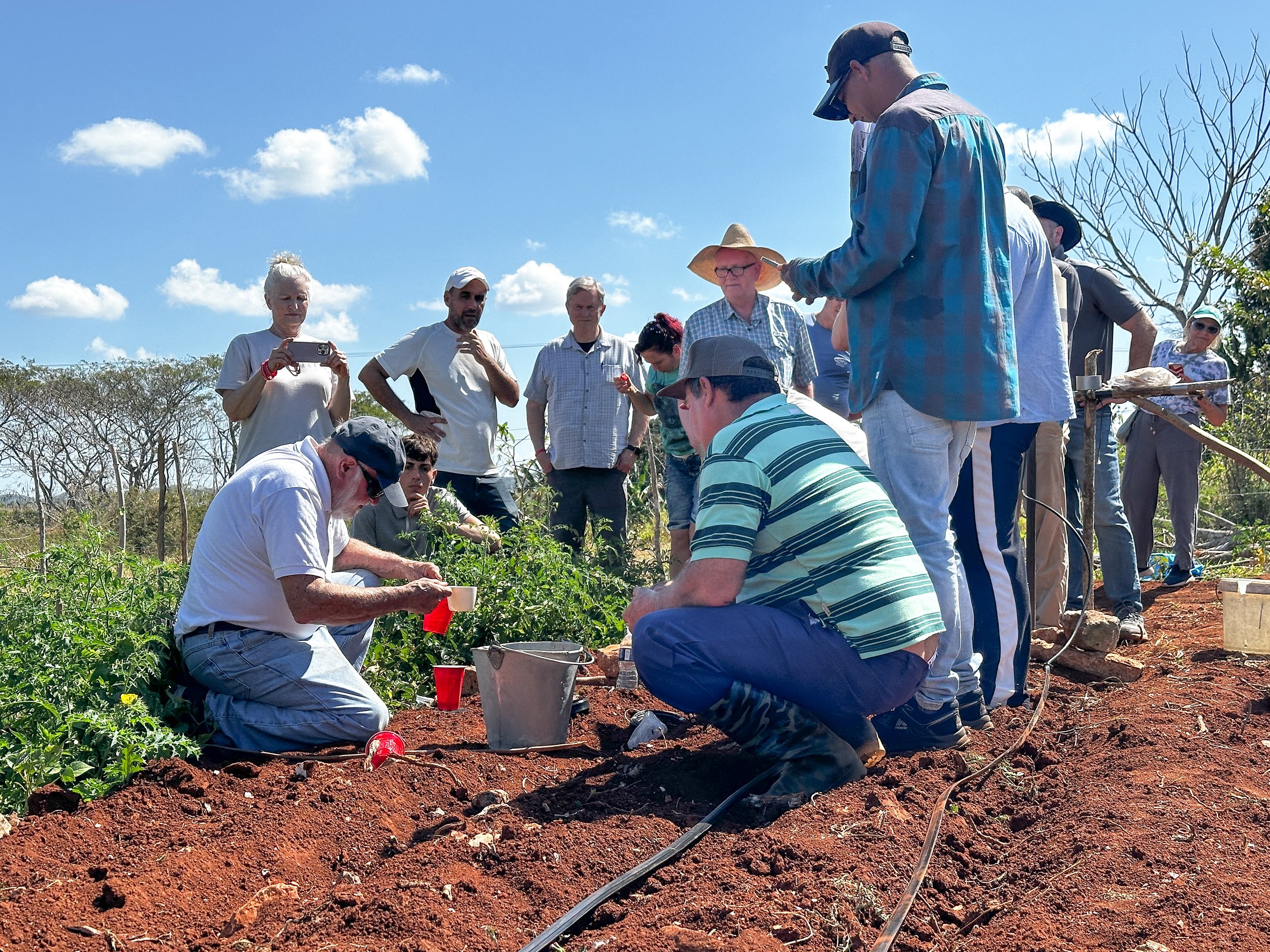
Bill Orange, at left in the white shirt, demonstrates drip irrigation techniques to a group including Jorge Sánchez, at right in the striped shirt. (Photo by Candice Pinzón)
Sánchez grows beans, onions, plantains, sweet potatoes, tomatoes and other vegetables at a church-operated farm about 20 miles south of the provincial capital of Matanzas in west-central Cuba.
The 17-year-old farm started small and grew after Tony Fernandez, longtime minister for the Versalles Church of Christ in Matanzas, baptized a rural couple.
The couple had lost two adult sons — one in a bicycle accident and another who died by suicide.
Jorge Sánchez, the couple’s third son, was “living a wild life of drinking and chasing women,” the minister recalled when I first visited the farm a few years ago.
But like his parents, Sánchez became a devoted Christian.
“No turning back, no turning back,” he sang gleefully in Spanish as he trekked through a field in 2023.
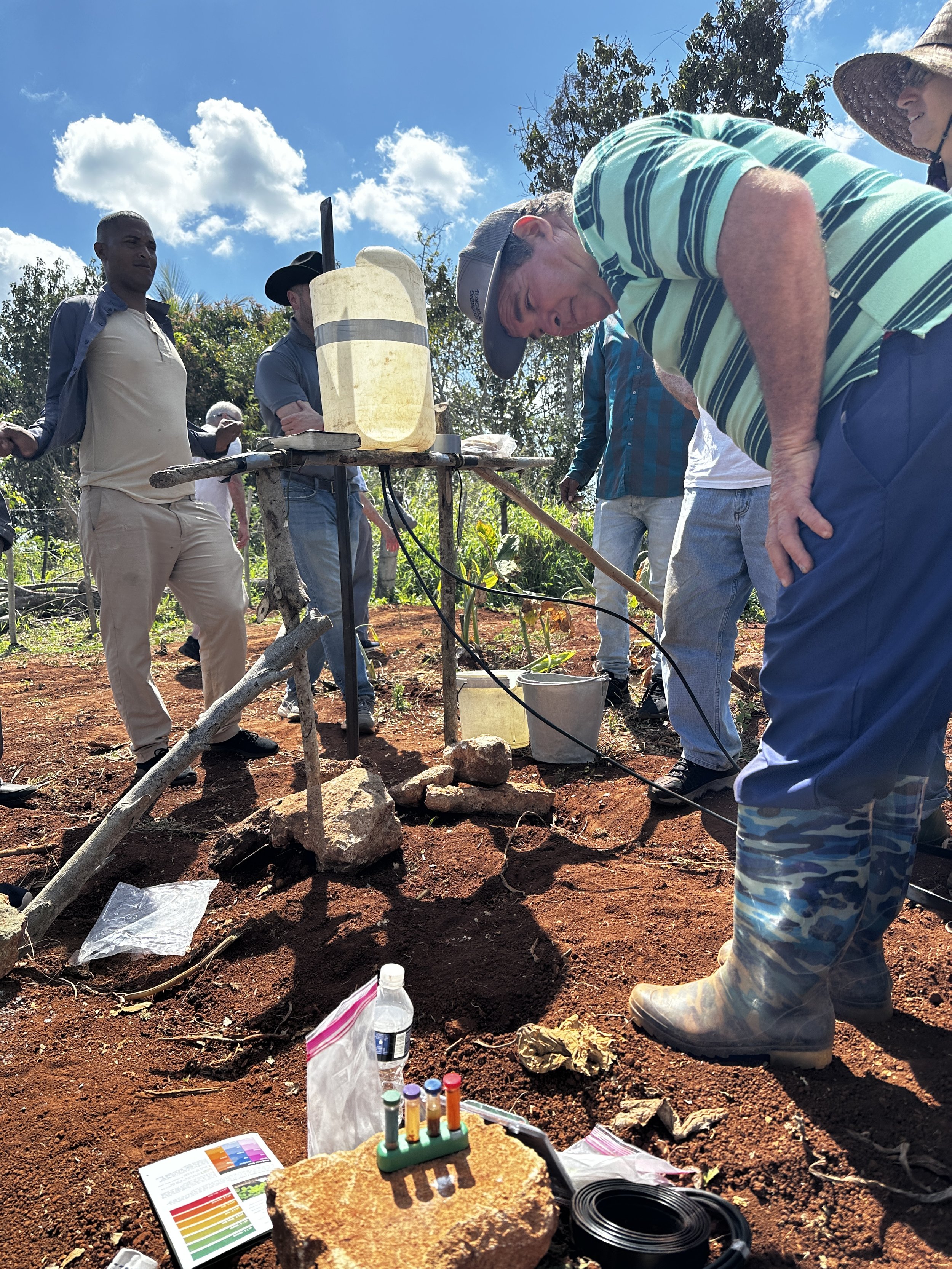
Jorge Sánchez learns drip irrigation techniques at his farm in Limonar, Cuba. (Photo by Candice Pinzón)
The farm produces crops to feed church members as well as orphans and elderly people in the community.
“I want to be able to provide a balanced meal to the people,” Sánchez said of his diverse range of produce. “I don’t want a whole lot of one thing. I want different things.”
I returned to the farm this past weekend with a U.S. mission group that came to support and encourage Christians in Cuba. Two global ministries — Herald of Truth and One Kingdom — organized the trip.
Bill Orange, an elder of the Pegram Church of Christ, southwest of Nashville, Tennessee, demonstrated a concept known as Farming God’s Way.
“This type of farming might work for some of you,” Orange, a former missionary to Liberia and Fiji, said as he taught drip irrigation techniques.
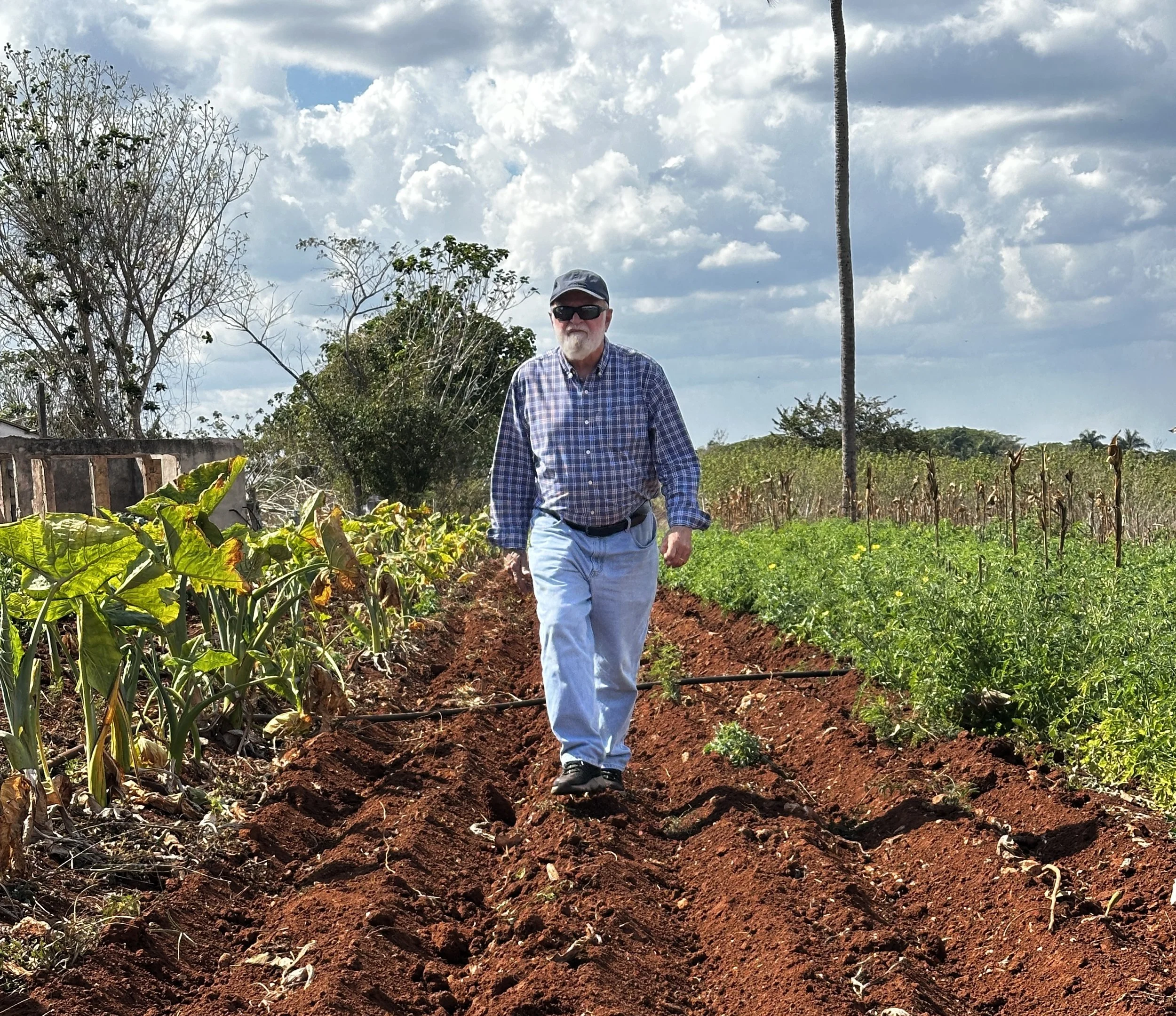
Bill Orange explores the church-owned farm in Limonar, Cuba, about 20 miles south of the provincial capital of Matanzas. (Photo by Bobby Ross Jr.)
Drip irrigation uses buckets and hoses to deliver a tiny but constant “drip” of water to plants. It’s designed to produce maximum crop yields with minimal water usage and is especially helpful in drought conditions.
Orange emphasized that he could learn a lot about farming from Sánchez but said drip irrigation might be helpful in certain situations.
Sánchez welcomed the advice.
“He taught me a very easy way to use the water,” Sánchez told me. “I know how to plant, but this is so helpful for the watering.
“I’m a very simple man,” the farmer added. “I don’t like technology. It just stresses me out. And this is so simple.”
Fernandez said he hopes Orange can return to Cuba soon — perhaps before the three-month rainy season begins in May — to provide additional instruction.
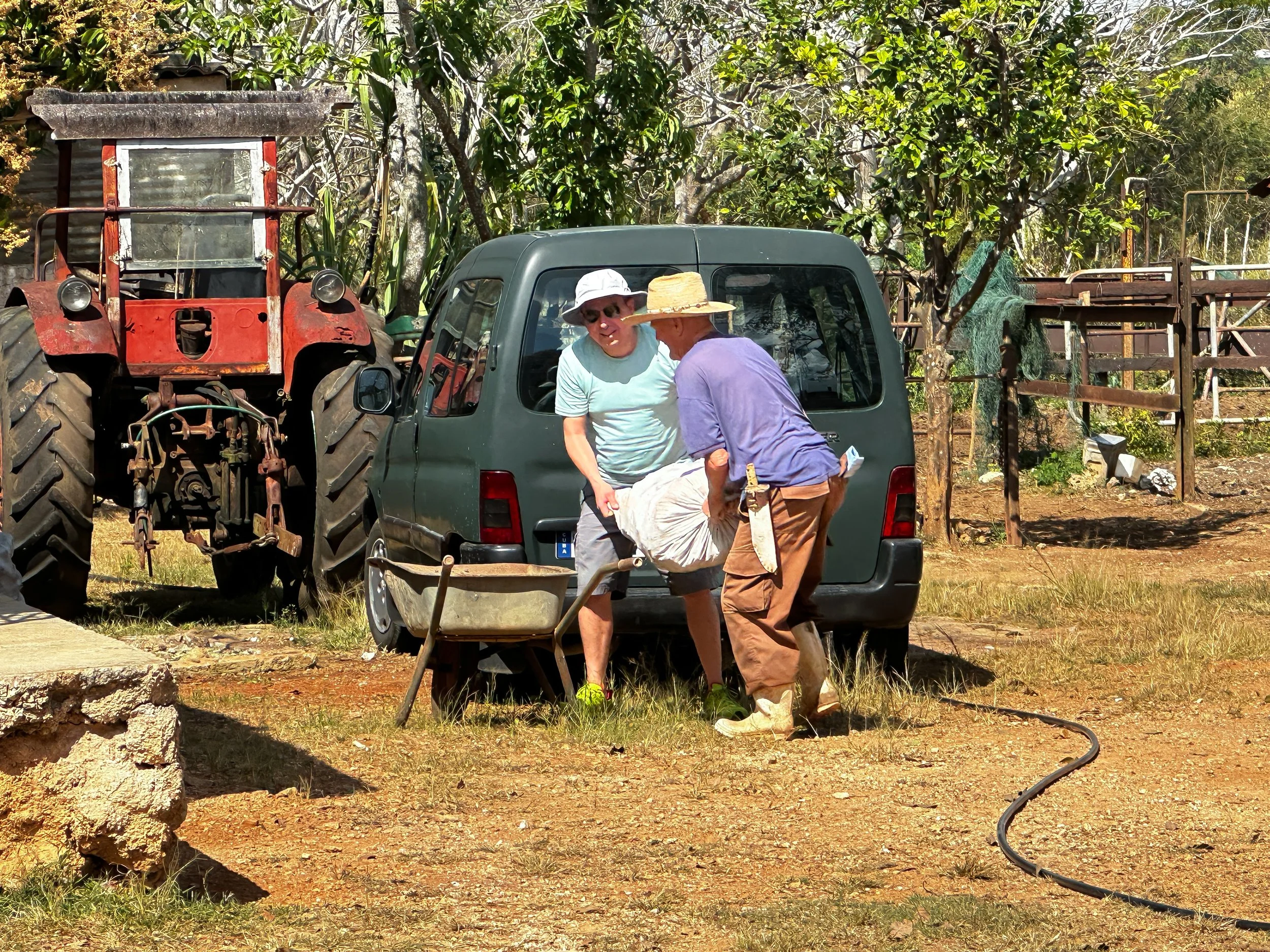
A scene at the church-operated farm Jorge Sánchez manages in Limonar, Cuba. (Photo by Candice Pinzón)
“Because of the shortage of food, we’ve really been working on helping people start growing food at their own homes,” Fernandez said.
With the lack of fuel, “it’s getting harder to bring the food in from the farm,” the minister added. “This — being able to grow crops with much less water — is really important.”
Orange, who traveled to Cuba with Marilyn, his wife of 55 years, said he’s eager to come back.
“I tell people all around the world that I have mud in my blood,” Orange said. “You can’t get it out. I was raised on a farm.”
In that respect, Orange and Sánchez are kindred spirits.
“I was born in the fields,” Sánchez said.
For his part, Sánchez keeps praying that God will provide a solution for Cuba’s fuel scarcity.
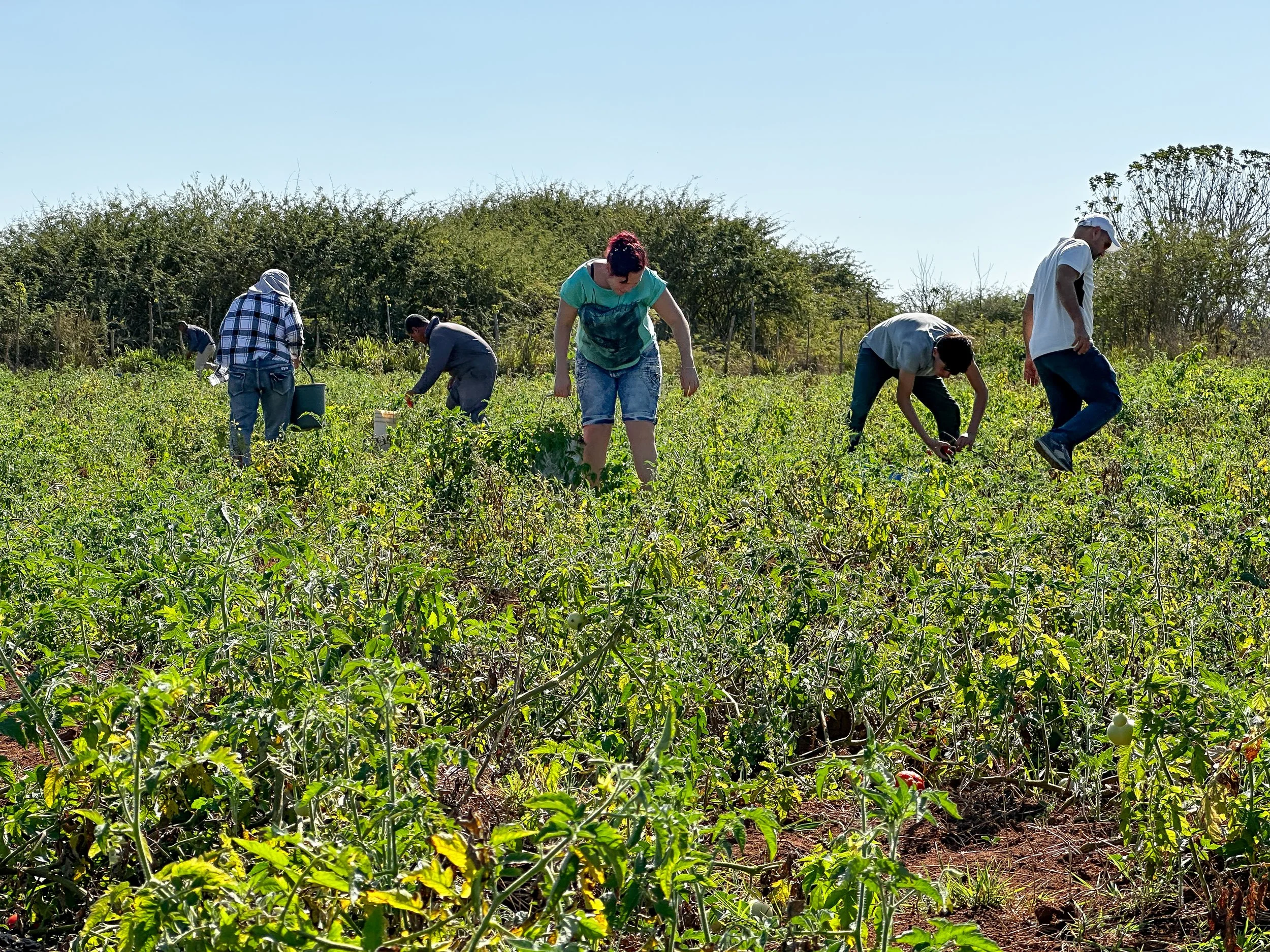
Church members help tend to the farm that Jorge Sánchez manages. (Photo by Candice Pinzón)
“You can see for yourself that we have a bunch of stuff that should have already been picked,” he said. “But if we pick it and just leave it there because we don’t have the fuel to take it to the city, then it’s just going to go to waste.”
But he remains undeterred.
“I have always learned to deal with difficult things like the dry season and lack of stuff, so it doesn’t really affect me,” he said. “Nevertheless, seeing the stuff there and knowing that people need it, it’s difficult to deal with. But I know that God is going to find a way.”
Sánchez lifted his pointing finger toward the sky.
And he smiled with confidence.
“If this fuel problem is not going to get fixed,” he said, “then I know that God is going to send us an electric car fueled by solar power, and that’s going to be our solution.”
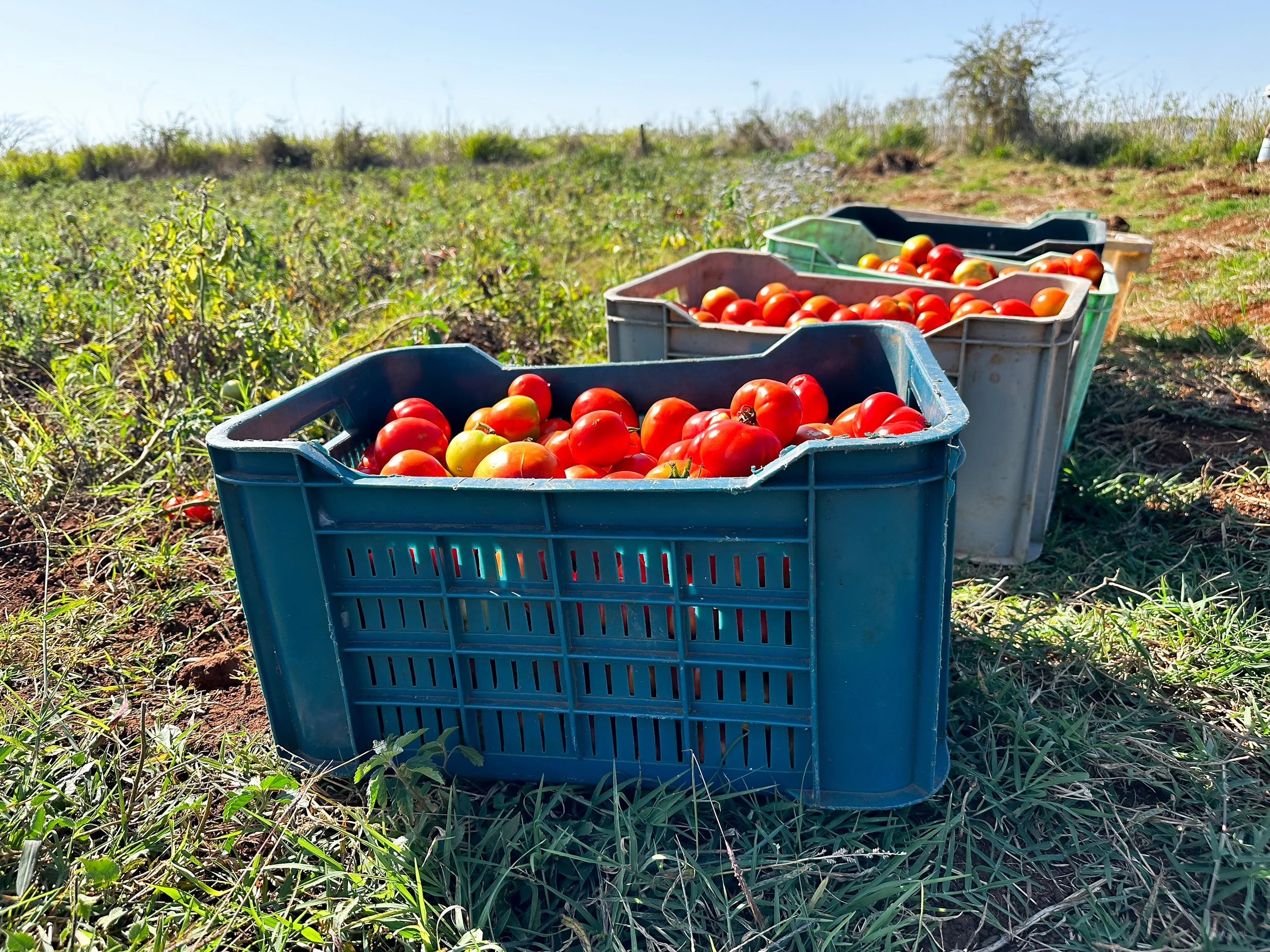
Cuba’s fuel shortage has complicated efforts to take produce from the rural farm to the city. (Photo by Candice Pinzón)
Inside The Godbeat
I had limited access to Wi-Fi or cellular technology while in Cuba. But with a brief online connection Saturday, I learned about the U.S.-Israeli attack on Iran.
Here at Religion Unplugged, Clemente Lisi reports on:
• Why the Sunni-Shi’a Muslim divide matters in the war against Iran.
• A Malta multi-faith leadership summit where women urged new conversations on Iran’s future.
• Three possible outcomes as the airstrikes take aim at Iran’s theocracy.
In a related piece, Cassidy Grom asks: What now for Iran’s religious minorities?
The Final Plug
Despite the crisis in Cuba, Christians traveled from all over the island — by boat, bus, train and even a cargo truck — to attend a national discipleship gathering.
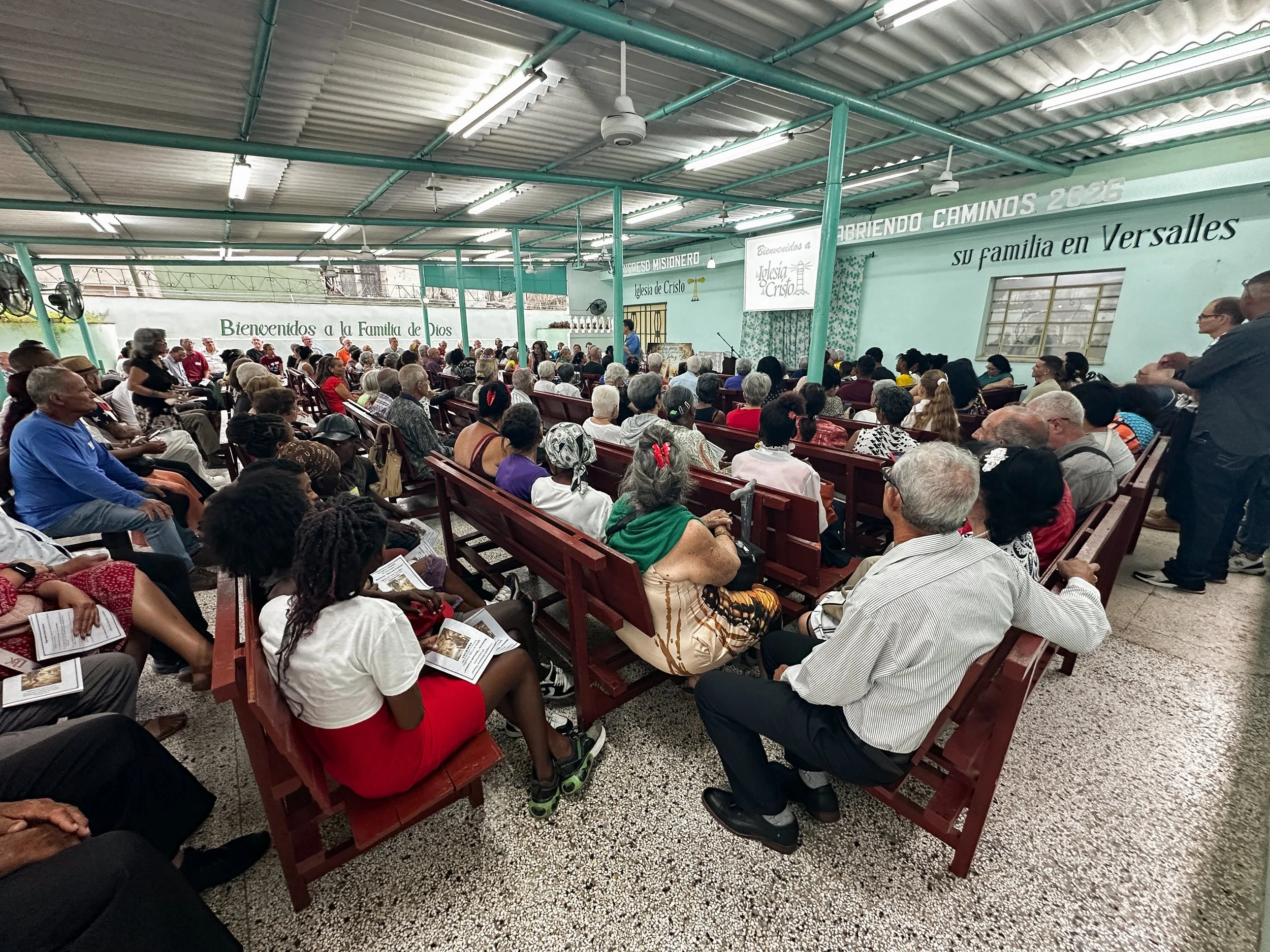
Christians worship at a national discipleship gathering in Matanzas, Cuba. (Photo by Candice Pinzón)
I interviewed a number of the attendees and reported on their compelling journeys. In a separate column, I delved into whether this is a bad time — or a perfect one — for Americans to visit Cuba.
Happy Friday, everyone! Enjoy the weekend.
Bobby Ross Jr. writes the Weekend Plug-in column for Religion Unplugged and serves as editor-in-chief of The Christian Chronicle. A former religion writer for The Associated Press and The Oklahoman, Ross has reported from all 50 states and 20 nations. He has covered religion since 1999.