
🗞️ My 35 Years In Full-Time Journalism: What’s Changed And What Hasn’t 🔌

Weekend Plug-in 🔌
Editor’s note: Every Friday, “Weekend Plug-in” meets readers at the intersection of faith and news. Click to join nearly 10,000 subscribers who get this column delivered straight to their inbox. Got feedback or ideas? Email Bobby Ross Jr.
STILLWATER, Okla. — In August 1990, the first President Bush occupied the White House, Iraq invaded Kuwait, and a gallon of gasoline cost $1.19.
I was a 22-year-old aspiring journalist, a new graduate of Oklahoma Christian University and newly married to my beautiful bride, Tamie.
After a few months of searching for a job, I finally found an editor, the late Lawrence Gibbs, willing to take a chance on me.
For my interview, I drove my light blue 1978 Volkswagen Beetle — with a stick shift — 60 miles up U.S. Highway 177 to the Stillwater News Press office.

A Volkwagen Beetle similar to the one that Bobby Ross Jr. drove early in his newspaper career. (Shutterstock photo)
Gibbs talked to me a bit about the small daily newspaper, which has roots dating back to 1892 in the home city of Oklahoma State University. Then he asked me to take a test of sorts.
“Write your own obituary,” he said, “as if you had died in a car crash on the way here.”
Well, OK.
I guess I passed because Gibbs hired me — at $225 a week. That amounted to $6 an hour. I officially worked 7.5 hours a day, clocking out for 30 minutes at lunchtime.
Tamie and I lived temporarily with her parents east of Oklahoma City. I commuted back and forth to Stillwater — a 120-mile daily round trip — for a few months. Then a community newspaper group a little closer to home offered me a position with a slightly higher salary. That allowed my wife and me to rent our own apartment.
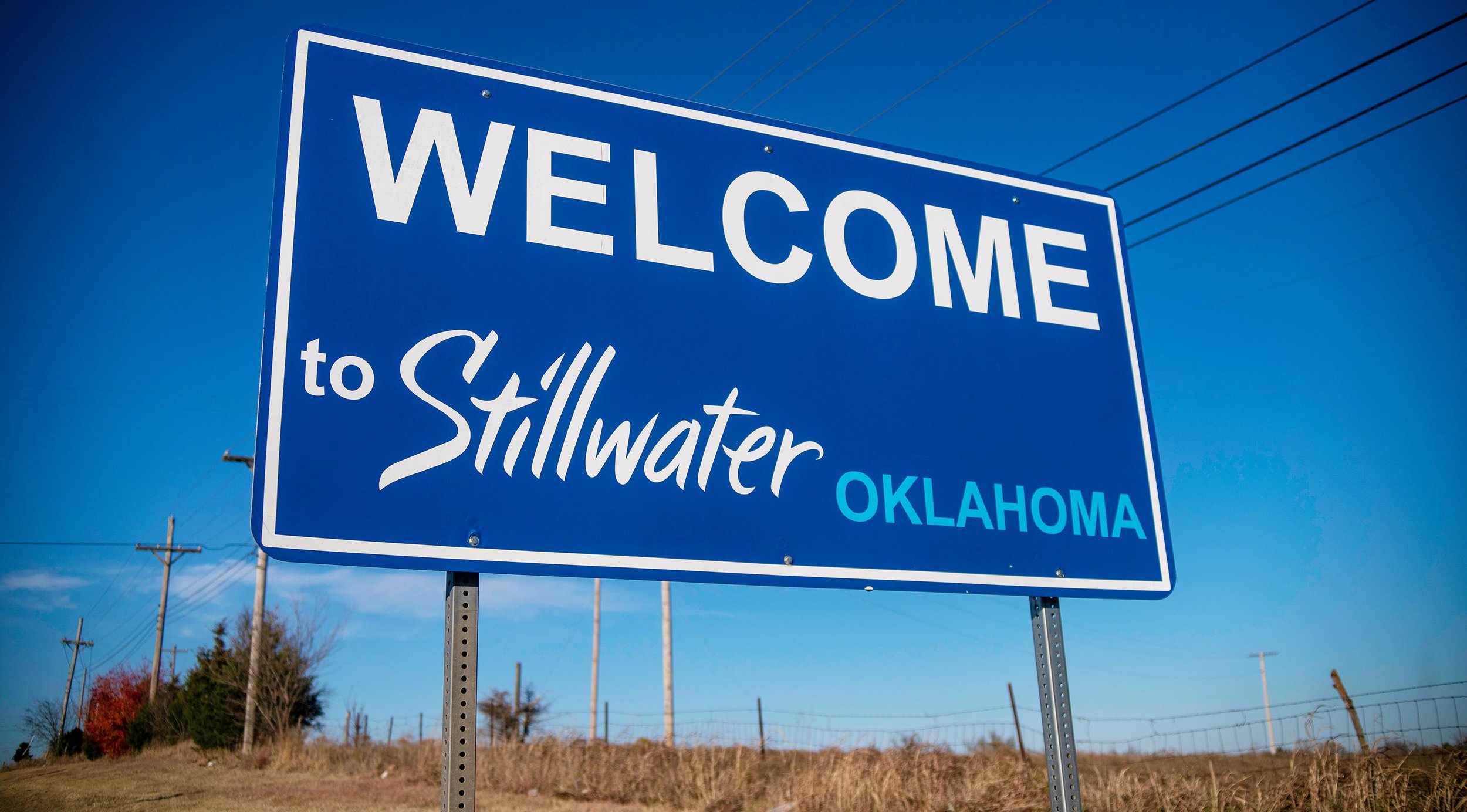
Bobby Ross Jr.’s first full-time newspaper job took him to Stillwater, Oklahoma. (Shutterstock photo)
My career eventually took me to The Oklahoman and The Associated Press before I joined The Christian Chronicle. I’ve written previously about how my time on the religion beat began in 1999.
I recall little about what I wrote in my brief stint with the Stillwater News Press. I know I covered business news, including the recovery effort after a major tornado that spring. I think I have a clip book (this was the era before electronic archives) hidden in a box somewhere in my garage, but I couldn’t find it in a quick search.
I do know this: I’m forever grateful for the opportunity Gibbs gave me. That gig marked the start of my 35 years — and counting — of uninterrupted work in full-time journalism.
Looking back, that era of bulky computers, fax machines and hard-copy dictionaries, atlases and library reference books seems like a lifetime ago — for my profession and me.
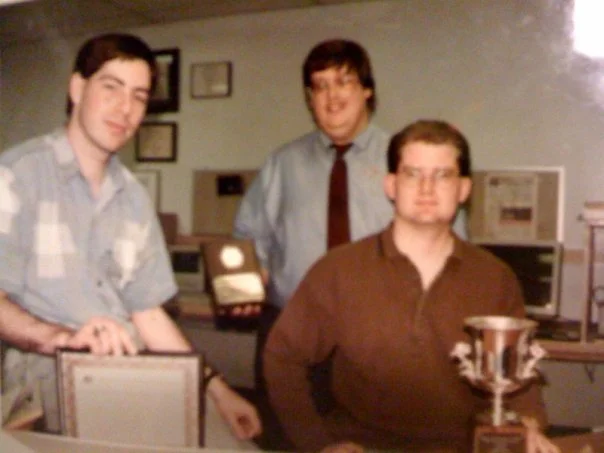
Bobby Ross Jr., right, with friends and fellow journalists Murray Evans, left, and Steve Lackmeyer, center, celebrates winning a reporting award in 1993. (Photo provided by Bobby Ross Jr.)
So much has changed, and I’m not just talking about the invention of the internet, sleek laptops, smartphones and sites such as Facebook, Instagram and X.
But not everything is different.
Yes, the technologies and formats have evolved. I don’t just write for a print publication anymore. I post on social media and publish a variety of articles online. I write a weekly column (I hope you’re enjoying it!) for an email newsletter and a web-only religion magazine.
However, the basic concept of finding and telling stories that resonate with readers (or listeners or viewers, depending on the medium) has survived.
The world still needs devoted journalists (sorry, AI!) to make this happen.
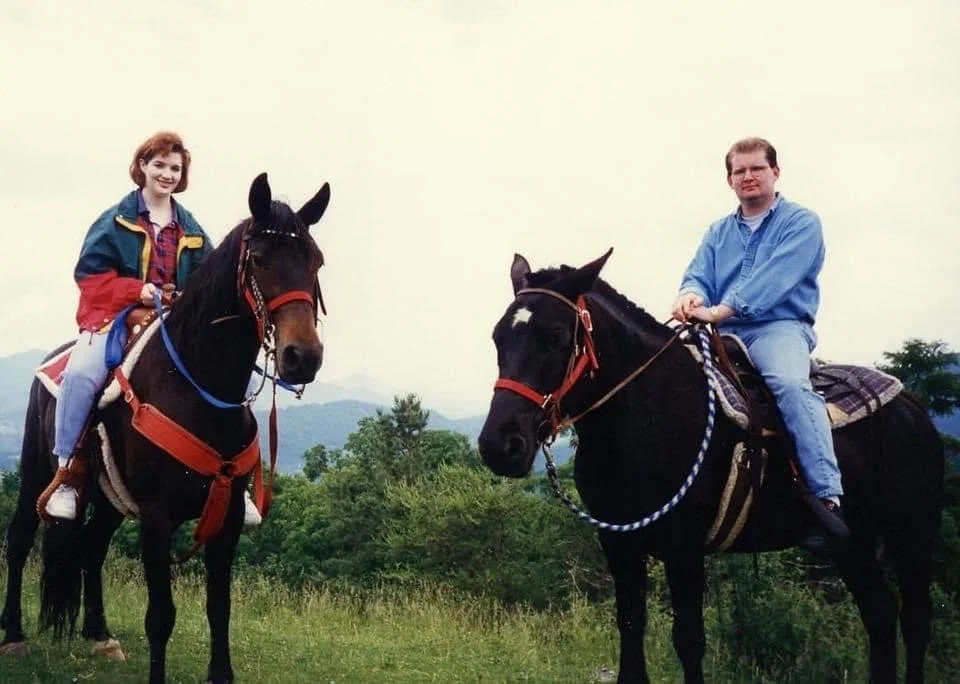
Bobby Ross Jr., right, and his wife, Tamie, enjoy a vacation to the North Carolina mountains in 1996. (Photo provided by Bobby Ross Jr.)
For all the high-tech advances, the basic process of reporting the news remains pretty simple (even if I am oversimplifying exactly how difficult it always has been).
At its most elementary level, developing a story requires a journalist to sit down with a source — or talk to someone on the phone or via a videoconference — and gather facts and information.
It helps if the inquirer can connect on a human level and gain the trust of the person answering the questions.
For some odd reason, I think of Julia Roberts’ character in the 1999 romantic comedy “Notting Hill” telling Hugh Grant, “I’m also just a girl, standing in front of a boy, asking him to love her.”
The journalistic equivalent of that interaction might be, “I’m just a reporter, standing in front of a source, asking her to open up to me.” (Yes, this may be the corniest thing I’ve ever written in a column.)
In the old days, journalists scribbled notes in skinny reporter pads and tried to make sense of their own handwriting.
These days, unlimited digital audio space allows the recording of most every interview. Programs such as Otter.ai can even transcribe the conversations in real time. (Insert the obligatory warning from your journalism professor and/or editor about newspeople still needing to take meticulous notes for those cases when technology fails them).
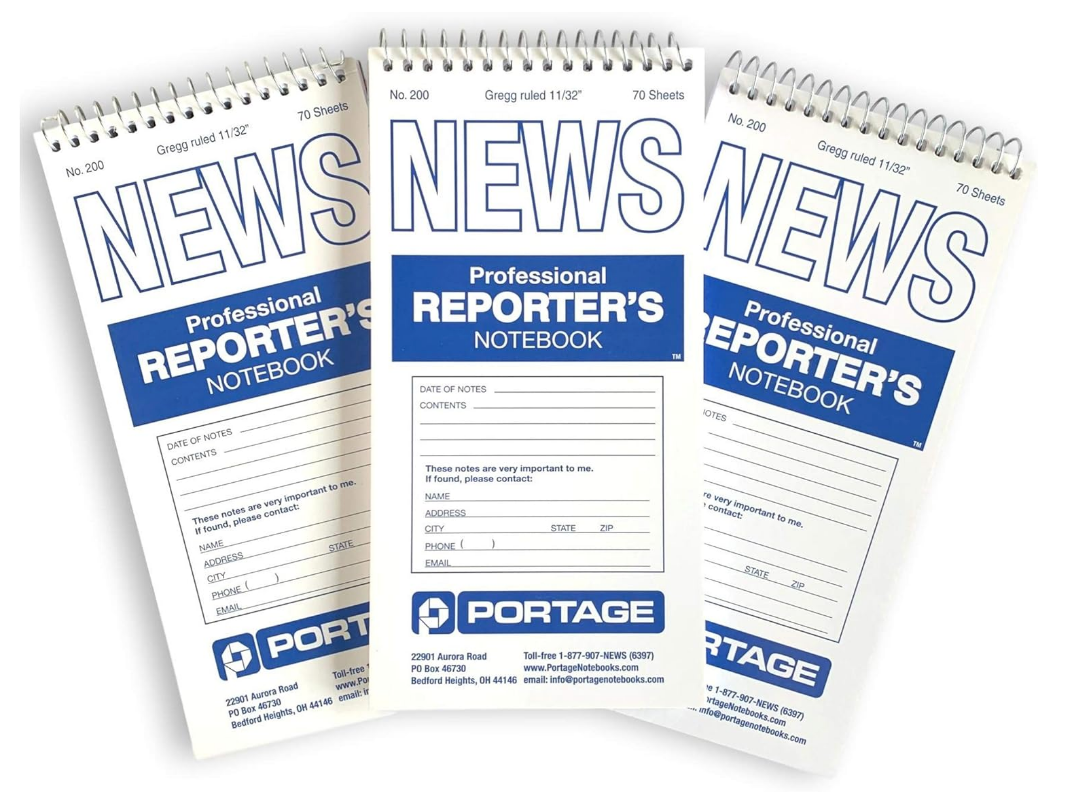
Journalists once relied more on written notes than they do in the high-tech age. (Photo via Amazon)
Informative, enlightening quotes remain crucial to helping the audience experience stories through the exact words of sources. Technology helps journalists quote sources even more accurately — and even more artfully, since digital files capture so much more of what is said than hard-to-decipher handwritten notes ever could.
No doubt my chosen profession faces myriad challenges in an era when political division — and a changing media landscape that has seen newspaper circulations plummet — has drastically reduced the number of journalists.
Even after 35 years, I still love the important role that journalism plays. I never take for granted my part in it, however long it might last.
I’m a little older now — just a few years from 60.
Tamie and I cherish our three grown children, two daughters-in-law, two absolutely perfect grandchildren and a basset hound named Frannie. I’ve replaced the 1978 VW with a 2018 Kia Sorento (with a few minivans and assorted other vehicles in between).
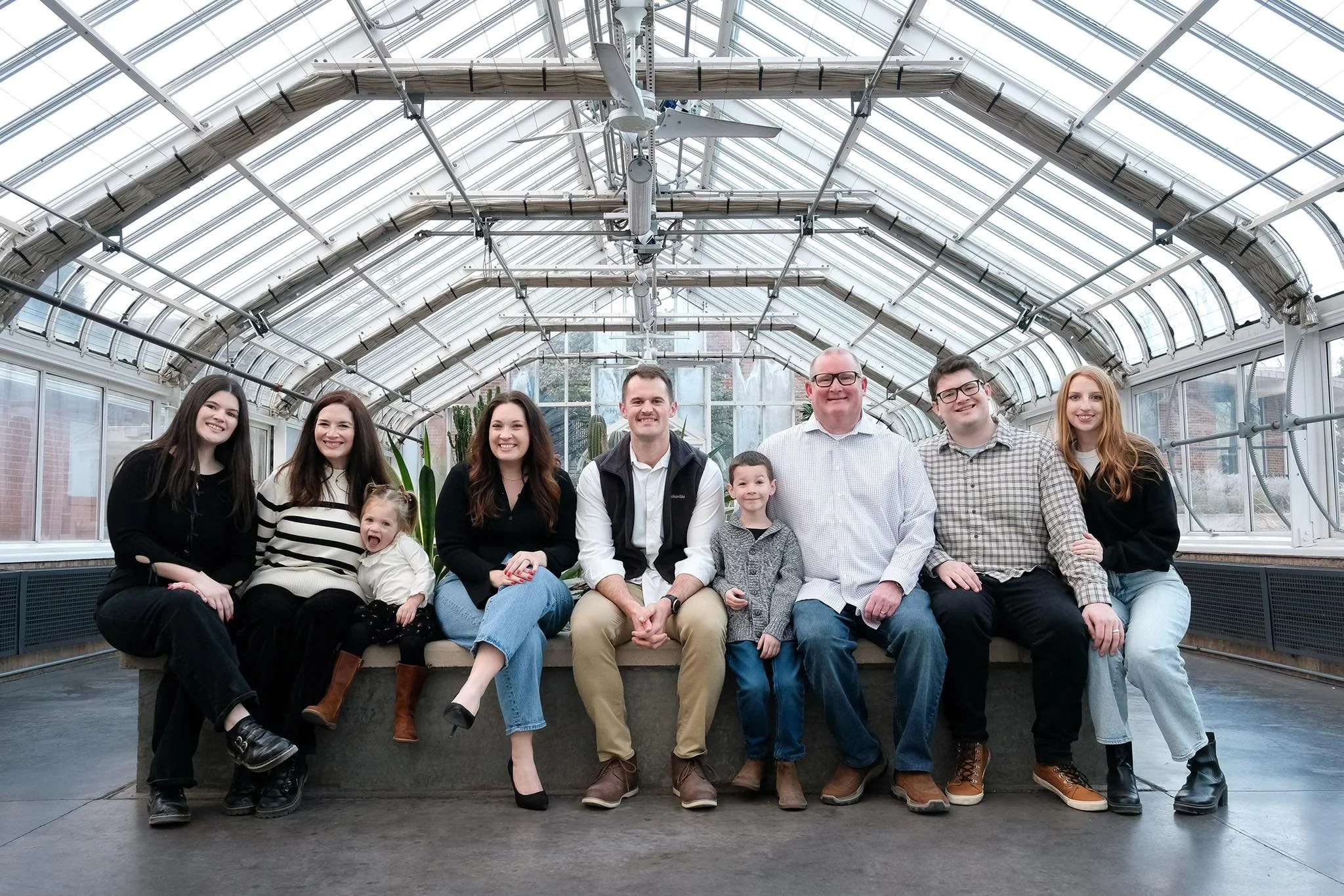
The Rosses pose for a family photo at Will Rogers Gardens in Oklahoma City. (Photo by Audrey Jackson)
I no longer make $6 an hour, although I’m reluctant to plug my salary into an inflation calculator and see how close I might come.
Regardless of the pay rate, I still can’t think of anything I’d rather do than report, write and edit. And I’m indebted to you, kind reader, for joining me on that journey.
Inside The Godbeat
Ryan Burge, a go-to national expert on the intersection of religion and politics, has a new gig, as Religion News Service’s Bob Smietana reports.
Burge’s new title: professor of practice at the John C. Danforth Center on Religion and Politics at Washington University in St. Louis.
Check out Burge’s articles for Religion Unplugged.
The Final Plug
The Associated Press’ Peter Smith, long one of the nation’s best religion journalists, reports this week on how President Donald Trump has delivered “a steady stream of wins for his conservative Christian base.”
Smith writes:
The Trump administration has green-lit political endorsements from the pulpit and encouraged religion in the federal workplace. Trump has established faith-focused entities with numerous influential Christian appointees. He’s energized supporters with assaults on cultural and academic targets long seen as liberal bastions. His administration and his Supreme Court appointees have expanded areas for religious exemptions and expression in the public square.
The AP writer quotes both Trump supporters and critics about these developments.
Happy Friday, everyone! Enjoy the weekend.
Bobby Ross Jr. writes the Weekend Plug-in column for Religion Unplugged and serves as editor-in-chief of The Christian Chronicle. A former religion writer for The Associated Press and The Oklahoman, Ross has reported from all 50 states and 18 nations. He has covered religion since 1999.