
Most Americans Stick With Childhood Faith — But 35% Say They Have Moved On
NEW YORK — A majority of Americans continue to identify with the religion in which they were raised — but more than one-third have departed from their childhood faith, according to a new study released on Monday.
The findings, put together by the Pew Research Center, draw on two major surveys: Pew’s 2023–24 U.S. Religious Landscape Study, involving nearly 37,000 adults, and a follow-up survey of 8,937 adults conducted this past May.
Together, they offer one of the most detailed looks to date at why Americans remain in — or leave — the faith of their upbringing, as well as why many choose no religion at all.
READ: Faith Deserves Better News Coverage — And Here’s How You Can Help
“Most U.S. adults (86%) were raised in a religion,” the report said. “Our data shows that the nature of their religious experiences as children — that is, whether they were mostly positive or negative — plays a significant role in whether they stay in their childhood religion as adults.”
Overall, 56% of U.S. adults still identify with the religion in which they were raised. Another 9% say they grew up without a religion and remain unaffiliated today.
The remaining 35% have switched — either into a different faith (10%) or out of religion entirely (20%).
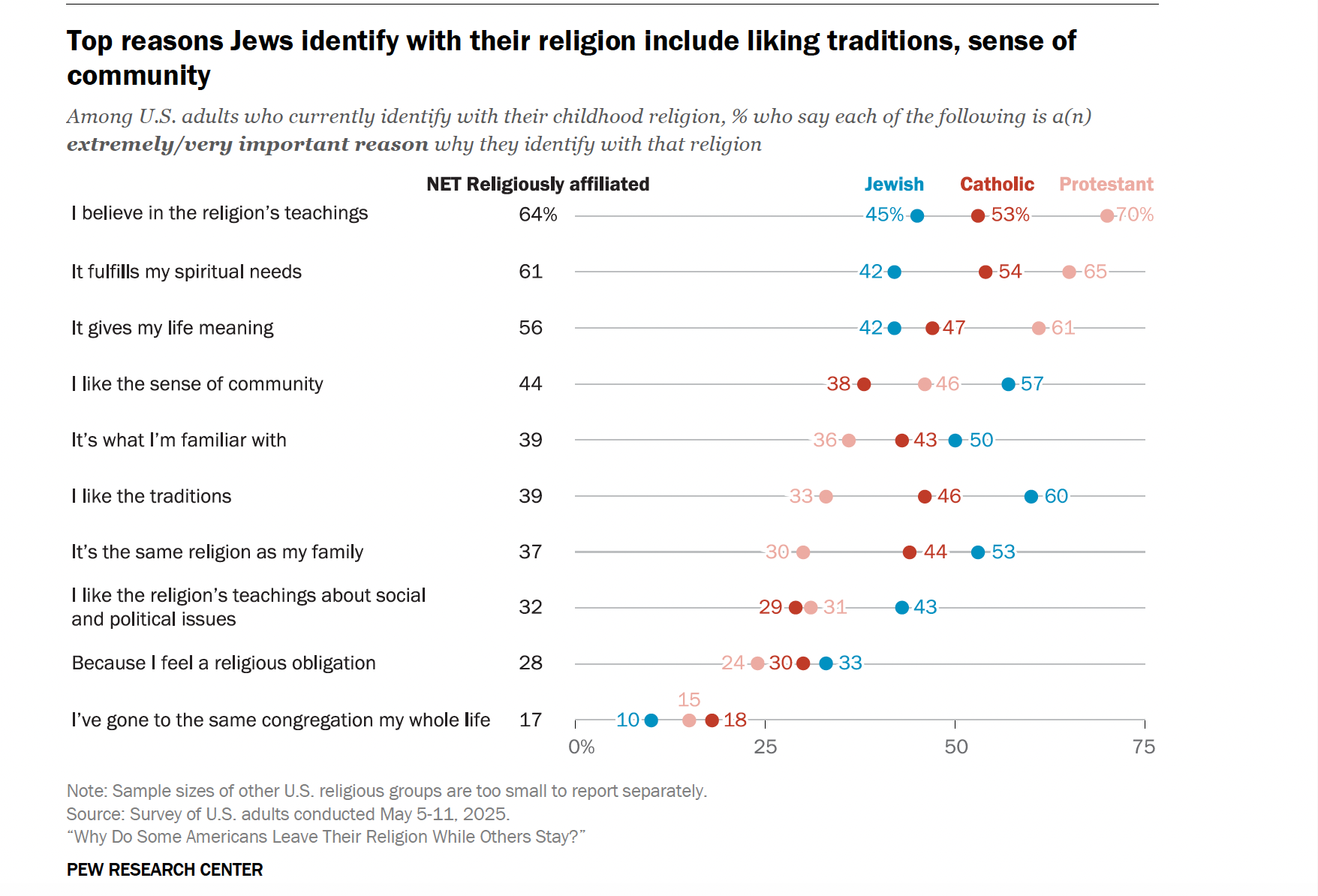
Among those who have remained in their childhood faith, belief continues to play the central role.
Here are some highlights from the report:
— 64% cite believing in the religion’s teachings as an extremely or very important reason for staying
— 61% say their religion meets their spiritual needs
— 56% say it gives their life meaning
Sense of community (44%), familiarity (39%), traditions (39%) and teachings on social or political issues (32%) were also cited, but less frequently, the study found.
The survey underscores the power of childhood experiences in shaping adult religious identity. Among Americans who were raised in a religion and describe that childhood experience as mostly positive, 84% still identify with that religion today. Only 10% have become religiously unaffiliated.
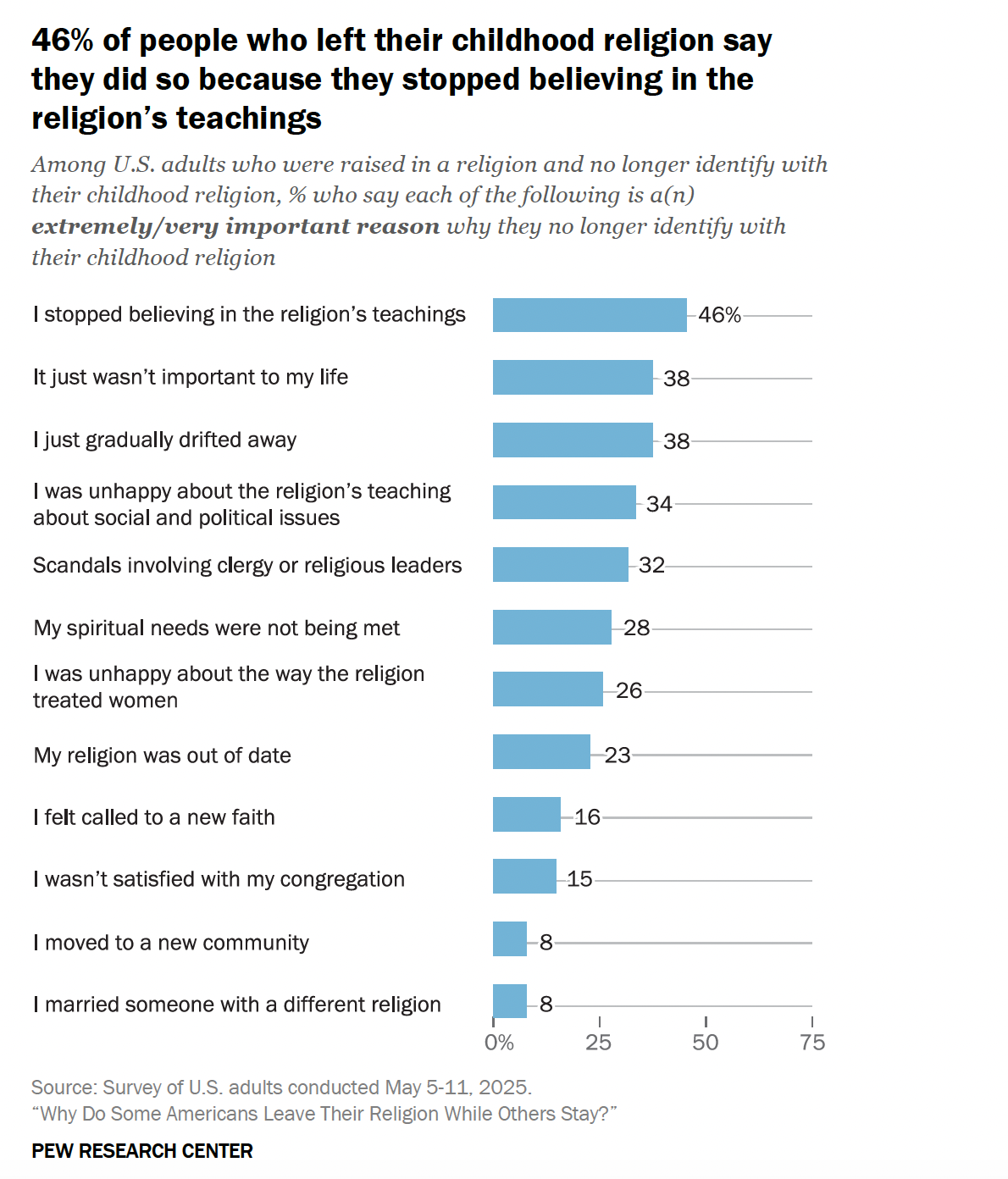
Reasons for departing differ sharply
Family religious intensity also matters. Adults raised in highly religious households are significantly more likely to stay in their childhood faith (82%) compared with those raised in households with medium-high (77%), medium-low (62%) or low (47%) levels of religious practice.
Pew said these motivations vary across religious groups. Protestants who stayed are especially likely to cite belief in their religion’s teachings (70%), as well as spiritual fulfillment and meaning.
Catholics who remained most often point to spiritual needs (54%), belief in teachings (53%), and life meaning (47%). Jews, by contrast, emphasize tradition (60%) and community (57%) as key reasons for maintaining their religious identity.
Pew noted that some religious groups — including lifelong Muslims and Buddhists — had sample sizes too small for analysis.
Reasons for departing a childhood religion differ sharply from reasons for staying. Among Americans raised in a religion who later left it: 46% said they stopped believing the religion’s teachings, while 38% said religion simply wasn’t important in their lives. Another 38% said they had “gradually drifted away.”
Pew found that about a third cite disagreements over social or political teachings (34%) or scandals involving clergy or leaders (32%).
Americans who switch into a different religion often leave because they felt called to another faith (48%) or felt their childhood religion didn’t meet their spiritual needs (45%).
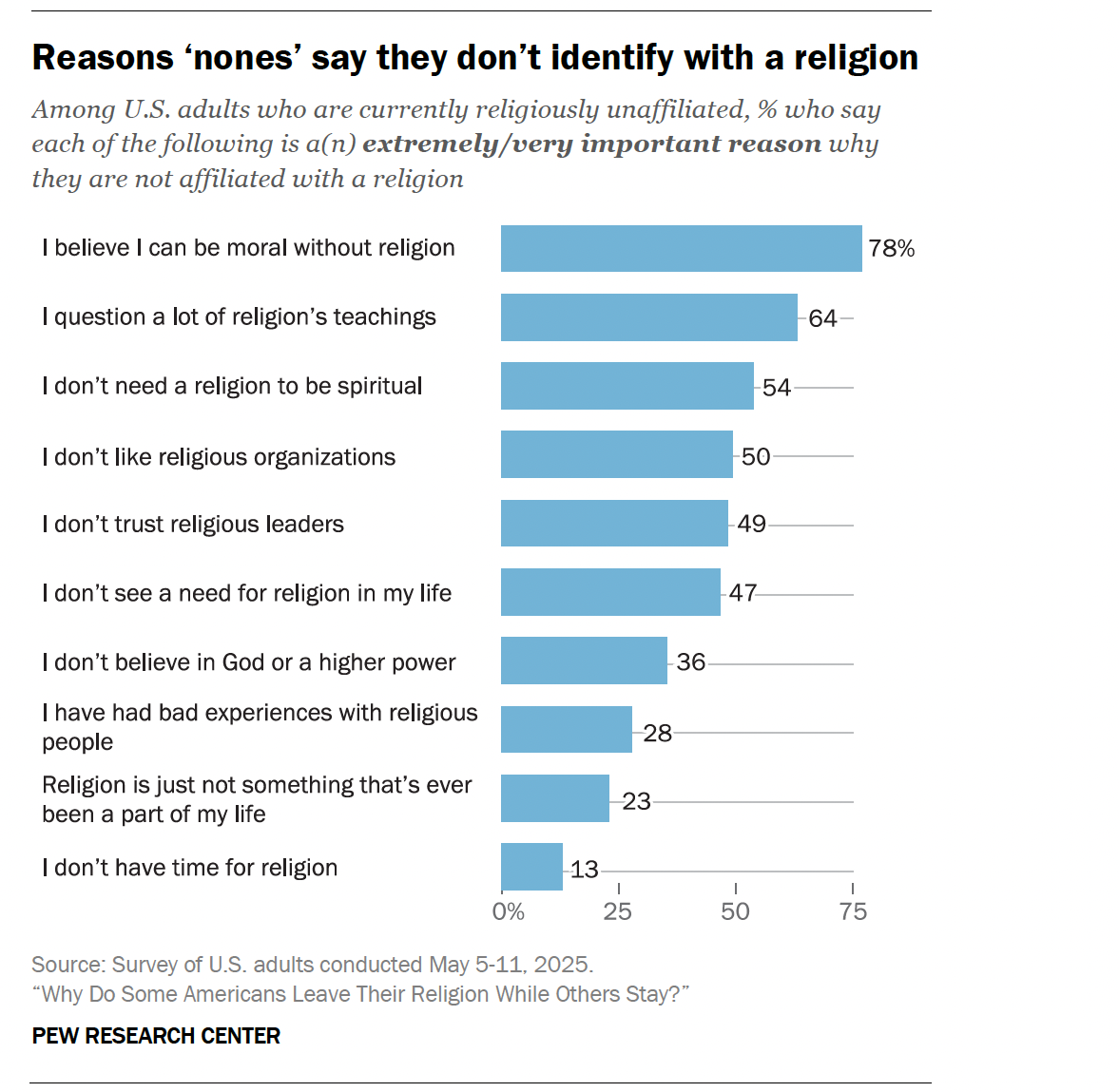
Morality without religion?
Those who leave religion altogether — becoming atheists, agnostics or “nothing in particular” — are most likely to cite loss of belief (51%), lack of personal importance (44%) or gradual drift (42%).
Religious “nones” now make up 29% of U.S. adults. When Pew asked this group why they don’t identify with a religion, wide majorities cited being moral without religion (78%), followed by questioning religious teachings (64%).
About half said they dislike religious organizations (50%) or distrust religious leaders (49%). Some “nones” claimed religion is harmful (6%) or that they remain open to spirituality, but don’t feel the need to affiliate with a formal religion (6%).
Pew said a small share — just 3% of U.S. adults — were raised with no religion, but later joined one.
Clemente Lisi is executive editor at Religion Unplugged.