
Russia Recruiting Africans To Fight In Ukraine. These Nuns Are Coming To The Rescue.
HARARE, Zimbabwe — When Russia declared war on Ukraine in February 2022, to many Africans this was yet another war that they could only follow from a safe distance. But this was not going to be. Four years later, the war is keeping many African families awake at night.
In Zimbabwe, the story of Tanaka Muzirikazi has become a cautionary tale for many desperate youths. For months, his body has been stuck in a morgue in Moscow. Just like other unemployed youths, the 23-year-old university graduate could not resist the lure of “lucrative civilian jobs” in Russia that purportedly pay as much as $3,000 per month.
But upon arrival, he found himself being thrust to the war front, where he was killed.

As his mother, Rodwin Chitewere, battles to repatriate his corpse for proper burial back home, he represents just one of the several hundred Zimbabweans who have been victims of human trafficking to feed Russia’s cause.
From Zimbabwe to Kenya, from South Africa to Cameroon, from Zambia to Ghana and across a total of 36 African countries, a common thread runs through them: Families in anguish over the fate of their loved ones who were lured to Russia.
Several investigations have established that Russia is exploiting the economic hardships and desperation in Africa to deceptively recruit people to use in its war on Ukraine, targeting the poverty-stricken Africans for trafficking on the false pretext of lucrative construction, transport, firefighting and other civilian jobs. Programs like the “Alabuga Start” scheme have been identified as serving to lure young Africans with false promises of study or “civilian jobs”, only to be enslaved in military factory work or even pushed to the war front.
As a result, just like Muzirikazi, hundreds of these poor Africans have died while thousands of others remain trapped in the war. As the war drags on and Russia is desperate to fill its ranks, the recruitment of unsuspecting, desperate Africans continues.
Talitha Kum Africa is a continent-wide network of Catholic sisters working towards ending human trafficking, protecting survivors and promoting prevention and healing. And with this new wave of trafficking, their work is cut out for them. The network is doing so through public awareness campaigns, providing survivor counseling, and coordinating grassroots rescue efforts.
It is not an easy task, as there are always some who are prepared to take the risk out of desperation and the tempting amounts on offer. A one-off signing fee of up to $26,000 and monthly allowances of $3,000 are being dangled.
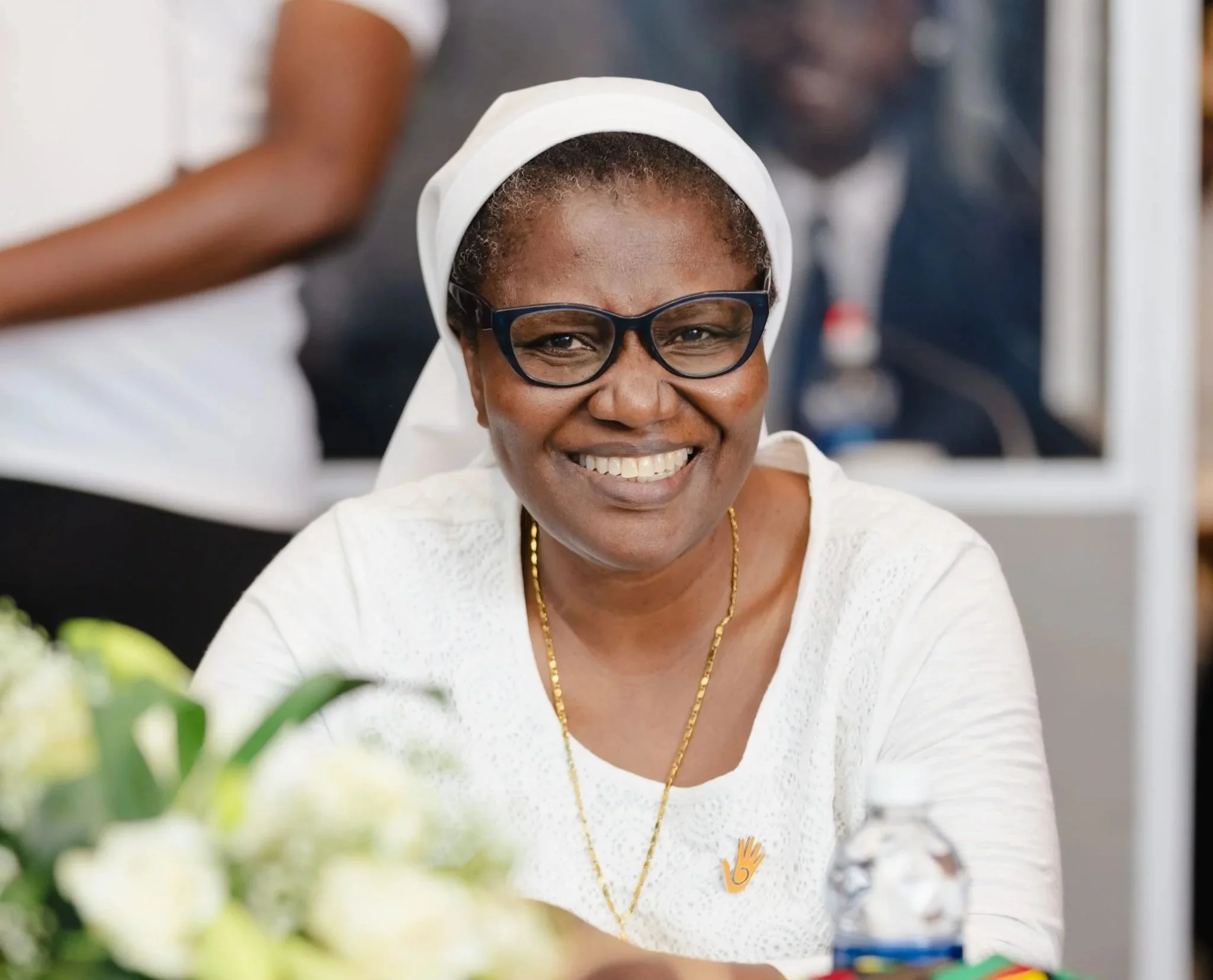
Sister Kayula Lesa. (Photo courtesy of Talitha Kum Africa)
Multi-pronged strategy
“It is human trafficking when deception is used at any stage of the whole [recruitment] process,” Sister Kayula Lesa, Talitha Kum Africa regional representative, told Religion Unplugged.
Lesa, who belongs to the Religious Sisters of Charity and is also the director of Talitha Kum Zambia, said that because of the hardships that most Africans, especially young people, they have become easy targets for traffickers, including those who are recruiting people to fight in the Russian war with Ukraine.
This, she said, has made their anti-trafficking work even more urgent, hence the multi-pronged strategy that they have adopted. The sisters are utilizing their grassroots network in African communities to raise awareness of the risks associated with migration.
This strategy encompasses, among other things, safe migration awareness campaigns, transit monitoring, verification of the authenticity of offers individuals receive, and economic empowerment programs that contribute to reducing vulnerability among local communities.
“Here in Zambia, just like in the other countries in which we operate, we are raising awareness, especially among youths, on the risks of migration,” Lesa said. “We know that most of them are always online searching for opportunities around the globe, so in our awareness campaigns, we alert them to the fact that human traffickers are using various social media campaigns to lure potential victims, so they need to be alert.”
She said that through their social media platforms, Talitha Kum Africa has been able to interact with up to 250,000 people annually who are seeking help in one form or another.
“Whether it is a job or scholarship offer abroad, we urge them to seek verification before taking it up,” said Kayula.
Deceptive recruitment is part of a broader, systemic pattern by Russian underground networks using fake job openings and technical scholarships to lure desperate populations across multiple African nations. According to Stop Russian Recruiters, Moscow has identified 36 African countries on which to focus its recruitment efforts.
Lesa said that nuns in every diocese in the African countries where the network operates are available to assist people who may be receiving offers from abroad.
“We assist with the verification process to ensure that the offers that they get are genuine,” she said. “Where we can’t assist, we refer them to government ministries and departments, just to ensure that they don’t end up being victims of human trafficking.”
Through equipping local clergy and youth leaders to identify recruitment signs and educate rural or economically distressed communities, the network has been able to disrupt the recruitment processes, while its trained personnel deployed on transit monitoring duties at border posts have managed to rescue some victims.
Lesa gave the example of the work that her own local Talitha Kum Zambia is doing, which she said is able to intercept and stop the trafficking of between 100 and 150 victims monthly at each of its main borders with the Democratic Republic of Congo, Tanzania and Malawi.
Members of Talitha Kum Africa in all its five regions are doing the same at local levels, contributing in their own way to fighting the trafficking of Africans to Russia.

Russian troops invaded Ukraine in February 2022. (Unsplash photo)
Escaping one war for another
Sister Therese Marie Wojia, Talitha Kum Cameroon’s coordinator, said that in the aftermath of reports of Cameroonians dying in the fight for Russia, they have started an awareness campaign to stop the recruitment.
“Talking about Cameroonians fighting war in Ukraine is not comprehensible because war is a reality in Cameroon,” she said. “Thousands of Cameroonians have died with no country coming to our aid, so how does it come about that a Cameroonian is recruited to fight in Ukraine?”
Wojia said the “irony with those being recruited in Cameroon is that they are those who have escaped from war in their cities and have found themselves in the capital [Yaoundé].”
She said that because these traffickers usually target internally displaced persons, sometimes it is very difficult to know who is being targeted until it is too late.
“In all our sensitizations, we do create awareness that this recruitment is a scam to kill our people,” said Wojia, who added that the organization also visits affected families to offer counseling.
“How can a person traumatized by war go to fight war in another country?” she added. “Man is made in the dignity and likeness of God. And all that God made is good and beautiful. To hire humans to go fight, destroy and kill is not the intention for which man was created.”
Cyril Zenda is a journalist based in Harare, Zimbabwe.