
Pope Leo Returns To His Peruvian Hometown, Retracing Missionary Roots In Chiclayo
CHICLAYO, Peru — Pope Leo XIV returned to his adopted hometown of Chiclayo, visiting the places that shaped him as a missionary and later as bishop of the diocese from 2015 to 2023.
His return to Peru was part of an apostolic journey to South America that began in Uruguay, continued in Argentina and ended in the country where he received citizenship in 2015. In Peru, people welcomed him as a mother welcomes her child home. “Leo returns home” was the slogan for his visit, which began on Nov. 11.
Born and raised in Chicago, Robert Louis Prevost first arrived in Peru in 1985. He served as a priest in the country’s northern region during several periods over more than 20 years. The first Augustinian pope in history left for Rome after Pope Francis appointed him prefect of the Dicastery for Bishops and president of the Pontifical Commission for Latin America. His roots in the Andean country ran so deep that during his visit, people repeatedly said, “El Papa es peruano” (The pope is Peruvian). In Chiclayo, they called him a local.
“What a joy to be back in Chiclayo,” he said as he began his homily at a Mass attended by 500,000 people, the largest gathering of his six-day trip to Peru.
The Mass was held in the desert area of Pimentel, where temperatures reached 90 degrees and there was no shade. It was his first public event after he landed in the city the morning of Nov. 13. Some people had camped overnight to see him.
“All the words he’s said have been incredibly kind. Sometimes I think we don’t deserve so much love,” said Diana Celis, a journalist who came out of retirement to cover the pope’s visit to northern Peru.
The trip to Chiclayo retraced places that had marked his ministry. He visited St. Oscar Romero Chapel, named for the archbishop who was assassinated in front of the altar while celebrating Mass in El Salvador in 1980. Leo helped rebuild the chapel during his time in Chiclayo.
He also visited the Catholic University of Saint Toribio de Mogrovejo, where he served as grand chancellor while bishop and is now grand chancellor emeritus. Students from Peru and neighboring countries came to see him.
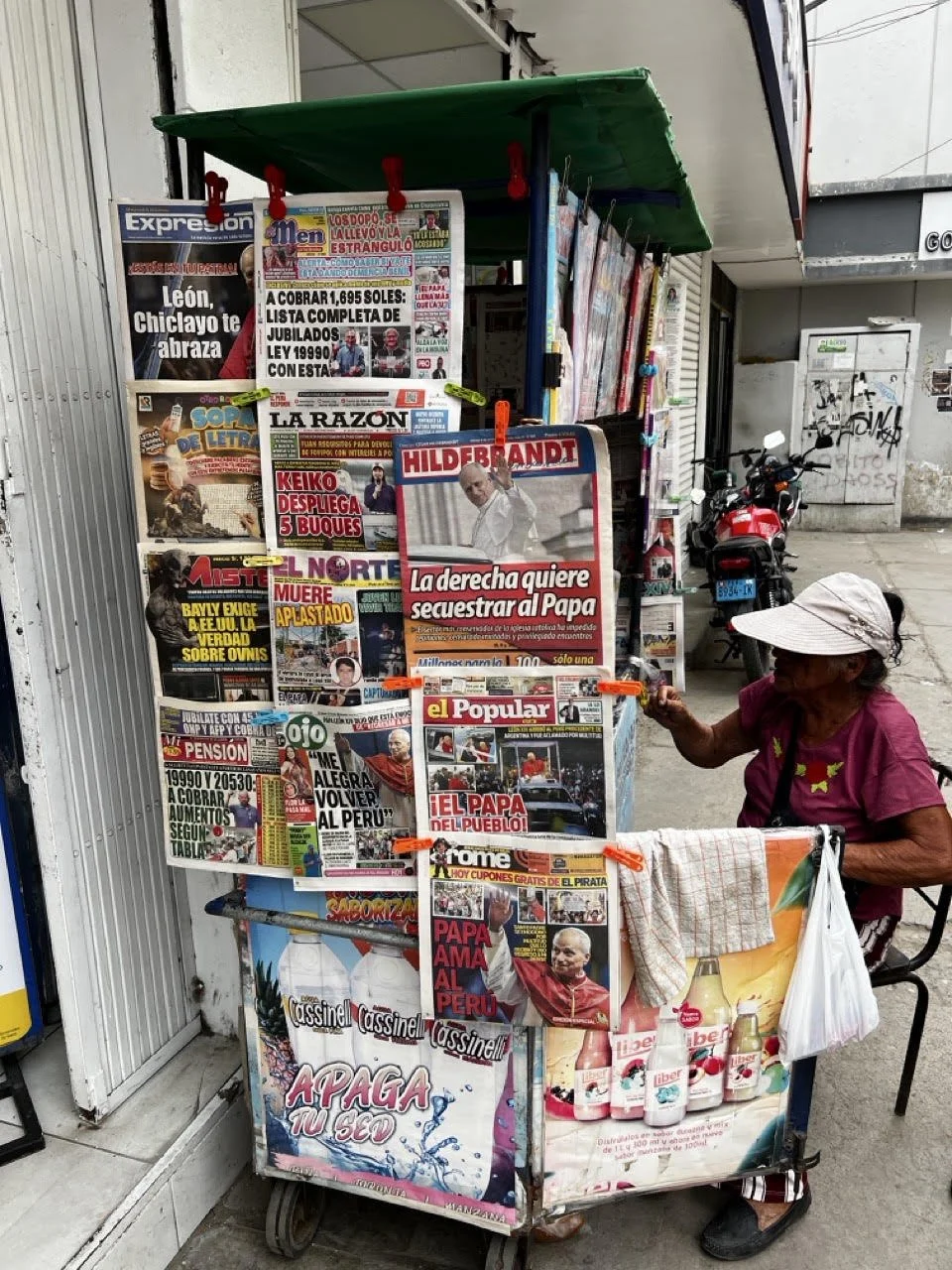
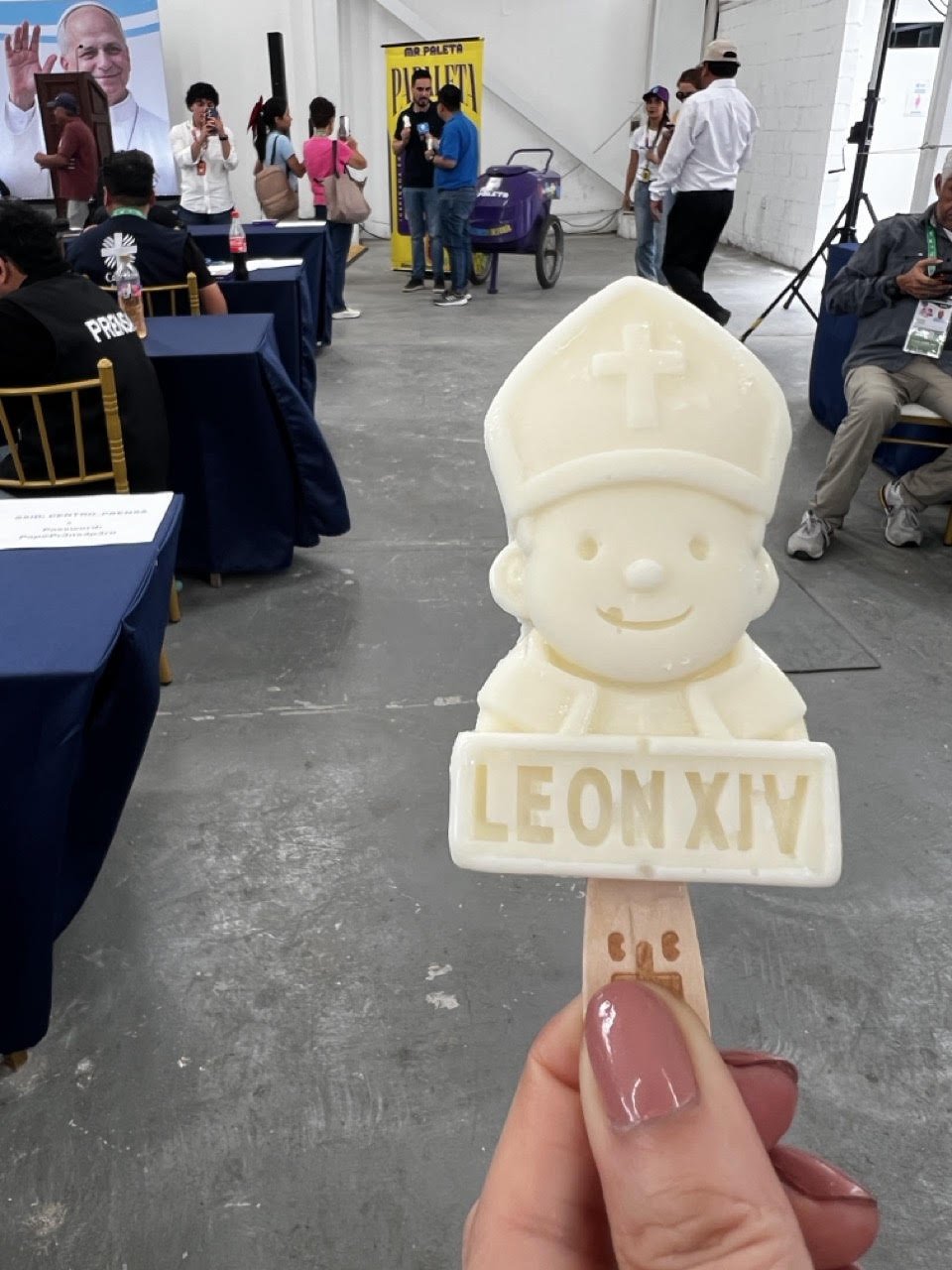
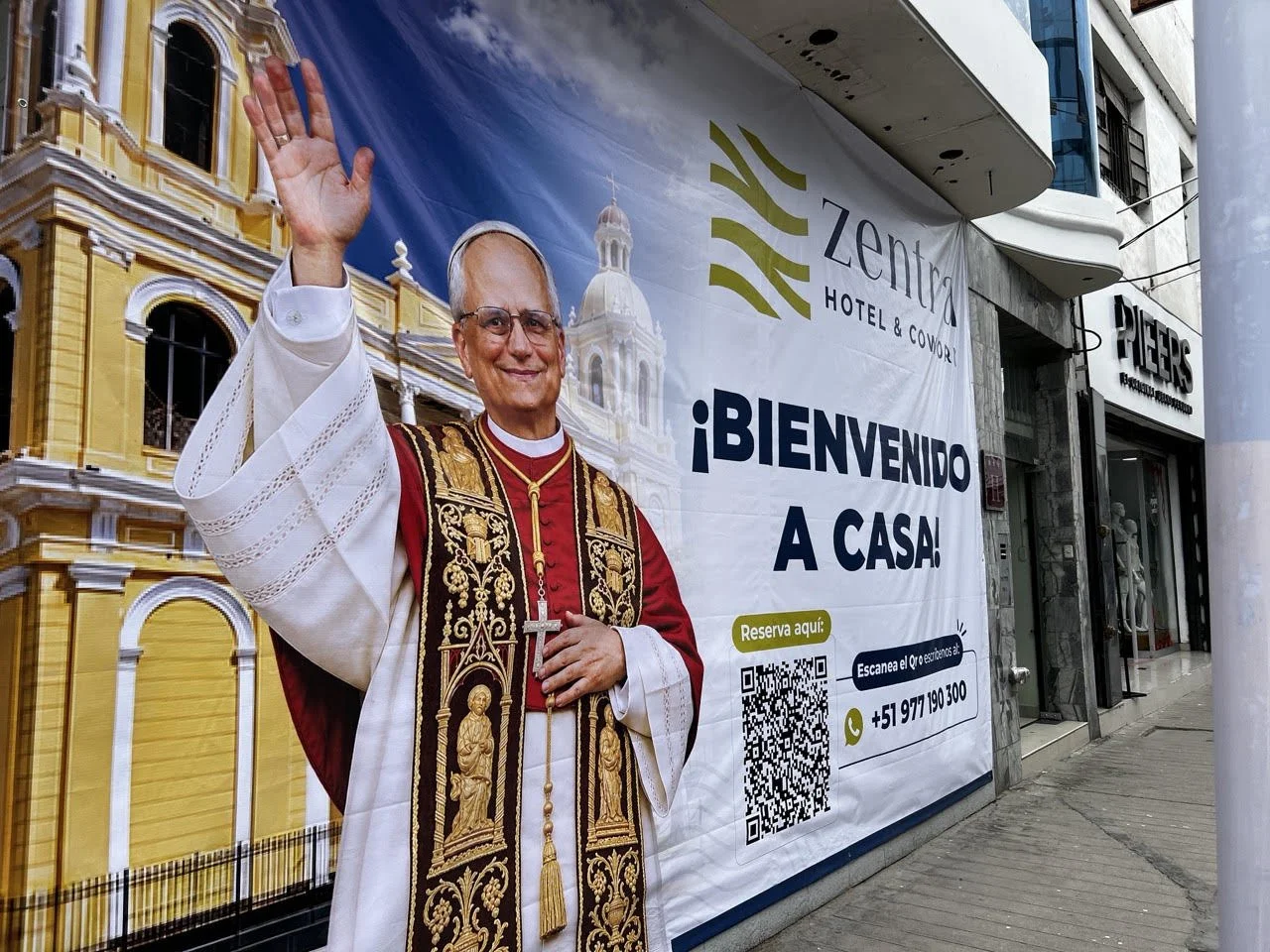
Photos by Graciela Ibáñez
St. Toribio, born in Spain in 1538, served as archbishop of Lima from 1579 until his death in 1606 in the district of Zaña, in the province of Chiclayo. The pope often cited the saint as an example of a missionary.
“When indigenous peoples were subjected to exploitation and discrimination, he defended their human dignity,” the pope said at the university, noting that the saint wrote one of the first catechisms in the Americas in an Indigenous language.
The day after visiting the university, Leo traveled to Zaña to close the jubilee year commemorating the 300th anniversary of the saint’s canonization. Speaking before 10,000 faithful, he recalled his years leading the diocese.
“As I was coming here, so many memories of the years the Lord entrusted me with the care of this beloved diocese came to my mind,” the pontiff said before thanking the faithful for their welcome. “I remember spending the night before I began my ministry as bishop of Chiclayo in prayer, asking the Lord, through the intercession of St. Toribio, to grant me the grace to be a shepherd according to his heart. I didn’t know then what awaited me or how much I would receive from you all.”
He added: “Thank you for welcoming me with the joy and hospitality that characterize you, for so many kind gestures and also for the delicious food you have prepared with such care. Those familiar flavors have brought back memories of the good times I spent here. Thank you for making me feel once again that I’m at home.”
With a smile, he visited the Cathedral of Chiclayo, which had been his home for eight years and where he was known as Padre Roberto. There, he crowned the image of the Virgin of the Immaculate Conception, the city's patron saint. The pope said he had learned to be a shepherd of Chiclayo alongside her, as she accompanied him on visits to towns throughout the region. He also spent the night at the Episcopal Residence, where he had lived as bishop.
He also traveled to Santa Cruz de Succhabamba, capital of the province of Santa Cruz in the western Andes. He used to visit the town every September for the celebration of the Lord of the Side. Before moving to Rome, he had promised the priests of Santa Cruz that he would return in 2025 to celebrate the 350th anniversary of the wooden cross bearing the image of the Lord of the Side, the province's patron saint. His plans changed when he was elected pope in May 2025. But he fulfilled his promise a year later.
Papamania swept Chiclayo after his election and intensified in anticipation of his return. Shops and buildings were covered with welcome signs. Even a white chocolate ice cream bearing his image, called Papaleta, has become a local sensation. It has sold 30,000 units since its launch more than a year ago.
“We are deeply moved and touched by this visit from the pope, who considers himself Peruvian,” said Walter Alva, who discovered the tomb of the Lord of Sipán in 1987, one of the country's richest archaeological finds.
Alva said Prevost, while bishop, attended his presentations about Sipán. He also praised the pope for drawing on examples from ancient Peru during his visit to Lima.
Speaking to bishops in Lima, Leo compared the path of a missionary to the Inca Trail.
“We know that the Inca Trail is not easy: its heights and narrow passages test the endurance of the hiker, whose effort finds relief in contemplating its majestic landscapes. Similarly, the episcopal mission doesn’t always follow clear paths,” he said.
You can read this story in Spanish here.
Graciela Ibáñez is a journalist with a Master of Arts from Columbia Journalism School, where she graduated in 2008. She covers Chile for foreign media outlets, including TRT World and The Art Newspaper. She graduated with a Bachelor of Arts from Universidad Adolfo Ibáñez in Viña del Mar.