
Science Says Religion Is Good For Your Mental Health
A massive amount of research confirms what your grandma has always told you: Go to church. It’s good for you.
And if a church isn’t your scene, a temple, mosque, synagogue or gurdwara would work, too.
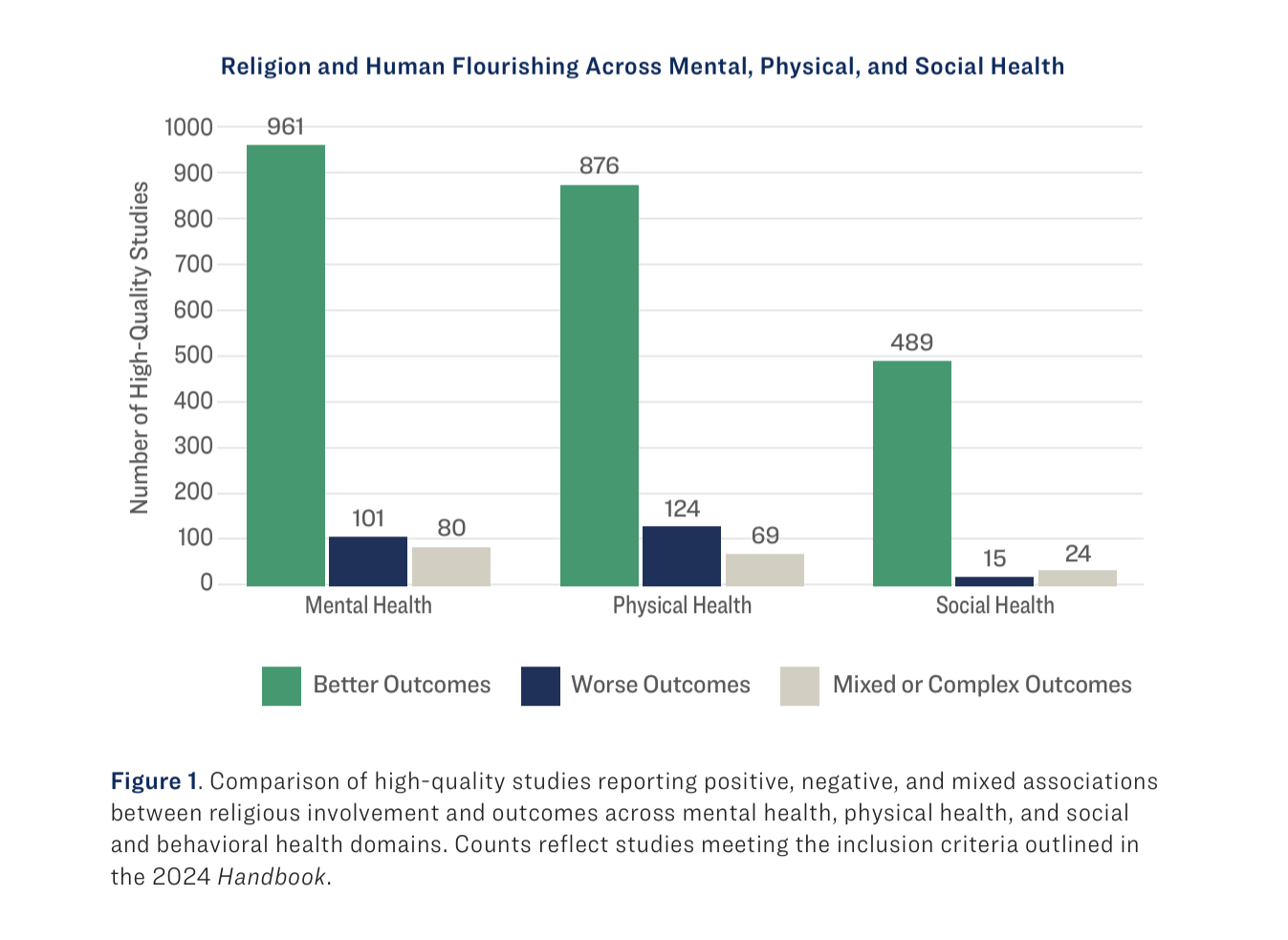
Religious involvement is strongly associated with better mental, physical and social health outcomes, a research team at the Wheatly Institute at Brigham Young University, led by Professor Loren D. Marks, said in a new report released Monday.
READ: Looking For A Gen Z Revival? Maybe Check Bookstores And Movie Theatres.
Tens of thousands of peer-reviewed studies on religion and health have been published over the years, and the BYU team used an “extensive screening process” to find the best-designed studies that used “stringent methodological criteria, including large samples, careful statistical controls, and clinically or socially meaningful outcomes.”
They found that “religious involvement is far more often associated with beneficial outcomes than harmful ones.” For mental health specifically, for every study reporting a negative association between religious involvement and mental health, there are 10 studies that report positive associations.
Participation in religious communities can serve as a protective factor, helping adherents cope with stress and find meaning in life.
Anxiety, depression and suicide
One in 5 adults reports symptoms of anxiety or depression, according to the U.S. Centers for Disease Control. Among the high-quality studies on religion and depression, 74% of the studies “noted better mental health among the more religious,” and as for studies about the religion-anxiety connection, 69% noted lower levels of anxiety among the religious.
There are several reasons for this, the researchers say. Religious involvement is strongly associated with a more stable marriage and more functional families, which makes individuals in those marriages and families less likely to have depression and anxiety.
Plus, life circumstances that could lead to serious depression, such as poverty, bad habits, domestic violence, divorce, disability, natural disaster and stress, can be mitigated by religious communities that encourage healthy habits and provide material and moral support following traumatic events.
For suicide rates, the findings were striking. Suicide is the 10th leading cause of death in the U.S. as of 2024, with much higher rates among young people.
However, 89% of studies reported lower rates of suicide among the more religious, with only 8% of studies reporting higher suicidality. For young people and teens, intense religious participation can be especially protective.
“A modest amount of religion ... does not appear to make a consistent difference in the lives of U.S. teenagers. It is only the more serious religious teens, the ‘regulars’ and the ‘Devoteds,’ whose outcomes are more consistently and significantly more positive than those of their entirely religiously Disengaged peers,” sociologists Christian Smith and Melinda Lundquist Denton said in the report.
However, other studies showed that the teens themselves might not even need to attend religious services to reap some of the benefits.
If their parents had high religiosity or perceived spirituality as important, there was “a nearly 40% decrease in children’s suicidal ideation or attempts, even independent of the children’s own religious or spiritual reports, ” according to a study by psychiatrist Harold Koenig and his colleagues.
Substance abuse
“In almost no other area of mental health (except perhaps suicide) is there more evidence that religion makes a difference than in alcohol and drug use problems,” according to Koenig and his coauthors.
Religious participation is both preventative (by limiting or forbidding access to harmful substances, encouraging virtues like moderation and strengthening families) and a rehabilitative effect.
“Religion shapes the social environment and peer networks in ways that matter: it helps curb negative peer influence, reduces access to alcohol and drugs, and supplies positive role models,” the BYU report said.
It also mentioned that practices such as prayer, worship and rituals can be positive coping mechanisms that reduce the chance someone will turn to alcohol or drugs in times of stress.
Bipolar disorder and schizophrenia
Bipolar disorder and schizophrenia haven’t been studied as much as other mental health issues. But of the small group of high-quality studies that do study their connection to religion, findings show a “marginally negative relationship with religion.”
The authors point out a compounding factor in some cultures, where individuals with bipolar disorder and who are also very religious may face further difficulties in very secular regions where religious people face marginalization.
The researchers said there needs to be more studies on both of these mental health disorders to fully understand their interaction with religious practices and beliefs, but there are some bright spots: “In an experimental study, 31 Hindu persons with psychotic disorders (23 with schizophrenia) stayed at a Hindu temple for about six weeks and experienced a reduction of psychotic symptoms equivalent to those on antipsychotic medication.”
What now?
The report also acknowledges the downsides of religion. The authors quote a social scientist of religion, David Dollahite, who points out that throughout history, religion has led to war, slavery, oppression, killing, hate, and greed, alongside peace, liberation, justice, kindness, love and charity.
However, in recent decades, researchers have increasingly analyzed religion’s impact on individuals, families and communities, which, when taken together, help readers see the larger picture of empirical evidence — and the BYU team is just getting started.
They plan to release two more reports in the future, more fully analyzing the body of research around the impact of religiosity on physical and social health, too. In the meantime, they offered some policy recommendations based on their findings.
They said health organizations should offer individuals the option to include faith-based support as part of their recovery or care, if they choose to do so. Plus, government policies should protect the freedom to practice religion, so that everyone can access the benefits of a faith community.
Cassidy Grom is the managing editor of Religion Unplugged. Her award-winning reporting and digital design work have appeared in numerous publications.