
When Religion Is Missing: The Trouble With Measuring Happiness
(ANALYSIS) Measuring happiness is a real problem for social scientists. It’s an area of intense interest because I think all of us would like to be just a little bit happier.
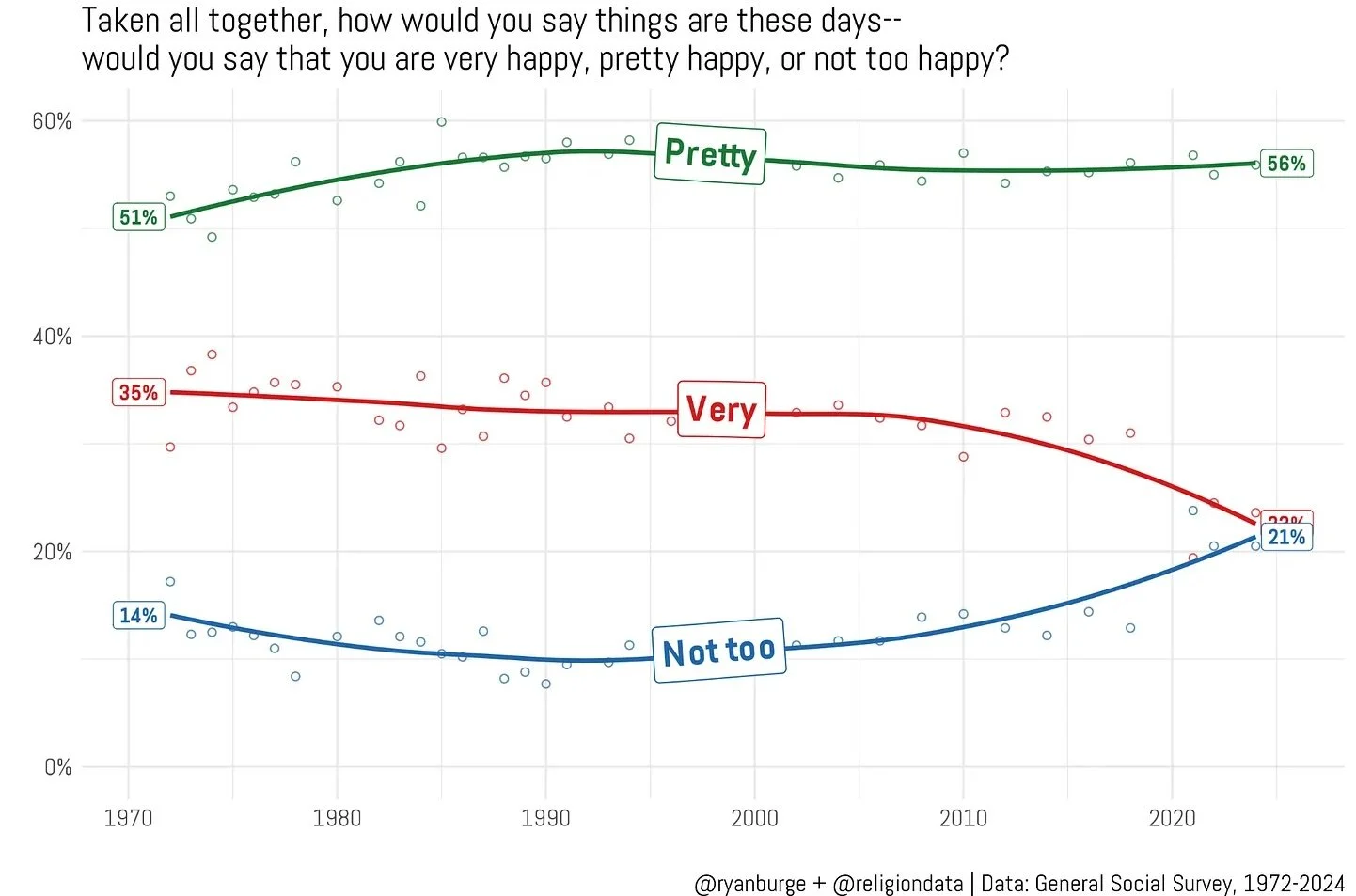
But it all seems pretty subjective and transient at some level, right? I mean, if you took part in a social survey that asked you: “Taken all together, how would you say things are these days — would you say that you are very happy, pretty happy, or not too happy?” How would you answer that question right now, and if asked again in four hours, would you give the same answer?
Take the often hyped-up “World Happiness Report,” published annually by Oxford’s Wellbeing Research Centre in partnership with Gallup. The report asks respondents to imagine a ladder with the best possible life at the top and the worst at the bottom, then place themselves on it. It’s elegant, but notice what it actually measures: not happiness in any rich sense, but a cognitive life appraisal.
And each respondent is comparing their life to a “best possible life” that could be completely different from another respondent. When a Dane rates herself a 7.5, she’s not reporting a feeling so much as rendering a verdict. It’s a valid measure, certainly. But is it measuring the same thing as happiness? Are satisfied people always happy?
The report also tries to explain its rankings using six factors: GDP per capita, social support, life expectancy, freedom, generosity and corruption. Notice what’s missing?
Things like religiosity, family structure, community belonging, a sense of transcendent meaning. Build the index around those variables instead, and the map of global happiness looks very different. For what it’s worth, the Human Flourishing research is doing a better job of leaning into a wider variety of variables. I’m excited for that data to become publicly available.
With that preamble, I want to focus on probably the best long-term measure we have of self-described happiness: The data from the GSS. The Association of Religion Data Archives has been hosting the General Social Survey files for a long time now. Lucky for us, the happiness question has been asked in every single wave of the GSS, all the way back to 1972.
You can read the rest on Substack.
Ryan Burge is an assistant professor of political science at Eastern Illinois University, a pastor in the American Baptist Church and the co-founder and frequent contributor to Religion in Public, a forum for scholars of religion and politics to make their work accessible to a more general audience. His research focuses on the intersection of religiosity and political behavior, especially in the U.S. Follow him on X at @ryanburge.