
Anglican Church That Witnessed Religious Tolerance In Chile To Become A Museum
VALPARAISO, Chile — Chile’s oldest Anglican church — which once brought together the British community that settled in Valparaíso during the 19th and early 20th centuries — will be forever preserved as a museum.
After decades of struggling to fund repairs and maintenance, the Anglican Episcopal Church Corporation of Valparaíso signed an agreement to transfer management of St. Paul’s Cathedral to Destino Valparaíso, a cultural center that houses the Immigrant Museum across the street. Under a 50-year lease, Destino Valparaíso will oversee the restoration and conservation of the church, built in 1858 on Cerro Concepción, one of the port city’s most iconic hills.
The church will become a museum dedicated to the British legacy in Chile, including the building’s role in documenting the development of religious tolerance in the country.

At the start of Chile’s independence movement from Spain, the First Government Junta declared freedom of trade for the port of Valparaíso in 1811. This opening triggered an immigration wave, mainly from Britain, Germany, Italy, France, Spain and the Arab world, which peaked during the second half of the 19th century.
“Chile didn’t have freedom of religion when the British arrived in the 1820s, and they wanted to practice their faith, which was Anglican,” said Eduardo Dib, executive director of Destino Valparaíso. Catholicism remained the country’s official religion until the 20th century.
The most influential immigrant community in the port city was the British, followed by the Germans. In 1823, they began building a cemetery that later became known as the Dissidents Cemetery because it was the only place in Chile where Protestants could be buried. The cemetery is half a mile from Cerro Concepción, where both communities had settled.
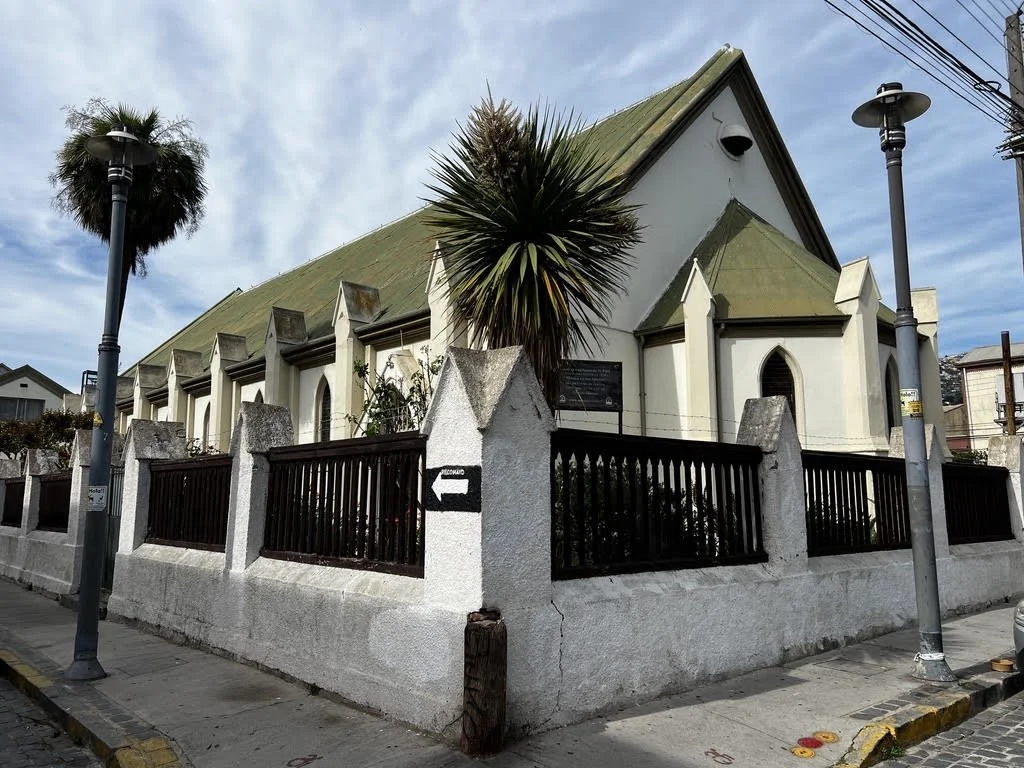
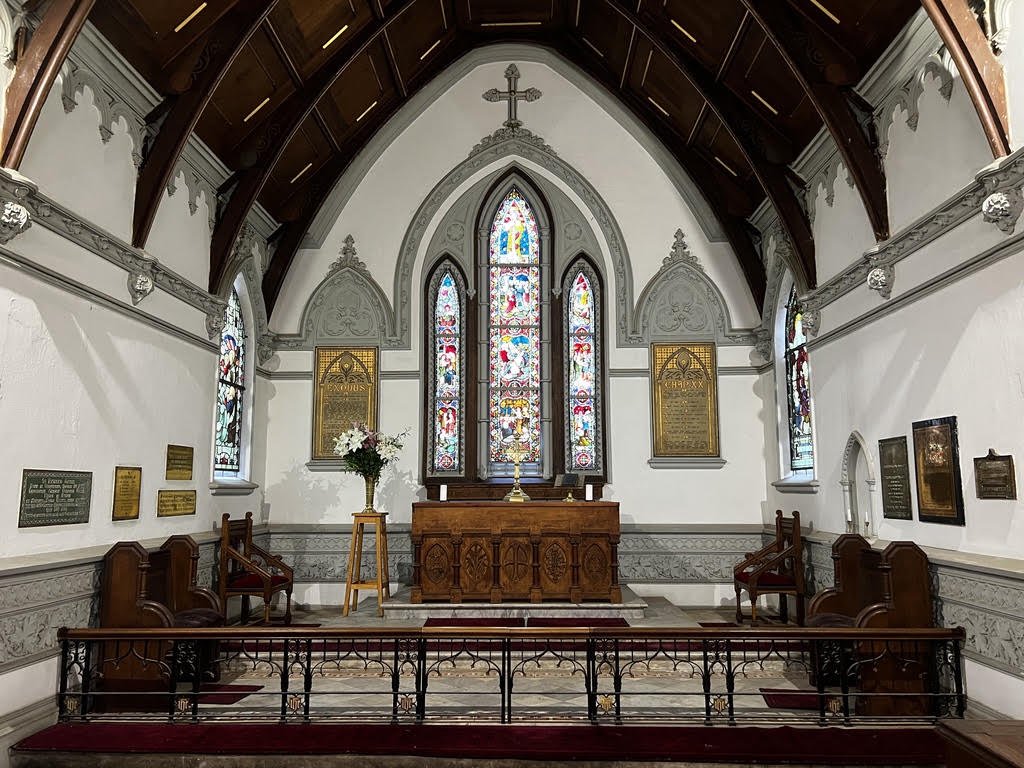
Later in the century, the British built St. Paul’s, which had to be discreet because of the lack of religious freedom. It had small windows and no main entrance. It also had no spire, cross or exterior bell tower, so the building would look like just another house on Cerro Concepción.
Partial religious freedom arrived in 1865. Two blocks away, the Germans built a Lutheran church, Holy Cross, in 1897. It was the first Protestant church in South America to have a bell tower. The separation of church and state was established in Chile’s 1925 constitution, which enshrined freedom of worship.
Photos by Graciela Ibáñez
“St. Paul’s is a witness to the tensions between a clerical state that gradually became liberalized and people of different faiths,” said Michelle Prain, a professor at Universidad Adolfo Ibáñez in Viña del Mar and author of the book “British Legacy in Valparaíso.”
Before the church was built, weddings between Anglicans took place aboard merchant ships or Royal Navy vessels anchored in the bay that had a chaplain. These ceremonies also took place in private homes with chapels.
In addition to Anglicans and Lutherans, Protestantism in Chile was shaped by the arrival in Valparaíso of missionary David Trumbull in 1845. A Congregationalist, Trumbull had graduated from Yale and studied at Princeton Theological Seminary. The Foreign Evangelical Society sent him in response to a request from English-speaking immigrants in Valparaíso for a pastor.
He initially served non-Anglican foreigners and later expanded his work to include Chileans. In 1847, he founded the congregation that would become the Union Church. In 1856, he inaugurated the first Protestant chapel on the South Pacific coast, located in Valparaíso.
One of Trumbull’s disciples, José Manuel Ibáñez Guzmán, became the first Chilean and South American evangelical pastor. He had studied theology in Sacramento, California, where he had traveled with his mother and brother during the Gold Rush. After returning to Chile, Ibáñez Guzmán met Trumbull, who advocated for freedom of worship.
All Protestant denominations gathered in Valparaíso, a thriving port and strategic location for expanding throughout South America during the 19th century. The influence of British immigrants extended to finance, commerce, mining, shipping and communications, a legacy Dib wants to highlight when St. Paul’s becomes a museum.
“They shaped the spectacular Valparaíso that was known until the 20th century,” he said.
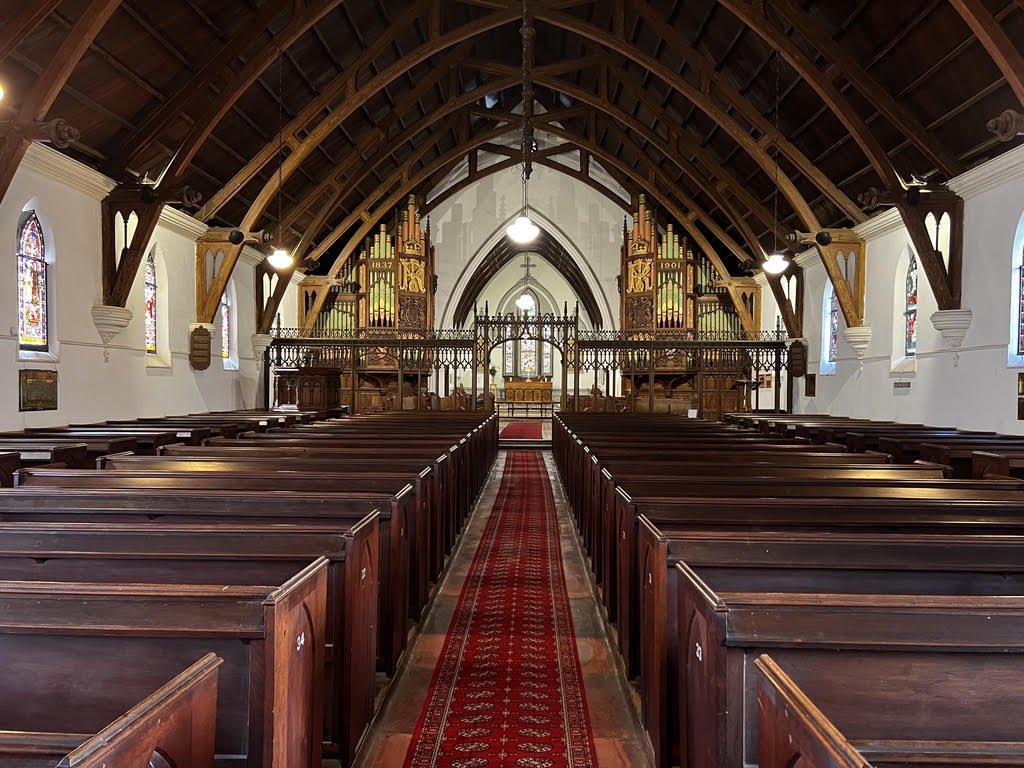
St. Paul’s has a single nave and an adjacent hall where the 11th Fire Company, known as “George Garland,” was founded by members of the British community in 1901.
Designed by English engineer William Henry Lloyd, who came to Chile to work on the construction of railway bridges, the Neo-Gothic church features laminated Oregon pine beams attached with nails and screws to form the ceiling arches.
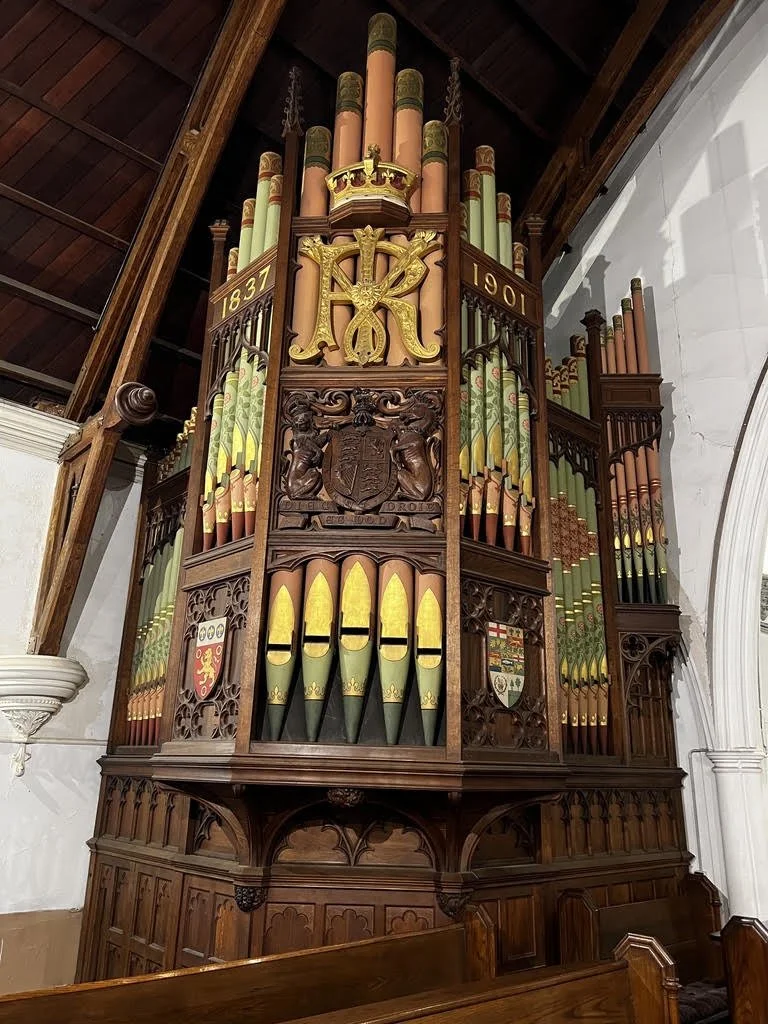
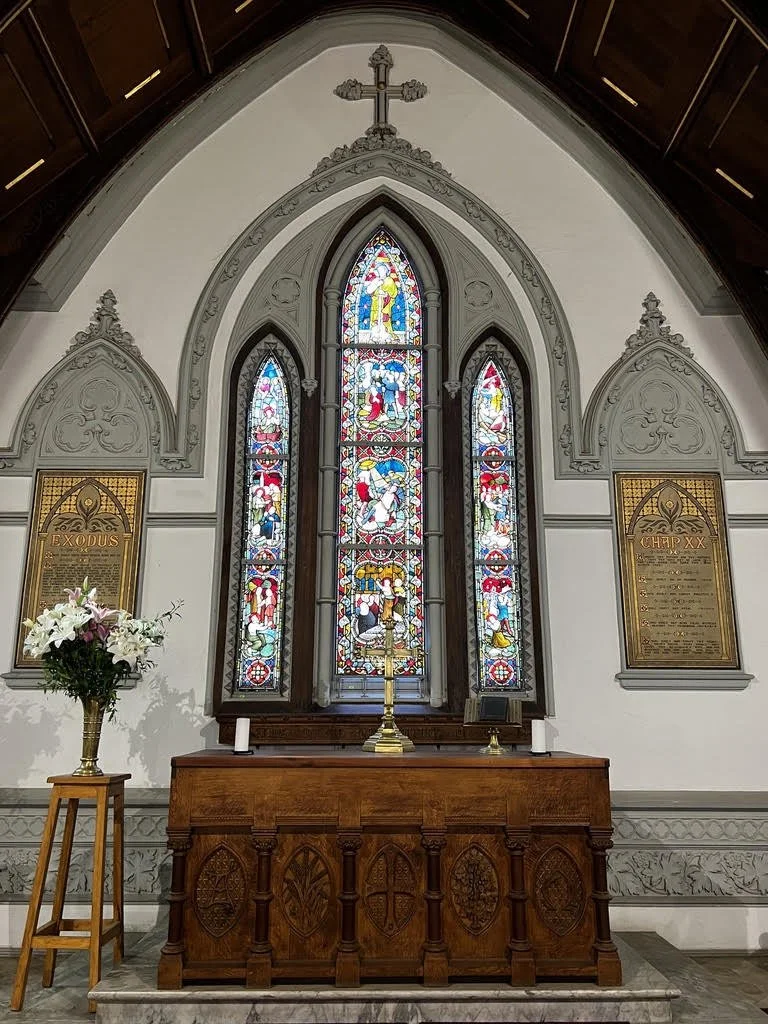
The building’s stained-glass windows, representative of the English Gothic Revival, include one made by Morris & Co. The church is famous for its Queen Victoria Memorial Organ, built in England by Forster and Andrews. The organ has kept the building alive with concerts every Sunday for the past 35 years.
St. Paul’s was under the jurisdiction of the Diocese of the Falkland Islands, which covered almost all of South America, until 1963. In 1979, the Chilean government declared it a historic monument. In 2016, it became a cathedral.
That same year, the Dib family bought the former German School of Valparaíso, which operated from 1870 to 1985, when an earthquake measuring magnitude 8 damaged the building. Dib transformed it into the Immigrant Museum, which recreates the lives of Europeans and Arabs who arrived in Valparaíso during the 19th and early 20th centuries.
Since opening in August 2025, the museum has become one of the most visited attractions in the Valparaíso area, which UNESCO declared a World Heritage site in 2003.
The agreement with Destino Valparaíso will take effect on Nov. 30. From that date, St. Paul’s will undergo restoration work on its roof, floors, pews and stained-glass windows.
The church will continue to host services and events, including the ordination of pastors, weddings for members of the British community and the Remembrance Service in November.
In a way, it will continue to serve as a meeting place for descendants of British immigrants, as it did more than a century ago, when it brought together their ancestors who had arrived in Valparaíso by sea.
You can read this story in Spanish here.
Graciela Ibáñez is a journalist with a Master of Arts degree from Columbia Journalism School, where she graduated in 2008. She covers Chile for international media outlets, including TRT World and The Art Newspaper. She holds a Bachelor of Arts degree from Universidad Adolfo Ibáñez in Viña del Mar.