
What We Learned From Pope Leo XIV’s 11-Day Africa Trip
ROME — Pope Leo XIV’s first international apostolic journey was clouded by a heated dispute with President Donald Trump, criticisms of appearing to appease the Islamist persecution of Christians and conflicts over homosexuality and polygamy in the Catholic Church.
“I don’t want to get into a debate with him,” the pope said as he boarded the papal flight to Algiers, referring to a high-profile spat after Trump unleashed a war-of-words against Leo, calling him “weak on crime” and “terrible for foreign policy.”
“I will continue to speak out loudly against war, looking to promote peace, promoting dialogue and multilateral relationships among the states to look for just solutions to problems,” Pope Leo added.
Amid the controversies surrounding Leo’s 11-day trip to Algeria, Cameroon, Angola and Equatorial Guinea from April 13-23, the pontiff focused on themes of harmony and human dignity, while condemning global strife, exploitation and state-sanctioned execution.
Summing up the high points of his journey on April 29, Leo stressed that the purpose of his apostolic journey to Africa was to encourage God’s people and to proclaim peace at a juncture “marked by conflicts and serious and frequent violations of international law.”
“The pope’s visit is, for the African peoples, a chance to make their voices heard, to express the joy of being God’s people and the hope for a better future, of dignity for each and every one,” the pope told his general audience in St. Peter’s Square.
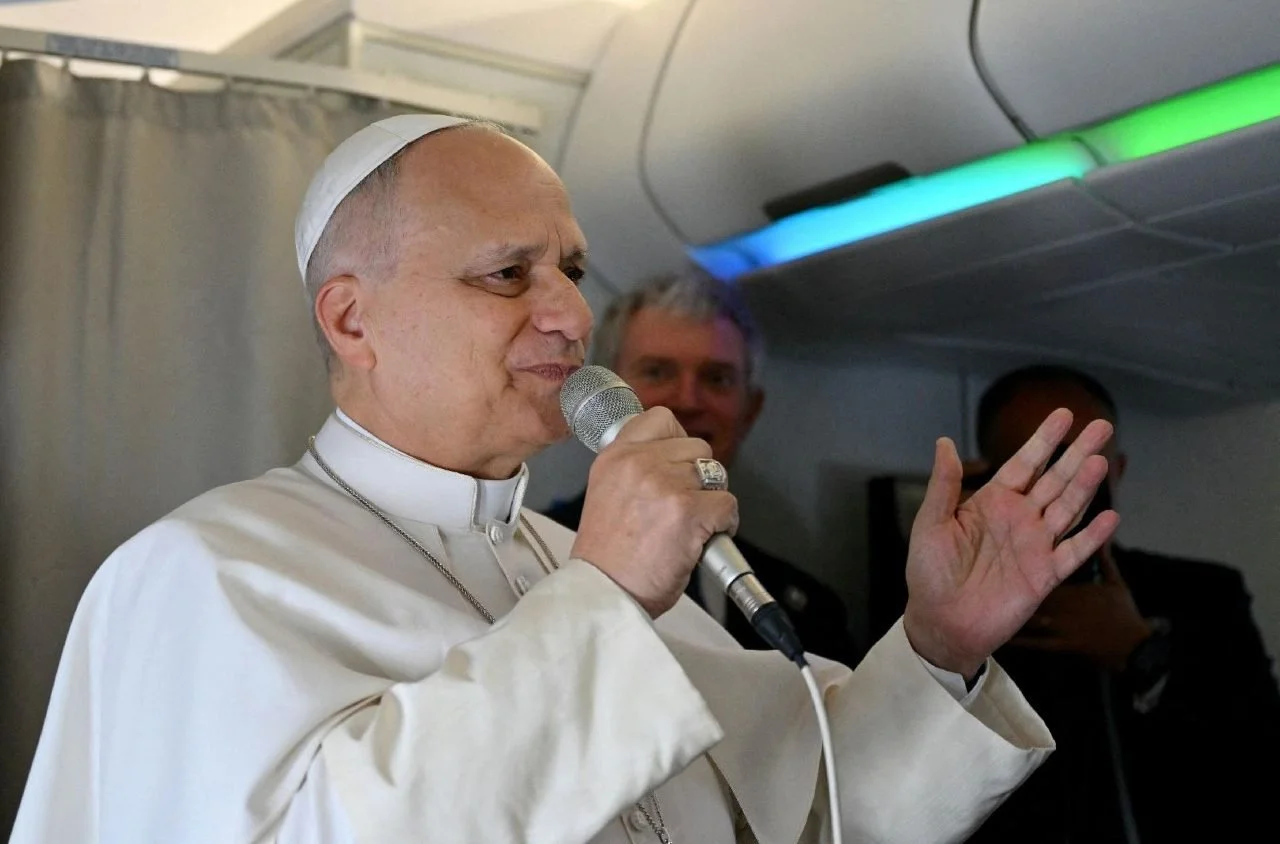
Pope Leo talked with reporters during his 11-day Africa trip. (Photo courtesy of the Vatican)
Algeria
In Algeria, the birthplace of St. Augustine of Hippo, Leo said he found himself “revisiting the roots of my spiritual identity” as a member of the Augustinian order. At the same time, he was able to cross and strengthen bridges with the Church Fathers, with Muslims and with Africa.
The pontiff shared how in the predominantly Muslim nation of Algeria, he experienced first-hand how it is “possible to live together as brothers and sisters, even of different religions, when we recognize ourselves as children of the same merciful Father.”
Freedom of religion advocates were disappointed when Leo did not respond to their persistent pleas to address the state-sanctioned persecution of Christians in Algeria. In a report called “The Oppression of Christians in Algeria,” the European Centre for Law and Justice complained that the government had reduced Catholicism to a state-tolerated religion with no missionary role.
The Alliance for Defending Freedom pleaded for Pastor Youssef Ourahmane, a Muslim convert and church leader, imprisoned in Algeria for leading “illegal worship.” Muslim convert Djamila Djelloul urged Leo to demand “the right to change one’s religion for those coming from Islam.”
Reaching out to the Islamic world, the pontiff visited the Grand Mosque of Algiers, observing that “the visit to the mosque was significant.”
He stood silently before the mosque’s qibla, the wall facing Mecca, alongside the mosque’s rector Mohamed Mamoun Al Qasimi. One objective of his trip was to build “bridges between the Christian world and the Muslim world,” Leo said.
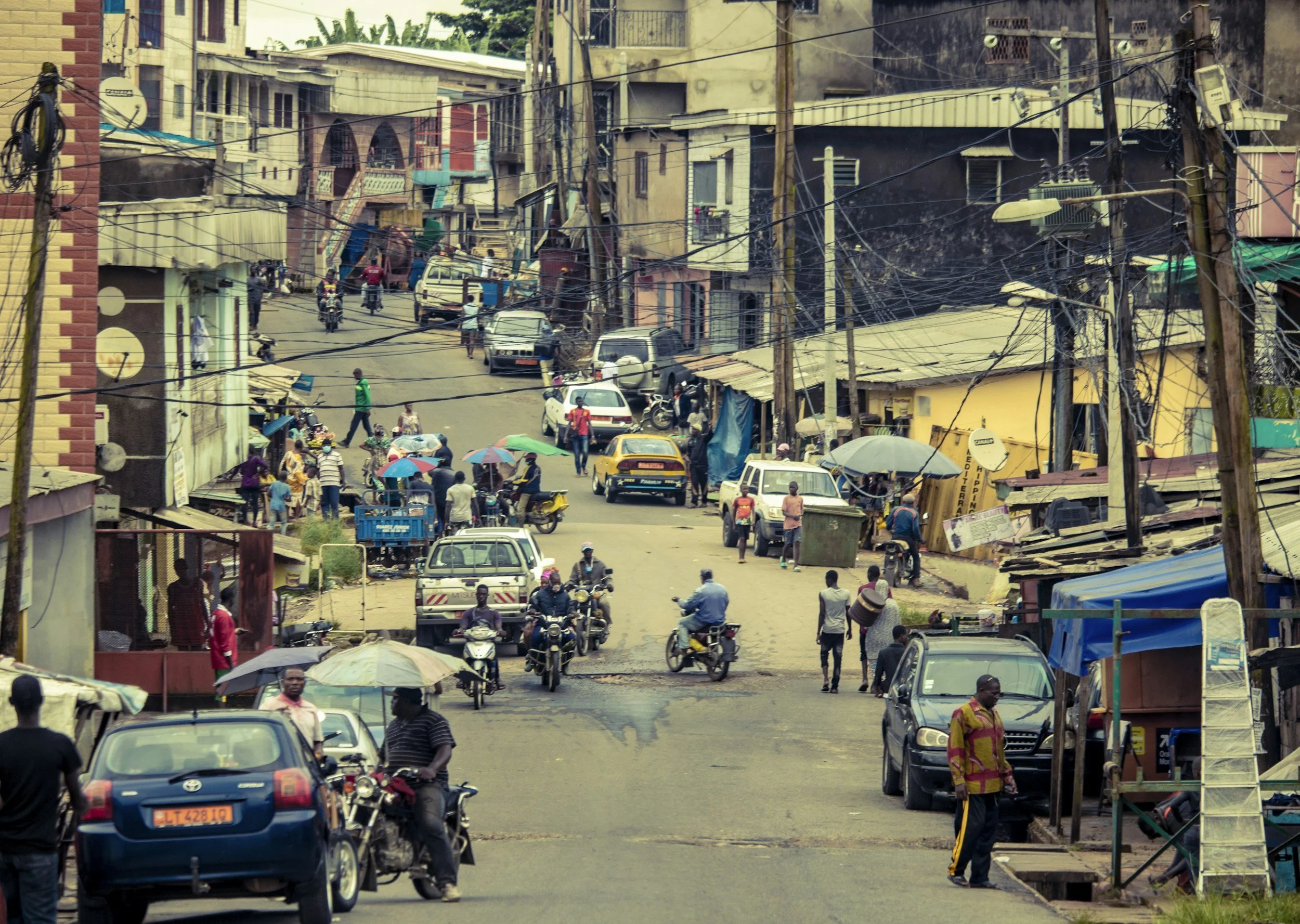
Cameroon is inhabited by both Christians and Muslims. (Unsplash photo)
Cameroon
In Cameroon, Leo said he addressed the need to distribute wealth fairly, provide space for the young, overcome endemic corruption, promote integral and sustainable development, and counter “the various forms of neo-colonialism with far-sighted international cooperation.”
“The crisis impacting these regions of Cameroon has brought Christian and Muslim communities closer than ever before,” the pontiff told the Bamenda community, which has been reeling under separatist strife, in the Cathedral of Saint Joseph. Leo met with 12 representatives of Islamic communities, some of whom he had welcomed to Rome in December.
Leo also extended ecumenical hospitality to the Anglican bishop of Cameroon, Thomas-Babyngton Elango Dibo. Two weeks later, the pontiff again met the Anglican prelate and his wife, Estelle, at his general audience in St Peter’s Square, the Anglican Centre in Rome said.
Using uncharacteristically strong words, Leo condemned warmongering political leaders and the arms industry.
“The masters of war pretend not to know that it takes only a moment to destroy, yet a lifetime is often not enough to rebuild,” he said, condemning those who “invest much of the profit in weapons, thus perpetuating an endless cycle of destabilization and death.”
Later, Leo clarified that he was not seeking to debate Trump when he criticized “tyrants” for spending billions on wars. The pontiff said the remarks, delivered days after a high-profile spat with the U.S. president, had been written “well before” the president commented on Leo.
Angola
In Angola, a majority-Christian nation and a former Portuguese colony where Catholics make up more than 18 million of a population of 40 million, Leo addressed the lingering political fractures that continue to persist after its 27-year civil war.
“It is possible to build together a country where old divisions are overcome once and for all, where hatred and violence disappear, and where the scourge of corruption is healed by a new culture of justice and sharing,” the pope told the 100,000 people gathered for Mass in Kalimba.
In Luanda, Leo pleaded with politicians: “Do not suppress the ideas of the young.”
Addressing Angolan President João Lourenço and the country’s political leaders, Leo spoke of the “material riches upon which powerful interests lay their claim, even within your own country.”
“At every level, we see how it sustains a model of development that discriminates and excludes, while still presuming to impose itself as the only viable option,” he warned.
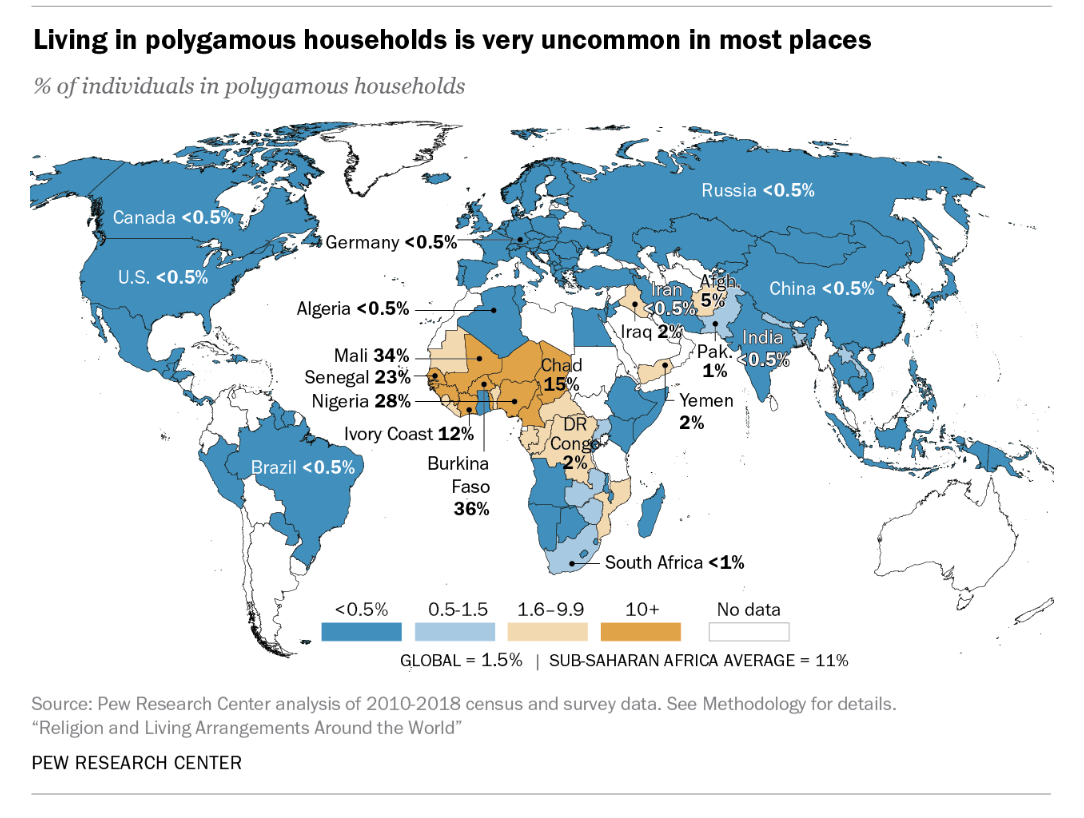
Pope Leo also heard testimonies, including one from the King of Mankon, Fon Fru Asaah Angwafor IV, who thanked Leo for the papal mandate given to the Synod of Bishops, the Pope’s global advisory board, to study the question of polygamy.
Although technically illegal, polygamy is generally socially accepted in Angola and is also somewhat common in nearby countries. Earlier this year, Catholic Bishops in Africa released a report, acknowledging that monogamy is the “biblical ideal” but also outlining the delicate personal, financial and family challenges that would come with a polygamist family choosing to fully immerse themselves in Catholic teachings and the church.
“We are waiting for the results of [the Synod of Bishops study] so that those traditional rulers and people who are in that situation may be able to worship God freely in the church without being judged or rejected within the same Church,” Angwafor said.
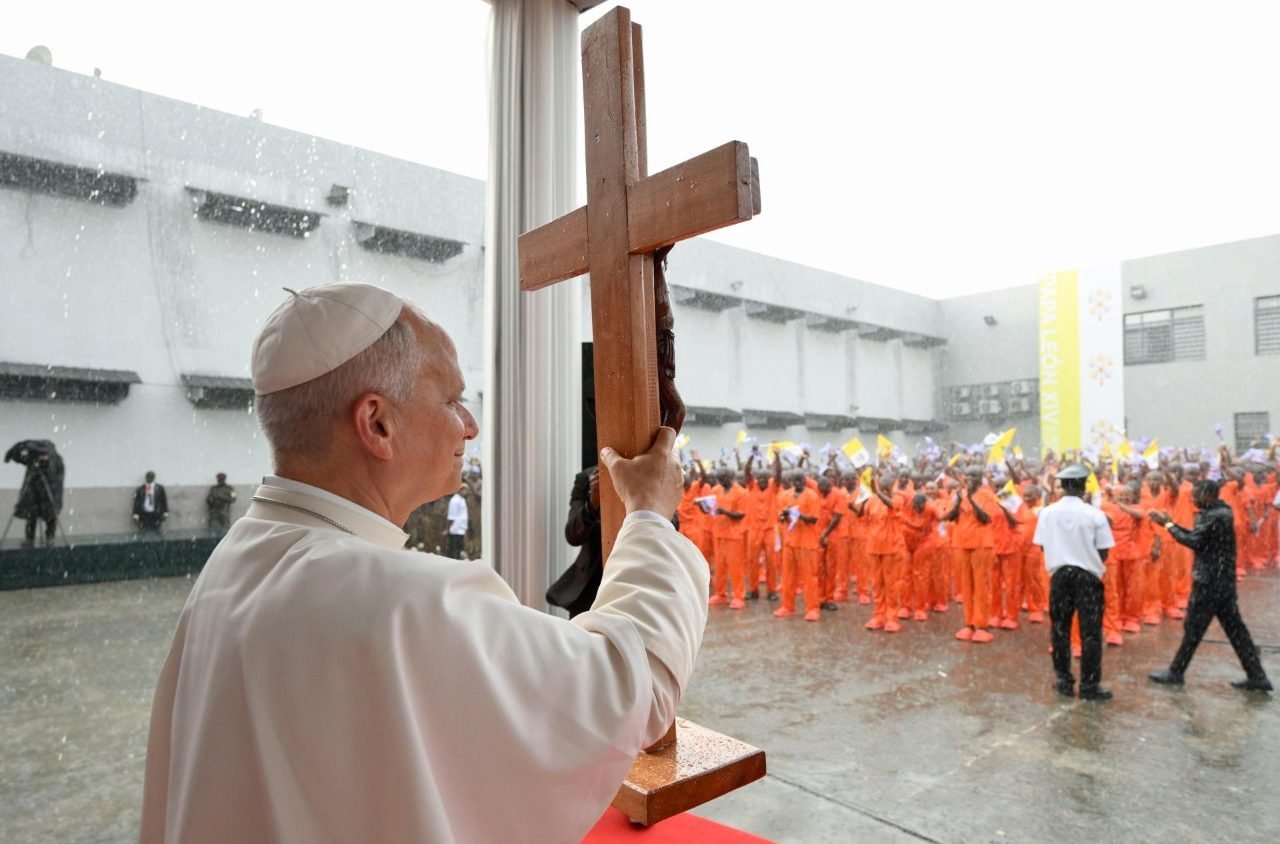
Pope Leo holds up the wooden cross for the prisoners to see. (Photo courtesy of the Vatican)
Equatorial Guinea
The pontiff described the last phase of his trip to Equatorial Guinea in moving words.
“I cannot forget what happened in the prison in Bata,” where “the prisoners sang at the top of their voices a song of thanksgiving to God and to the Pope, asking him to pray ‘for their sins and their freedom.’ I had never seen anything like it.”
“And then they prayed the ‘Our Father’ with me in the pouring rain. A genuine sign of the Kingdom of God!” Leo said.
On his return flight, Leo addressed the issue of same-sex blessings in the Catholic Church, explaining that he has not revoked Fiducia Supplicans, the 2023 Vatican document allowing non-liturgical blessings for same-sex couples.
He noted that the Vatican did not agree with the German bishops’ proposals for “the formal blessing” of same-sex couples, “beyond what Pope Francis has specifically permitted,” since it “could cause more disunity than unity, and that we should seek to build our unity on Jesus Christ and on what Jesus Christ teaches.”
“I condemn all actions that are unjust. I condemn the taking of people's lives. I condemn capital punishment,” he told reporters on his return flight to Rome. “As a pastor, I cannot be in favor of war. And I would like to encourage everyone to make efforts to seek answers that come from a culture of peace, not hatred and division.”
Jules Gomes has a doctorate in biblical studies from the University of Cambridge. Currently a journalist based in Rome, he is the author of five books and several academic articles. Gomes lectured at Catholic and Protestant seminaries and universities and was canon theologian and artistic director at Liverpool Cathedral.