
‘We Have Endured’: Islam’s Third Branch Has Deep Roots On This African Island
HOUMT SOUK, Tunisia — Wedged between a pizzeria and a clothing shop in the capital of Tunisia’s island of Djerba, lies an ancient treasure. The El Barounia Library is one of the oldest centers preserving Ibadi heritage in North Africa.
Ibadism presents itself as a third path, between Sunnism and Shiism, within Islam.
Ibadism developed as a peaceful branch of the Kharijite movement, which originated during a dispute following the death of the Prophet Muhammad. Two groups disagreed on who should be the Islamic leader, sparking a civil war. When the two leaders agreed to settle their conflict through human mediation, the Kharijites condemned both of them, arguing that only God has the authority to judge such matters.
READ: Divorce Rates In Zimbabwe Are Forcing Churches To Adapt
When their Kharijite counterparts embraced violence against the central powers, the Ibadis parted ways and pursued a peaceful course. Today, Ibadis no longer consider themselves Kharijites, and they make up a tiny fraction of muslims worldwide, with an estimated three million Ibadis.
The majority of the community is concentrated in Oman, but there are about 60,000 in Tunisia and a sizeable group here on the island of Djerba.
I rang the library’s doorbell and a soft-spoken man opened the door. Saïd Ben Youssef Ben Mohammed Al-Barouni works as the custodian of the family library and gives us a tour.
“Here, there are 1,200 books and 800 files from all schools of jurisprudence [interpretations of divine law],” Al-Barouni said.
It was founded six generations ago by his “grandfather,” Abu Uthman Al-Barouni, who studied at Al-Azhar University, one of the world's most prestigious Islamic institutions.
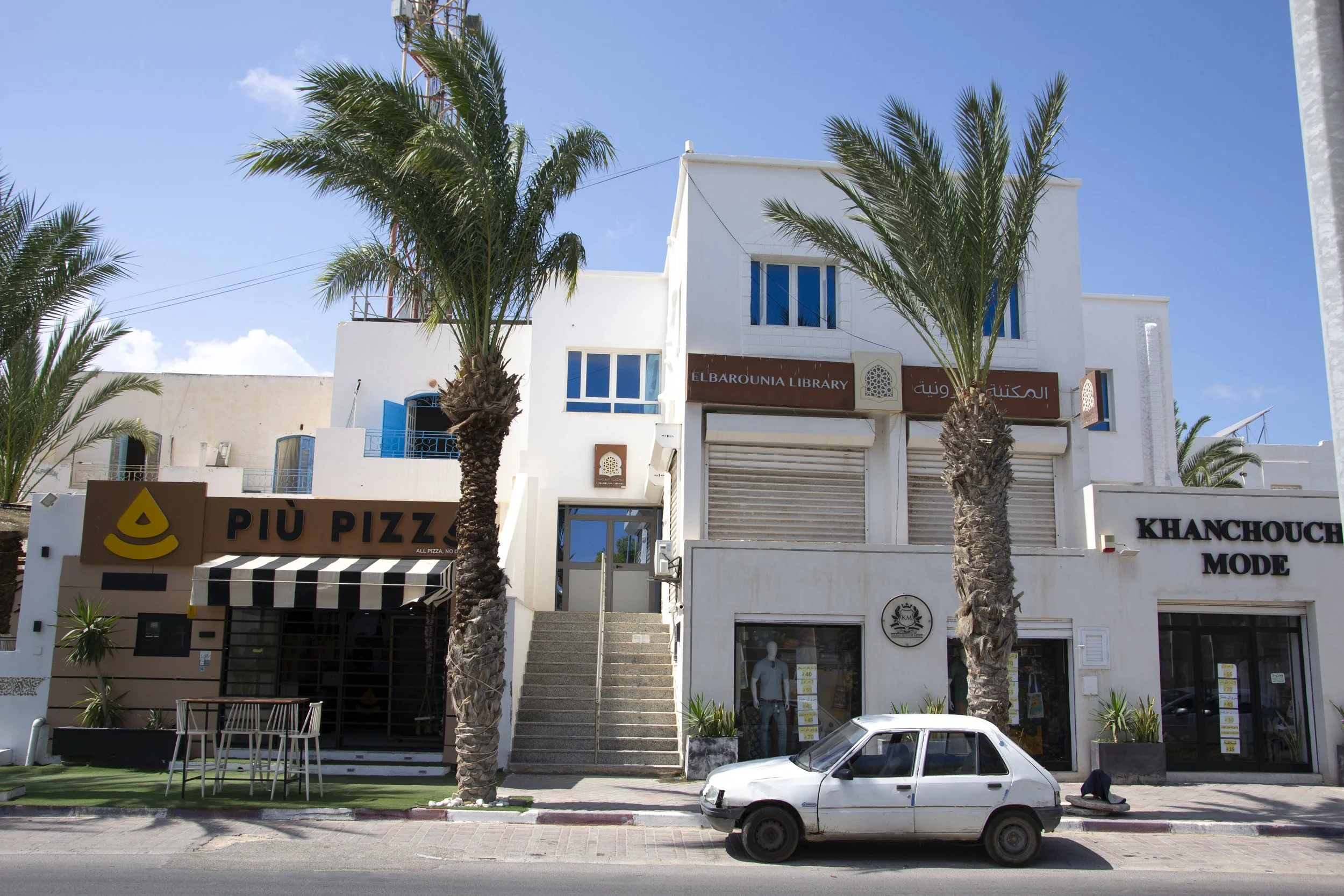
The library’s inconspicuous entrance. (Photo by Nadia Addezio)
He later became a teacher of Ibadi fiqh (Ibadi Islamic theory of law) and taught students from around the region.
We sat in his office. Al-Barouni opened a book that recounts the history of the library he safeguards and notes that it is thanks to his ancestor that this heritage is now accessible internationally.
In the early 1800s, Abu Uthman Al-Barouni copied many of the religious texts by hand, years before movable-type printing arrived in Egypt. After 20 of teaching in Cairo, in 1811, he moved to Djebel, a historic stronghold of Ibadism.
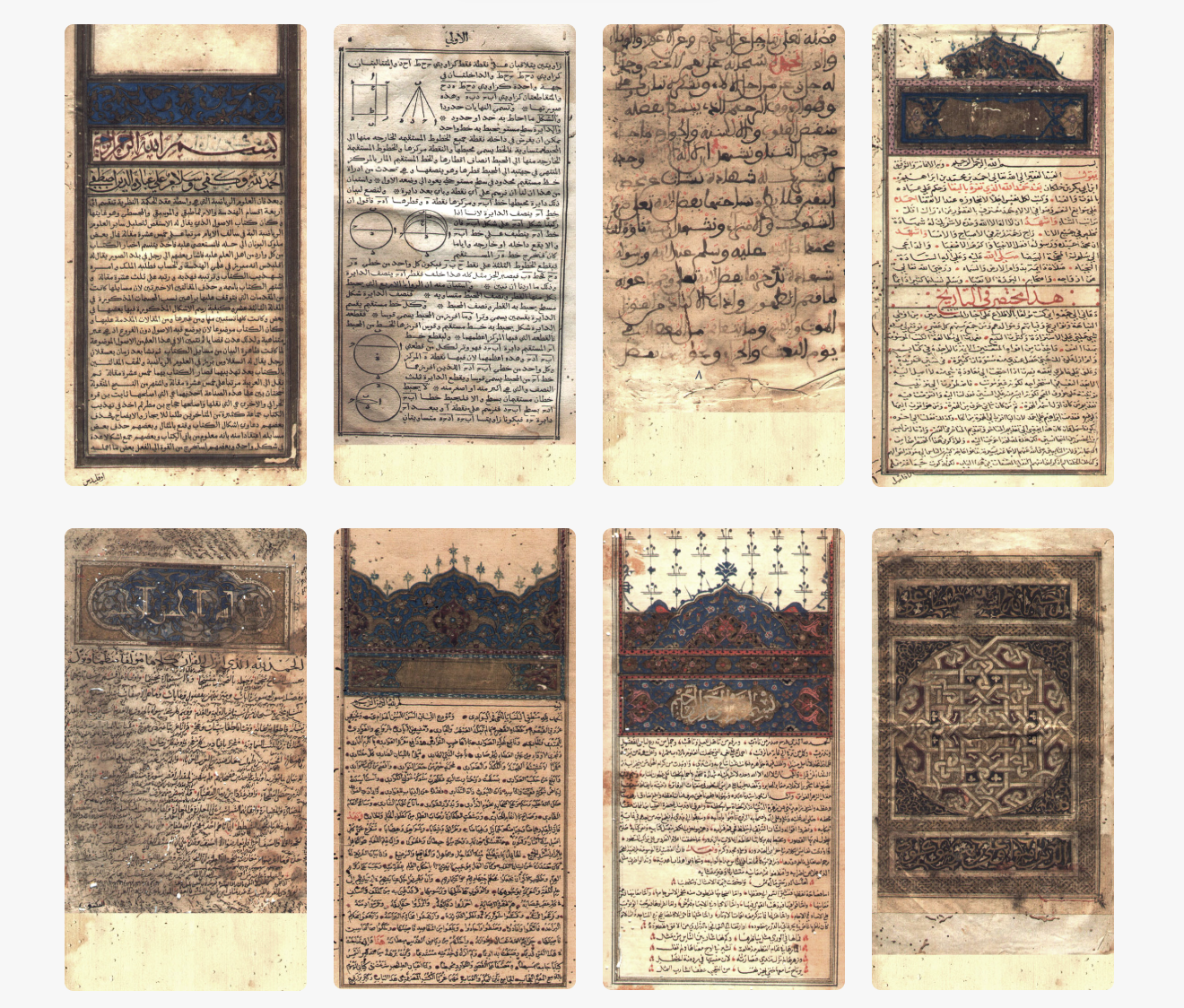
Examples of the library’s manuscripts. (Source: Baronial Library of Djerba)
The ‘Third Way’ spreads
“In the early Middle Ages — between the eighth and tenth centuries — a large part of the Maghreb [Areas including Algeria, Libya, Mauritania, Morocco and Tunisia] was Ibadi, with the exception of Morocco,” said Virginie Prévost, a Belgian art historian at the Université libre de Bruxelles who specializes in Ibadism.
Ibadism reached North Africa at a time when the region was administered as a province of the Umayyad Empire. Islamic rule coincided with the gradual Islamization of the native populations, commonly known as “Berbers.” Although they converted to Islam, the Berbers largely remained on the margins of political life and decision-making centers.
From Iraq, preaching missions proposed an alternative to the caliphal system, offering the Berbers the possibility of choosing their own ruler. The idea resonated particularly in the mountainous region near the Tunisian border with Libya and in southern Tunisia.
It also took root in central-western Algeria, where in 777 A.D. the first and only Ibadi state in the region was established: the Rustamid state. Ibadism is still practiced today in Algeria’s Mzab Valley.
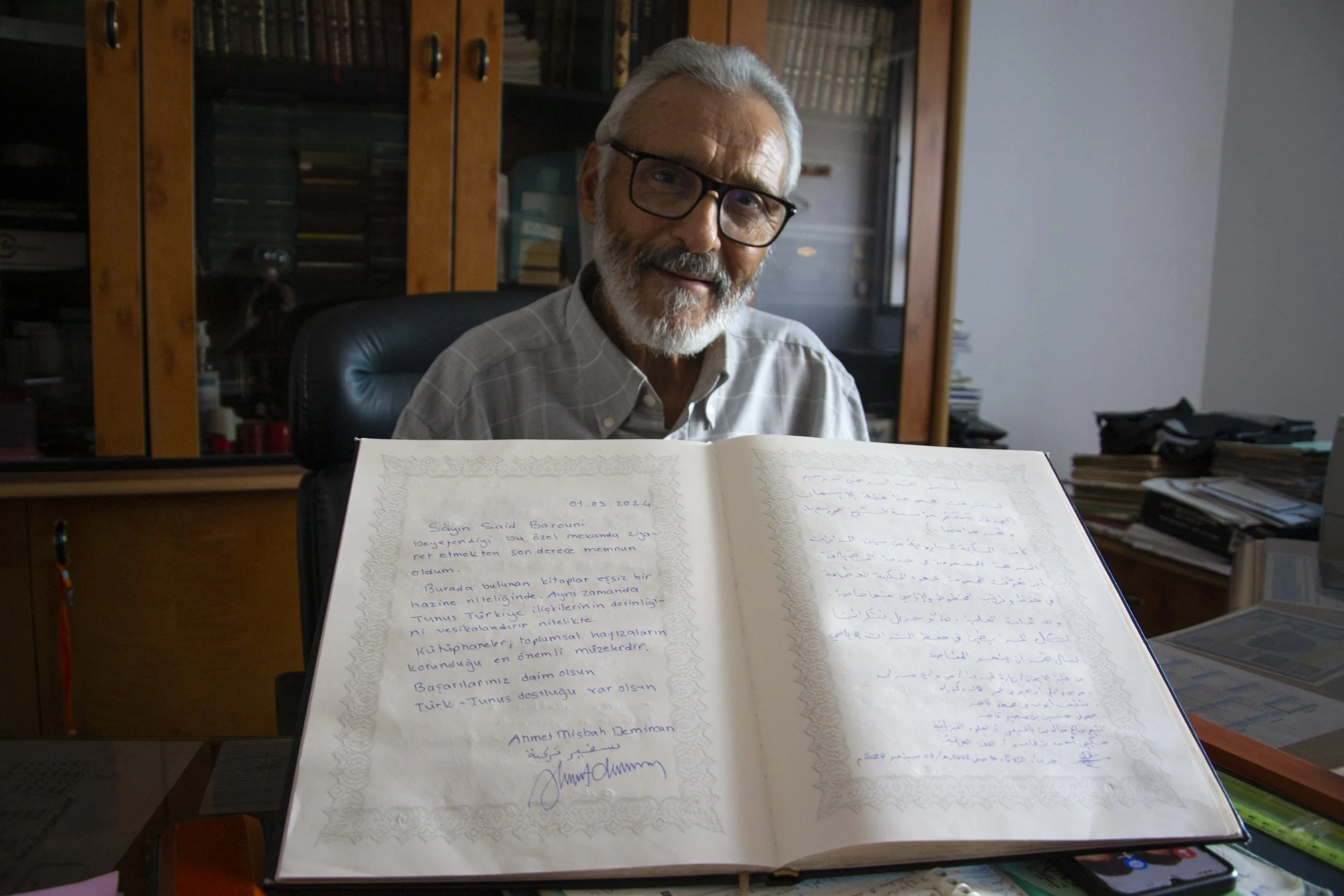
Abu Uthman Al-Barouni (Photo by Nadia Addezio)
The nucleus Of the ancient library
Al-Barouni was invited to teach at Djerba’s oldest and most prestigious school: the Abu Miswar Mosque, also known as the “Great Mosque.”
“At that time, our grandfather decided to settle permanently on the island. He brought with him his family and all the books he owned,” Al-Barouni recalled.
This marked the first step in the family library’s formation, initially set up in 1819 in Abu Al-Barouni’s private home. The manuscripts remained there until 1966, when the family built a new facility to house them exclusively. In the meantime, additional books and manuscripts from Djerban families were acquired.
Walking through the reading rooms, our attention was drawn to a table where rolled parchments lie beside a light box with opaline glass. Sheets yellowed by time are spread out.
“The manuscripts are disinfected, cleaned, catalogued and digitized so that researchers can consult them online,” Al-Barouni said.
The digital shift was made possible through collaboration with Zinki Company, a technology firm that uses artificial intelligence to process Arabic documents.
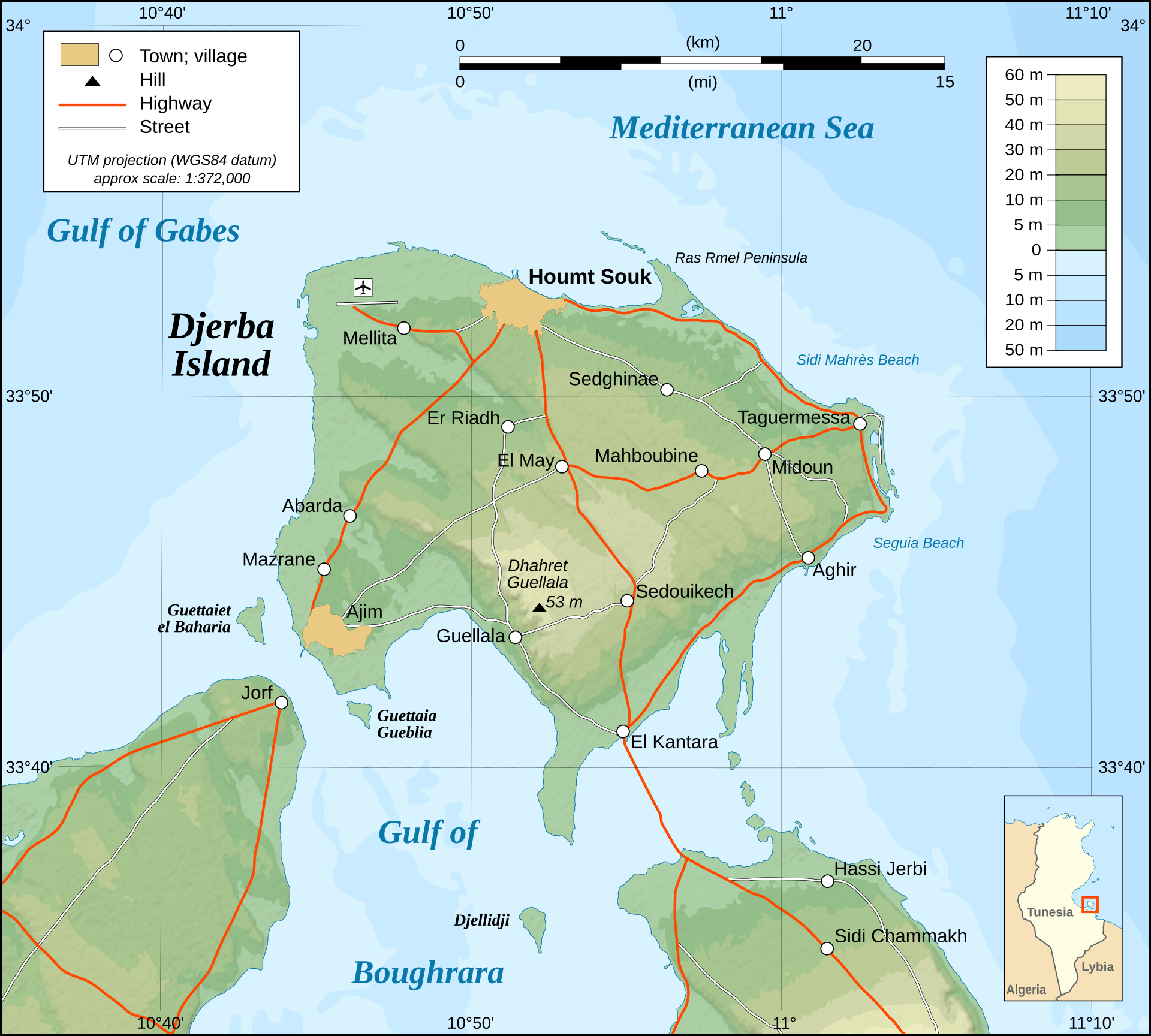
Wikipedia Commons image
A faith seeking recognition
Yet knowledge of Ibadism remains limited.
“When the French protectorate was established [in 1881], the colonial authorities were aware of the existence of an Ibadi community, especially in Djerba, but they preferred to ‘turn a blind eye,’ with the result that Tunisian Ibadism remained in the shadows,” Prévost said.
In Tunisia, as in the rest of the region, Sunni Islam is predominant. Even after Tunisia gained independence in 1956, Ibadism lived in the shadows. A turning point came only in 2011, with the fall of dictator Zine El-Abidine Ben Ali, and groups began reclaiming Ibadi identity.
However, at the same time, some Sunni muslims embraced the fundamentalist Salafi movement, which considers Ibadism heretical, and tensions arose.
“The Fadloun Mosque, the only one on the island converted into a museum, was even confiscated from the Ibadis by Salafis after the revolution,” Prévost recalled.
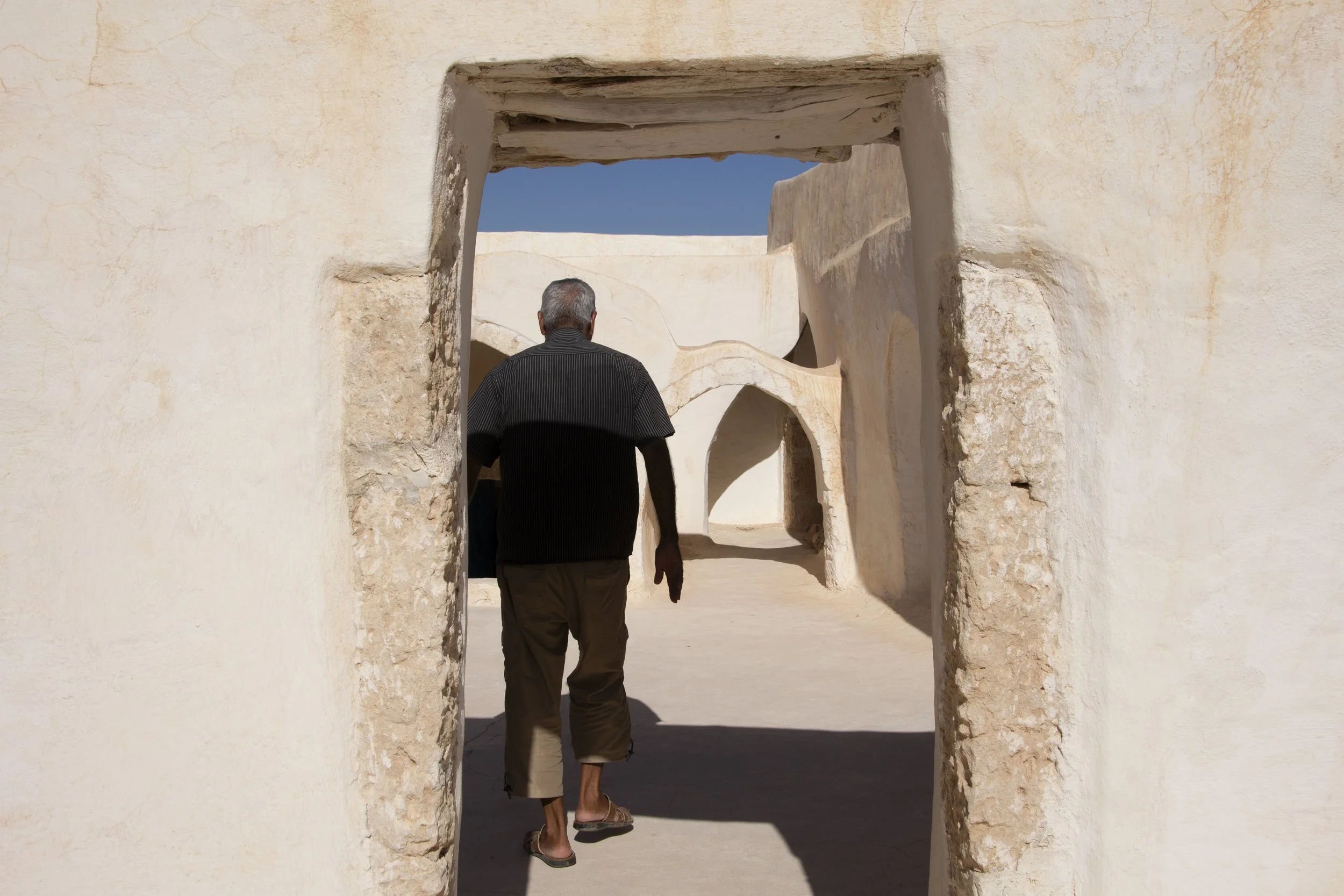
Ibadism remains a practice among some of Tunisia’s citizens. (Photo by Nadia Addezio)
Underground Mosques
Today, that memory seems distant on the island.
Safeguarding Ibadi heritage is a way of life for the believers on the island: It is preserved through historical texts and rediscovered in the memory woven into Djerba’s urban fabric.
“The island’s Ibadi mosques serve multiple roles. They are not only places of worship, but also schools,” said Salah Ben Mahmoud as he guided us through the underground Bardaoui Mosque, “one of the largest subterranean mosques.”
In 2011, he founded the Djerba Ettawasol, an association to promote Ibadi historical memory.
“Instead of spending my time in cafés, I decided to commit to something meaningful and leave a mark for the future,” said the retired factory director.
With this spirit, he leads the way.
Inside the Bardaoui Mosque’s underground area, we enter small, bare rooms with rounded arches. The reasons behind this architecture remain debated. According to Prévost, Ibadis probably built the underground rooms to escape the heat.
The island’s Ibadi mosques serve multiple roles. (Photo by Nadia Addezio)
Plus, there is a cultural and spiritual dimension, tied to local traditions, where the underground world was perceived as a place of connection between earth and sky.
The underground placement also reflects Ibadi principles of discretion and modesty: the mosque should blend into the landscape, not dominate it, almost to the point of disappearing. This aesthetic and architectural simplicity ultimately facilitates the believer’s spiritual concentration.
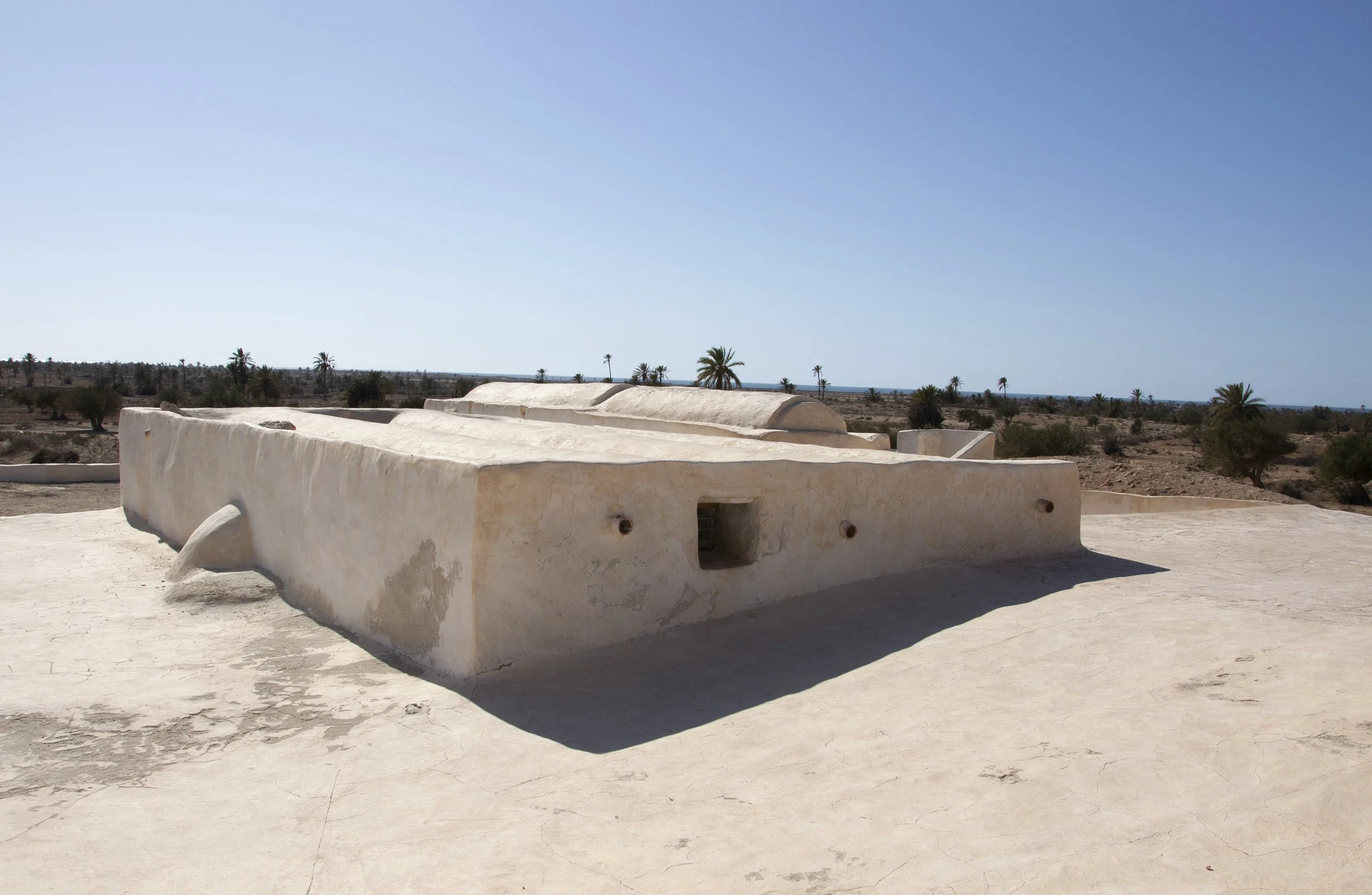
The same simplicity is evident at the Sidi Yati Mosque in El Fâhmîne. This cubic structure, coated in white plaster and topped with hemispherical domes overlooking the sea, once served as a lookout.
“When an unknown boat was spotted, someone would climb up there and light a palm leaf. The smoke would alert the population,” Ben Mahmoud said.
This heritage contributed to Djerba’s designation as a UNESCO World Heritage site in 2023.
As the day draws to an end, so too does the discovery of a religious minority that here, in Djerba, is instead a majority actor in the island’s past and present. It shapes relationships that develop around wala, the duty to assist one another.
“Those who need help, we help them, said Mahmoud with a smile. “We don’t wait for them to ask. This is our civilization. That is why we have endured for centuries.”
Nadia Addezio is an Italian journalist based in Rome. She focuses on North and West Africa, reporting on human rights in their multidimensional implications, resistance practices, African diasporas, environment, and migration. Her work emphasizes the social, political, economic, and geopolitical dimensions of these issues. Her countries of interest include Tunisia, Algeria, Mauritania, Niger and Cameroon.