
Amid Stunning Landscapes, A Monk, Zen Priest And Muslim Leader Feel At Home
(ESSAY) I drove slowly along a winding 13-mile dirt road in the Chama River Canyon Wilderness area in New Mexico on a cool Saturday morning. Aside from the occasional bird and the sound of my tires crunching on the gravel, there was no noise. The waning moon hung in the light blue sky as I made my way through switchbacks and arroyos.
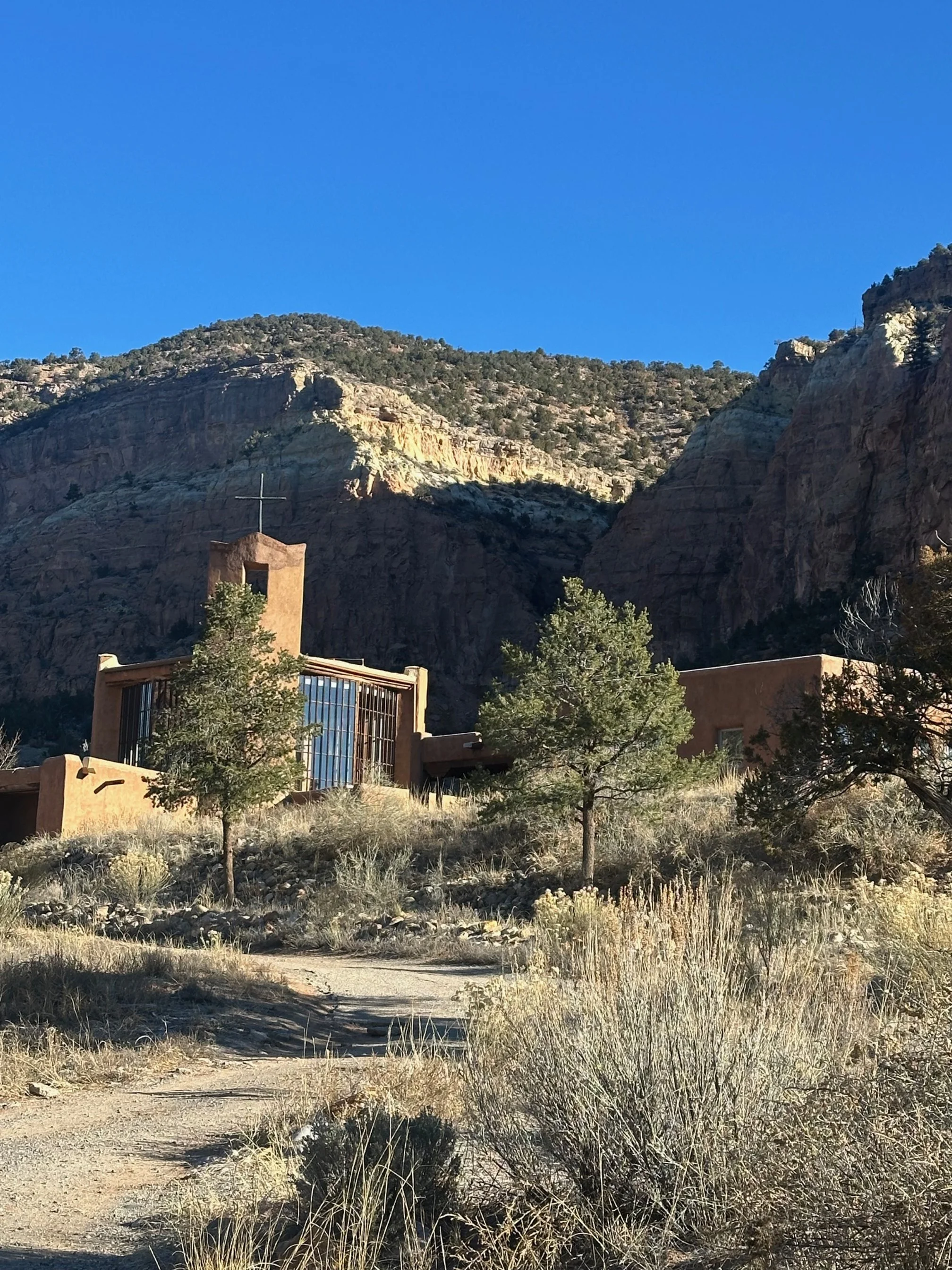
I parked and approached the monastery on foot. It was nestled at the base of a mountain and composed of clean lines and earth tones. In the high-ceilinged, light-drenched chapel, the mid-morning Terce prayer had begun.
The congregation that morning was composed of a family and several solitary attendees. We sat in the back, and robed monks sat in designated seating on the left side of the chapel. Psalms were chanted in low voices, underscoring the stillness. A carved wooden statue of Jesus with exaggerated bloodlines, a turquoise loincloth, and elongated limbs hung in a corner.
READ: How Prague’s Süleymaniye Mosque Became A Respite For Turkish Immigrants
After the service concluded, a smiling, bearded monk stood and motioned for me to meet him outside.
Across New Mexico, religious communities locate themselves in remote areas in order to gain solitude and silence. Benedictine monks, Zen practitioners, and Muslim caretakers all recognize that seclusion sharpens our connection to the divine by eliminating the clamor of urban life.
The monk I spoke to that morning at Monastery of Christ in the Desert in Abiquiu, New Mexico, was Brother Dom Chrysostom Christie-Searles. He told me that monasteries try to select a location with natural beauty, silence, and minimal light pollution.
“This affords me and others the chance to listen,” Chrysostom said. “You have to be away from the noise to hear.”
Silence isn’t just the absence of speech.
“You can fill it with prayer and meditation,” Chrysostom said. “It’s filling a space with God and allowing God to enter a space. You keep silent because you don’t know who is praying, and it allows you to listen and observe.”
The monks pray five times a day, which brings “predictability” and “an expectation of how we live and communicate with God through prayer,” Chrysostom said.
Photos by Zach Abend
The desert provides common ground for anyone seeking a connection between the self and the divine, whether it’s achieved through prayer, meditation, or stewardship of the land.
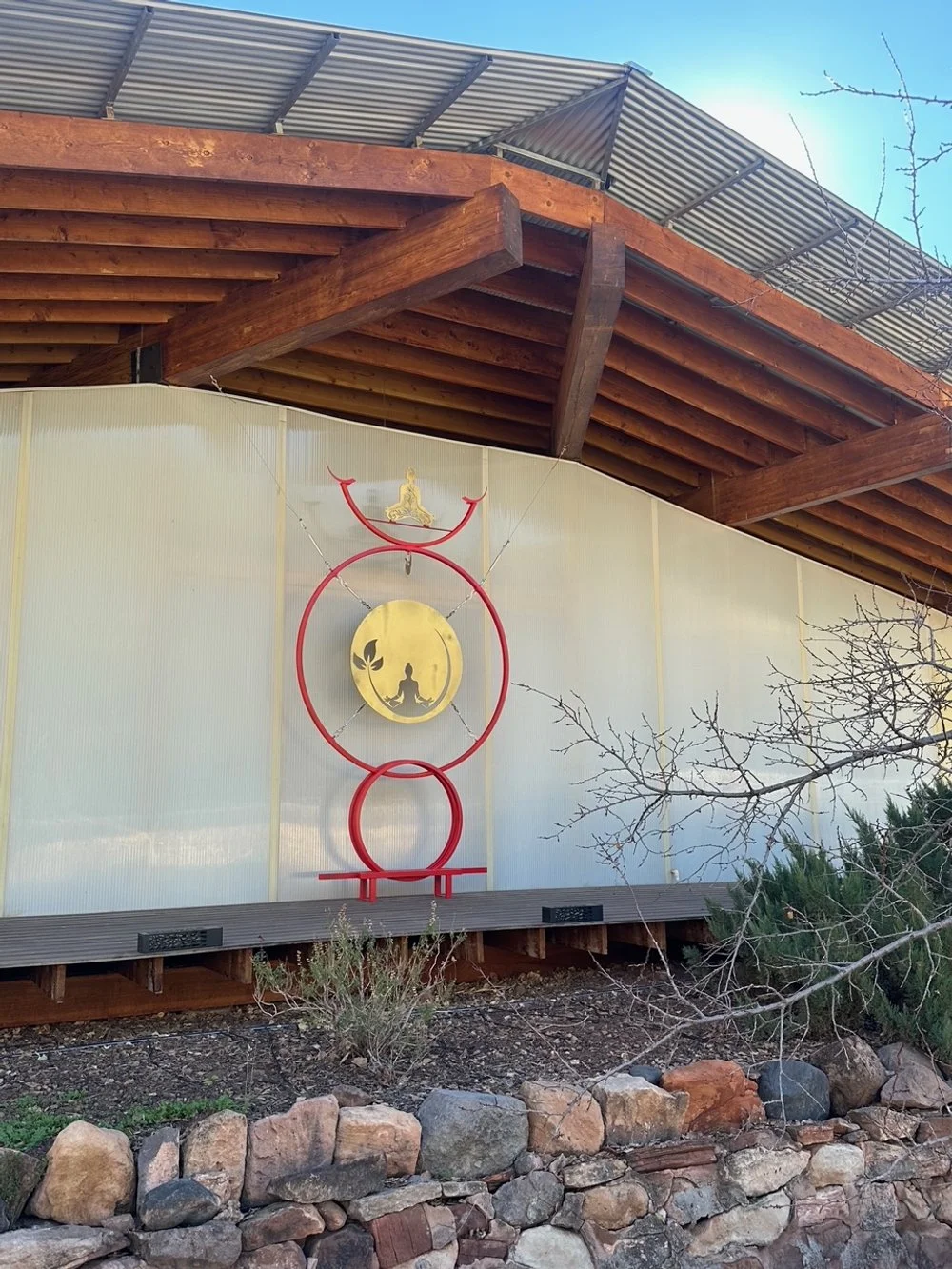
Jiun Hosen, the Abbess of the Bodhi Manda Zen Center in Jemez Springs, and a Zen priest, believes that being out in the desert helps people find quiet. “The Zen Center offers silence, something we have forgotten in our lives,” she said.
Our minds are naturally noisy, and meditation helps us concentrate.
“The practice we do here allows us to see the mind doing its thing,” Hosen said. “We stop and bring the focus back to the breath and the emotions.”
The members of Bodhi Manda incorporate the silent mindfulness of their meditation into the daily tasks needed to maintain the center – a Zen practice known as Samu.
Hosen compared the surface noise of our minds to the ocean. “If you dive in, a few feet under, it’s still,” she said. Indeed, the Zen center is surrounded by water. It’s located on the banks of the Jemez River and has several hot springs on the grounds, which heat the center geothermally.
The Benedictine method of filling silence with prayer and the Zen tradition of finding silence via awareness require stillness, repetition, and commitment.
The pursuit of silence and the desert have always drawn seekers. Hosen recounted how, when she was 22, she bought a motorcycle and drove across the country, stopping to see where Jim Morrison practiced with the Doors. “December 8 is enlightenment day in Buddhism, and it’s also Morrison’s birthday,” she said with a twinkle in her eye. Soon after that trip, she started meditating and has never stopped.
Chrysostom said his calling to serve God had been a slow realization, which culminated while he was walking the pilgrimage routes of El Camino de Santiago de Compostela in Spain. “I heard a voice telling me he wants me,” Chrysostom explained. He laughed and added that he heard God in the middle of the trek and not at the end. He joined the monastery the next year.
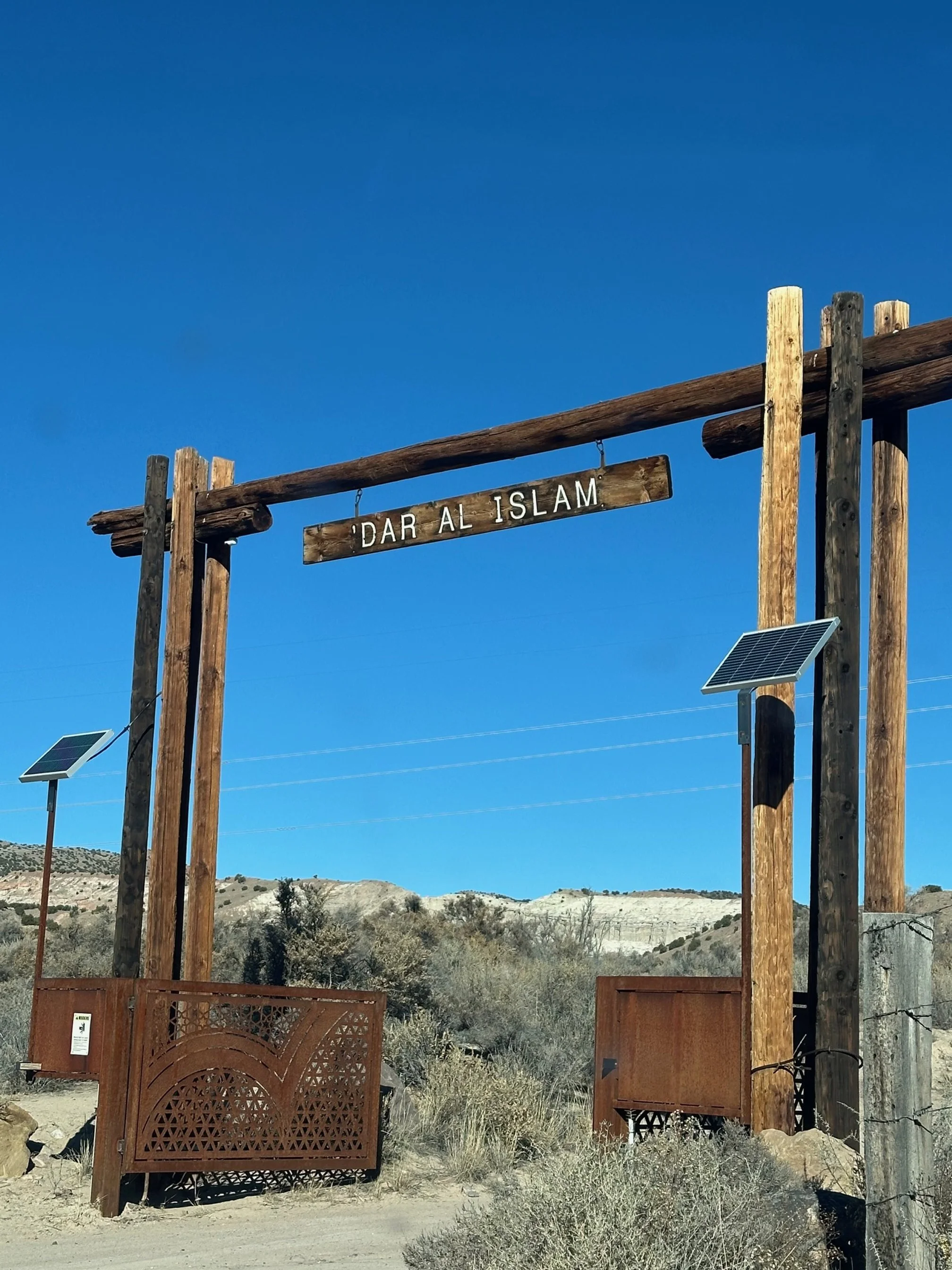
Rafaat Ludin, the Executive Director of Dar al Islam, a mosque and school in Abiquiu, New Mexico, first visited the mosque over twenty years ago. “I came here in 2004 on a retreat and fell in love with the place,” he said. “I kept coming back.”
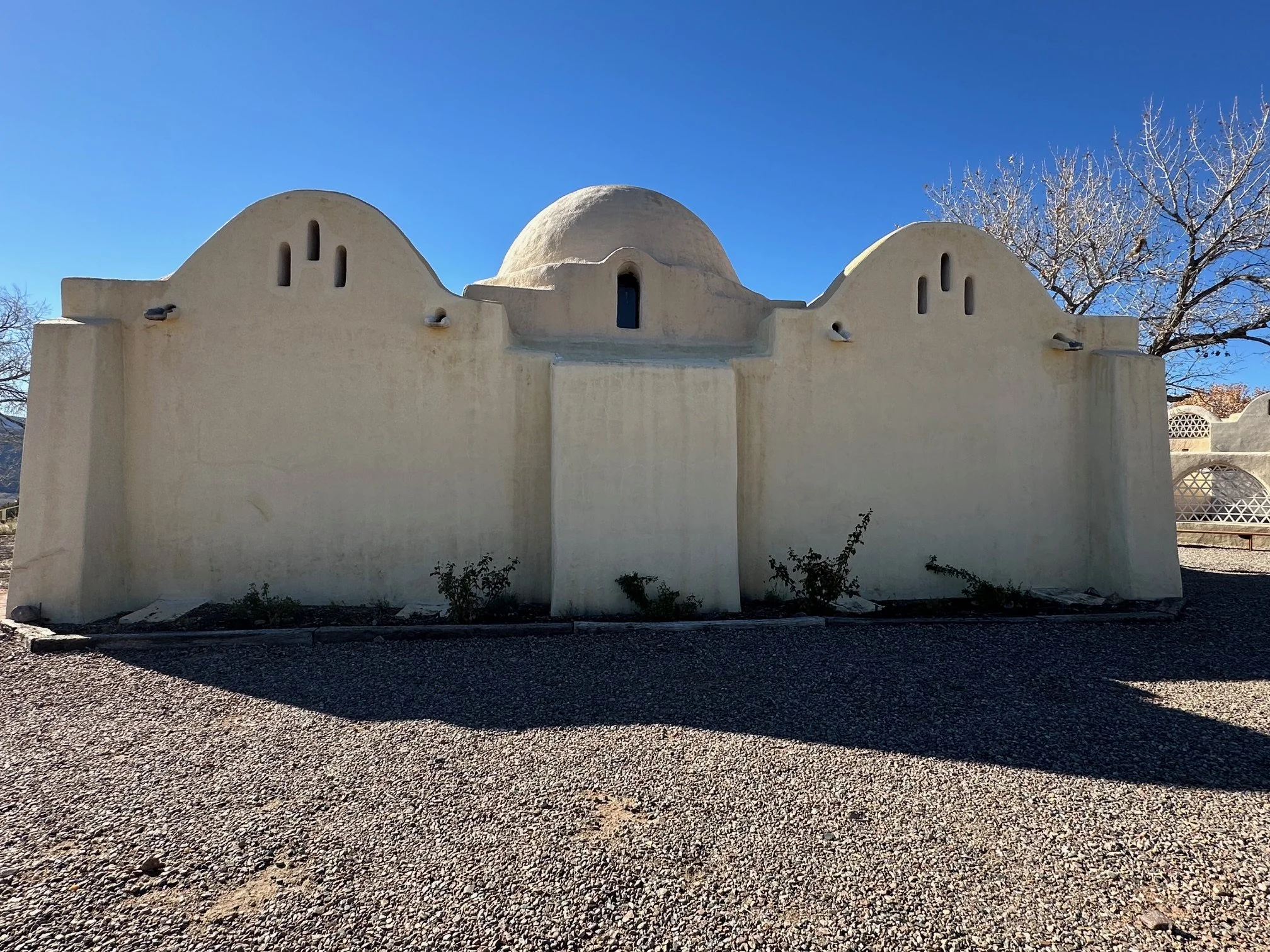
Dar al Islam is the largest adobe building in the U.S. with walls up to six feet thick. It was designed by Egyptian architect Hassan Fathy, who used an architectural style that ensures the flow of air and light.
The mosque is “a building of earth,” which is what all humans are made of, Ludin said. “The responsibility we owe the earth is the same as the one we owe our bodies.”
The thick walls enhance the solitude. “It’s silent in there,” Ludin explained. “We are surrounded by beauty and silence. It brings you closer to your creator.”
For Ludin, humans have a responsibility for the planet. “It’s a trust we hold,” he said. He paraphrased a quote from the Quran about the followers of Allah going “gently on the earth,” meaning they do it no harm. Being surrounded by God’s beauty makes us cognizant of how important it is.
The silence I encountered in all three spaces varied. The silence in the mosque felt slow and welcoming. In the Zen center, it felt reserved and segmented. In the monastery, it felt heavy and invoked restraint.
“You develop higher levels of patience with others and yourself,” Chrysostom said about living in the monastery. “You are looking for God in your brothers, guests, and inside yourself. Being here allows you the time and peace to do it.”
Ludin lives at the mosque while his family is in Colorado. “I am alone for daily prayer here five times a day,” he said. Being in such a beautiful place is definitely a consolation. “People who come here fall in love with the place,” Ludin said. “They notice that their level of spirituality becomes greater than before.”
The desert doesn’t have to be literal. It’s a state of mind more than an actual location. “There are deserts all around us,” Chrysostom said. “A desert is anywhere you find quiet and solitude.”
“You can find silence anywhere if you tap into silence,” Hosen agreed.
Zach Abend is a writer based in Utah.