
A Religious Freedom Martyr Took Risks. A Book About Him Should, Too.
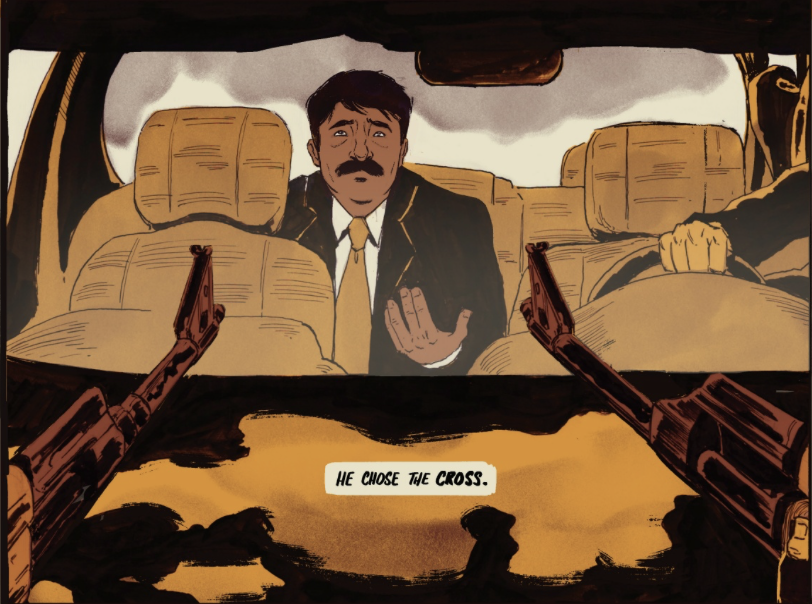
(REVIEW) On March 2, 2011, Shahbaz Bhatti was shot and killed by the Pakistani Taliban. The Taliban said the reason for his assassination was his opposition to blasphemy laws.
Fifteen years after his death, his life, martyrdom and relentless advocacy for the rights of religious minorities have been recorded and celebrated in a graphic novel titled, “Blood and Water,” written by Marvel Comics writer Matt Yocum and illustrated by Jordan Holt of “Theseus.”
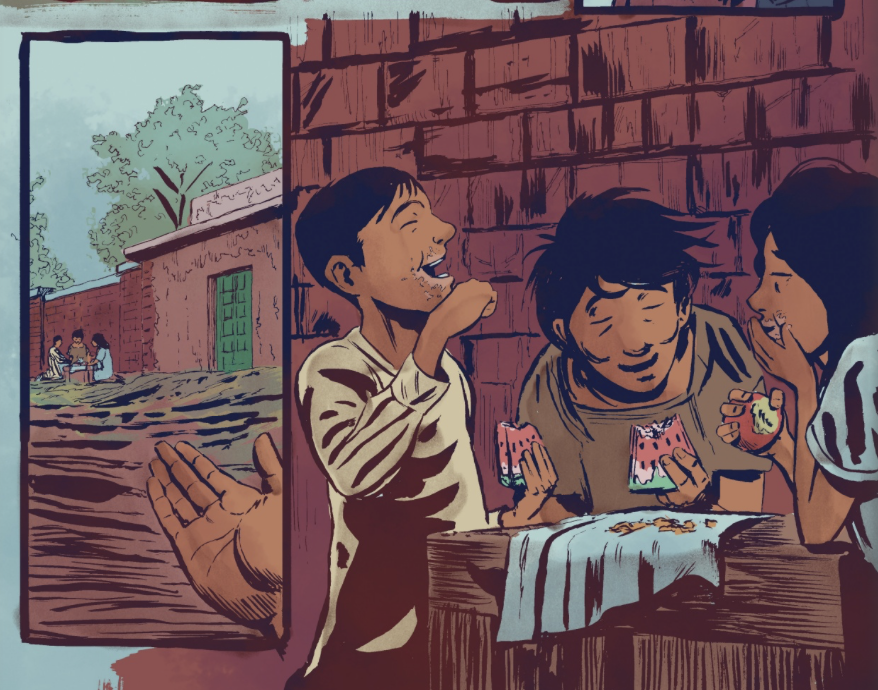
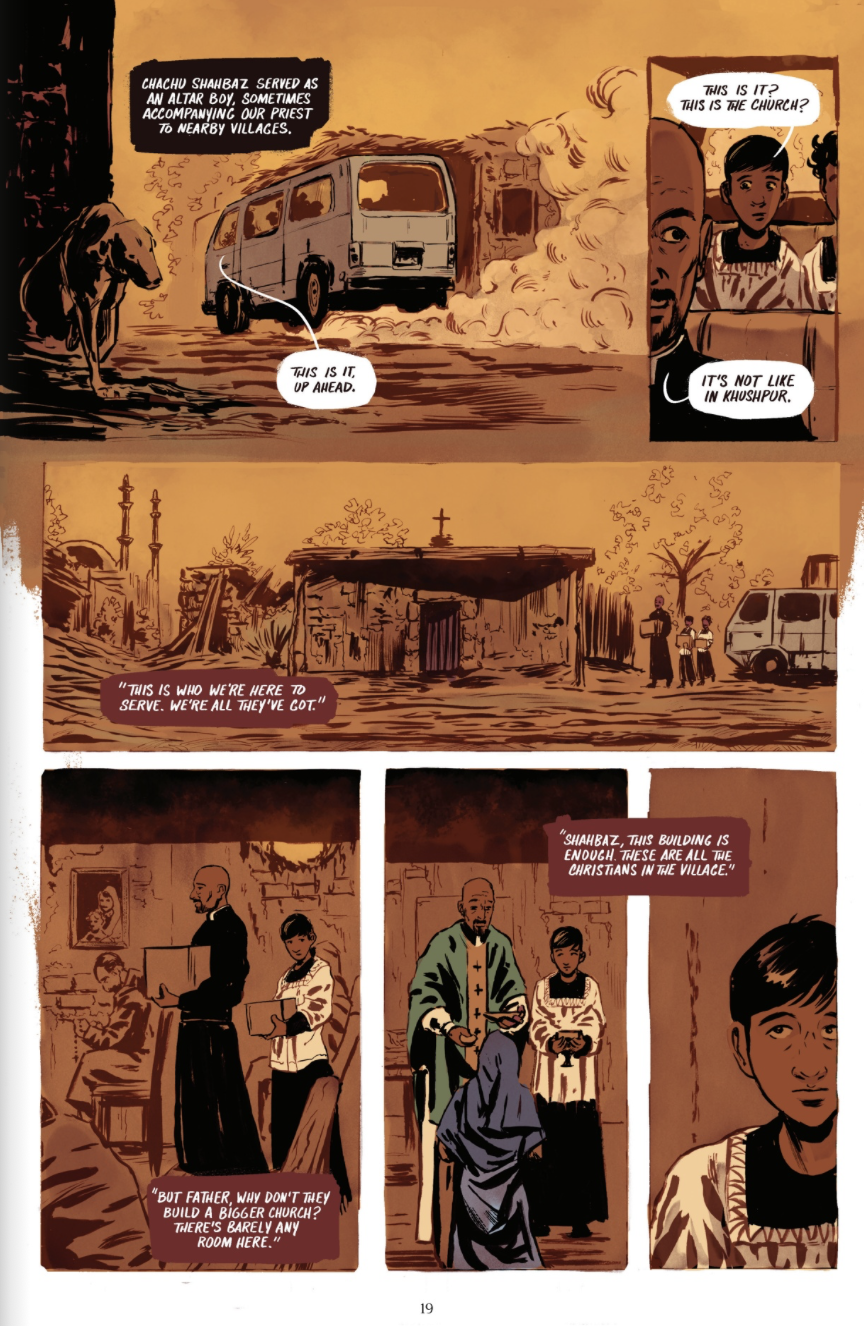
The book tells the story of Bhatti’s childhood in a small Catholic village in Punjab, where he cared for the poor from a young age — building relationships and bringing food to individuals living on the street. In college, his compassion for others turned into activism, as Bhatti, minister of Minorities Affairs of Pakistan, advocated for Christian students to be treated the same as their Muslim counterparts.

Real People. Real Reporting. Donate to Religion Unplugged now through August 17 and your gift will be doubled.
Eventually, this materialized into a much bigger movement started by Bhatti called the All Pakistan Minorities Alliance, which sought to unite religious and ethnic minorities in Pakistan to bring about greater equality in the nation. At the time of his death, Bhatti was serving as Pakistan’s Federal Minister of Minority Affairs under President Asif Ali Zardari of the Pakistan People’s Party.
The story itself is inarguably moving — and it is made even more tragic with the knowledge of his violent, impending assassination. Bhatti’s leadership, compassion and commitment to Christ are all on full display on every page. He is not only a martyr for his Christian beliefs, but also one for his belief in interfaith harmony.
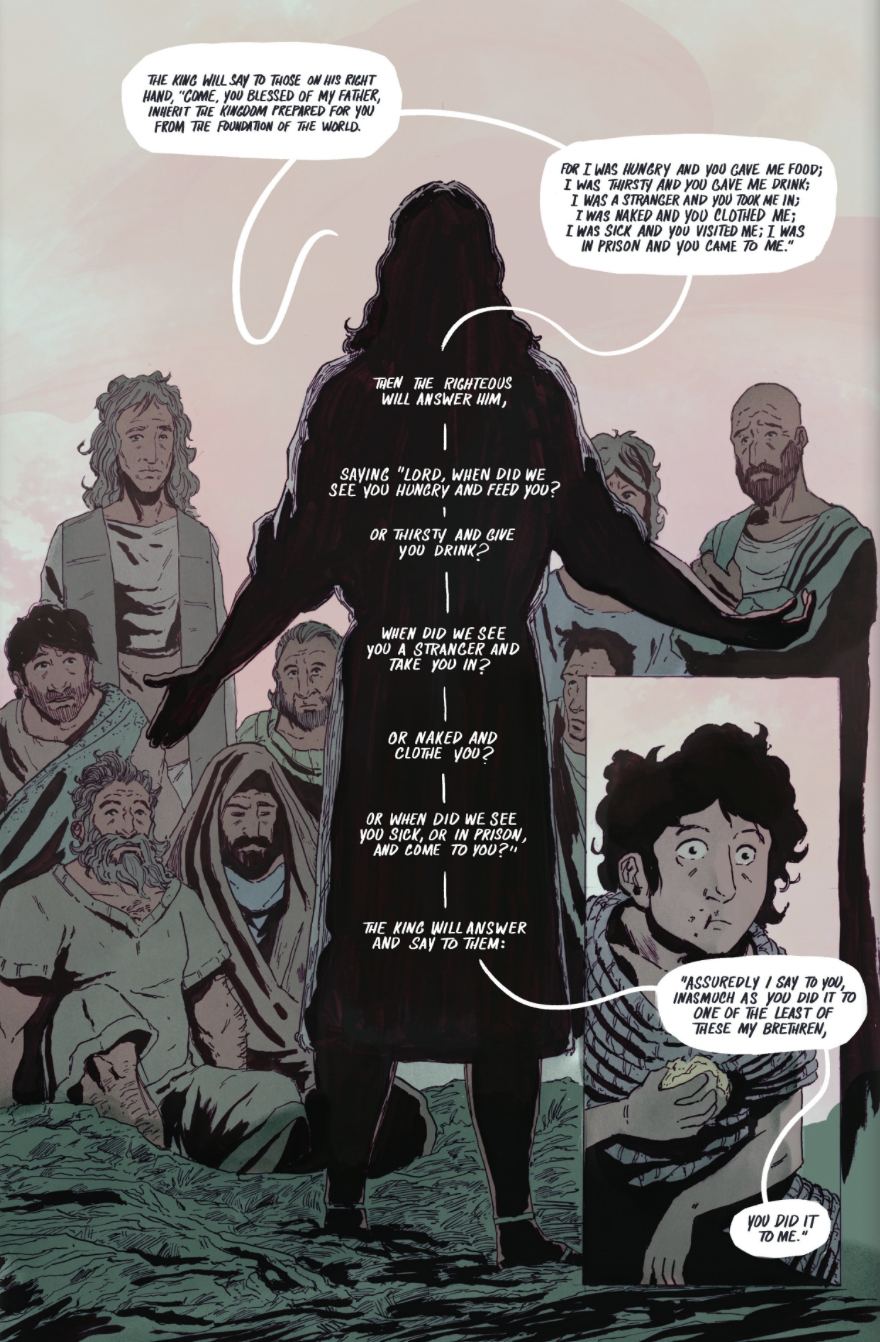
The book periodically interrupts Bhatti’s story with stories of Jesus’ ministry, drawing parallels between the missions of the two men.
The choice to tell Bhatti’s story in comic book form is surprising, but somehow fitting. The dynamic scenes Bhatti found himself in throughout his life lend themselves well to the visual format. The experience of reading the book is full of beauty and warmth — it has an accessible nature about it. And, for a story about the complexities of interfaith governance, this accessibility is deeply necessary to making Bhatti’s legacy known.
The illustrations are precise, with sharp linework and deep shadows that are just rough enough to give the book a distinct character and a naturalistic feel. The colors combine dim, low-light tones with lush pastels — the artwork is at its most memorable when it leans into purples, reds and oranges.
Both the illustrations and the writing keep the story moving without distraction. However, the occasional long passage or visually complicated page would have been welcome as an interruption to the otherwise straightforward storytelling.
Images courtesy of Igantius Press
It was the illustrations that particularly left me wanting more as I read. And not because Holt isn’t talented, but because he demonstrates that he is capable of more than he is giving us. In viewing some of Holt’s other work outside of “Blood and Water,” it is clear that he is holding back a bit here.
He does provide several particularly excellent pages, including the scene where Bhatti helps victims of the 2005 earthquake and the scene where Jesus calms the storm. In these standout illustrations, the art seems to almost pour off the page and fully immerses us. More pages that broke the rules of traditional comic book form and even more large-scale drawings could have really livened up the book.
Bhatti was a risk-taker, so his biographers could have taken more. But “Blood and Water’s” biggest problem is one it shares with many biographies, biopics and memoirs. It presents its character as one-dimensional.
Bhatti was assassinated in 2011. So, the graphic novel telling his story seeks to memorialize his life and work only 15 years after his death. The novel's creators are his family and friends. It is narrated by his niece and nephew and largely put together by his friend and fellow human rights advocate, Knox Thames. With only 15 years between the martyr and the memorial, the pain still lingers, and the story is personal.
It is no wonder that “Blood and Water” remembers its hero with a spotless record. If Bhatti has failures, whether professional, personal or spiritual, they are left unmentioned. He is consistently right about all manner of things — even in childhood.
While the book works well as a beautiful memorial for an undeniably brave and kind man, the absence of any hint of a flaw in Bhatti’s character greatly weakens the story. Bhatti’s life is a story with great potential to inspire. He’s a religious minority from a small village who becomes a high-ranking political official. He’s also cultural frontiersman for interfaith representation in an Islamic Republic, and he is ultimately killed for his commitment.
That is the pitch of “Blood and Water,” and it is undoubtedly compelling. But the omission of instances where Bhatti makes a mistake or changes his perspective allows for little opportunity to demonstrate his growth.
This absence of failure is particularly disappointing for a story about a Christian leader. The Bible is full of characters who fail in catastrophic and deeply disturbing ways. Consistently, it is God who picks up the pieces after they have broken things. The repeated pattern of human failure makes the Bible feel believable, and the repeated pattern of God’s steadfastness gives readers reason to trust him.
As we tell the stories of great Christian leaders, it is essential that we include the humanizing force of their mistakes — both as a vehicle for explaining how growth happens and as an opportunity to celebrate God’s faithfulness. Bhatti may not have had any major moral failure or controversy. There is no need to invent one. But perhaps there was an opportunity to show how his commitment to his work was difficult for his family members, or that he doubted his faith at times, or that he did something foolish growing up that taught him a valuable lesson. Any instance of Bhatti developing into a better man as a result of his shortcomings would have significantly strengthened the book.
When a Christian biography neglects to include the person’s errors, it runs the risk of reading as a political pamphlet as opposed to a testimony — a sales pitch for a man’s ideas rather than a testament of God’s ability to work through imperfect people.
Matthew Peterson is Religion Unplugged’s podcast editor and audience development coordinator. He took part in this past summer’s European Journalism Institute held in Prague, an annual program co-sponsored by The Media Project.