
Why Our Dog Was Given A Taiwanese Traditional Pet Funeral
(ESSAY) Before a shrine of Bodhisattva Ksitigarbha lay a white Spitz, her lifeless body wrapped in a gold “dharani blanket” covered in Sanskrit and Chinese. To the left, a wall was stocked with Buddhist and Taoist offerings, to be burned. The Buddhist offerings were represented by lotus thrones and dragon boats, finely crafted from folded paper.
The Taoist ones included rolls of ghost money; cardboard cars and villas; and suitcase facades filled with fake cash (both Taiwanese and U.S. dollars), cards, and immigration documents for Paradise. Cans of dog food replaced the food offerings Taoists call foot-end rice.
Taiwanese religious culture is a unique mix of Chinese Buddhism, Taoism and other Southeast Asian influences — and this blending is especially apparent at Taiwanese funerals. Now, as fewer Taiwanese folks have kids, raising pets instead, we can get a new perspective on these rites by observing the relatively new phenomenon of traditional pet funerals.
READ: Emerging Anti‑Immigration Sentiment In Japan Obscures Surprising Islamic History
Sending off our dog Byoo in this manner showed me how these practices help the grieving to quiet their minds and let go, in spite of the pain and attachment. This grieving process is subtly different with pets too, though — as we owners are so used to their total reliance on us.
Our Spitz’s decline started the day after Christmas. I’d heard a small crash, followed by a heartbreaking mix of a horrified scream and desperate sob from my girlfriend. Byoo had passed out onto her food bowl. We’d feared she was already dead, until she slowly came to in our arms.
At the crematorium, I now tried to forget the scream and imagined the peaceful chanting that would be heard at the pujas (a kind of Buddhist mass) the funeral parlor would hold for Byoo and others. There would be five pujas total, but the one I was imagining was the Seven-Seven Puja, common to both Taoism and Chinese Buddhism.
Taoists believe the spirit is made up of three souls and seven sheaths, the latter of which dissipate weekly over the course of 49 days. Likewise, Chinese Buddhism holds that the spirit doesn’t reincarnate until after a 49-day period in bardo (an intermediate state). Throughout these seven weeks, clergy would perform rituals and chant sutras for these deceased pets — in Byoo’s case, the “Diamond Sutra.”
I could conjure the tranquil sounds of melodic recitations and rhythmic tapping of the wooden fish block as ambiance from various memories of visiting Taiwanese temples over the past decade. It would be that much more comforting, I thought, to be surrounded by the sangha (clergy), collaborating to evaporate the deceased’s karmic hindrances and ensure a better afterlife for them — though unfortunately we wouldn’t be present for that.
For those who chant, the ritual is a kind of concentration-based meditation practice. For those who listen, the reassurances of the scripture soak into the subconscious. For those who grieve, there’s a sense the dead are being looked after by someone else, or something else, unseen.
After the first incident, Byoo’s life was in our vet’s hands. He did his voodoo to mix together a heart medication that would “hopefully” stop the fainting “for now.”
Still, he warned us that she was in a relatively late stage of heart disease, and all we could do was keep adjusting the dosage until it stopped working. My girlfriend was sad that we likely only had a few years left. To me, it sounded more like a few months. Having raised Byoo since she was a puppy, I’d supposed she was in denial.
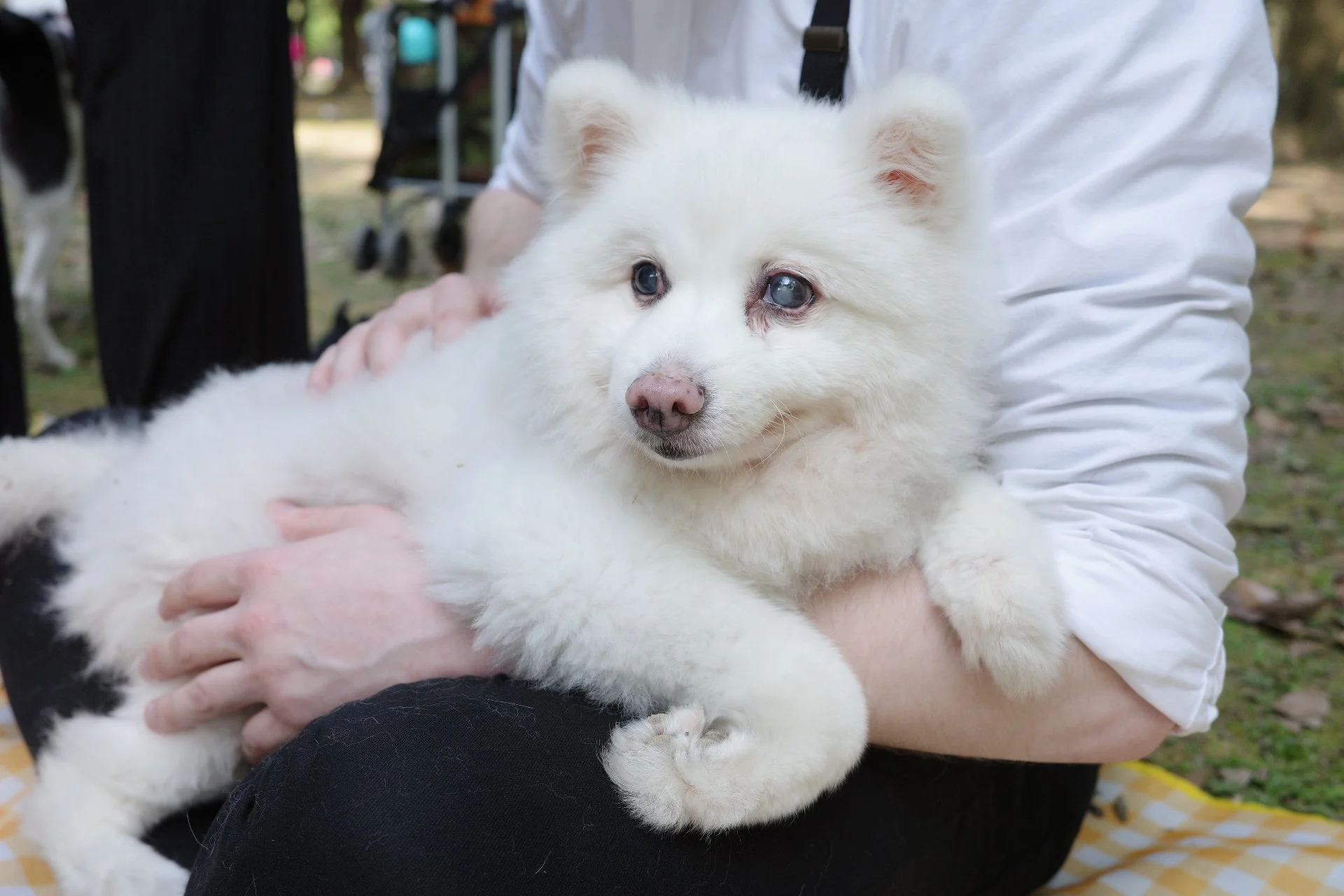
(Photo courtesy of Eric Stone)
Apparently, denial is the first stage not only of grief, but also of the funeral rites. In both the Buddhist and Taoist traditions, Taiwanese mourners bathe, dress up and apply cosmetics to the deceased before services — not unlike in Western traditions. In line with this, the pet funeral parlor provided a “spa grooming service” for the dead, including snot and earwax removal, nail clipping and even an oil massage.
It was a nice escape from reality to see Byoo clean and relaxed when we saw her again, for the last time — rather than disheveled and frightened as when she departed. Even if it made no difference to her, at least we felt like we could still care for her needs.
Those six months we cared for Byoo before she ultimately died, I likewise thought a lot about the concept of overtreatment. On one hand, it seemed that by medicating her, we could give her a decent extension on life.
After all, she still had a great appetite and enjoyed short walks. But every few weeks, Byoo would faint again, and we’d have to hurry to adjust her dose, or rush her to a 24-hour emergency room when the vet was closed. She even had to stay in an ICU chamber for two multi-day stays. She hated those oxygen chamber cages, and it felt like we were making deals with the devil to keep her alive. Ultimately we decided it would be better to let her pass at home with us, rather than risk her dying alone in a sterile, cramped box.
Still, all the while we did actual bargaining with the buddhas, bodhisattvas and gods at Taipei’s Xingtian Gong and Longshan Si temples. The former is a Taoist temple for the deified Three Kingdoms general Guan Yu; the latter is a Buddhist temple for Bodhisattva Avalokiteshvara.
The experiences were surprisingly similar, mainly consisting of making rounds praying to various deities at their palaces. They were so similar, in fact, my partner never considered they belonged to separate religions. She vowed to Guan Yu not to eat meat for 30 days if Byoo could return to normal (though the temple staff assured us his help was unconditional).
Each temple was surprisingly tranquil in spite of large crowds. The smell of burning joss sticks relaxed me. And through this prayer ritual, we were able to organize our thoughts as we recited them again and again to the various deities, which in itself was a kind of meditation. Perhaps there was even a kind of concentration practice-like quality to the act of carrying our joss sticks from burner to burner, as we had to be so careful to avoid inhaling the smoke or burning others.
As the weeks went on, we threw more and more money at the problem of Byoo’s health just to keep her comfortable. We got an oxygen machine and built an open chamber for it around her bed and under the air conditioner, so that she could be comfortable, cool and breathe easily, yet still come and go freely. We home-cooked healthy meals to mix with her kibble too, as it seemed to make her more energetic. We were on our way to accepting her inevitable imminent death, yet still grasping.
Now I looked over the offerings at the crematorium skeptically. The idea behind the ships and lotus thrones, as well as the dharani blanket, is that they would help deliver the deceased to the Buddhist heaven known as the Western Paradise. The Taoist paper-mache burial objects and ghost money, meanwhile, were to fulfill the deceased’s material needs in the afterlife – or at least until reincarnation. Regardless, we’d bought our share for Byoo.
Traditionally, the loved ones of the deceased would fold the paper lotuses together in a communal space, like a sitting room. That way they could grieve collectively while occupying themselves with yet another meditative act. This tradition hadn’t made it to us, though, and so we had to buy ours pre-folded.
Paper mache Taoist offerings, meanwhile, were originally meant as substitutes for real burial objects — an alternative devised to prevent grave robbing. I could see how buying these offerings might help us to feel less helpless, like we still had the ability to provide for our struggling pet. Maybe this would have been more pacifying if we’d been able to burn her real possessions instead, believing she could still use them wherever she went. All of the things we’d bought for her now seemed so useless. Plus, I couldn’t picture her driving that blue cardboard jeep on the shelf.
The final days of Byoo’s life were the most difficult, tinged further with denial and clinging. The fainting was relentless, but we were sure she’d be fine if we just got the dosage right. It wasn’t working yet, though, so we constantly monitored her through a camera we watched from our phones as we worked from home – jumping and rushing to her side anytime anything looked off. After days of this, we were at our wits’ ends.
Now, we were sitting still and in silence with her body at the crematorium — though on edge for the moment we knew must come. Then it did. The staff carried Byoo to deliver her into the furnace. As we watched her spa-groomed white fur catch fire, we were instructed to yell: “The flames are coming; quick, run!”
This is supposedly so that the dead will move on, and won’t get burned due to clinging to the body. My girlfriend’s agonized scream was so much worse than the morning Byoo had first fainted.
The sound died out quickly, though; then we both became surprisingly calm. The ritual wasn’t the barbaric spectacle it might appear to be, but a way for us to express our anguish with one final, cathartic outcry, as we faced reality.
Our loved one was gone — at least to us.
Eric R. Stone is an American journalist and translator of Chinese Buddhist and Taoist classics. He’s translated four books: Happiness & Suffering, The Tao Te Ching: Wondrous Revelations, Emptiness Energy, and The Secret of Chan. His writing has appeared in Lacuna Magazine, The News Lens, Taiwan News, and The ATA Chronicle. Eric currently lives in Taipei. In his free time, he runs a Mandarin-Taiwanese D&D campaign. See more of his writing at ericrstone.substack.com, or learn more at ericrstone.com.