
Being Religious May Help You Live A Longer And Healthier Life
Want to live a healthy life? Hit the gym, eat your veggies and — according to a synthesis of more than 1,000 high-quality research studies — join a church or religious organization.
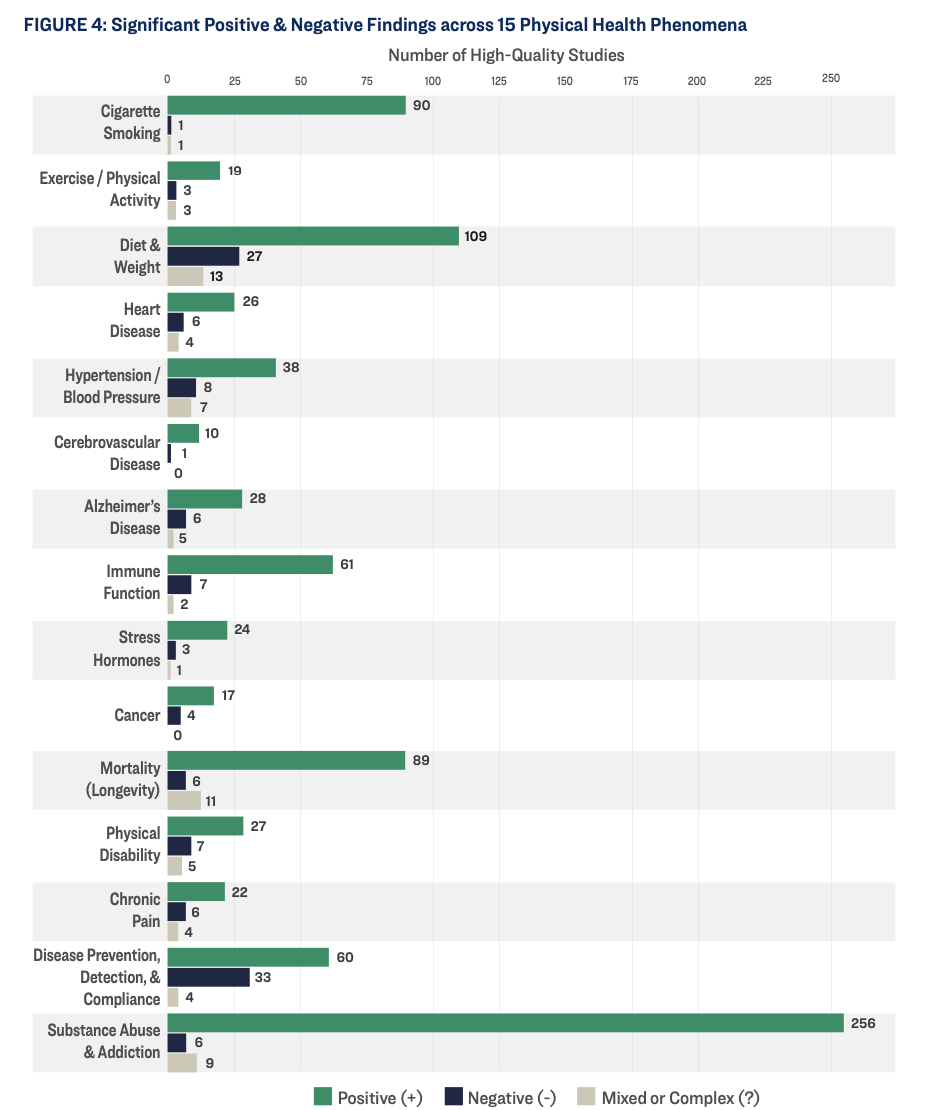
Researchers at the Wheatley Institute at Brigham Young University did a deep dive into 1,069 of the most rigorous studies that showed statistically significant associations between religion and physical health.
The studies showed that religion was associated with better physical health more than seven times as often as worse health, including lower rates of smoking, lower rates of substance abuse and lower rates of strokes among religious people.
READ: Science Says Religion Is Good For Your Mental Health
“After four decades of research and thousands of studies, the pattern is remarkably clear: religious involvement is associated with better physical health across virtually every domain we've examined,” said author Harold Koenig. “These are not isolated findings — they represent one of the most consistent relationships in all of health science.”
Notably, research points to religious involvement being positively correlated with longer life spans. Frequent religious attendance is associated with an average reduction in mortality risk of approximately 34%, the BYU team said in the report released Thursday.
In a nationwide study of more than 20,000 adults, frequent religious attenders lived, on average, 7 years longer than non-attenders. Among African American participants, this gap nearly doubled to more than 13 years.
Contributing to that longer life span may be many religions’ teachings that tell followers to take care of their bodies, according to the BYU report.
Of the studies that explore the relationship between religion and exercise, 25 had statistically significant findings, and 19 of those 25 identified positive associations between higher religiosity and better levels of physical activity or exercise. The same goes for diet. The majority of high-quality studies found that higher religiosity was associated with healthier dietary habits, weight levels, or both.
“Most world religions emphasize the importance of caring for the body, often teaching that it is a sacred vessel or temple for the spirit,” the researchers wrote. “Many also hold that the condition of the body can either strengthen or hinder one’s spiritual life. When these beliefs are understood and applied, they can serve as powerful motivators for physical activity, exercise, and self-care grounded in faith.”
Many religions dictate specific dietary codes that could positively impact health; Orthodox Jews eat kosher food that has been prepared in a certain way, and Muslims often choose halal foods. Buddhism and Hinduism advocate for a low-fat vegetarian diet, while some Christian denominations like the Seventh-day Adventists and The Church of Jesus Christ of Latter-day Saints also promote distinct health codes that encourage moderation in diet, as well as avoidance of harmful substances.
Most religions have some form of fasting, which can provide physical benefits in addition to spiritual benefits.
“Modern clinical research has begun catching up with what religious traditions have practiced for millennia: periodic fasting appears to trigger cellular repair processes, improve insulin sensitivity, and lower cardiovascular risk,” the researchers noted.
Religious participation can be a boon for your heart health, too. Religious participation encourages stronger social ties, which have been shown to help lower the risk of coronary heart disease.
Most religions also encourage marriage, which can help reduce stress, loneliness and minimize rates of heart disease, especially for men. In a similar vein, positive religious coping can reduce “environmentally transmitted risk factors for hypertension”. In layman's terms, that means having close friends at your church, mosque or temple might help you chill out and stress less.
The researchers found religious people have better outcomes for a slew of other health issues, too, including cancer, Alzheimer’s disease, immune function, stress hormone and chronic pain.
Cassidy Grom is the managing editor of Religion Unplugged. Her award-winning reporting and digital design work have appeared in numerous publications.