
US Churches Rebound Unevenly After Pandemic Disruption
ATLANTA — Five years after the pandemic upended religious life across the United States, a new national study shows that many churches are stabilizing — and in some cases rebounding — even as challenges persist.
In a 41-page report by the Hartford Institute for Religion Research, which surveyed more than 24,000 churchgoers across over 80 Christian denominations, found that most have either maintained or increased their level of engagement since COVID-19.
Whatever you call this surge, however, researchers said it is not a revival. In fact, nearly half of congregations continue to report declining attendance, mirroring other studies that have come out over the past year.
READ: Global Study Finds Catholicism Facing Big Losses From ‘Religious Switching’
“What we’re seeing is not a revival — it’s a recalibration,” said Dr. Allison Norton, a researcher on the project.
The report — released during the annual Religion News Association’s annual conference on Friday — also highlighted how disparities between larger, growing churches and smaller, struggling ones have widened, underscoring an uneven recovery across the country’s religious landscape.
Dr. Scott Thumma, co-director of the Hartford Institute for Religion Research at Hartford International University, added that larger congregations are more likely to grow, while smaller ones decline.
“After years of constraint, even modest gains can feel like recovery for these congregations,” he said.
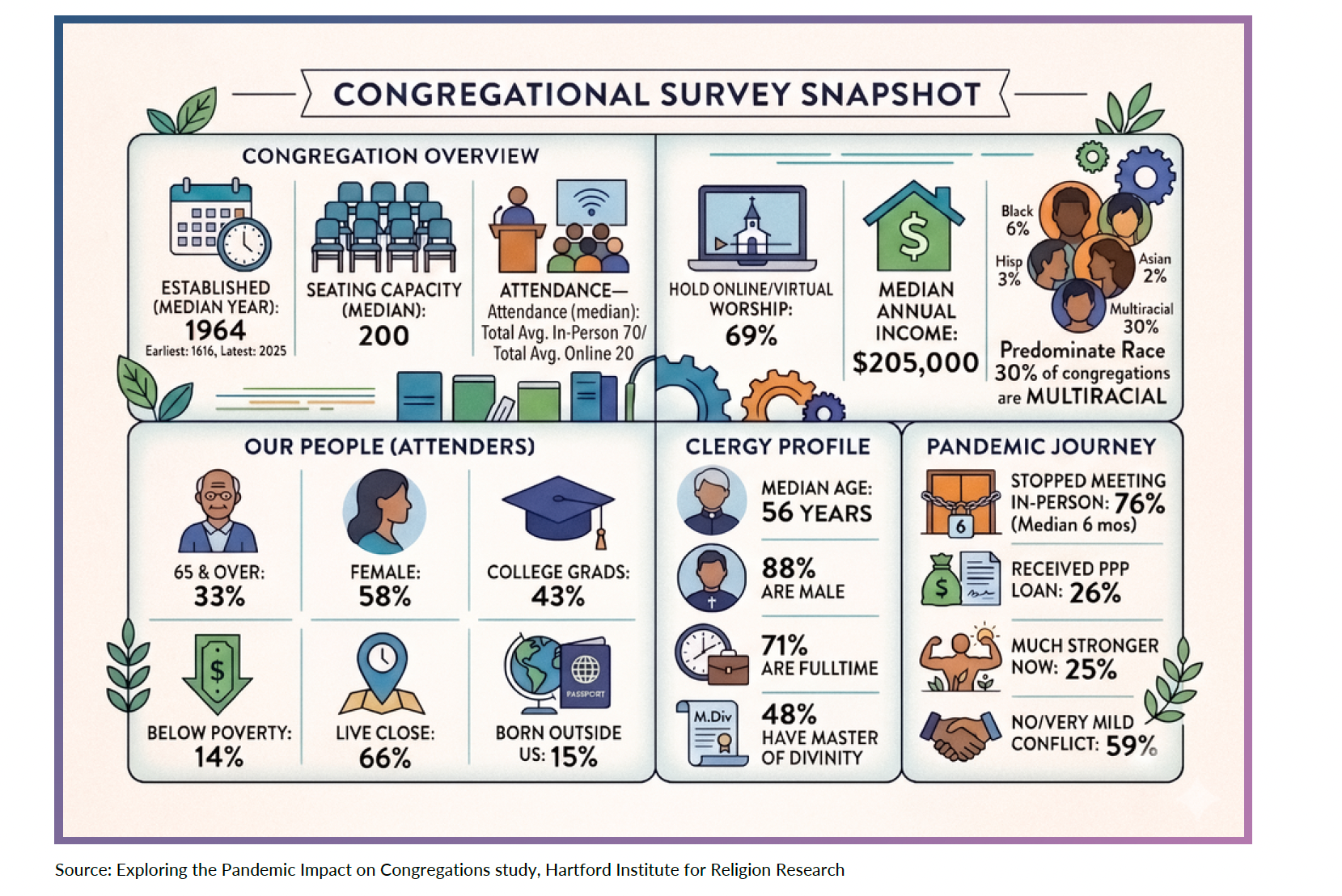
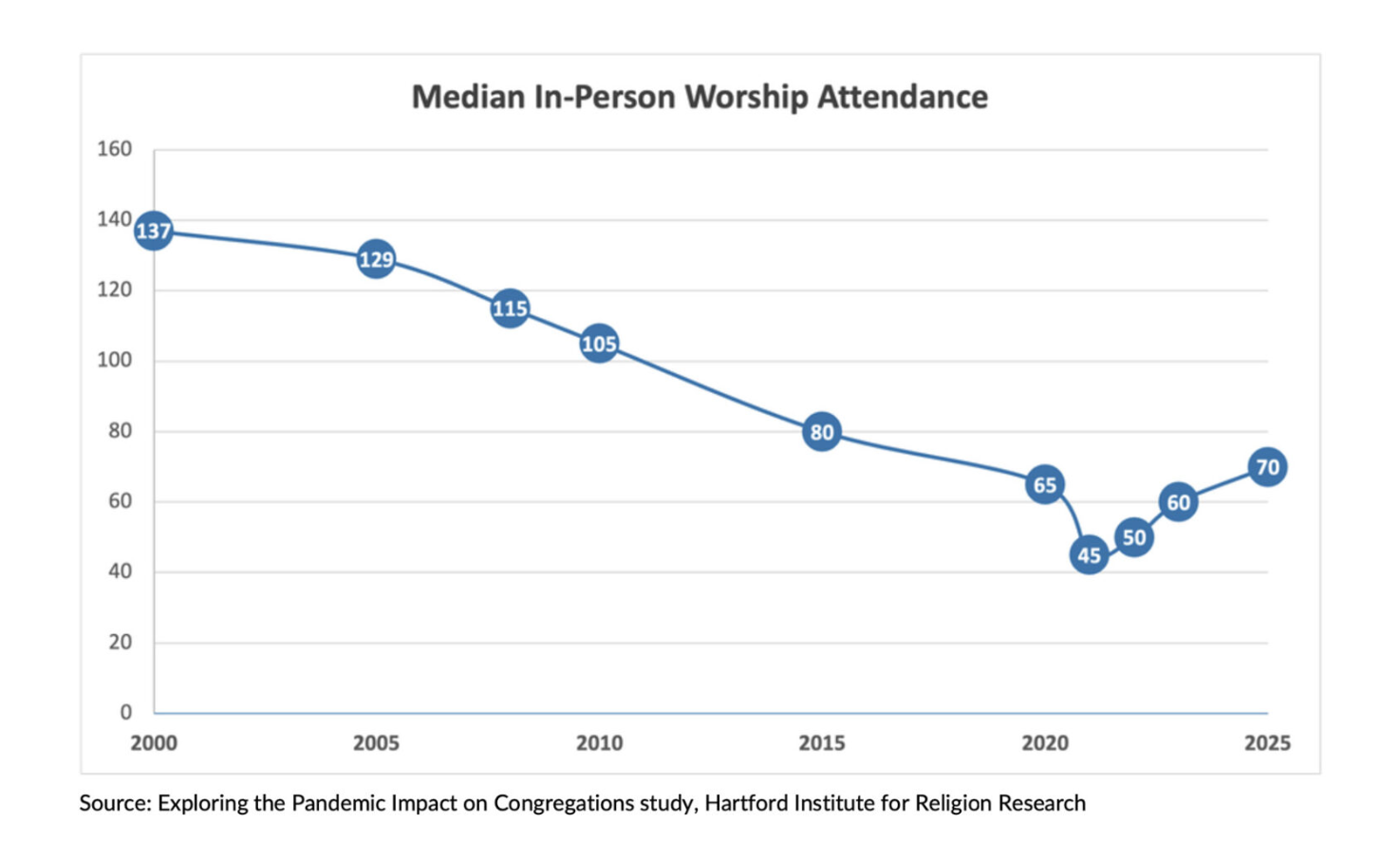
Median in-person attendance, which dropped from 137 in 2000 to 45 during the pandemic, is now at 70 adults. That figure is higher than the 2020 Faith Communities Today survey from the Hartford Center for Religious Research, which reported that the median attendance at the time was 65.
“We were pretty surprised when we saw the 2025 data.” Thumma added.
Catholic and Orthodox churches had the highest reported median attendance at 200. The median evangelical congregation — the highest among Protestants — reported 75 worshippers. Mainline churches reported 50 attendees.
While online worship remains widely available, in-person services continue to dominate. About 26% of respondents said they regularly participate in online worship, but three-quarters still prefer attending in person. Many families and younger adults report combining both formats.
The report also found significant turnover in congregations. Roughly 38% joined their current church after the pandemic began, including those who switched churches, returned after a lapse or began attending for the very first time. Researchers noted that these newer members often bring a sense of energy and optimism about their church’s future.
Engagement extends beyond attendance. About half of respondents said they volunteer monthly and more than a third reported increasing their financial giving. Electronic giving has become especially common, now used by more than half of those surveyed.
The findings are part of a broader five-year research study led by the Hartford International University for Religion and Peace. The report draws on surveys from 7,453 congregations collected between September and December 2025 through the long-running Faith Communities Today project, which has tracked congregational trends since the year 2000.
“Congregations have been through an extraordinary period of disruption,” Norton added, “and though it has taken a while, many have come out of it with greater clarity about who they are and what they’re called to do.”
Clemente Lisi serves as executive editor at Religion Unplugged.