
‘Ring By Spring’: A View Into Christian College Dating Culture

Unsplash photo
(ESSAY) On the surface, it seems like just another reality dating show. Young, attractive singles are thrown together in a beach town in Mexico, hoping to find the love of their life.
But Hulu’s upcoming new series “Ring By Spring Break” in Cabo promises to have some twists. First, everyone on the show will be a college-aged Christian and the show’s premise — a “ring by spring” — is derived from a polarizing cultural phenomenon that has persisted for decades: Getting engaged during your final semester at a Christian college, then marrying shortly after graduation. It is a tradition that is both upheld — and derided — by students across the nation.
I know because I lived through it.

Real People. Real Reporting. Donate to Religion Unplugged now through August 17, and your gift will be doubled.
Stepping onto the campus of Taylor University, a small Christian school in Indiana, in the fall of 2014, the initiation into the niche dating culture began before we even started classes. That first night on campus, about 20 girls from my dorm lined up side-by-side with young men from our “brother floor” for the annual “Awk Walk.” Our resident assistant, who functioned like a sorority leader, called out body parts.
“Left knees,” she shouted, as we bent over to touch each other’s sweaty knees and waddle for a few yards, before she’d tell us to switch partners and hold their earlobes. We made our way across campus, as if we were playing a strange game of Twister, walking two-by-two.
It was one of many traditions on the tiny campus in the middle of the Indiana cornfields at this Christian college designed to break the ice and get the genders mingling. Our campus wasn’t unique. “Ring by spring” culture is prevalent on almost every U.S. Christian college campus and in many secular schools with strong campus ministry programs. Depending on your experiences, dating during those four years of undergrad can be a pressure cooker of anxiety, expectations and disappointments — or a true chance to find your forever partner.
Following the script
Many students follow the script. The summer after I graduated, I was invited to eight weddings — all celebrating my 21- or 22-year-old classmates’ success in finding a godly man.
From the outside, it might seem easy to poke fun at the seemingly desperate girls who go to college for an “MRS” degree (slang for when a woman goes to college just to find a husband instead of getting a job), but for those of us on campus, underneath the jokes ran an undercurrent of anxiety and anticipation. Any of those men from the brother floor could be your future husband; and if not them, perhaps it was a guy in your geology class or the guy leading worship during the well-attended chapel services.
The women in my dorm were there to get an education, but more importantly, they wanted to graduate with a fiancé in tow. I bought into this narrative, too. My older brother had married his high school sweetheart at 21, and in the evangelical circles I grew up in, marrying young was considered the gold standard. I chose Taylor, in part, because its male-to-female student ratio was more favorable than at other colleges at the time.
My experience can’t capture the full reality, so now, more than a decade since that icebreaker, I called up some old classmates and friends. Amid the “freshman frenzy,” the “pick-a-dates”, the “senior scramble” and the strong, unspoken force of purity culture during those four years, it was challenging to have perspective: Many of us felt like one of our main purposes on this planet, if not our core purpose, was to be married — ASAP!
But now, we’re older. We’ve had some time to process those experiences during our undergraduate years. And I wanted to know: Do they think “ring by spring” culture is helpful or even healthy?
Finding a man — and your purpose
One of my first calls was to my former roommate, Ellen. She was a leader on campus at the time, an A student, and, on the surface, truly the epitome of “put together.” But now, she describes those college years as riddled with fears.
She grew up a missionary kid, and when her family wasn’t overseas spreading the Gospel, she attended a Presbyterian church and a small Christian high school in the Midwest.
“The dynamic (growing up in high school) was always who is dating who, but a lot of us weren’t allowed to actually date, so it was who liked who,” she told me.
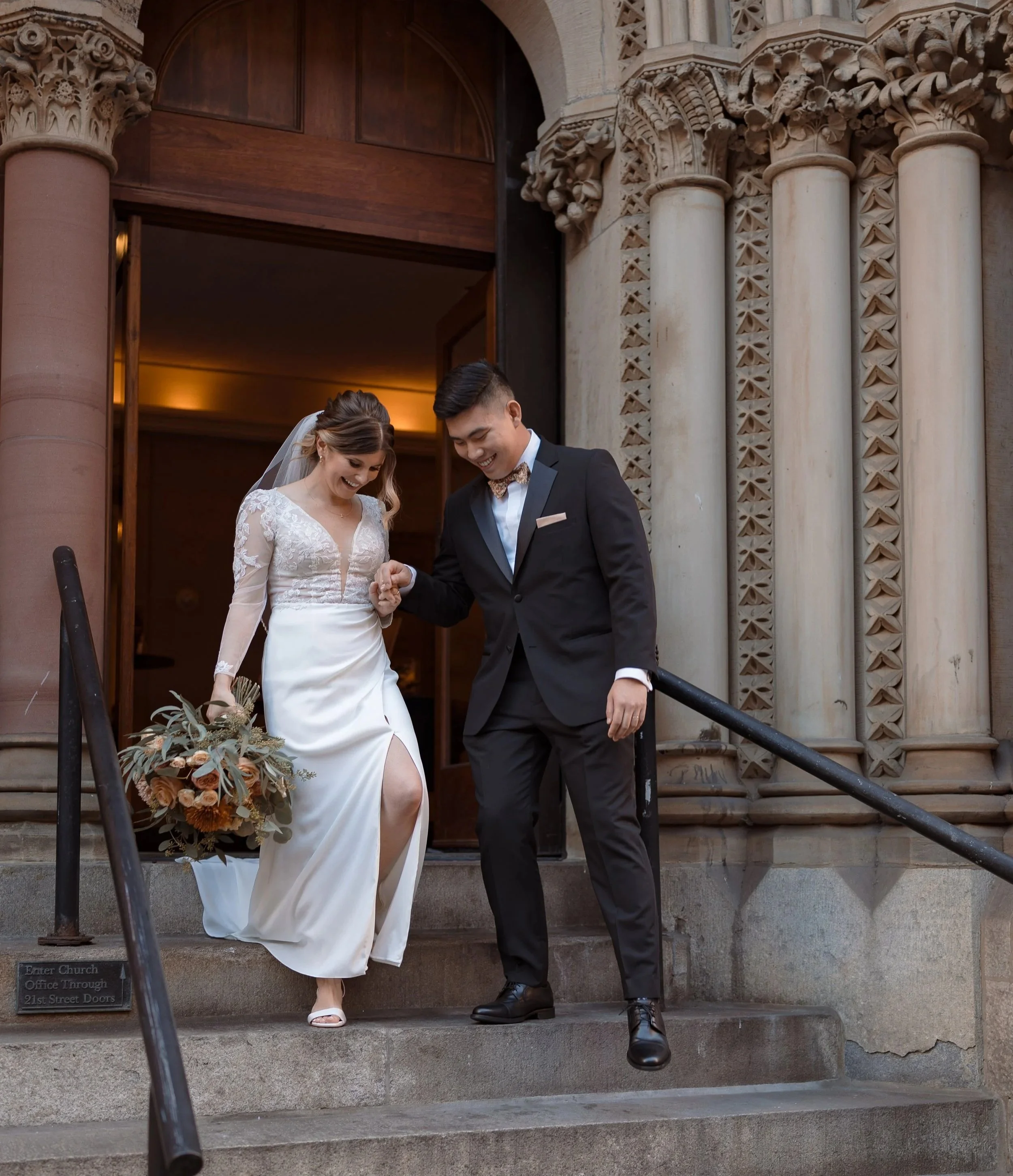
I didn’t get my “Ring by Spring” in college, but I met my husband years later after we had both learned to “adult” on our own. Here we are at our wedding in 2024. (Source: Morina Photography)
She absorbed the message early that a good Christian woman’s job was to find a man to submit to, and finally, in college she was allowed to openly explore the dating world — but there was a tricky balance to strike: Act too forward with a guy or go on dates with too many different people and you’ll be labeled as desperate. But don’t make any moves at all, and you might miss your chance to find the man God picked out for you, and ultimately, your place in the world.
“There was a sense of urgency,” Ellen said. “Ring by spring culture was always played off as a joke, but it wasn’t. It was very real. … I went off to college, excited to finally feel that placement of where I was meant to be. Find that man, find my place in my church. The core anxiety is finding a man, finding a purpose and getting that sense of ‘not belonging’ over with.”
I remember that pressure well: In churches throughout the South and Midwest, singleness was a problem to be solved. It’s not a sin per se, but single women and men hitting the ripe age of 25 or 26 were viewed first with pity, then with suspicion.
In my rural Southern Baptist church in Kentucky, whispers followed the few young women who stayed in town and remained single. The arrival of a new children’s minister, age 25, triggered a frenzied competition among the older women to find him a wife. They seemed to conveniently forget that Jesus, the savior they prayed to, was a 30-something single man himself.
In the meantime, in that gap between your teenage years and finding your forever spouse, young people were relegated to singles groups or “college and career” Bible studies.
“Churches say, ‘We don’t know what to do with you; we’re going to put you in this singles group,’ and it's just a meat market,” said Stacy Keogh, a researcher and professor who wrote the preeminent book on the subject, titled “Ring by Spring: Dating and Relationship Cultures at Christian Colleges.”
A wedding was the marker that transformed a young person into a fully accepted adult. They would graduate from the purgatory of the singles group and into the well-established adult Sunday school classes and community groups.
The disparity of how single people and married people are included can be hard to ignore. While Catholicism and Buddhism have pathways for singles to be leaders by becoming priests, nuns or monks, many Protestant churches overtly (or covertly) consider marriage a requirement for top roles.
Pastors’ wives are interviewed alongside their husbands for open roles, and once hired, the churches essentially consider them a two-for-one deal, with the woman leading worship or running the children’s activities unpaid. Christian universities provided a pipeline for future pastors to find their wives — or at the minimum, for Christian singles to find each other and form young families that become the bedrock of local churches after graduation.

The more someone went to church, the more pressure they felt to get married. (Source: Morina Photography)
Some denominations were proponents of female leadership, sure, but the more conservative ones made it clear that men were designed to lead. In my last years at my public high school, I was chosen by my peers to lead the Fellowship of Christian Athletes, a campus ministry that held prayer before school and sports games. But because I was so conditioned to see myself as subservient to male authority, I declined the role, giving it instead to my male classmate.
The influence of ‘purity culture’
Ellen says all of these cultural norms have the same goal: to keep men in power, and for women to submit to them.
“To me it kind of branches from a larger tree of patriarchy. One of the limbs is purity culture, and one of those branches is ring by spring culture,” she said.
As a teenager, Ellen received a “purity ring” from her father. It was a symbol of her promise to remain sexually “pure” until marriage. Virginity was considered a prerequisite for a holy relationship with her future husband.
“It was a really significant thing,” she said. “We went and picked out a ring; that ended up being really shitty, it turned your finger green. It’s very tied to your relationship with your father, which, in retrospect, to me is very creepy. It’s the idea of your father holding your virginity safe until you meet the man who you will marry. It’s never owned by yourself. I was pretty young.”
I received a purity ring as a teenager, too, and wore it proudly through the halls of my high school. As I approached college, I stopped wearing it — I didn’t want any potential future husbands to mistake it for an engagement ring.
Even before the teenage purity rings, our churches imparted to us the importance of staying totally “pure.” One week in fifth grade, my church teacher directed us girls to cut hearts out of red paper. She proceeded to read aloud a list of “sins.” We were instructed to rip a piece off of the heart if we had ever kissed a boy, or even looked at one and thought they were hot. At the end of the lesson, we were told that because of these transgressions, we had less of a heart to give to our future spouse. We were less whole.
Rumor has it, a few years later, the boys got a similar lesson: A teacher baked brownies with a tiny bit of dog poop inside, and then tried to entice the boys to eat it — the lesson demanding total sexual purity of them, too.
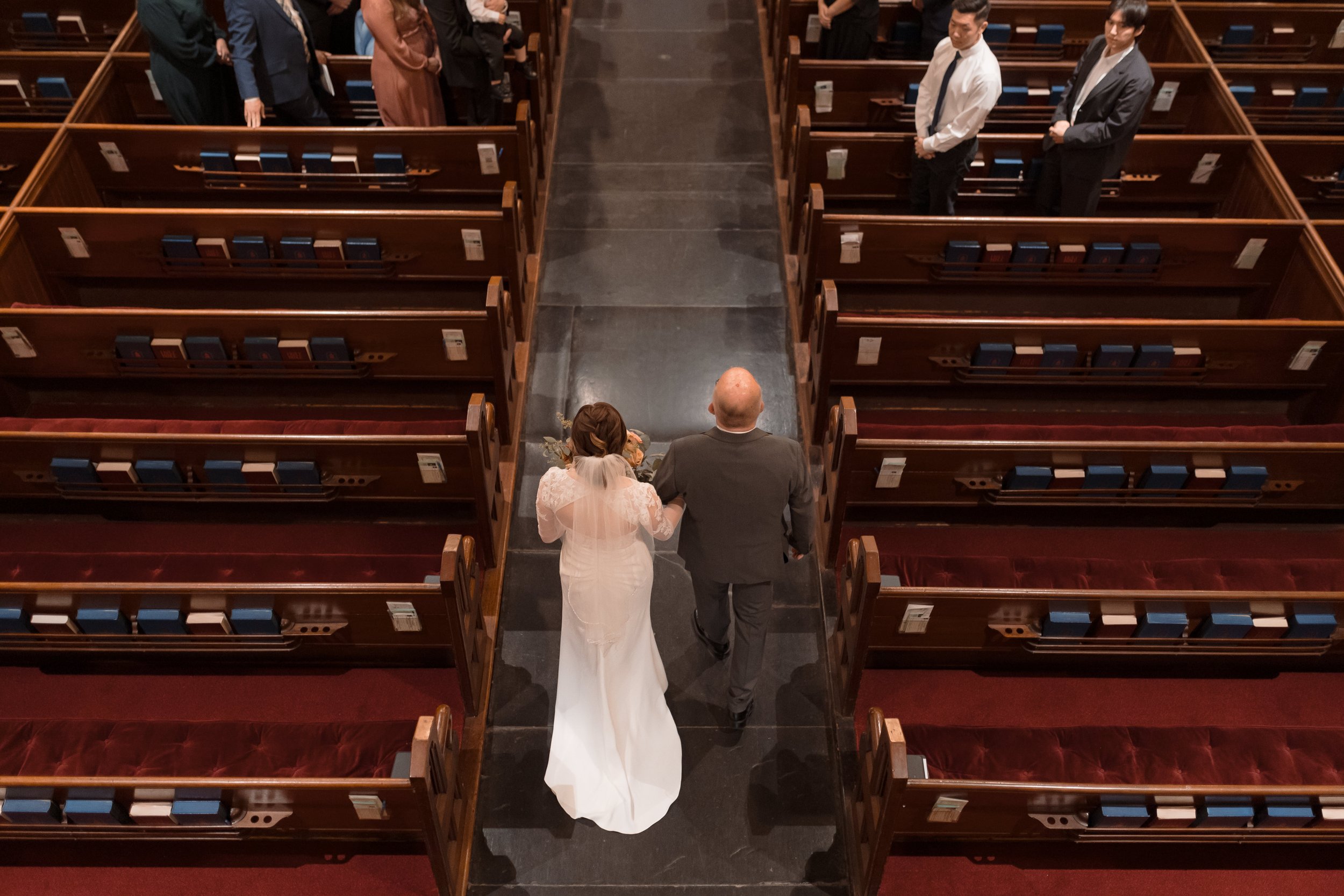
Christian dating culture expectations start long before young people set foot on a college campus. Many parents and churches embrace a “get married young” mentality and purity rules. (Source: Morina Photography)
At Taylor University, there were no ripped-up paper hearts or alleged tainted brownies, but because of the students’ collective upbringing, purity culture was everywhere. In some ways it was explicit: We had strict dormitory rules that limited the other gender from visiting our rooms, except for a few hours on the weekends. When we were allowed to visit each other, we had to leave our doors open and always keep one foot on the floor. The resident assistants would monitor the hallways, making sure we complied.
Yet in other ways, purity culture created unspoken rules. We dressed decidedly more modestly than our secular peers — for the women, this was tricky, too. You had to be attractive enough to pique guys’ interest, but not too promiscuous for fear of being labeled immodest (or worse).
Many of us had been trained to walk that line for years at our church and home.
“The responsibility and onus is on the women of the church to keep men from lusting,” Ellen said. She recounted an experience when she was a child, playing on a playground, when a man sexually assaulted her.
“I never talked to anybody about it, because purity culture ingrained in me that it was my job to keep my shameful body in check,” she said. “My friends and I were playing dress up, and I was wearing a skirt that made me feel pretty, and that was my fault. That was very common – the message that you are responsible for men’s lack of control, that led to a lot of situations where women are taken advantage of.”
In college, even consensual interactions among adults were fraught with negative emotions. Those of us who were lucky to escape the anxieties of being single by finding a boyfriend were then often slapped with a new negative emotion to take its place: guilt.
My college boyfriend and I would park my car far away from campus buildings to make out in the middle of the night, but always stopping before we “went too far.” Each night, I went back to my dorm feeling elated, and then each morning I woke up feeling guilty: I’m not married to this guy yet; how could I do this to my future husband? I’m such a sinner.
Turns out we weren’t the only couple navigating those spiritual and hormonal minefields. My former classmate, Alec, now 30, filled me in from a guy’s perspective.
“There was definitely — and I hate this — that there was this vibe that girls were getting snatched up left and right and you don’t want to get last pick,” he said. “[My now wife] was dating a very good friend of mine before me. I remember thinking there is this very small window of time where she was single, and I need to swoop in or forever hold my peace. If I don’t do it now, someone else will.”
When they got together, Alec said it was a losing battle to abide by the Christian purity rules.
“That was my whole life. Thinking about sex, and trying not to do it,” he said. “That was all I remember. I don’t remember my classes. I really wish I was able to pay attention to other things … I didn’t really trust myself — dating boundaries were really, really difficult; I would say they were impossible.”
For much of their relationship, they didn’t have a car to leave campus. So, there was nowhere for them to go, even just to have a private conversation or get to know each other without others around.
“The fact that there were no communal spaces you could be in that didn’t have prying eyes. That was always kind of a weird thing,” Alec said. “I don’t even have a moment to see this person I’m trying to spend the rest of my life with, with their guard down.”

Young women, in particular, face a lot of pressure to get engaged before college graduation. (Source: Morina Photography)
In her research, Keogh found that at least 67% of students at a Christian college report feeling at least a little pressure to be married. She didn’t find a direct connection between Ring By Spring culture and purity culture. She did, however, find that religiosity correlates with pressure to marry young. In other words, the more someone went to church, the more pressure they felt to get married.
At Whitworth University — where about one-third of students are evangelical and where Keogh trains graduate students in marriage and family therapy — Keogh said young women connect their worth as humans to their relationship status. They may jump into a marriage prematurely, without truly getting to know their significant other, or themselves, first.
“For so many people, it's a status symbol,” she said. “They want the engagement photos. They don’t think about what it means for their career, or their lives.”
Another theory, communicated through knowing glances at weddings of young people, is that Christian College students get married just to have sex. For those that waited for marriage, it’s a milestone to be proud of: They kept their purity promises until they found their spouse. For those that didn’t wait, it was a chance to finally have sex guilt-free.
But people in both camps say that the guilt doesn’t end at the wedding altar — whole books have been written about unpacking the harms of the shame-based messaging of purity culture.
“The guilt was pretty constant,” Ellen said. “Anytime I had to be vulnerable with my body, the shame and guilt would pop up. It made it really difficult in our marriage, when we were finally free to do whatever we wanted. The shame and guilt didn’t go away. We had to figure out how to have good fun sex. Those feelings didn’t disappear because we made vows to each other.”
Really serious, really fast
Several people that I interviewed mentioned there wasn’t much room for casual dating in the Christian college culture. “DTR” — or “define the relationship” — talks were commonplace among couples who had only been seeing each other a few weeks or months. The pressure to become exclusive with one person could be intense, especially when it felt like everyone on campus knew you were interested in each other.
Keogh advises young couples to “slow it down,” saying it is easier for young people to pursue their chosen career, move where they want, and develop a sense of self when they are single.
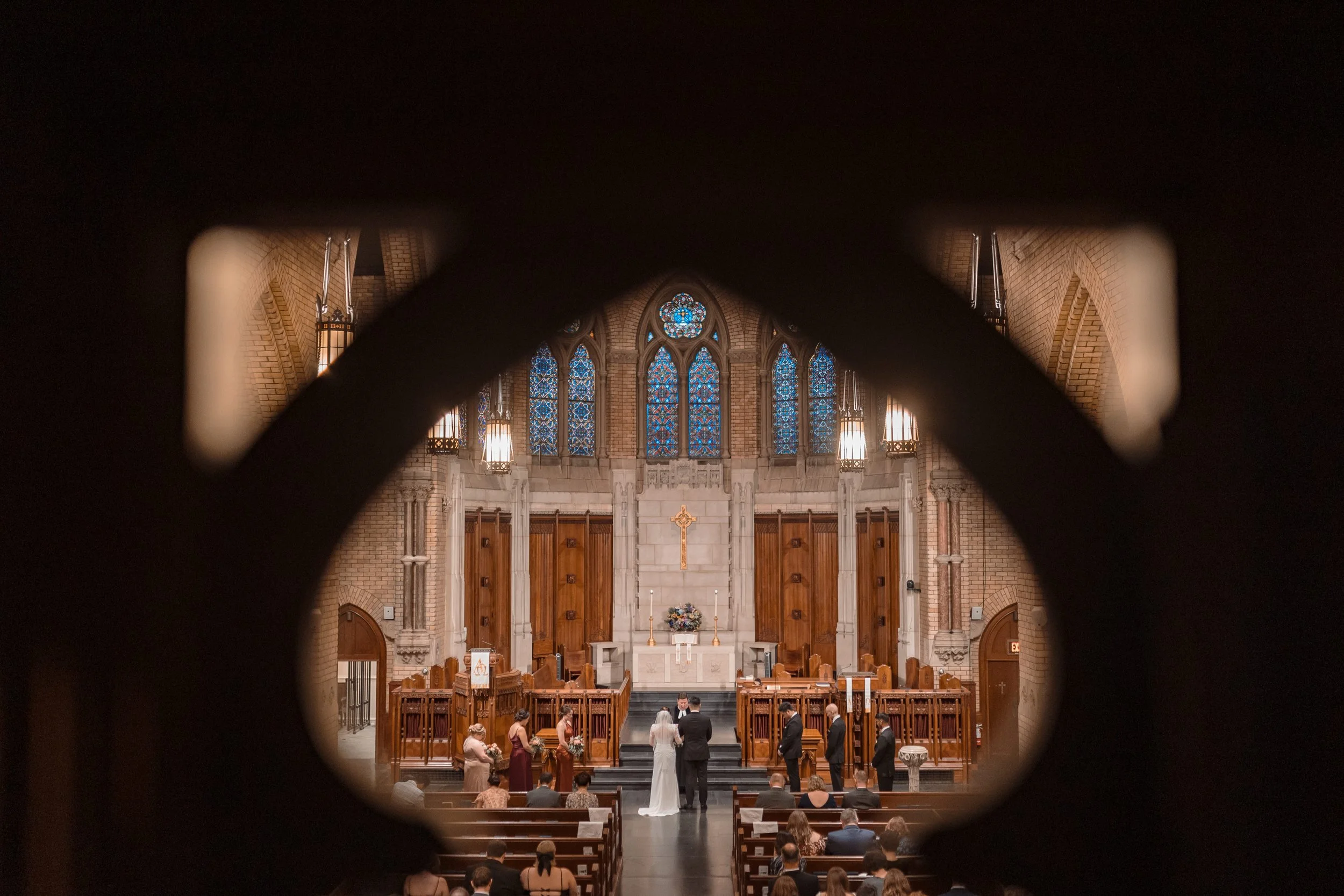
People are getting married later, or not at all. Churches now face the challenge of being more inclusive to singles. (Source: Morina Photography)
“I’ve encouraged some pre-engagement counseling, because once they are engaged, they don’t want to break that off,” she added.
It’s important to note that this pressure didn’t just come from churches or authority figures, like parents. On Christian College campuses, the celebration of relationships and marriage was self-reinforcing among the students. In my dormitory, it was a tradition that when a young woman got married, we would all gather in the hall with the lights out, sitting in a circle as we passed around a candle — fire hazard rules be damned.
The candle briefly illuminated each girl's face as we sang “Going to the chapel and we’re gonna get married/ Gee I really love you, and we’re gonna get married/ Going to the chapel of love!” As the candle made its rounds, our singing would get faster, until the candle stopped, lighting up one girl’s smiling face.
She would blow out the candle. She was the chosen one. We’d all cheer and congratulate her.
It wasn’t until several years later that I thought about this tradition and found it odd. If marriage was the beginning of the best chapter of a girl’s life, shouldn’t the flame get stronger, illuminating more of her face? Instead, the symbolism chosen long ago was to blow out the candle. To extinguish the flame.
Adulting together
Leslie attended Westmont College in California, where she joined the theatre program and tried to distance herself from the dating culture and be the “cool alternative girl,” she said. But that was hard when her religious upbringing taught her to take dating very seriously.
Her parents’ rule was “the only reason to be dating someone is if you want a spouse, if you want to get married,” she said. “That’s a lot of pressure. Casual dating is not something I was familiar with.”
Despite her efforts to transcend the pressures, Leslie “ended up getting together with my partner the first semester of my final year.” They dated for three months, were engaged for three months and married right after they graduated in May.
They’re divorced now — and when she looks back on those five years of marriage, she views her former self with the tenderness that can only come with more life experience. In college, she was afraid: she would have to leave the safety of the Christian bubble and figure out what’s next.
“We got together really fast, part of that — for me more than others — I was really scared of going into the world alone, she said. “I did not feel prepared to be an adult.”
I know that feeling well. My college boyfriend and I got together toward the middle of sophomore year. He was a transfer student with kind eyes and a big smile, who wholeheartedly enjoyed all the quirky traditions that kept our college culture alive. After going on several pick-a-dates (large, organized group dates that, to Taylor University’s credit, are actually very low-stakes), he made it official with a vase of sunflowers handed to me on a sidewalk campus one night.
We went through the next two years of undergraduate, staying busy with our studies and jobs and clinging to each other for emotional support. He met my family, then I met his. Our friends were integrated, and we sat with each other through every chapel service. Even the professors knew we were together. We were the picture of the perfect Taylor couple — right on track to celebrate a graduation and wedding in the same summer.
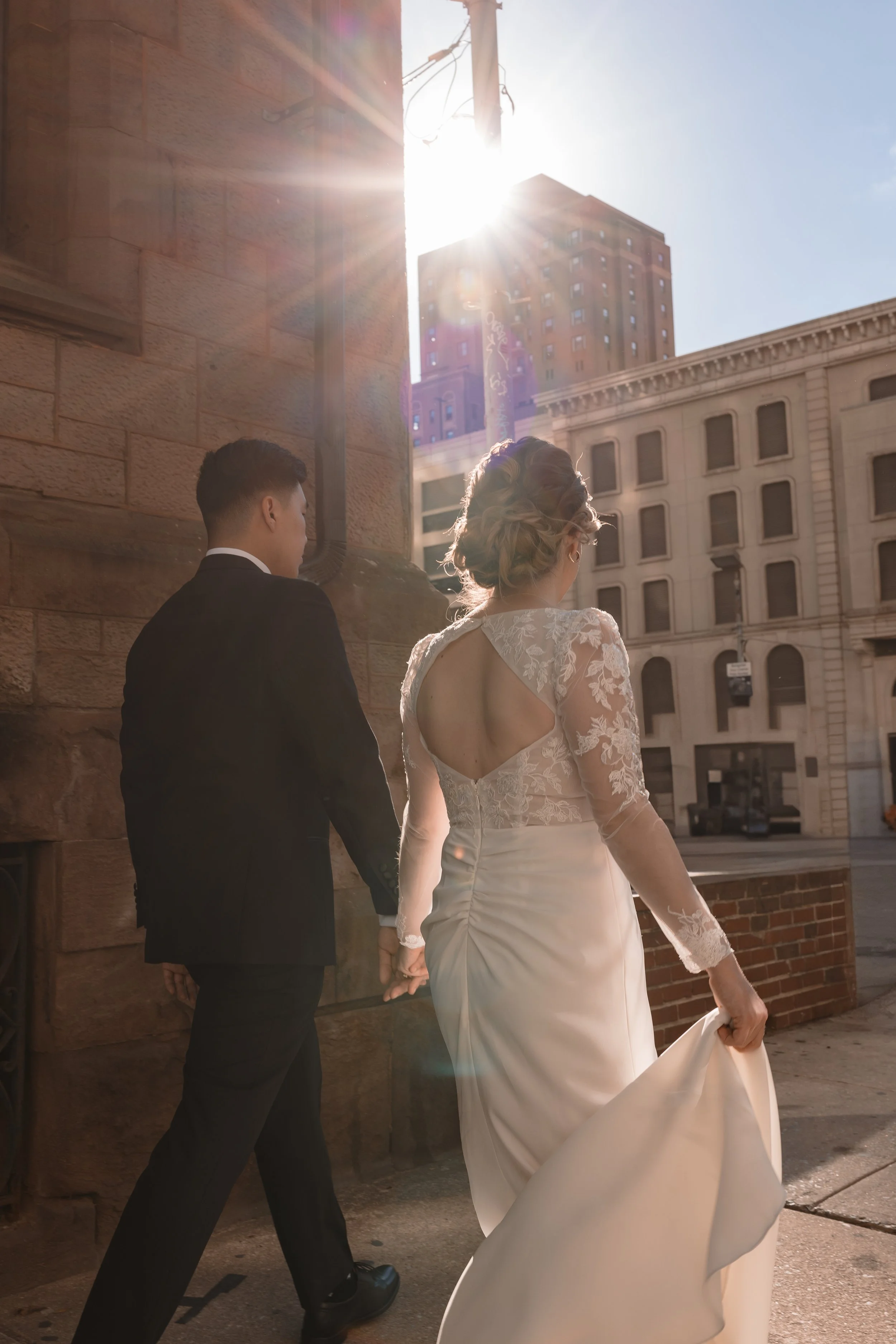
From my anecdotal experience, most people who got married young are still together and doing well. In fact, it was challenging to find anyone who was divorced to interview. (Source: Morina Photography)
Yet, there was this nagging feeling inside me. Something wasn’t right. I led the campus newspaper; I was in the honors cohort; I told myself I was the type of girl who could become somebody. I still had a lot of the world left to explore.
If there is any villain in this story, it’s me. I broke up with this guy and got back together with him more times than I can count — and I’m sure to his family and friends, it looked like I was stringing him along. Yet, underneath the indecisiveness was the huge anxiety of being alone. My upbringing had instilled in me the belief that being a good Christian woman meant being a good Christian wife. I had no examples of successful career women who were single, living on their own terms.
I spent a semester away from campus in New York City, where striving for individual success was in the air. I met people from all phases of life and started to see myself as someone who can handle new challenges alone. When I returned for our final semester, I eventually broke up with him for good.
Meanwhile, my roommate, Ellen, was planning her wedding.
“Getting engaged and getting married was just an expectation, I guess,” she said. “We didn’t think of any other options; that’s just what you did.
Ever after
I said no to the “ring by spring” culture, but was still deeply impacted. I moved to New Jersey after graduation to be a newspaper reporter. There are moments in those months that followed where I felt incredibly, deeply alone. When my car broke down and I had no one to call; leaving a party full of laughter late at night and having no one to come home to; finding a safe place to live; trying to survive on just a dollar more than minimum wage.
I feared I had made a mistake. My former classmates were experiencing these same struggles, but at least they were married, at least they had each other. Seven months after we graduated, I reached out to my college boyfriend. I was ready: I wanted to be married.
His response email was graceful but clear: He had reconnected with a young woman from his hometown. They were engaged.
For every sad breakup story like mine, there seemed to be a totally different story playing out for my friends somewhere else. In Ohio, my other roommate, Grace, had been happily married for more than a year to her sweetheart from her Christian high school days.
I had attended their summer wedding. They washed each other’s feet as part of the ceremony — a symbolic way to say they would serve each other, be there for each other and put each other’s interests before their own. It was beautiful. And when I recently reconnected with Grace, now 31, she was as genuinely happy as she was on the day of her wedding.
“It keeps getting better,” she said. “It takes hard work. When you’re young, and you get married, you grow up together. It can be hard with growing pains. But it can be delightful, too. You knew that person when they were really young. They find their footing over time.”
Getting married didn’t solve the problems that came with early adulthood. I remember a 20-something Grace talking to me about struggling to pay for gas and navigating career choices and first “real jobs” like the rest of us. But perhaps it eased the struggle a little bit, and getting married young meant building a life together from the beginning.
Grace’s story is not unusual. From my anecdotal experience, most people who got married young right out of college are still together and doing well. In fact, it was challenging to find anyone who was divorced to interview. Alec and Ellen are still married to their respective spouses despite shifts in their faith.

Part of the appeal of marrying soon after graduation is having someone to navigate adult life alongside. (Source: Morina Photography)
Ellen said she was now an “open-minded agnostic if you want to put a label on it, and it changes day to day.”
The years after college and her early years of marriage brought a lot of growth for her. She realized she was pansexual, and went to therapy to process her anxiety and religious trauma. She said she is lucky. The man she’d chosen in college to be “subservient” to didn’t want that at all. Now, their differing viewpoints just make for good conversations and friendly debates.
Still, she advised caution: “I would tell kids in college to focus more on developing yourself as a person, and if a relationship forms on the side, then that’s fine.”
Alec still identifies as a Christian but said he hasn’t felt the Holy Spirit in years. He said his opinions and views about almost everything have changed in the decade since college, but his view of marriage has held firm, and he’s very glad he married young.
“I knew what I wanted out of life. I still do,” he said. “I wanted a companion, someone to give my everything to and someone to give everything to me and for that to start as soon as possible.”
A spiritual or statistical issue?
Visit any crowded congregation on a Sunday in America, and you’ll find similar couples. People who married right out of high school or college, and who hit the ground running raising kids and signing up for the church potlucks. Yet, in that same congregation, you’ll find single people in their 20s, 30s and 40s — many of whom deeply desire a spouse and wish their college years (or the years that followed) had resulted in an engagement ring.
They are part of a worldwide trend: people are getting married older, or not at all. On college campuses in the 1980s, both religious and secular, marrying soon after graduation was more the norm than the exception, with women getting married at the average age of 22. Now, the average age is 28. There’s been a lot of hand-wringing about the falling marriage rates and the connected drop in fertility rates — prompting conservative politicians and influencers to encourage people to “get married young” and “have more kids than you can afford.”
But Christian women, in particular, don’t need any more reminders. Years of singleness can cause them to question God’s plan for their lives.
“For women especially, they ask, ‘Am I worthy enough?’” Keogh said. “Worthy has a heavy connotation in Christianity. [It means] valued, seen as significant, or appreciated. Validated.”
According to Keogh, women who don’t get dates may think: “There must be something wrong with me, because I followed the formula,” she said.
An evolving culture
With singleness on the rise, churches face the challenge of refashioning themselves to be more inclusive and embracing Biblical teaching that promotes singleness as a force for good.
“Singleness is seen as a temporary status,” Keogh said. “Churches need to learn how to incorporate everybody at the table.”

In many Christian communities, a wedding is still seen as the marker that transforms a young person into a fully accepted adult. (Source: Morina Photography)
Talking with my classmates recently, I remembered how high the stakes were in dating culture as a teenager and young 20-something. Every date was taken with the utmost seriousness, and that messaging was ingrained in us by parents and church leaders who had bought into movements like “I Kissed Dating Goodbye” and “True Love Waits” long before we hit puberty. Some of my former classmates have said Christian dating culture before and after college could improve by destigmatizing casual dating and getting to know multiple potential partners at a time.
Something Taylor University did extremely well in this regard was organizing “Pick-A-Dates,” which were massive, fun group dates where you could ask basically anyone on campus out. Sometimes the get-togethers were announced by your residence assistants mere hours before they started to avoid any days-long anxiety. Sometimes they would impose light-hearted restrictions to encourage more random selections: “your date has to be wearing a blue shirt” or “they have to have a name from the Bible.”
It was considered courteous to say “yes” when asked whenever possible, and if a scheduling conflict prevented you from going, it was typical for guys or girls to refer you to a friend.
“It’s kind of like bar culture, where you go pick up chicks,” Alec recalled. “You have a bilateral excuse within an entire society for a guy to ask a girl or a girl to ask a guy.”
In the years since we’ve been in college, there’s reason to believe the situation has improved even further. Grace said waiting to settle down and getting married later in life is now more normalized in Christian circles and “seems less scary.”
Social media has introduced role models who are happily living Christian lives as single women and men — and several well-known Christian leaders have peeled off from their conservative-leaning bases, embracing feminism and upholding singleness as a legitimate life path.
Yet, if the hype around the upcoming “Ring Before Spring Break” series is any indication, all signs point to the pressure to get engaged and married is still prevalent on most Christian campuses. There will still be girls like me who face the massive decision to either forever yoke themselves to a fellow 22-year-old or to strike out on their own. The phenomenon of Ring By Spring will still impact generations to come — for better or for worse.
There was a moment that year, after my college breakup, or perhaps two years after. I was rushing out of the house (which was built in the 1800s and had lopsided floors, asbestos in the basement and mice in the bathroom, but was “mine” nonetheless because of the $700 I paid to rent a room there) when I paused, staring at myself in the mirror. I looked no different than the day before, but something had changed. I was confident; I was evolving. I was chasing life on my own terms and paying all my own bills, and doing my best to shape the world as it shaped me.
“I’m committed to myself,” I thought.
Reflecting on that thought now, several years later, it seems obvious. Of course I was committed to myself. But at the time it felt monumental, even revelatory. I had entered college with a script.
I expected myself to come out with a ring and be married in the spring. But somehow, miraculously, I broke the script written into my psyche since birth, and there I stood, a young woman responsible for only myself, committed to myself and allowing myself to taste life outside the chapel.
I smiled at the mirror and hopped in the car — headed only God knows where.
Cassidy Grom is the managing editor of Religion Unplugged. Her award-winning reporting and digital design work have appeared in numerous publications.