
From Fast To Feast: New Book Teaches Tasty, Classic Ramadan Recipes
(REVIEW) As a child growing up in England, Somali-born cookbook author Ilhan Mohamed Abdi recalls the “soft glow” of kitchen lights piercing the predawn darkness of the house during the month of Ramadan.
During this reflective time, which starts on Tuesday evening, Muslims fast from dawn to dusk in memory of the first revelation of the Qur’an to the Prophet Muhammad in 610 C.E.
The soft light, low voices, and gentle clinking of pots coming from the kitchen signaled the quiet preparation of suhoor, a pre-fasting meal eaten just before sunrise. The subdued, sleepy meal is intended to fortify the faithful for the day of abstinence, a day made even more challenging whenever the shifting season of Ramadan falls during the longer daylight hours of summer.
READ: How Ramadan TV Dramas Serve As A Conduit For Cultural And Social Change
Suhoor meals prepared by Abdi’s Egyptian mother varied from simple, rib-sticking barley porridges to tempting, elaborate dishes such as umm ali, a rich, creamy bread pudding, studded with almonds and pistachios and liberally spiced with cardamom and cinnamon.
At sunset, iftar, the prayerful breaking of the fast with a date or two and sips of water, was just as “quiet, intentional, and deeply comforting,” Abdi recalled.
Small, rejuvenating nibbles, such as bajiye (Somali split pea fritters) or sambuus — the Somali version of samosas, packed with beef or tuna — were among her mother’s specialties. These paved the way for bountiful main courses around which the family would gather, enlivened now with sustenance, conversation, and the “joy of feeding others.”
Drawing upon these memories as an inspirational foundation, Abdi’s “The Ramadan Kitchen,” a culinary celebration of the Muslim holiday, includes nearly 80 recipes “from East and North Africa, the Middle East and the global Muslim diaspora.”
The book’s sections follow the rhythms of the Ramadan day, beginning with a handful of suhoor dishes, such as her mother’s umm ali (which she uniquely makes with stale croissants) or zippy fasooliyad (spiced beans), a Somali specialty, somewhat Anglicized, not to mention simplified, by the use of classic, canned British beans.
Abdi’s date shake is a creamy and delicious morning power drink, made with plump Medjool dates (a good way to use up extra dates during the holy month, she suggests), milk, cinnamon and some optional vanilla extract simply swirled in a blender. (I opted for oat milk instead of dairy, and the results were fantastic).
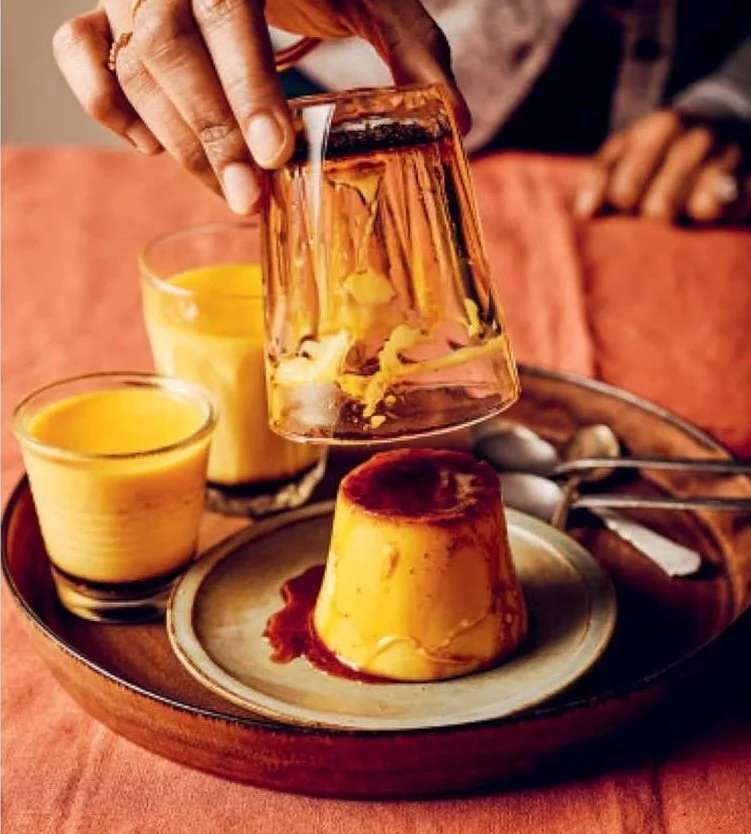
Cardamom creme caramel (Photo courtesy of “The Ramadan Kitchen”)
It is reasonable to think that after a day of fasting, Iftar would be all about voracious indulging. Rather, it is characterized by small, energy-boosting bites, “a soft landing after a long day of stillness and patience” that fills “the space between the fast and the evening meal.”
A generous dish of hummus, finished off with an unctuous garnish of oodkac (bits of diced beef, sauteed with plenty of freshly ground black pepper and cumin), served with soft, flaky loaves of kimis (unleavened flatbread), offers an opportunity for family and friends to gather around a communal plate and ease into the evening.
Kimis also pairs well, Abdi suggests, with another iftar staple, addas, lentil soup. While this hearty, warming, stew-like soup is widely known throughout the Middle East, Abdi enlivens hers with the addition of ras el hanout, a heady blend of North African spices that typically includes cardamom, cumin, clove, cinnamon, turmeric, nutmeg, and other exotic aromatics. Not surprisingly, ras el hanout is Arabic for “head of the shop”, meaning the best that the spice merchant has to offer.
Once the fast is broken, the table begins to fill with more substantial, main dishes, “the heart of the evening meal,” Abdi writes. Her menu suggestions include several traditional Somali dishes from her childhood, such as bariis Somali (aromatic Somali rice), basmati richly spiced with cumin, cardamom and cinnamon, with some golden raisins for sweetness (the recipe actually draws heavily on South Asian pilafs). Another is bisteeki, thin slices of tenderized beef rubbed with nearly a dozen spices, quickly seared in a hot pan and briefly simmered in a rich, umami, soy-based sauce.
With a nod to her mother’s ethnic background, she includes several Egyptian versions of standard classics such as mac and cheese (the additions of ground beef, cilantro and nutmeg take the dish to another level) or mesa’a’ah, similar to classic Italian caponata (sweet and sour sautéed eggplant and tomatoes), with cumin and coriander providing a North African twist.
In addition to kimis, Abdi offers a variety of bread recipes to scoop up these saucy mains, such as soft and golden muufo (traditional, leavened Somali flatbread made with Greek yogurt) or garlic bread-like, yeasty dinner rolls drenched in melted garlic butter and parsley.
The end of the fast, Eid, is a “day of joy.” Like most big holidays, the cooking of the season’s most plentiful meals commences “long before the table is laid.” After prayers and services at the mosque, families come home to the first substantial breakfast since the beginning of the fast, digging into dishes such as fuul madammas (stewed fava beans with eggs and feta).
Then a joyful, grateful day of cooking begins. The kitchen buzzes with food prep and fills with the aroma of hearty main dishes such as roasted lamb shoulder, richly marinated with tangy tamarind paste, curry powder, cumin and other spices. In Abdi’s house, sweets at the end of the meal may include her unique interpretation of baklava, layered with a custard cream in addition to the traditional nuts, or doolsho, a spiced Somali pound cake.
Though not Muslim, I have attended several iftar dinners and Eid celebrations, at the warm invitation of hosts who never considered my own faith tradition (Christianity) as a barrier to a seat at the table. It’s fair to regard Abdi’s ode to the holiest month in the Islamic calendar in much the same way.
This is a book for everyone, or at least everyone who enjoys Middle Eastern/North African cuisine and would like to adventurously learn more about it, as well as Ramadan, from a culinary perspective.
Tom Verde is a freelance journalist, specializing in religion, culture, food and history. His book, “Queens of Islam: The Muslim World’s Historic Women Rulers” was published by Interlink Books in 2025.