
The Women Of Faith Who Shaped America
There are few more famous lines from a woman’s pen in the era of the American Revolution than those written by Abigail Adams, wife of delegate John Adams.
Writing from their farm in Braintree, Massachusetts — where she managed much of the household and business while he advocated for independence — she urged her husband: “In the new code of laws which I suppose it will be necessary for you to make, I desire you would remember the ladies and be more generous and favorable to them than your ancestors. Do not put such unlimited power into the hands of the husbands. Remember, all men would be tyrants if they could.”
She warned that if women were not given “particular care and attention,” they would “foment a rebellion” and refuse to be bound by laws in which they had no voice or representation.
READ: Who Really Are The 250 Greatest Americans?
John Adams, who respected his wife’s abilities as a farmer, parent and businesswoman, responded in a jocular tone, though he appears to have continued reflecting on her arguments.
Born into a Congregationalist family and later a Unitarian, Abigail Adams represents, in many ways, the type of woman whose words and experiences have endured from the Revolutionary era: white, literate, relatively well-off and deeply religious. She also lived in New England, a region that has received significant attention from 18th-century historians. One reason is the emphasis that theological descendants of the Puritans — such as Congregationalists — placed on literacy for both boys and girls.
Although Adams was likely pressing her husband to advocate for women’s legal protections within marriage rather than explicitly calling for suffrage, many women of her era were engaged in carving out a spiritual space of their own — one in which their piety placed them on equal, if not superior, footing with men.
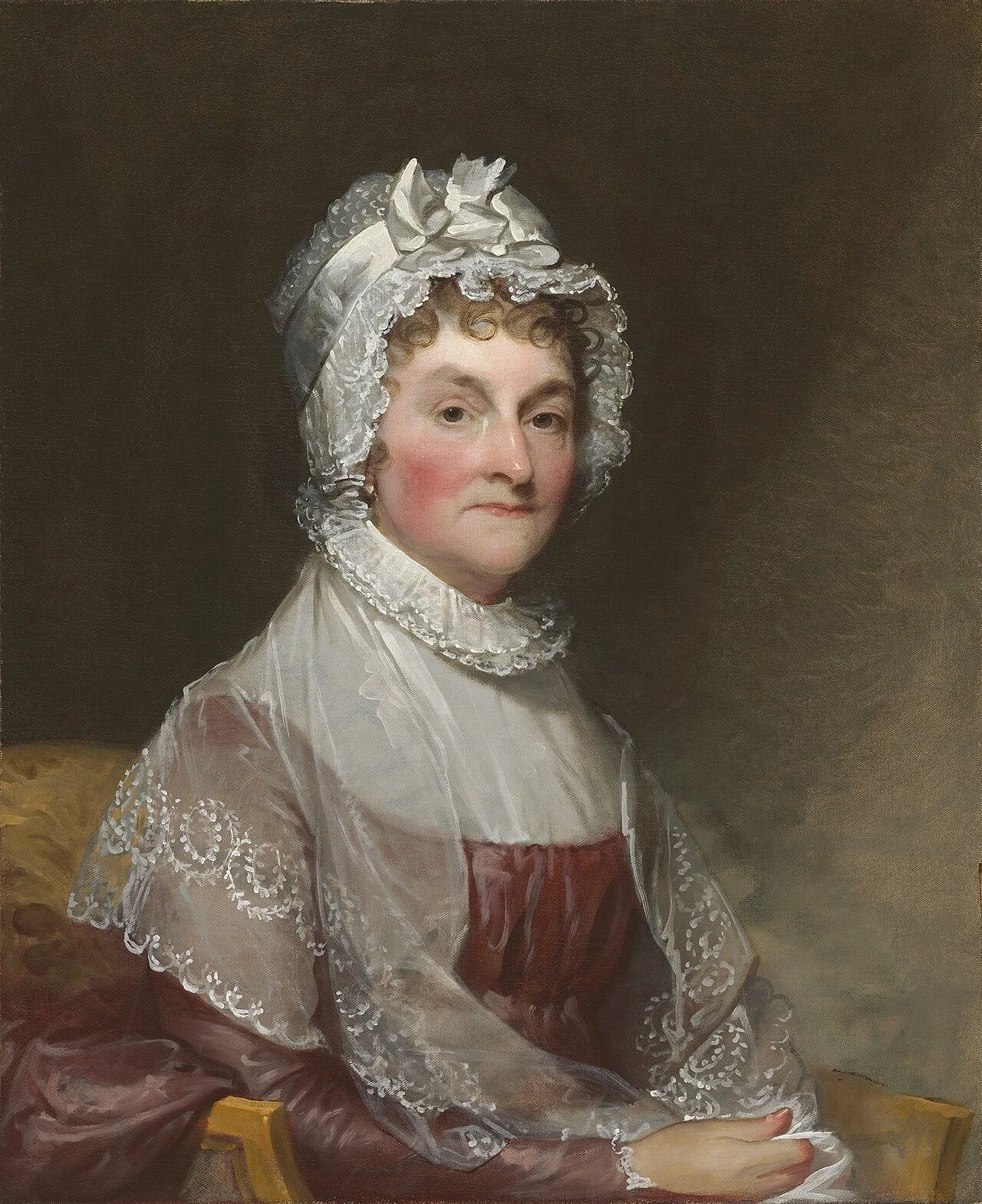
Abigail Adams by Gilbert Stuart. (Image via Wikipedia Commons)
Women in Colonial America, diverse in their religious practices, played a major role not only in shaping the domestic religious life of the household but also in influencing the social movements that emerged in the nineteenth century, including abolition, women’s suffrage and charitable reform. They lacked formal political power, but — like enslaved Black men and women and some Native Americans — many heard in the sermons of the First Great Awakening a call to spiritual, if not legal, equality and a path forward.
It is difficult to determine how many women embraced such ideas. Some historians argue that assertions of female religious independence provoked a backlash that intensified after the Revolution. Still, several women whose writings survive belonged to traditions — such as the Religious Society of Friends — that believed the “Inner Light” could shine through anyone, regardless of gender. Others, influenced by revivalist preaching or Calvinist theology, described conversion experiences that marked them as among God’s chosen ones for salvation.
Any effort to describe women’s religious lives in the Revolutionary era must acknowledge the limits of the historical record. Many voices were never recorded or have not survived.
“The women who receive widespread attention tend to have very unique stories,” said Katherine Carté, a professor of history at Southern Methodist University and author of “Religion and the American Revolution: An Imperial History.”
Among them was Sarah Osborn, a Calvinist and prolific memoirist who, despite severe rheumatoid arthritis, hosted large revival meetings in her home attended by hundreds, including both free and enslaved Black people.
In Philadelphia, Quakers such as Elizabeth Drinker struggled to reconcile pacifist beliefs with support for the Revolutionary cause. Meanwhile, Jemima Wilkinson, after a mystical experience of death and rebirth, renounced gender and lived as the Public Universal Friend, eventually leading followers to western New York.
As explored by historian Catherine Brekus in “Strangers and Pilgrims,” some of the first female preachers in American history emerged during this period of religious ferment. Men retained formal authority in households and politics, but women often claimed spiritual authority grounded in piety and personal conversion.
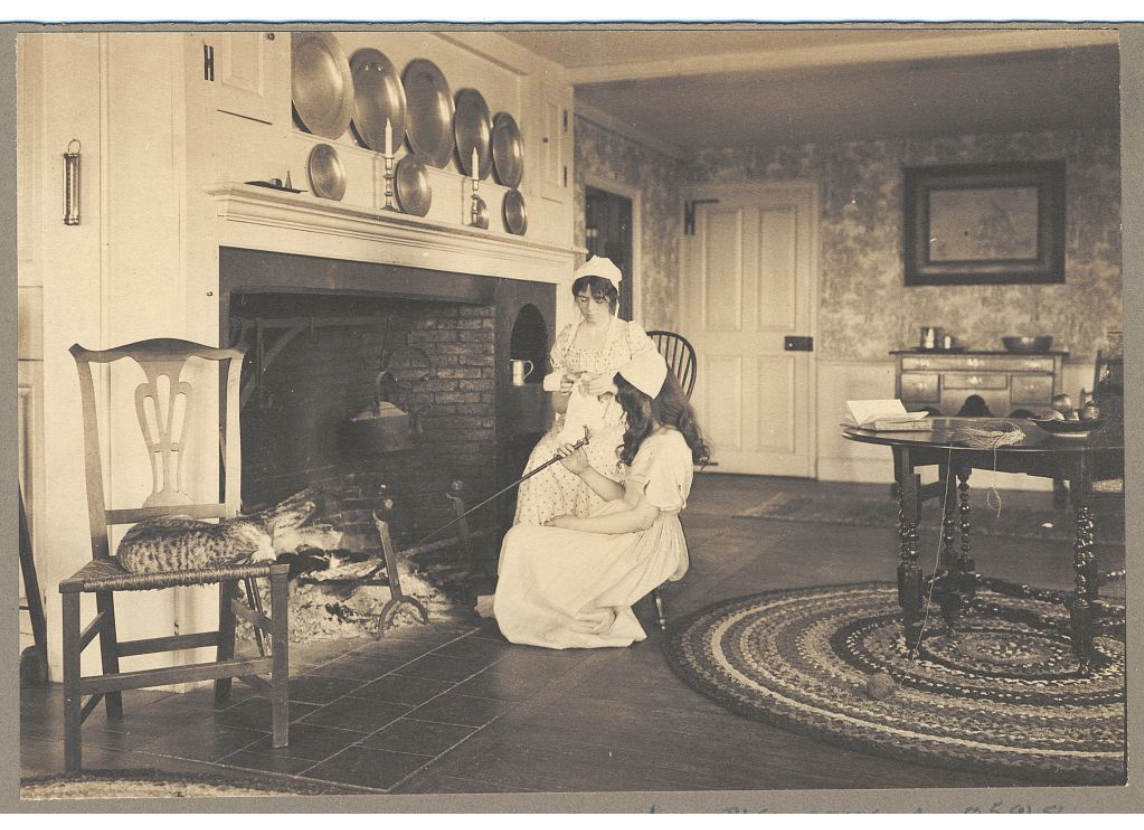
Women reenacting domestic colonial life. (Source: Library of Congress)
Leadership through everyday practices
Scholarly understanding of these women has evolved. In recent decades, historians have shifted attention from formal theology — largely dominated by men — to the everyday practices of religious life. As Janet Lindman has argued, examining daily expressions of faith provides a fuller picture of women’s experiences.
Literacy gave many white women distinct advantages. The ability to read, write, correspond, and keep journals allowed them to document their spiritual lives. Even so, whether literate or not, women were typically expected to gather their households for worship — often including enslaved people, though this varied by region — and to oversee their children’s religious education. Class also shaped religious practice, influencing how much time women could devote to devotion and reflection.
Instead of looking at women’s experiences through the lens of denominational history and clergy in that period, said Carté, “it helps to start with the household. Protestantism is, in some ways, a household-based religion. Family is a very crucial building block, and women played really important roles,” she added — particularly in geographical areas like New England, where family and household worship was encouraged. Women were also critical to the charitable work that took place in local congregations, “so women were going to be very active in the communal life of a congregation.”
This pattern extended beyond New England. In Anglican colonies such as Virginia, where churches were often widely dispersed, much religious life took place in the home. Historian Erik Seeman, a professor of history at the University of Buffalo, has found that mothers were expected to model piety through prayer, reading and activities such as teaching daughters needlework. Women were also deeply involved in childbirth — a female-centered space — as well as in practices surrounding death and mourning.
In the southern colonies, where the Church of England predominated, attendance requirements were less frequent due to distance. Still, women played essential roles in maintaining the material and devotional aspects of religious life.
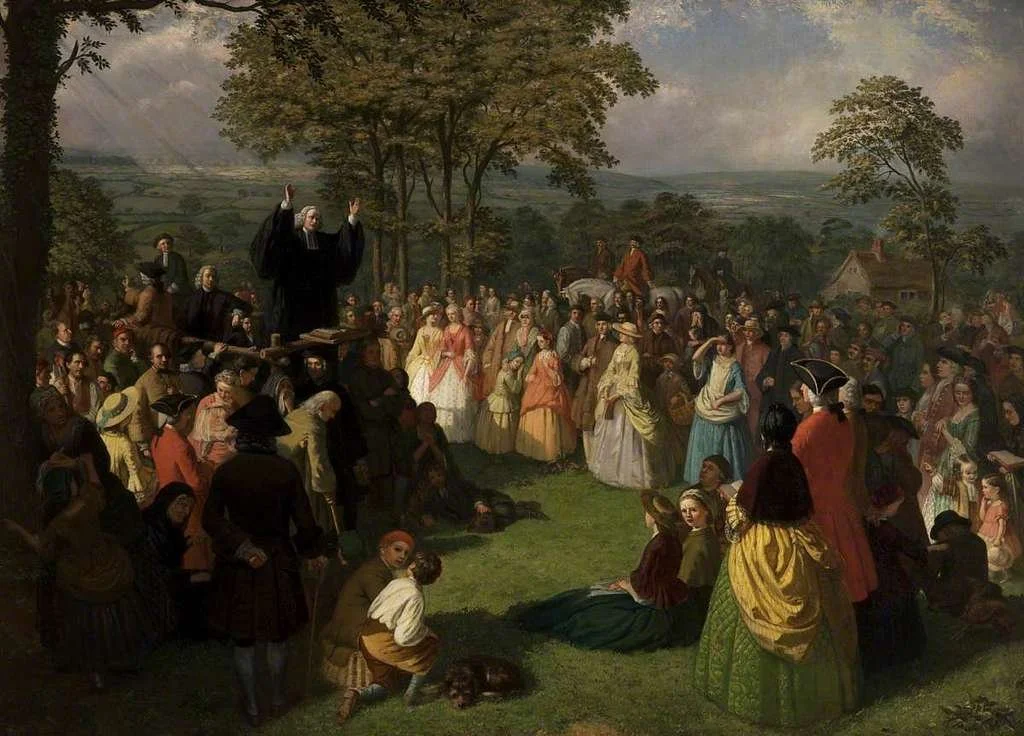
The Great Awakening encouraged women to think more about independence. (Creative Commons image)
Conversion narratives lend authority
Although women could not preach in most Congregationalist or Puritan settings, their conversion narratives could grant them recognition and influence. Women often outnumbered men in congregations — sometimes by a ratio of 2 to 1 — and were highly visible in the sharing of personal testimonies.
The First Great Awakening, beginning in the 1730s, created fertile ground for the growth of Baptist and Methodist traditions. Its revivalist message also had profound effects on women. As Carté noted, revival movements sometimes divided families and congregations, as individuals, often women, embraced new forms of worship or broke from established denominations.
“Revivalistic movements divided the denominations,” and could become a source of family conflict, Carté said.
Revivalist preachers emphasized spiritual equality before God, but they did not always anticipate the broader social implications. Women and African Americans, in particular, took these messages seriously, interpreting them as affirmations of their spiritual autonomy.
“I think the revivalists were kind of taken aback by some of the social implications of what they are preaching,” Carté added. “They were so focused on the spiritual implications that they underestimated how much other people would respond. Both women and African-Americans heard those messages (of spiritual independence) and took them seriously.”
Even so, tensions persisted. In many denominations, women made up the majority of members, especially in groups that required a conversion experience. Some male leaders worried that men were relinquishing spiritual authority. In the early republic, ministers increasingly called on men to reassert religious leadership within the household, linking patriarchal authority to civic virtue.
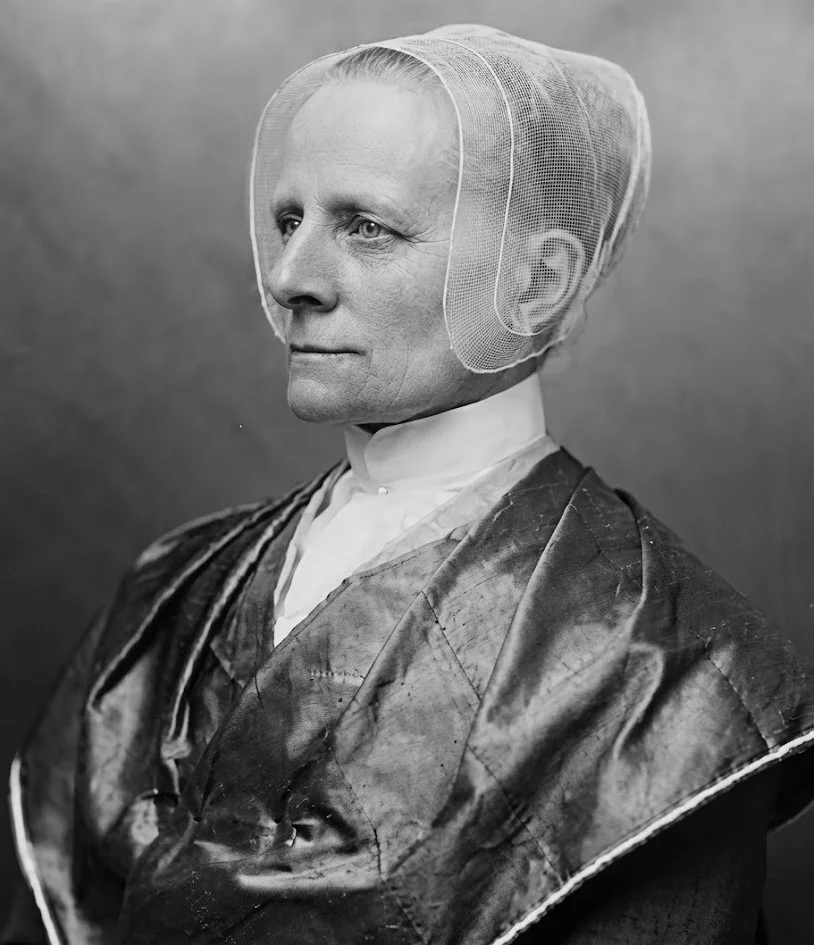
Ann Lee. (Source: Wikipedia Commons)
Some denominations allowed leadership
Despite these constraints, some religious communities offered women greater roles. Quakers, for example, allowed women to speak in meetings and exercise a degree of authority uncommon in other denominations. Similarly, movements such as the Shakers and the Moravians challenged traditional gender norms.
Led by Ann Lee, the Shakers believed that the divine encompassed both male and female aspects. After emigrating to America, Lee established a utopian community near Albany, New York. Although she died in 1784, the movement endured, attracting followers drawn to its alternative vision of gender and religious life.
Moravian communities also experimented with gender roles, organizing members into separate living groups based on age, sex, and marital status. Even so, most denominations — including the Quakers — did not fundamentally challenge male authority within the household.
Important perspectives remain underrepresented in this history. African American women, for instance, are less visible in the surviving record, though their experiences were central to American religious life. Phillis Wheatley, the first person of African descent to publish a book in North America, stands as a notable exception, though her life was shaped by the racial constraints of 18th-century society.
Overall, the legal and social status of women changed little during the 18th century. In some respects, opportunities for female religious leadership even declined after the American Revolution, as institutional structures solidified. Women preachers in the 19th century, such as Harriet Livermore, were sometimes dismissed despite earlier prominence.
Yet the foundations laid during the colonial and Revolutionary periods had lasting effects. Women remained the backbone of many congregations and gradually extended their influence beyond the home and church. Through voluntary societies and reform movements, they became key participants in efforts to abolish slavery, expand education and secure political rights.
Elizabeth Eisenstadt Evans is a freelance writer whose work has appeared in Religion News Service, National Catholic Reporter, Sojourners, Christian Century, The Washington Post and Philadelphia Inquirer.