
Dolly Parton, Country Music Icon Who Celebrated Her Christian Faith, Dies at 80
Dolly Parton, the country music singer, songwriter and actress whose rags-to-riches story, talent and large-than-life persona helped turn her into a cultural icon, died Tuesday in Nashville. She was 80.
Parton’s family announced her death in a social media video post. Her publicist, Marcel Pariseau, said Parton had been “bravely facing a brief battle with cancer” and that she was “surrounded by loved ones” while receiving medical care at the Vanderbilt-Ingram Cancer Center in Nashville.
For more than six decades, Parton built a career that seemed almost too improbable to be true: A poor girl from the Smoky Mountains who became one of the world’s most celebrated musicians, a movie star, businesswoman and philanthropist.
READ: The ‘Visual Commentary On Scripture’ Is Changing How We Read The Bible
Behind the rhinestones, big blonde hair and curvy figure was something Parton considered more fundamental to her identity than fame: Her Christian faith.
“A belief in God is essential,” she once said. “You have to believe in something bigger than yourself. We grew up believing that through God all things are possible.”
That belief was formed in the mountains of East Tennessee, where Parton was born on Jan. 19, 1946, the fourth of 12 children. Her parents had little money, but the family was rich in affection, music and faith. Her maternal grandfather, Jake Robert Owens, was a preacher at the House of Prayer, the little mountain church where Parton worshipped. She began singing hymns and playing guitar at church when she was only six.
By age 13, she appeared on the Grand Ole Opry in Nashville, where Johnny Cash introduced her as “a little girl here from up in East Tennessee.”
The faith of her childhood was not something Parton abandoned when she found success. Instead, she carried it with her to the recording studio, concert stages and even Hollywood.
“That’s who I am,” she said of her faith. “That’s what keeps me going.”
Her songs often reflected the same mixture of hardship and hope that characterized her upbringing. In “Coat of Many Colors,” she transformed childhood poverty into a story of dignity and love, while “My Tennessee Mountain Home” looked back toward a simpler place of belonging. Other songs — such as “I Will Always Love You,” “Jolene” and “9 to 5” — demonstrated her extraordinary ability to turn personal emotions and everyday struggles into songs understood by millions.
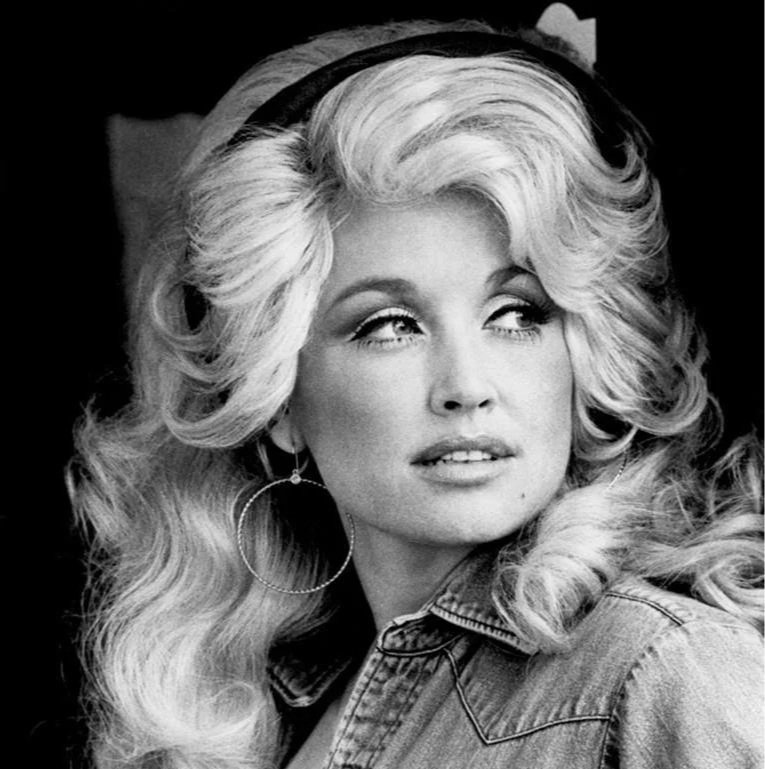
Dolly Parton was beloved by fans for over six decades. (Wikipedia Commons photo)
Parton was the top-ranking female singer on country radio from 1967 to 1993 with a total of 25 No. 1 country singles. As a result, she had the distinction of being inducted into both the country music and rock ’n’ roll halls of fame.
New generations of listeners discovered Parton’s music over the decades. Featured in the 1992 movie “The Bodyguard,” Whitney Houston’s version of “I Will Always Love You” spent 14 weeks at the top of the pop charts. The original song had previously been a No. 1 country single twice in versions released by Parton in 1974 and again in 1982.
Parton often described songwriting itself as a spiritual practice.
“God is my co-writer and my co-pilot,” she said.
Parton said her musical ability was a gift that brought with it a divine inspiration. Songwriting, she said, was her “God-time.” Her purpose was not simply to entertain but, as she put it, to “write, create, spread joy and spread a message” to others.
That philosophy helped explain why Parton’s philanthropy became such a central part of her life and now legacy. Through her Imagination Library, which she founded 31 years ago, Parton helped put books into the hands of children around the world. She supported schools, charities and people in need — repeatedly using her extraordinary success to give opportunities to people who had not been given the advantages she eventually had.
“Well, I hope that a lot of my songs may last that long, and I hope I’ll be remembered as somebody that tried to do some good in the world and left, you know, a few good things behind, like the Imagination Library and some of the music I’ve done,” Parton told The Associated Press in 2024.
Faith also appeared in Parton’s TV and film career. Her productions “Coat of Many Colors” and “Christmas of Many Colors” drew on her childhood and Christian beliefs. In the 2020 Netflix musical “Christmas on the Square,” she played an angel and surrounded the story with themes of family, faith, redemption and generosity.
In recent years she had dealt with health problems, while also grieving the death of her husband Carl Dean, an asphalt paving contractor, in 2025. She continued to speak about faith as something that helped her endure loss and look beyond it. They had been married for 59 years.
“I will always love him,” she said of Dean, “and I will always miss him.”
In 2019, The New York Times published a story with the headline, “Is There Anything We Can All Agree On? Yes: Dolly Parton.”
Indeed, Parton was loved by all Americans — regardless of race, gender, creed or who they voted for.
“I don’t do politics,” Parton told host Jad Abumrad on his hit podcast “Dolly Parton’s America” that same year. “I have too many fans on both sides of the fence. Of course, I have my opinion about everything, but I learned years ago to keep your mouth shut about things.”
Clemente Lisi serves as executive editor at Religion Unplugged.