
🗽25 Years After 9/11, We Remember The Darkness And The Light 🔌

Weekend Plug-in 🔌
Editor’s note: Every Friday, “Weekend Plug-in” meets readers at the intersection of faith and news. Click to join nearly 10,000 subscribers who get this column delivered straight to their inbox. Got feedback or ideas? Email Bobby Ross Jr.
• • •
Clemente Lisi was a 26-year-old general assignment reporter for the New York Post on Sept. 11, 2001.
“Every day you’d get up, and you didn’t know what you were gonna do,” Lisi, now Religion Unplugged’s executive editor, told me last year. “One day it was covering a fire. The next day you’re covering a murder.”
On that Tuesday, he was told that a plane had hit the World Trade Center.
“So I went downtown, and I got pretty close to the scene, but the subways were all backed up,” Lisi recalled. “So I started walking, not knowing that one tower had already collapsed, because we lived in a world where the cell phone wasn’t a thing yet.
“And I didn’t know what was happening,” he added. “And the second tower collapsed, and I was pretty close to that, and I had to basically run away — run for my life. And I was locked down in Manhattan all that day, all that night, interviewing people.
“And then I was there, basically, for three more months in Lower Manhattan, talking to people about what had happened.”

Three yellow roses rest on a 9/11 memorial plaque in New York City. (Shutterstock photo)
At the 25th anniversary of the nation’s worst terrorist attacks, Lisi explains for Religion Unplugged readers how the world that made 9/11 still casts a shadow.
He writes:
The 9/11 attacks are often remembered as a single event. That morning, 19 terrorists turned commercial airliners into weapons and the modern era of terrorism began.
A total of 2,977 people died in the terror attacks at the World Trade Center, the Pentagon and in Shanksville, Pennsylvania — the deadliest to ever take place on U.S. soil.
That recollection, however true, obscures more than it reveals. The attacks were not something that occurred out of the blue. They were the product of decades of decisions, alliances, betrayals and unintended consequences stretching from the mountains of Afghanistan to the oil fields of Saudi Arabia to the corridors of Washington, D.C.
In a separate essay, Lisi looks back on the attacks and reflects on faith, memory and hope a quarter-century later:
He concludes:
Twenty-five years after the attacks, we remember those who died, those who survived, those who served and the families who continue to carry the burden of loss. We remember the darkness, but we also remember the light that appeared within it.
Amen!
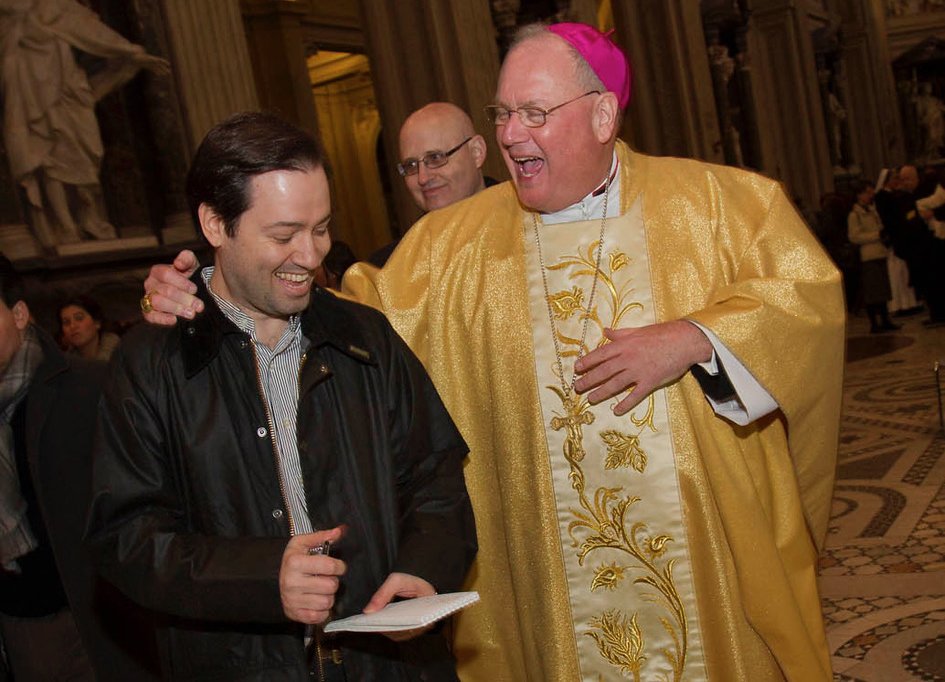
Clemente Lisi, then a reporter for the New York Post, covers Archbishop Timothy Dolan’s elevation to cardinal in 2012. (Photo provided by Clemente Lisi)
• • •
LIKE LISI, almost everybody alive then remembers what they were doing the morning of Sept. 11, 2001, as the Pew Research Center notes.
Cassidy Grom, now Religion Unplugged’s managing editor, was a 5-year-old enrolled in a half-day kindergarten program in Mount Washington, Kentucky.
Her reflections:
I remember that day mostly because the adults were acting so strange. The teachers kept leaving the classroom to watch something on the TV that was on a rolling cart in the hallway. They seemed really worried. Lessons stopped, and parents began coming to the school, checking their kids out. Our class dwindled one by one. I think the teachers tried to distract us with games.
Since it was a half-day program, my day usually ended around noon anyway. But instead of catching the bus as usual, my mom came and picked me up in her car — which was really different. And she also stopped at a gas station on the way home, which was very unusual. I didn't understand what was going on at the time, and only later learned it was because of a big event in New York.
People in our area were very concerned because we lived near Fort Knox, which held a large portion of the nation's gold reserves. They were worried there would be another attack, and this time, Fort Knox would be targeted — that explained my mom stopping for gas. She was worried our area would fall into chaos, too, and we would need a full tank to be able to get around or survive in a rural area.
I pieced together the bigger picture as I grew up and saw footage of the day. I remember the new airport security being a talking point those first few years when we would go to visit my grandparents in Arizona.
My school had a big patriotic streak for the following years. Either a year or two later, on the 9/11 anniversary, our elementary school had us make a giant American flag using our handprints. When I visited about a decade ago, it was still on display.
In a lot of ways, I'm grateful I got those first 5 or 6 years of childhood in the optimistic 1990s. I don't remember it much, but it seemed stable and hopeful. People just a few years younger than me were born into a more chaotic and fearful nation.
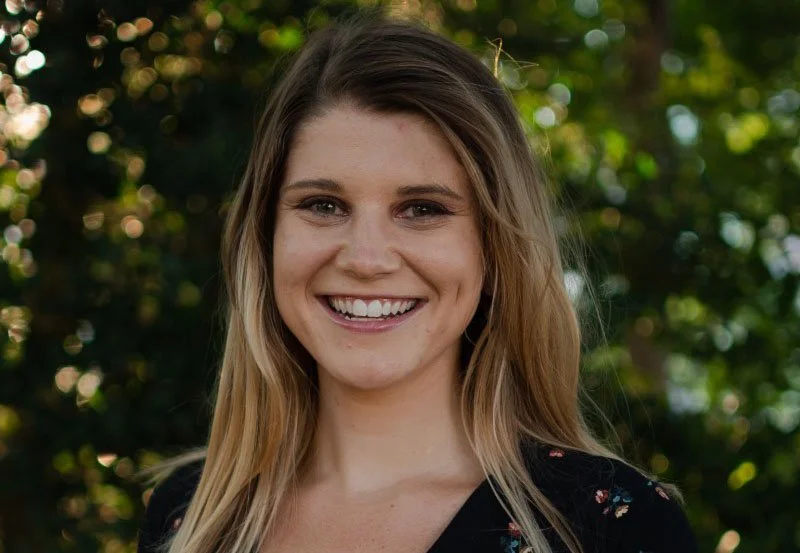
Cassidy Grom serves as managing editor for Religion Unplugged. (Photo provided by Cassidy Grom)
• • •
RICHARD OSTLING is an 86-year-old Godbeat legend who still writes a biweekly column for Religion Unplugged.
Then a New York-based national religion writer for The Associated Press, Ostling found himself on the opposite side of the Atlantic Ocean on Sept. 11, 2001.
He shares these memories:
My late wife, Joan, and I were on vacation in London, turned on the TV and were overwhelmed by the unimaginable news.
I felt immediately we had entered a new era in world affairs and world religion.
The Beeb (aka British Broadcasting Corp.) covered nothing but the attacks for days, including an extended feature from our town of Ridgewood, New Jersey, a couple days in. At an internet cafe we found it comforting that our church in Ridgewood emailed a summons to a prayer meeting that night for victim families and for domestic and international peace.
Brits on the subway heard our American accents and expressed condolences. Mountains of flowers were placed at the FDR statue across from the U.S. Embassy with long lines to sign the condolence book. They remember 1940-45 with gratitude.
I was pulled off our vacation for a day to work on a religion analysis at AP’s London bureau. As with obstetricians and volunteer firefighters, people are surprised that for three decades with Time magazine and AP, my 24/7/365 whereabouts had to be on file with the headquarters news desk.
Amazingly, our return flight took off for NYC as scheduled. Back home, I learned 34 regular commuters from our Ridgewood train station had been murdered. Our news agent (remember newsstands?) thoughtfully set up a small shrine for us to post flowers and condolences.

Richard Ostling with his late wife, Joan, and his daughters, Elizabeth and Maggie, when he received the Religion News Association’s lifetime achievement award at RNA’s 2006 annual meeting in Salt Lake City. (Photo provided by Elizabeth Ostling Klein)
• • •
MY 9/11 EXPERIENCE? I was religion editor for The Oklahoman, the metro daily in Oklahoma City, on Sept. 11, 2001.
I was running a few minutes late that Tuesday because I stopped at Walmart to buy a new pair of cleats for a company softball team starting the fall season that night. As it turned out, we didn’t play.
As I flashed my company ID at the security guard outside the newspaper building, he asked if I’d heard about a plane crashing into the World Trade Center in New York. I had not. Minutes later, after I arrived in the ninth-floor newsroom, my colleagues and I watched on TV as a second plane hit the twin towers.
Almost immediately, ABC anchor Peter Jennings likened the attack to Pearl Harbor. That’s when I grasped the significance.
The rest of the day is a blur. Like my reporter colleagues all over the nation, I immediately put aside any personal feelings and operated on journalistic adrenaline.
I wrote four bylined stories for the next day’s editions: one on the religious community’s response, one on Muslim fears of a backlash, one on Oklahoma City bombing victims’ reactions and one one an eyewitness account by an Oklahoma professor’s daughter.
Like many (most?) Americans, I tossed and turned that night. And I was roughly 1,500 miles from the collapsed towers.
I can’t imagine the real-life nightmare of those like Lisi, who chronicled the aftermath up close.
Lisi, who later taught journalism at the since-closed Kings College in New York, reflected on his experience in 2018 remarks at the College Media Association’s annual conference.
“I don’t consider myself a 9/11 survivor,” he said in the speech. “I am not. I was just a journalist doing his job.”
Inside The Godbeat
Elise Ann Allen has decided to step away from Crux and her role as its Vatican correspondent, as she details in a farewell column.
Charles Collins, Crux’s editor-in-chief, tells readers:
The death of John L. Allen, Jr., our editor and friend and Elise’s husband, hit all of us very hard, and it hit Elise hardest of all.
We were amazed at her grace — and her work ethic – during that painful time, and we felt her absence when she stepped away on sabbatical after Pope Leo XIV’s trip to Spain earlier this year.
We’ll continue to feel it, but we understand her decision comes from a place of deep discernment, and we wish her all the best.
John Allen died Jan. 22 after a long battle with stomach cancer.
The Final Plug
One more 9/11 note: St. Nicholas Greek Orthodox Church, a small Greek Orthodox parish, was destroyed when the World Trade Center’s south tower collapsed.
Twenty-five years later, the church stands as a place of peace, Angelina Ispir writes for Religion Unplugged.
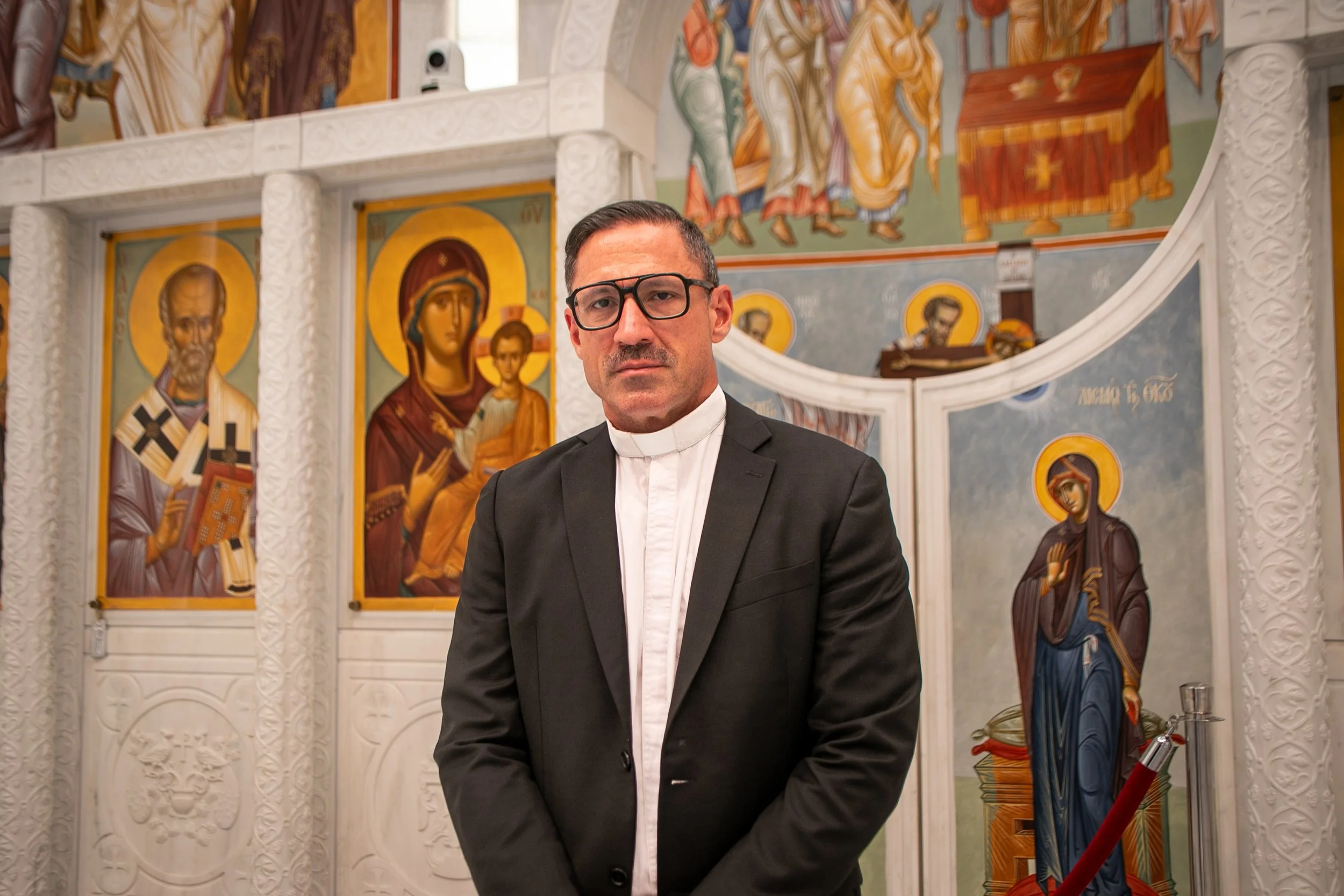
Father Andreas Vithoulkas, the leader of St. Nicholas Greek Orthodox Church, witnessed 9/11 firsthand and recalled searching for loved ones. (Photo by Angelina Ispir)
Check out all of Religion Unplugged’s special 9/11 anniversary coverage.
Happy Friday, everyone! Enjoy the weekend.
Bobby Ross Jr. writes the Weekend Plug-in column for Religion Unplugged and serves as editor-in-chief of The Christian Chronicle. A former religion writer for The Associated Press and The Oklahoman, Ross has reported from all 50 states and 20 nations. He has covered religion since 1999.