
With Proverbs And Psalms, Venezuelan Christians React To Maduro’s Capture
For many Venezuelans, the capture of President Nicolás Maduro is an answer, albeit a bittersweet one, to decades of fervent prayer.
“Although I am a Christian and firmly oppose all forms of war, I cannot deny that my heart feels a sense of hope at the possibility of justice being served in Venezuela,” Yhonatan Parada told The Christians Chronicle Saturday morning, after U.S. forces seized Maduro and his wife.
“And it is precisely because of my Christian faith that I do not celebrate the downfall of a person,” Parada said, “but rather the longing for peace, freedom and restoration that is now beginning to awaken in the soul of our people.”
READ: Church Leaders Call For Prayer As Maduro Transferred To New York
Parada is a fourth-year student at the Baxter Institute, a ministry training school in Tegucigalpa, Honduras, associated with Churches of Christ. He is among the 7.9 million Venezuelans who have left the South American nation in the past decade, amid a failing economy, rising gang violence and political repression.
The attack follows a months-long campaign by the U.S. against Maduro’s government, which President Donald Trump accuses of narco-terrorism. Since September, U.S. forces have destroyed and seized Venezuelan vessels in the Caribbean Sea. The capture operation, which lasted less than 30 minutes, took place in the Venezuelan capital, Caracas.
“The rest of the country is normal — scared but normal,” Jesús, who ministers for a Church of Christ in Puerto La Cruz, Venezuela, said in an early Saturday message to the Chronicle. The port city is about four hours east of Caracas. For security reasons, the Chronicle is withholding the minister’s full name.
“People are doing their shopping to stay safe at home,” Jesús said. “The brothers and sisters of the church in Caracas are safe, thank God.”
Members of Churches of Christ in the U.S. that support evangelists in Venezuela told the Chronicle that they’re receiving reports of long lines for food and fuel across the country. Some U.S. churches are sending funds to help.
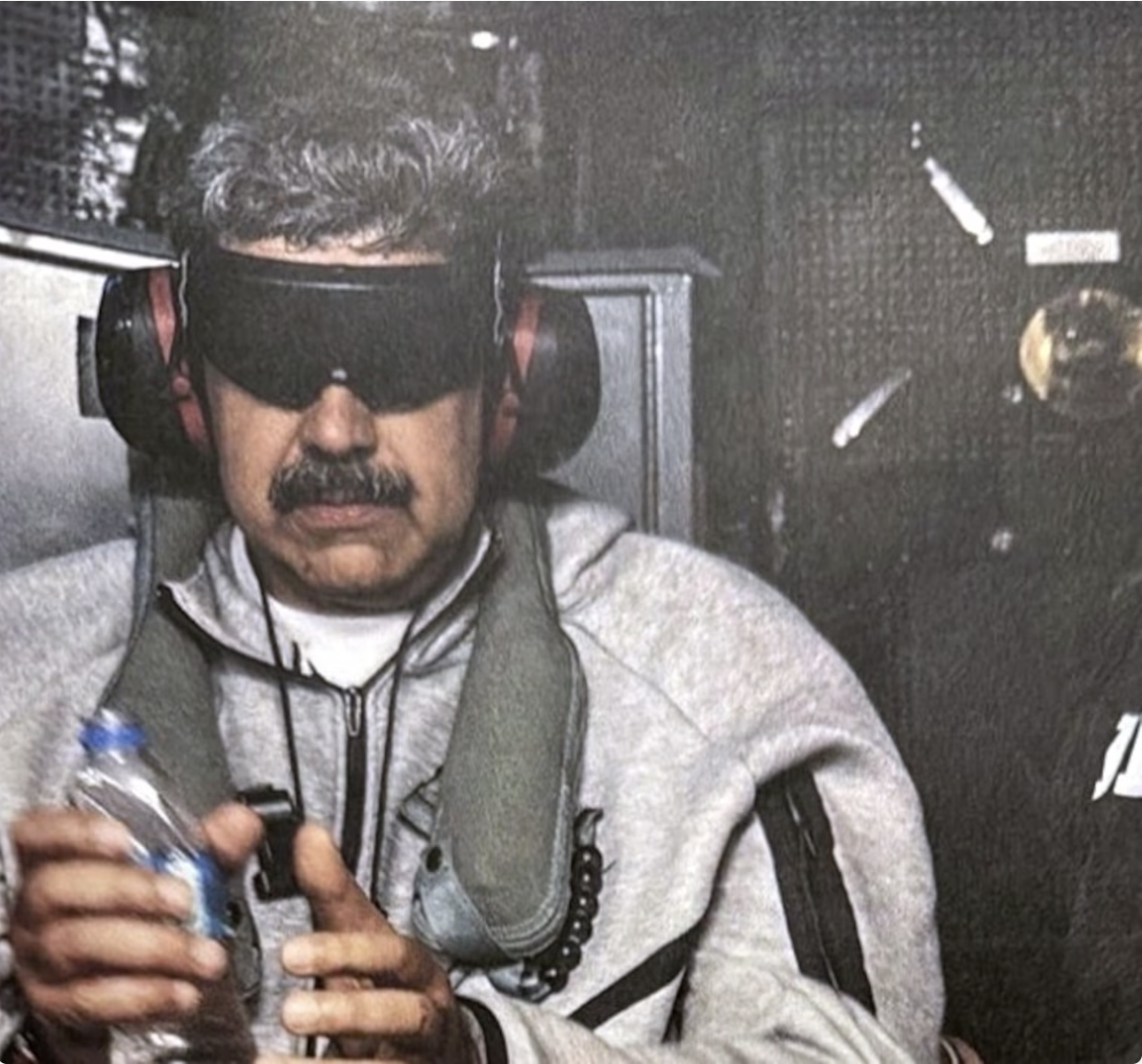
In this photo posted to social media by President Donald Trump, Venezuelan President Nicolas Maduro is shown in U.S. custody. (Photo courtesy of the White House)
As they watch their TVs and social media, Venezuelans see a flood of messages from their country’s government — especially Diosdado Cabello, Venezuela’s interior minister, who Jesús described as “one of the most difficult and hardest-hitting leaders.” Cabello called the capture of Maduro “a criminal, terrorist attack.”
“Continue praying for the situation,” Jesús said. “The tension remains high.”
Churches of Christ have found fertile soil in the oil-rich nation, which had the largest number of congregations and members on the continent in the early 2000s. Then President Hugo Chávez launched what he called a “Bolivarian Revolution,” strengthening government control of Venezuela’s oil industry and implementing social programs to expand access to healthcare and education.
Chávez formed partnerships with Cuba and socialist-leaning governments. Oil revenues declined, and scarcity increased.
Chávez died from cancer in 2013, and Maduro became president. Opponents have accused Maduro of vote rigging, and anti-government protests have resulted in deaths and thousands of arrests. Meanwhile, the country’s economic crisis has deepened. Power outages are common. Unemployment and gang violence are on the rise. So is inflation.
An exodus followed Maduro’s rise to power as Venezuelans poured into neighboring Colombia. A Church of Christ planted in the border city of Cucuta, Colombia, by a team from Great Cities Missions became a ministry of refuge and relief for hungry Venezuelans, the Chronicle reported in 2017. As the Venezuelan diaspora expanded around the globe, Churches of Christ across Latin America, the U.S. and Europe welcomed refugees. In recent years, the Chronicle has visited and profiled ministries serving Venezuelans in Chile, Argentina, Uruguay and Florida.
Now, expatriate church members anxiously watch the news and wait to receive messages from relatives in their troubled homeland.
“We’ve been talking about it since 3 a.m. when there were a lot of people on TikTok reporting detonations in Caracas,” said Odalis Vásquez, who moved from Venezuela to the Uruguayan capital, Montevideo, in 2015. Vásquez — with her husband, Eduardo, and their two teenage children — worship with a Church of Christ composed of immigrants from Venezuela, Cuba, Peru and other Spanish-speaking nations.
The Vásquezes have since heard from their family members in Venezuela, who are safe.
“There are a lot of mixed emotions,” Odalis said, “Hope that was almost gone came back. Joy of seeing Venezuela free, but frightened for innocent lives that may suffer.”
Gabriel Damalis, a church member in Buenos Aires, Argentina, is watching the news with visiting family members from his native Venezuela.
“Venezuelans are happy and gathering across the globe to celebrate the capture of a person that has caused so much suffering and oppression,” Damalis told the Chronicle. “As Venezuelan Christians, we are often asked how we reconcile the command to love our enemies with the immense relief we feel today. My answer is clear: What we are feeling is not hatred for a man. It is the joy of justice for a nation.
“Reading Proverbs 11:10, it tells us that ‘when the wicked perish, there are shouts of joy.’ This is a public relief that an obstacle to peace has been removed. For years we lived what Proverbs 29:2 describes. The wicked have ruled, and the people have groaned. Today, that groan has started to turn into gratitude. We celebrate because God has heard the cry of the oppressed and has acted as a righteous judge to set a limit on evil.”
Damalis stressed that Maduro’s capture “is not the end of our challenges, but rather the beginning of a long and difficult road toward stabilizing and rebuilding our country.”
In Honduras, Yhonatan Parada echoed those sentiments.
“I celebrate the hope that the weary Venezuelan people are breathing once again, and I rejoice deeply in the experience of faith that many are having who, for years, cried out to God for peace and freedom for our nation,” the ministry student said. “Today, those hearts know that their prayers were not in vain, that God heard their cry and that He continues to work, even when the road seems long.”
Parada cited Psalms 34:17, “The righteous cry out, and the Lord hears them; he delivers them from all their troubles.”
“My faith teaches me that God is not indifferent to the suffering of people,” Parada said, “and that justice, peace and hope always find their ultimate source in him.”
This article was first published by The Christian Chronicle.
Erik Tryggestad is President and CEO of The Christian Chronicle. You can contact him at erik@christianchronicle.org.