
‘Christianity At A Crossroads’: Signs Of Decline And Hope For The Future
Religion sociologist Ryan Burge opens the new PBS series “Christianity at a Crossroads” with an ominous declaration: “It’s unfathomable for me to describe how much religion has changed in America in the last 30 or 40 years. In 1972, only 1 in 20 Americans said they were nonreligious. And now it’s 3 in 10 Americans — 30% are nonreligious. It’s changing every aspect of American society.”
A narrator then delivers the bad news: It is estimated that as many as 100,000 churches will close or be repurposed in the coming decade. But Christianity still dominates American religion, with 62% of U.S. adults identifying as Christian and 30% of Americans still attending church every week.
Younger generations generally are far less religious than older ones and attend church less often. There have been recent anecdotal reports of a resurgence, especially among Generation Z. However, Burge says it is not enough to stop the bleeding because older congregants are dying and women are leaving denominations at a higher rate than younger people are entering them.

The series suggests the decline has leveled off for now, but the evidence points to a less rosy religious future. There are various reasons for this decline, including distrust of institutions, secularization, the sexual abuse crisis, churches' entanglements with politics and culture war issues, such as LGBTQ inclusion, which has been highly divisive for many churches.
But the series is not all doom and gloom. It claims there are signs of hope and vitality that may be forecasting a different, unique and possibly stronger future.
The series, which consists of four one-hour episodes, focuses on different churches to highlight some of these negative and positive trends. The film visits booming evangelical megachurches and the Catholic Church of the Nativity in Timonium, Maryland, which is borrowing successful megachurch techniques, such as contemporary music, energetic liturgies and numerous small groups and programs, to boost attendance.
The creator of the series, Martin Doblmeier, has been making films about religion, faith and spirituality for about 40 years. His subjects have included Dietrich Bonhoeffer, Abraham Joshua Heschel, Dorothy Day and Howard Thurman.
“We are well aware of the data coming out about the generation-long decline in Christian practice,” he told Religion Unplugged. “Our intention was not to challenge or deny the data, but to ask: Who is being impacted by this decline, and is the data providing the whole story?”
For the 75-year-old Doblmeier, the closing of the Michigan church after more than 100 years reflected what so many churches are experiencing today.
“A beautiful building, a rich history — but the realities of today are so different. So many people I have talked with say, ‘That’s my church. I wish it wasn’t, but that is my church.’”
He also pointed to First Baptist Church in Dallas, pastored by Donald Trump supporter Robert Jeffress, as an example of where he sees the church heading.
“A church that is alive and vibrant because it stays grounded in the Scriptures. People today are seeking something fundamental they can hold on to, and for many, it starts with the Bible.”
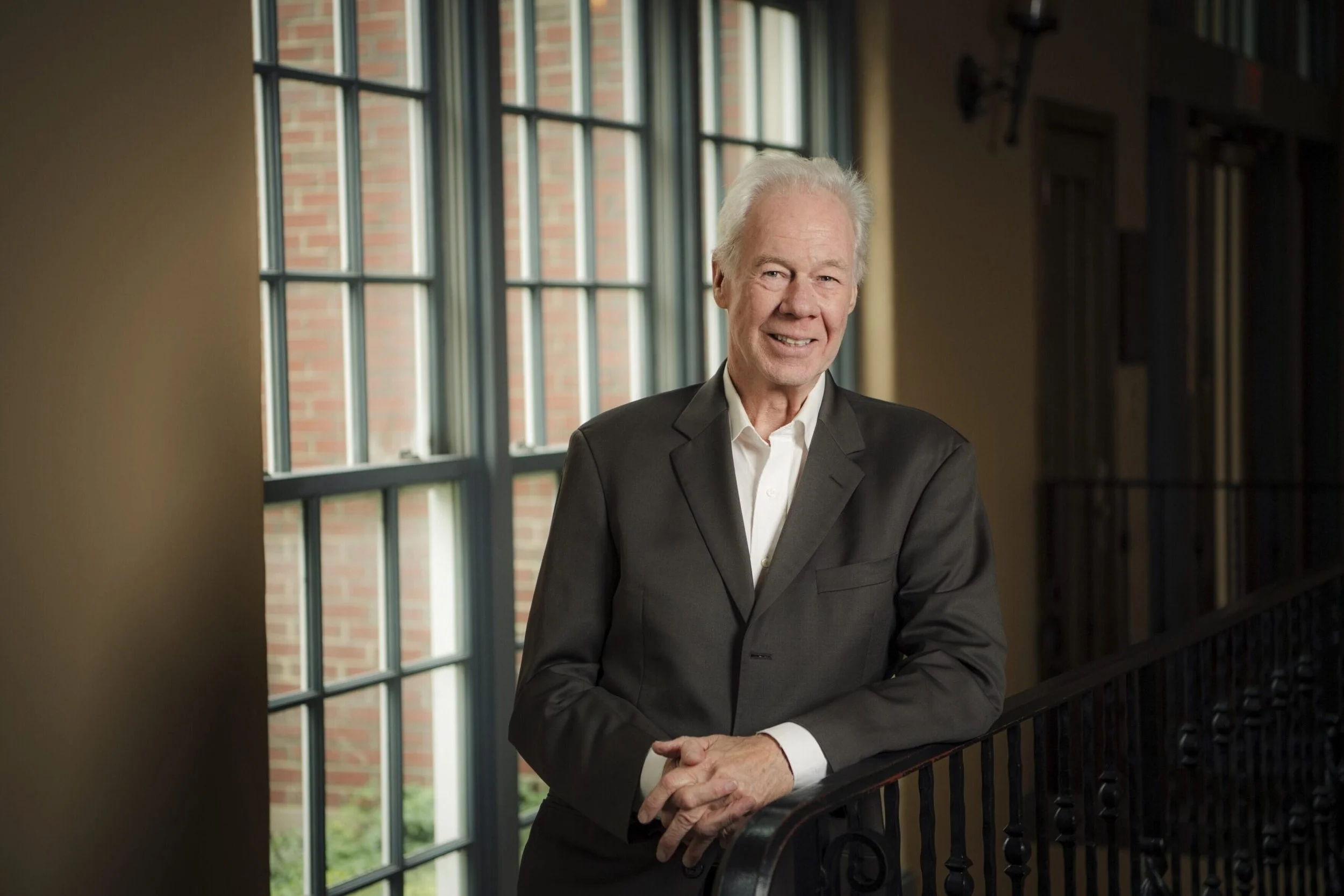
Martin Doblmeier (Handout photo)
Numerous factors contribute in their own ways to the decline of Christian practice in America today. However, Doblmeier notes: “I tend to agree with the data that people simply stopped believing in religion that changed everything for them. If you aren’t raised in a family where religion is practiced or made a priority, the likelihood of you becoming a church member and maintaining it later in life declines.”
What is the greatest sign of hope for the resurgence of Christianity in 2026?
“The key is not the number of people who still identify as Christians, but the strength of commitment of those who show up every Sunday that offers hope for the future.”
Why are younger Generation Z members starting to return to churches?
“We were in New York City, where a 200-plus-member church is filled to capacity for every service on Sunday,” Doblmeier recalled. “And the people in the pews are young Americans who seem hungry for the faith.
“Again and again, when I asked them, ‘Why are you here?’ they responded that they are looking for something solid to believe in, something they can bet their lives on. But while it was a very encouraging sign, the data is clear that across the country, young people are NOT flooding back to church. But if a handful of people find the confidence and courage to come back to church, maybe that provides a seed for the future.”
In Catholicism, the recent upsurge in OCIA (Order of Christian Initiation of Adults, formerly RCIA) candidates and catechumens has been particularly evident in more conservative and traditional churches, such as St. Joseph’s in Manhattan, which is featured in the series.
Doblmeier said: “Young people today are keenly aware that the most valuable commodity in America today is TRUTH. For many, they find it in the ancient teachings of the Catholic tradition. They reason that if the Catholic faith has sustained itself for 2,000 years — through so many political and social upheavals — it must be worth believing in. The young people we met seemed smart, reasoned and comfortable in their own skin. For them, being there was not an accident but a choice, one they felt they could live with.”
The series reminds viewers that, for the first time in 25 years, the number of people attending in-person worship services in the United States has increased. Doblmeier said he is cautiously optimistic.
“It is true that the data indicates that the generation-long downward trend in church attendance seems to have leveled off. It has been an historic decline, so we have yet to determine whether this is just a break in an otherwise downward trend or a real reversal. It will take a while before we know for sure,” he added.
Unsplash photo
Doblmeier said there “has been an increase in nondenominational Christian practice over the last few years. The lack of trust we see across our country has had a great impact on mainline churches, and many have fled to nondenominational congregations. That is where the real growth is today.”
Still, the near future will be challenging.
“We talk about how parents don’t pass on the faith to their children like they did in the past. That does not bode well for the future of any church. If we focus on the numbers alone, the future can seem daunting, but I believe the people who are now in the pews really want to be there, and that is a strong foundation to build on,” he added.
Doblmeier also highlighted how immigrant churches are thriving and filled with life.
“But that has been the case throughout America’s long history. Churches provide welcome and comfort for immigrants and, in some cases, even literal sanctuary and protection,” he said. “The Bible speaks of welcoming the stranger in our midst. Thousands of congregations take that as a mission statement and a challenge to reaffirm the human dignity of every person. Immigrant churches seem to be alive because they are literally offering new life to the people in the pews.”
The LGBTQ+ issue has been a dividing line for many churches, leading to schisms, including among Methodists. Younger generations have often been turned off by the anti-LGBTQ+ treatment of church members, driving them away from congregations. Doblmeier said he sees the LGBTQ+ question as a major crossroads for many American congregations.
“But in reality, many congregations have already made their choices and sorted themselves out accordingly. It has been incredibly painful to see congregations split off and leave the main body, but much of that has already happened,” he said. “Many of the churches we visited had made their choices and are at peace with it. It all comes down to a matter of scriptural interpretation. Do we take those passages literally, or do we look for ways to keep our communities together and try to heal the wounds? The reality is that many congregations that take those passages literally, believing that being gay is a sin, are thriving. Yet others that chose to be more open and inclusive also can find their audience, as we saw in the series. Christianity in America today is a HUGE tent.”
With the significant rise in the number of nones, what is the best way for Christian churches to engage with them?
“From an historical perspective, those who are not religious have been part of the American story from the founding of the nation. Some people leave church because they felt belittled by good ‘Christian people,’ while others leave because they could no longer be part of communities they saw filled with scandal and hypocrisy,” Doblmeier said. “The best way forward for churches, and Christian churches in particular, is to stay true to the teachings of Christ. … When people see something that is true and provides genuine meaning to life, that becomes undeniably attractive. Don’t try to convert the ‘nones,’ but simply live as faithfully as you can and let God do the heavy lifting.”
Church entanglement with politics has had a significant impact over the past decade. Doblmeier said he sees both positive and negative results.
“There are many people who turn to their church and church leaders for guidance — especially in social and political matters — and some of those churches do very well,” he added. “We are an incredibly diverse country with hundreds of brands of Christianity, so it is next to impossible to say what works and what doesn’t across the board.”
Christian nationalism, Doblmeier added, is the latest manifestation of this debate.
“Christian nationalism is not only a serious threat to America but a challenge to every Christian. We did raise the issue in our series and pointed to the challenges it presents. We did point to historical ties — especially from the perspective of the Black Church,” he said. “Whether we could have done more is a question of balance, but we did not shy away from the issue.”
Ultimately, Doblmeier said he wants viewers to realize that it is not the church buildings themselves that are important, but the people who call those houses of worship home.
“The community of people is what is truly sacred and they need to be the first priority — even when it means downsizing or even leaving the building that has been home for decades,” he said.
Brian Bromberger is a freelance writer/journalist who works as a staff reporter and arts critic for The Bay Area Reporter weekly newspaper in San Francisco.