
In UK Churches Off The Beaten Path, You Can Find Famous Sacred Art
Churches and cathedrals around the U.K. hold works of art by some of the most important and exciting artists of the past 100 years. But unless you know where to look, many can be hard to find.
High-profile examples include significant commissions by Elisabeth Frink, John Piper and Graham Sutherland at Coventry Cathedral, while Henry Moore’s celebrated sculpture “Madonna and Child” is installed at St Matthew’s, Northampton.
Other prominent pieces include Tracey Emin’s neon installation “For You” at Liverpool Cathedral, while beneath Winchester Cathedral, Anthony Gormley’s contemplative figure “Sound II” famously stands in water when the crypt floods. Yet many sculptures, paintings, tapestries, mosaics, and murals in churches large and small remain overlooked and, in some cases, are at risk of being lost altogether.
READ: Faith Deserves Better News Coverage — And Here’s How You Can Help
Ecclesiart is a unique online project that aims to document important works of modern and contemporary art in UK places of worship that are less well known. The brainchild of UK-based charity Art + Christianity, it showcases the diversity of high-quality church commissions and charts the developments in both artistic practice and ecclesiastical art and design since 1920.
“It’s partly about raising awareness that many of these things exist and partly about celebrating them — that there is this remarkable, unsung story of ongoing church patronage,” said Laura Moffatt, director of Art + Christianity. “Importantly, it spotlights artworks that you can go and visit anytime.”
The Ecclesiart site includes more than 100 works of art commissioned by Anglican, Catholic and some non-conformist churches, many of which are not widely known. As Moffatt explained, the project began in the mid-2000s when she and her colleague, curator Paul Bayley, found themselves “having innumerable conversations about artworks in churches that were tucked out of the way and weren’t really known about.”
Besides a handful of niche gazetteers and rudimentary lists compiled by enthusiasts, there was very little public information available about the numerous commissioned artworks that could be seen around the country. “We were both really excited to discover that all these things were out there that hardly anyone knew about,” she said.
Moffatt approached the grant-making charity The Jerusalem Trust with the idea of researching and creating a searchable online resource that would spotlight these overlooked works.
“They thought it would be an exciting way of encouraging people who wouldn’t normally visit a church to go out and discover something new,” she recalled. “And there was the potential for it to be a resource for academic study and for churches interested in commissioning new artworks who were looking for inspiration.”
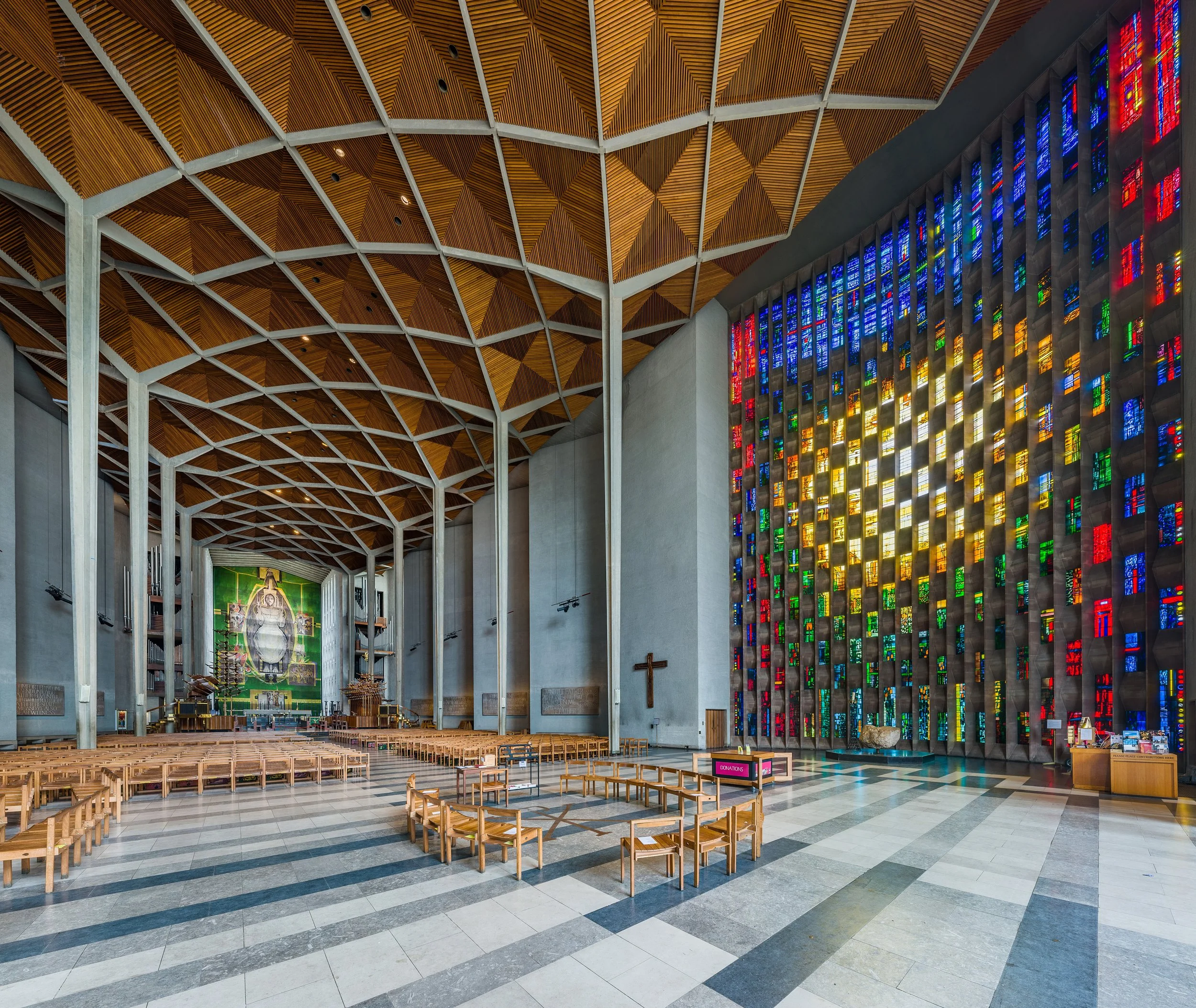
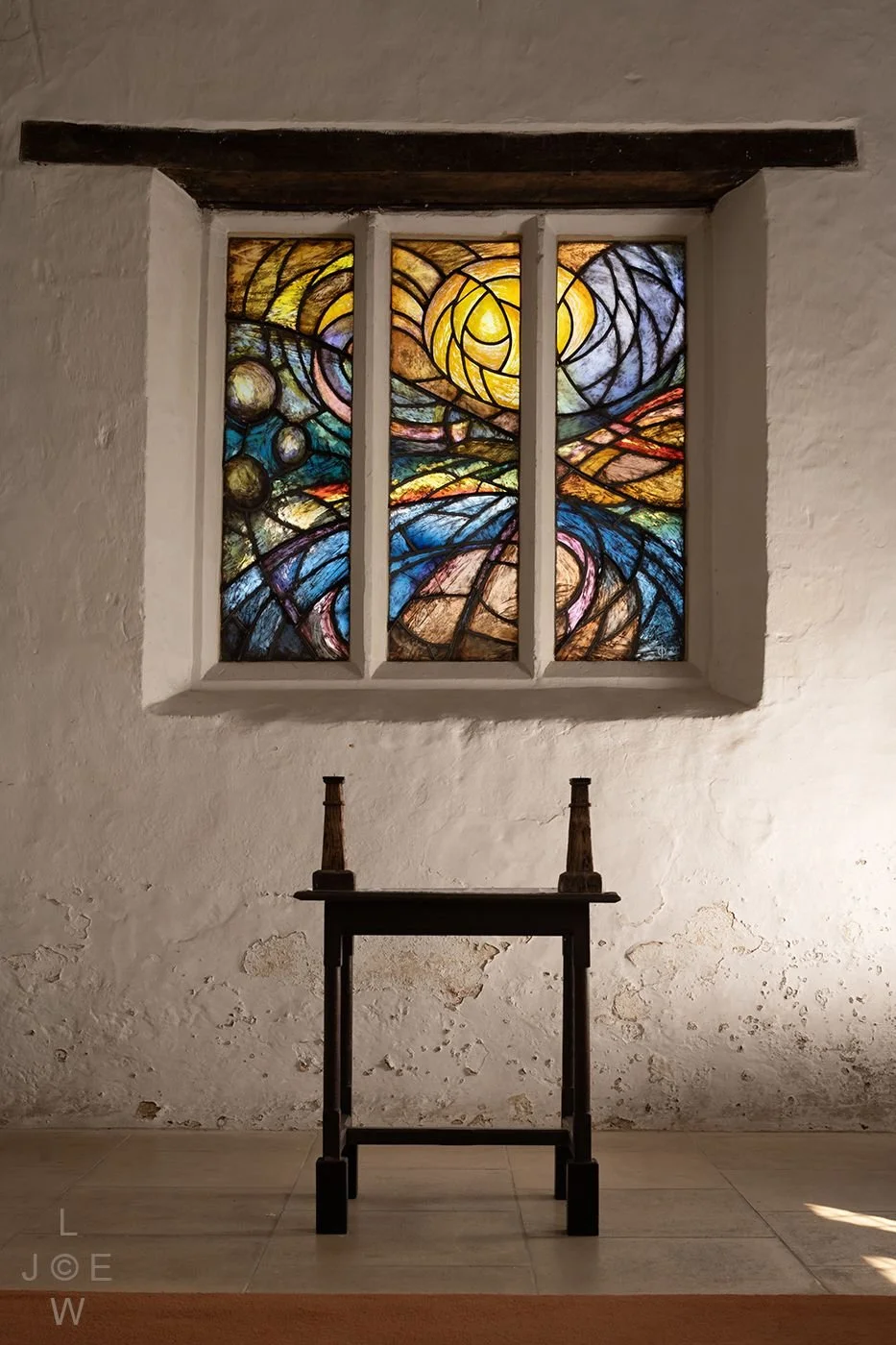
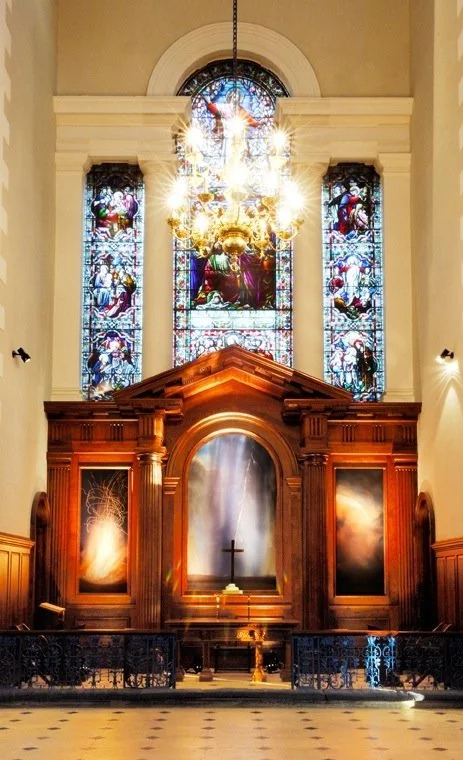
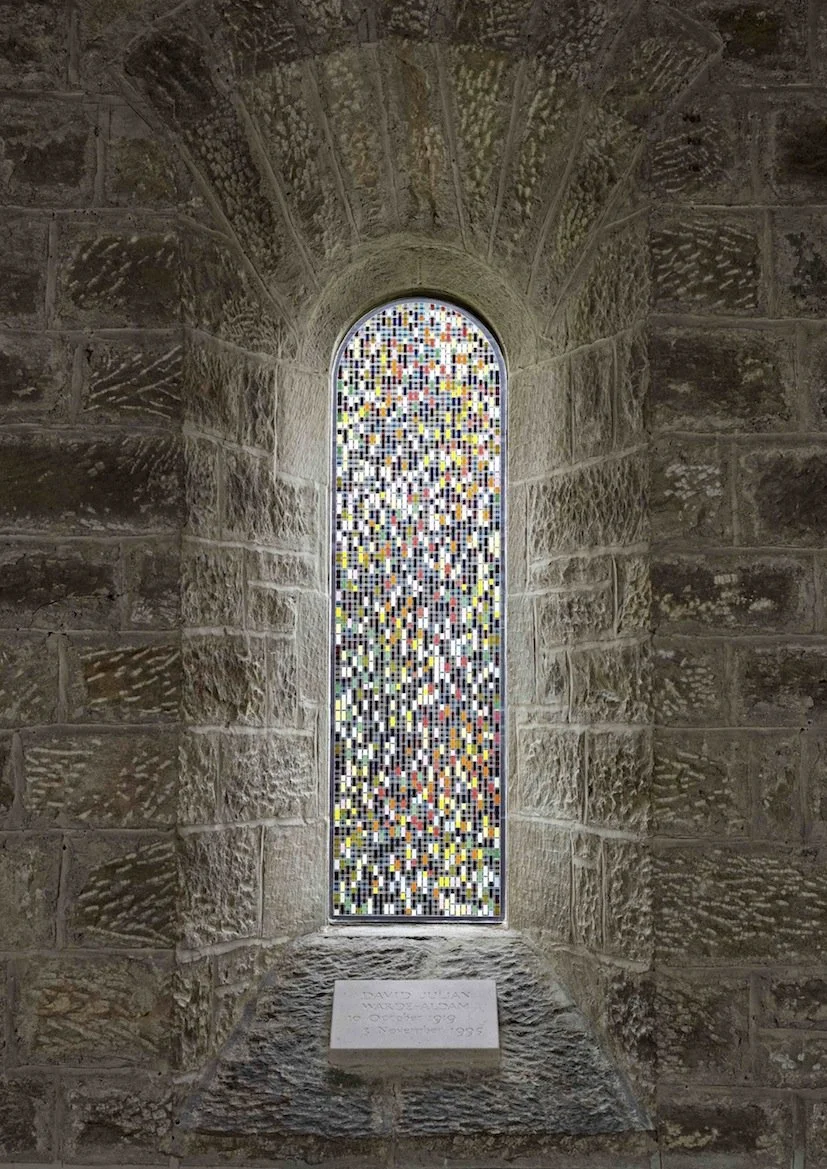
Photos courtesy of Ecclesiart
Each entry on the Ecclesiart site comprises images, a description with contextual information, notes about the artist and links for further research. Sometimes short theological reflections are included, as with the entry for Ceri Richards’s surprisingly stark painting “Deposition” in St. Mary’s in Swansea, which former Archbishop of Canterbury Rowan Williams described as emphasizing “the sheer physicality of the pain of the cross.”
With an inordinate amount of artworks in churches up and down the country, she acknowledged that Ecclesiart cannot be exhaustive. Indeed, she and her team have had to be quite selective with the included works.
“Some artists, such as Hans Feibusch, have multiple artworks in churches and, as a general rule, we include just one artwork per artist,” Moffat explained. “Even so, we do our best to list the other works by that artist, so that people know where to find them.”
“And we don’t necessarily include an artist’s most famous piece on Ecclesiart,” she added. “Often we’ll select less obvious pieces. If there’s something well known by an artist in a London church but they also have a work in a regional town or city, we’ll choose the latter because we want a good geographical spread on the Ecclesiart map.”
Among the lesser-known works by famous artists is Barbara Hepworth’s “Madonna and Child” in St. Ives Parish Church, Cornwall, which was carved in memory of the artist’s son Paul, who died in an RAF plane crash over Thailand in 1953. “It’s a very modest little sculpture,” Moffatt said. “We obviously associate Hepworth with St. Ives, where she lived and worked and has many works on display, but if you are visiting the town, the parish church wouldn’t be the first place you’d think of going to see her work.”
Alongside works by well-known artists are those by figures who have been largely overlooked, many of whom are women. A recent addition is the strikingly modern mural “To the End of Time” by Mary Adshead, which fills the entire east wall of St. Francis, Luton, a post-war building notable for its modern architectural style. The mural depicts Christ on the cross surrounded by the symbols of the four evangelists and scenes of the modern world of the 1960s, including an astronaut and a reference to the atomic bomb.
While the majority of works on Ecclesiart are permanently accessible, some can only be seen at certain times of the year. For instance, the abstract Lenten altar frontal by Jacqueline James was made for the high altar of York Minster in 1990, but is often covered by other frontals.
“It’s seasonal, so is generally only on view during Lent,” Moffatt explained, adding: “Jacqueline is an incredible textile artist; she’s registered blind and yet makes these extraordinary woven tapestries.”
Other types of church art, such as silverware, are similarly occasional.
“Some of these objects are incredibly beautiful,” enthused Moffat, mentioning the work of Michael Lloyd, who has designed three chalices for Carlisle Cathedral. “But unless you’re going for a communion service at Carlisle, you probably won’t get to have a good look at them.” Such examples highlight the importance of Ecclesiart’s documentation in making less-accessible pieces available to a wider public.
While many of the entries on Ecclesiart have resulted from Art + Christianity’s ongoing research, others have been nominated by people outside of the organisation. “We get many nominations from churches and other interested individuals, but we have a rule that artists can’t nominate their own work,” Moffatt said, noting that suggestions for new additions are always welcome.
For a work of art to be included, it needs to be of exceptional quality. For this reason, the selection process is quite rigorous, and some pieces inevitably don’t make the cut.
“The decision-making comes down to myself and the trustees of Art + Christianity, who are all at the top of their fields, and I trust them to make the right choices,” said Moffatt, adding, “Just because an artwork is in a church or cathedral doesn’t necessarily mean it’s good.”
Ecclesiart is a growing resource, but there are still many gaps. “What is sadly obvious when you look at Ecclesiart is that it is mostly representations of white people by white artists, so that’s definitely something that needs improving,” Moffat said. Yet the selected artworks simply reflect the broader, historical reality of U.K. church art.
“There’s the occasional Black Madonna — there’s one in Willesden that I really want to include soon — but, regretfully there’s just very little in the way of diverse representation,” she conceded.
It is a situation that Moffatt hopes will change as new artworks are commissioned in the future.
As Ecclesiart has grown so has its popularity among researchers, educators and church leaders.
“I know it is used by people that teach courses in higher education, such as the MA in Christianity and the Arts at King’s College London, and at Samford University in Birmingham, Alabama,” Moffatt said. “And from time to time we get requests from people asking if they can use an image from Ecclesiart, perhaps for a service sheet or a Lent course.”
While copyright restrictions prevent such permissions from being granted, these requests have inspired the creation of Art + Christianity’s first Advent resource, based on Ecclesiart.
“It’s a PDF that you can download from our website, and it includes six meditations designed to be used in conjunction with selected artworks from Ecclesiart,” Moffatt added. “You can follow in any way you like. You can do it individually, dipping into it whenever you want, or you could do it as a group.”
The artworks include a large-scale painting by Alison Watt, sgraffito murals by Adam Kossowski, a large watercolor installation by Rebecca Hind, colored glass windows by Sophie Hacker and James Hugonin, and an altar and interior murals by Jean Cocteau. Each meditation features quotes, comments and Bible verses for reflection, followed by a page of questions to encourage further contemplation as we approach Christmas.
The Ecclesiart Advent Resource provides a way for people to engage with the project’s artworks on a deeper, more theological level — something that Moffat and her team are keen to encourage and facilitate further.
A resource for Lent will be published next year, along with a series of videos made in partnership with the Foundation for Spirituality and the Arts, in which artists featured on Ecclesiart discuss their work. The first of these will be Shirazeh Houshiary, whose East window was installed at St. Martin-in-the-Fields, London, in 2007.
David Trigg is a writer and art historian based in the U.K. He is the host of the “Exhibiting Faith” podcast. You can find him on Instagram @davidtriggwriter.