
Digital Project Reveals The Artistic Treasures Of St. Francis’s Basilica In New Detail
St. Francis of Assisi remains one of the most influential religious figures in Western history. He famously renounced his family’s wealth to live an itinerant life of poverty in service to God, preached the Gospel to all who would listen (including animals), performed miracles, championed peace, fraternity and care for creation and founded the Franciscan order.
The saint’s remains are interred in the Basilica of San Francesco in Assisi, one of Europe’s most important Christian pilgrimage sites. Built into the side of a hill in Umbria, where criminals once swung from gallows, it was founded on July 17, 1228, when Pope Gregory IX laid its foundation stone just one day after he canonized Francis.
Apart from those of the New Testament, Francis is perhaps the most represented saint in the history of art, and the basilica is filled with frescoes that tell his story. Marking the 800th anniversary of the saint’s death, “Preserving Assisi” is a new free-to-access digital platform that uses cutting-edge visual imaging technology to document the architecture and artistic masterpieces of the basilica that bears his name.

In the basilica’s lower church, beautiful yet very damaged frescoes by an anonymous artist depict episodes from the saint’s life, including preaching to the birds and receiving the stigmata. But it is in the upper church where the most celebrated renditions of these accounts are found, attributed to Giotto and his collaborators.
Giotto’s deep relations with the Franciscans led to him becoming the de facto official image-maker for Saint Francis. Dating from the 1290s, his 28 scenes run the entire length of the nave and are closely based on the “Legenda Maior,” the authorized biography of St. Francis compiled by St. Bonaventure in 1263. Included here is Francis’s conversion to a life of holiness in Assisi, the approval of his vocation by the Church hierarchy, his death and canonisation, and posthumous miracles.
Above these frescoes are episodes from the Old and New Testaments, designed to draw parallels between Francis and the lives of biblical figures such as Abraham, Noah, Joseph and Moses. Additionally, comparisons to Christ reflect the medieval identification of the saint as an “alter Christus” (another Christ).
The Assisi frescoes represent an important milestone not only in Franciscan iconography but also the development of narrative painting in Italy during the 14th and 15th centuries. Indeed, with further masterpieces commissioned from Cimabue, Simone Martini and Pietro Lorenzetti, the basilica’s artworks appeared at a time of significant cultural change in Italy and Europe; it was the dawn of what would soon be called the Renaissance. “Preserving Assisi” offers a new way to explore and understand these important paintings.
Developed by pioneering technology company Haltadefinizione, part of Gruppo Panini Cultura, and in collaboration with the General Custody of the Sacred Convent of Saint Francis, the project combines gigapixel photography, three-dimensional surveying and immersive technology to map the basilica’s interior and exterior spaces in unprecedented ultra-high resolution.
The result, accessed online, allows visitors to move virtually through the building and view its architecture and major decorative schemes in spectacular close-up detail, revealing aspects that are impossible to perceive during a physical visit.
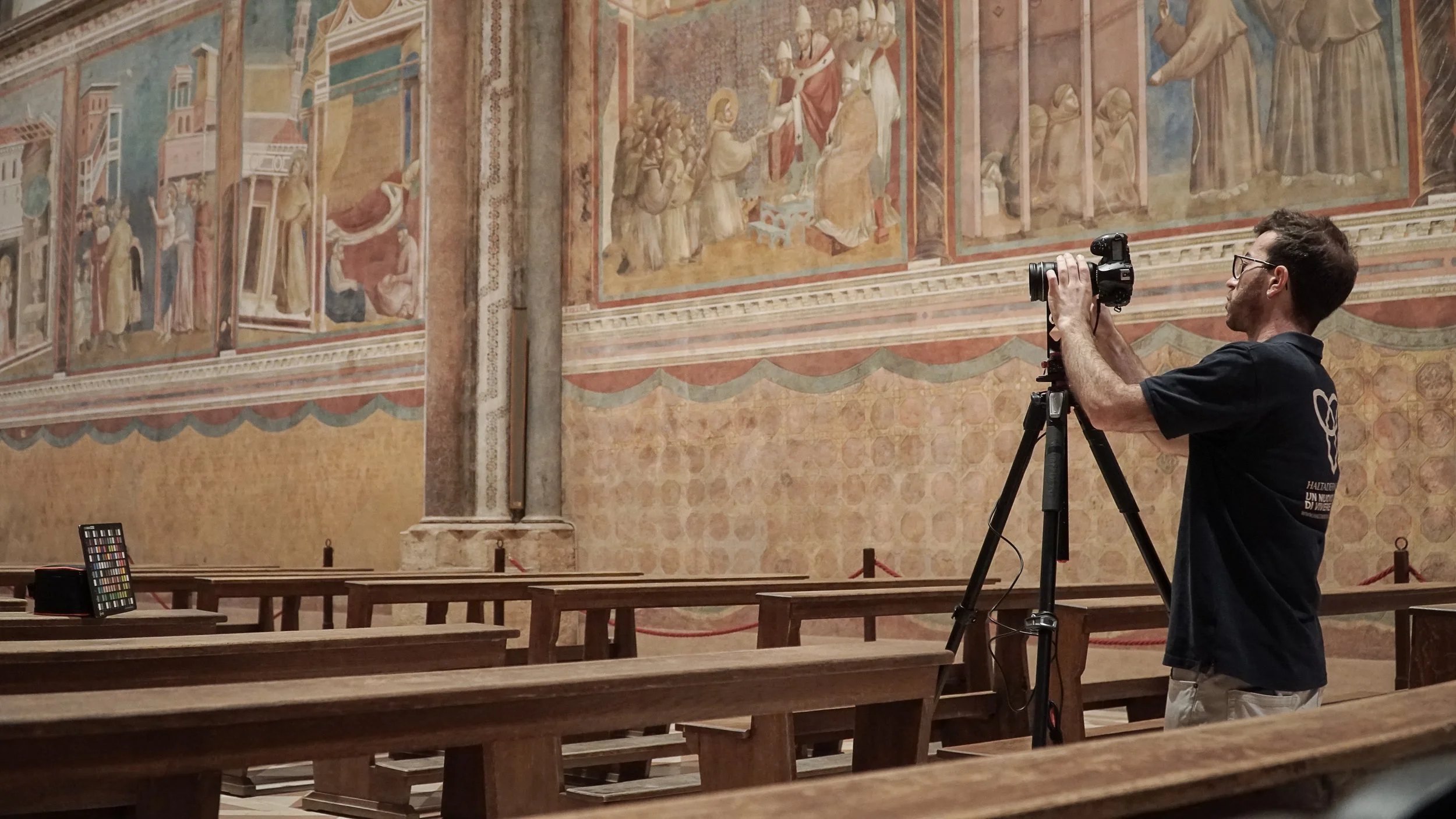
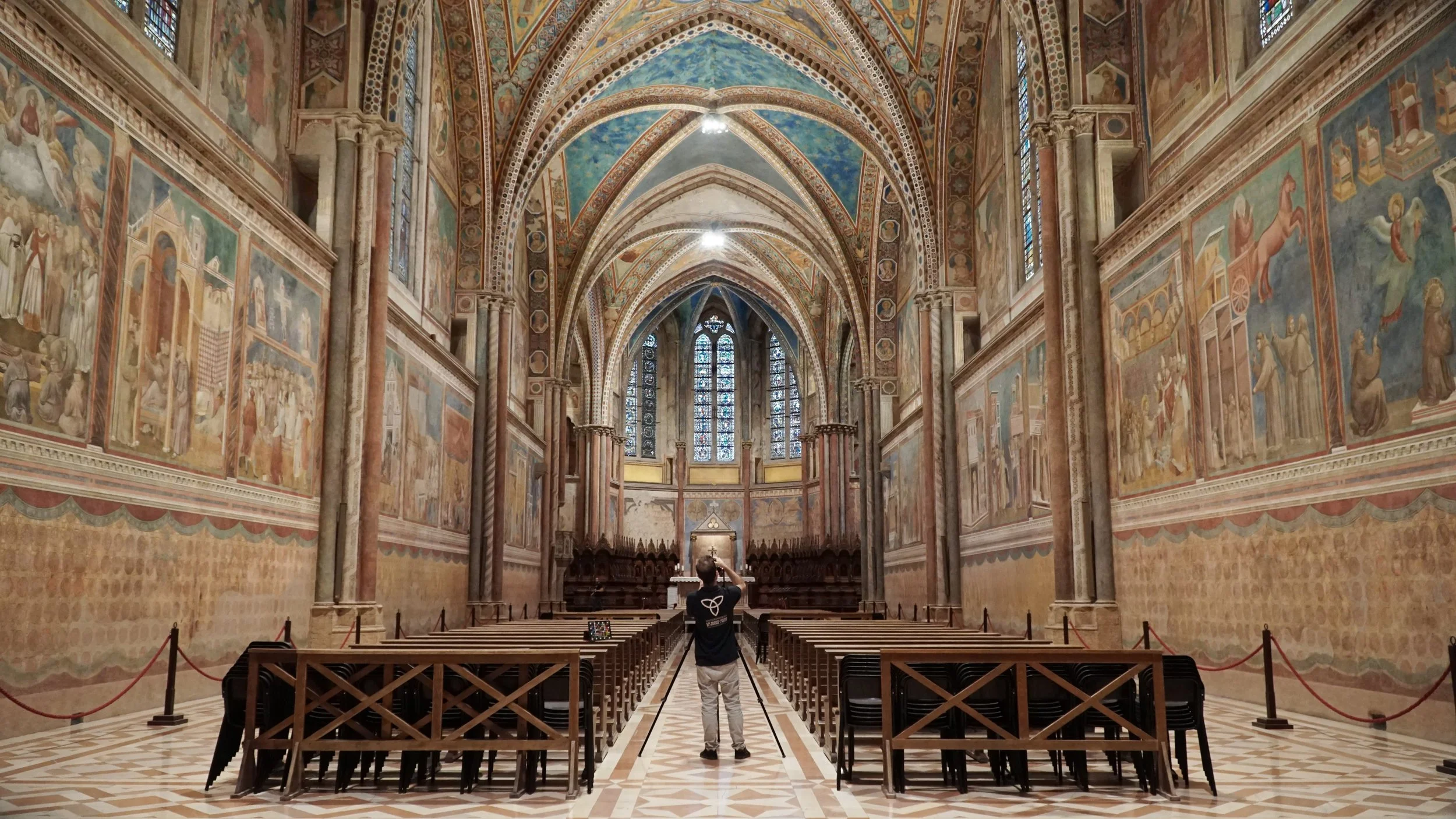
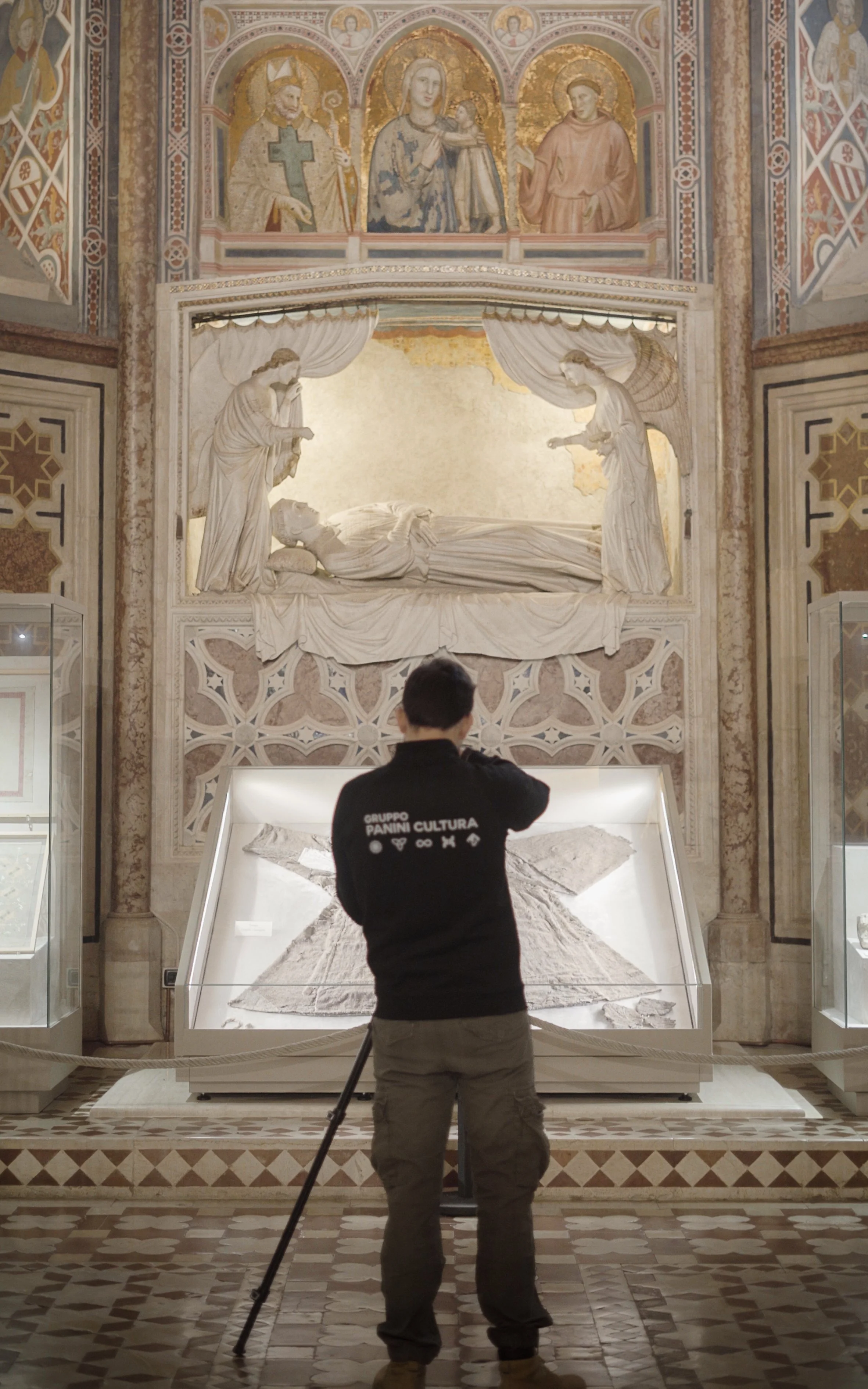
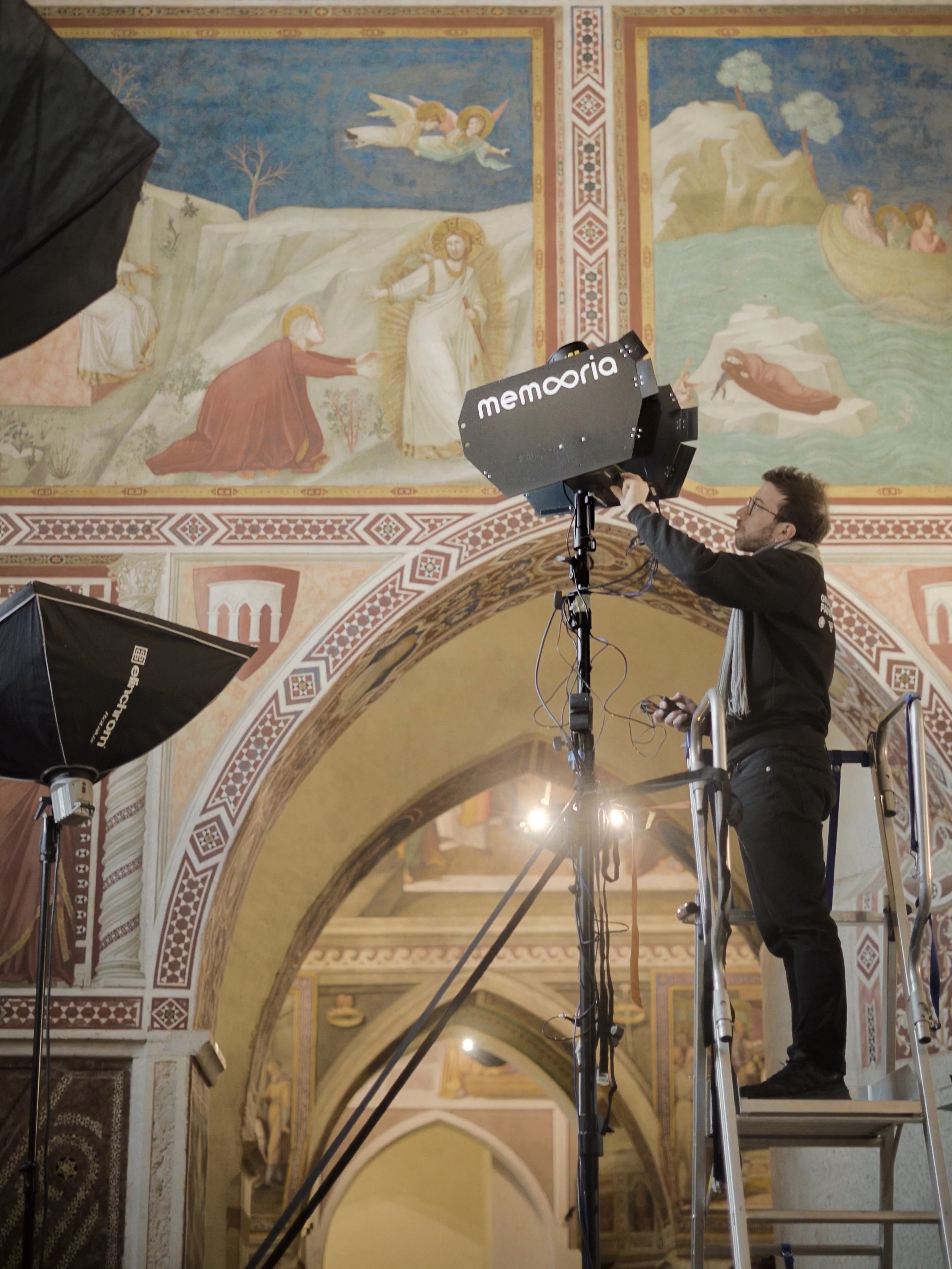
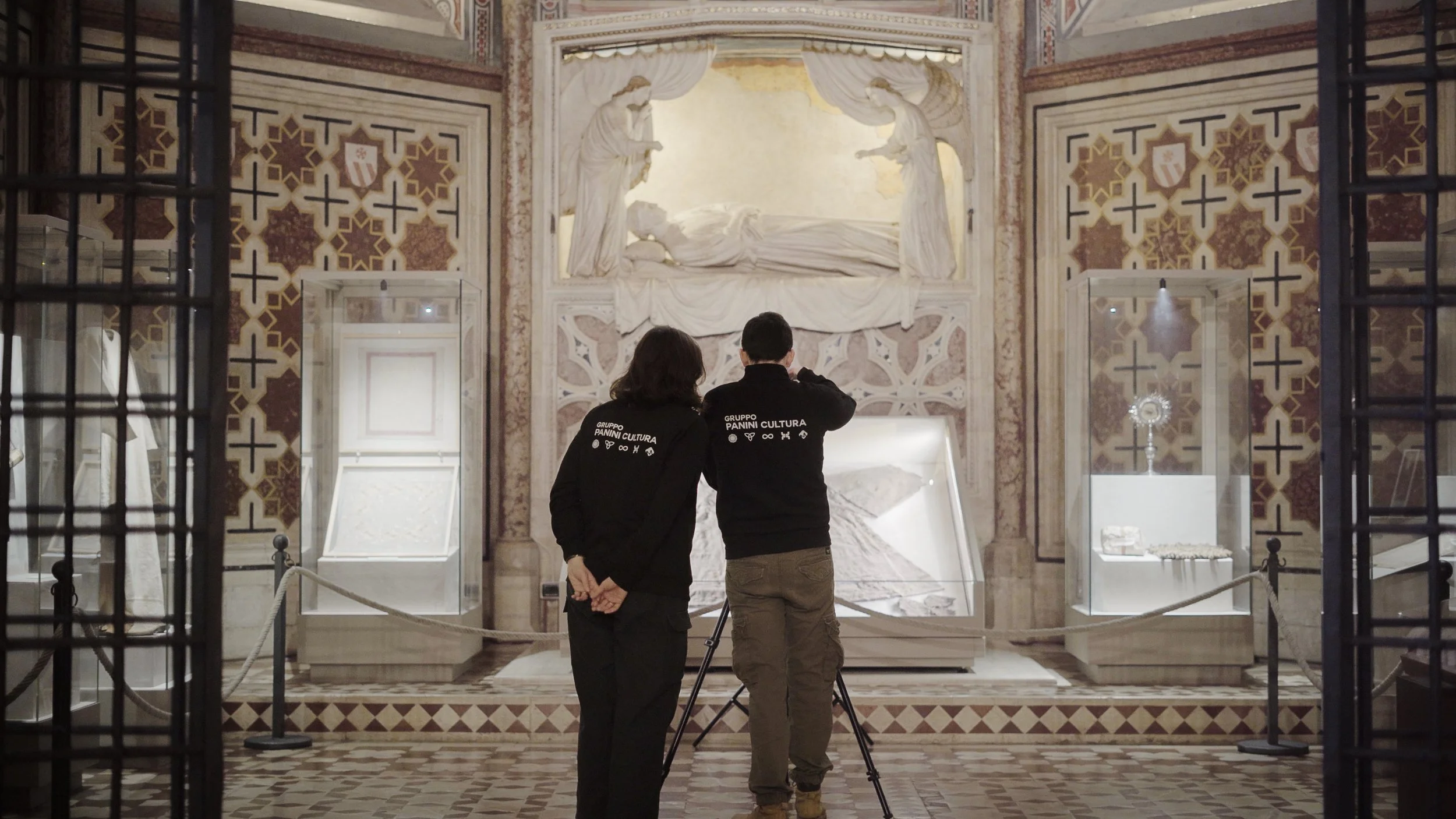
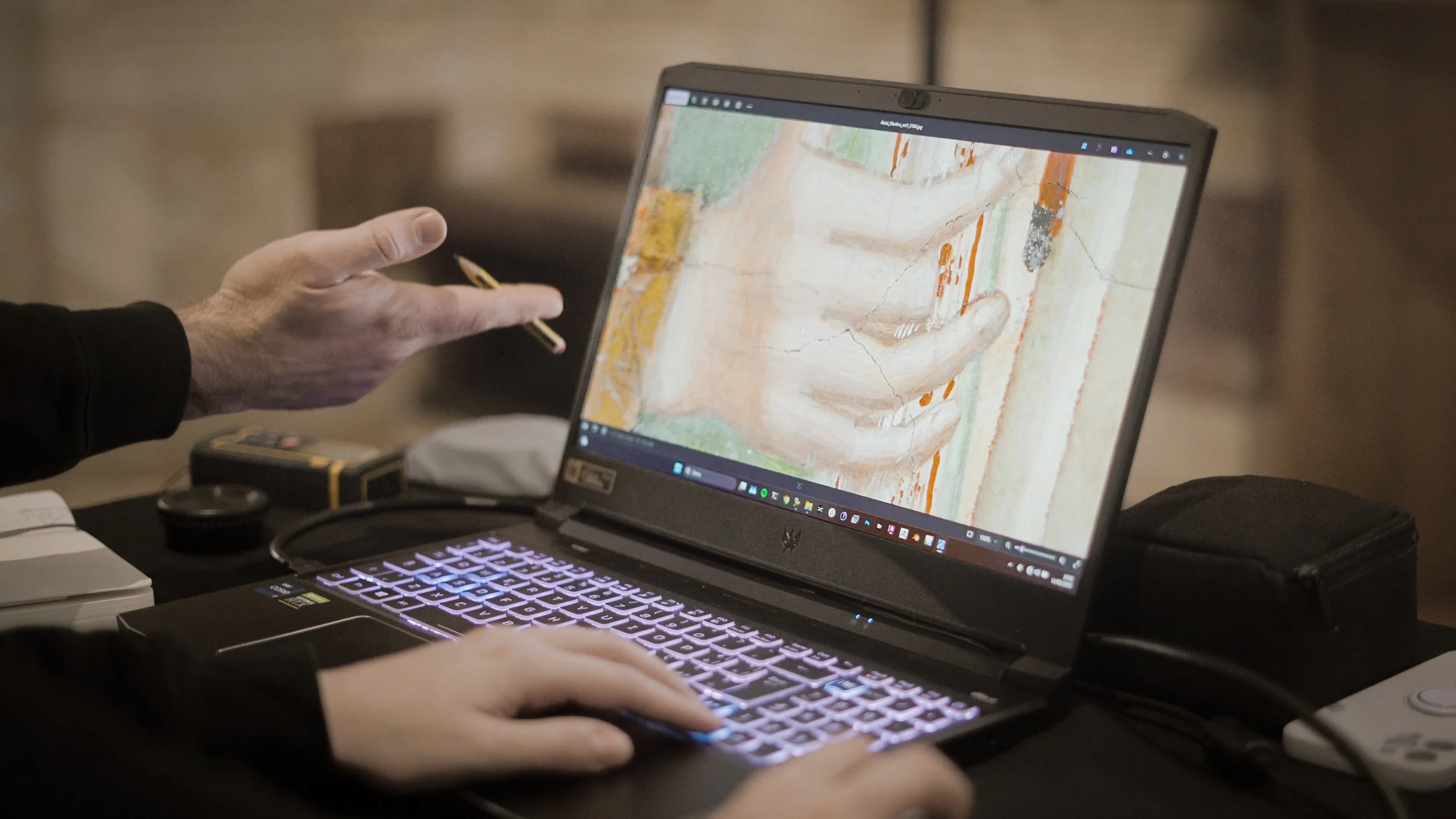
Photos courtesy of Haltadefinizione
“This is one of the most complex projects we have undertaken in our twenty years of work,” said Luca Ponzio, Founder & CEO of Haltadefinizione. “It has been conceived as a tool to support research and conservation, while at the same time offering the public a new way to access and explore the Basilica remotely.”
Friar Marco Moroni, Custos of the Sacred Convent of Saint Francis in Assisi, added: “The project marks the beginning of a genuine process of democratising access to this heritage — or perhaps, in more Franciscan terms, it creates a new opportunity for cultural knowledge to be shared in a spirit of fraternity.”
While “Preserving Assisi” opens up the artistic and spiritual treasures of the basilica to audiences around the world in the finest possible detail, the project is not just about making cultural heritage more accessible. Beyond the online experience, this “digital twin” functions as a reference for future preservation, a resource for scholars, conservators and researchers.
This is particularly important considering the recent history of the monument, which sustained significant damage in 1997 when a series of powerful earthquakes hit the regions of Umbria and Marche, causing the collapse of part of the frescoed vaults of the upper church. The basilica reopened in 1999 after an enormous reconstruction effort, although some of the frescoes were so badly damaged that they are yet to be fully restored.
Before the earthquake, Italian publishing house Franco Cosimo Panini Editore fortuitously commissioned an extensive photographic record of the basilica’s extraordinary decorative heritage for its “Mirabilia Italiae,” a landmark series launched in 1994 and dedicated to the systematic documentation of Italy’s major monuments.
Around 2,000 photographs were produced for “Mirabilia Italiae,” recording the interior and exterior of the basilica. Some of these images were captured just hours before the earthquake, becoming a valuable record of the condition of the frescoes before their destruction and a fundamental reference for the subsequent reassembly and restoration work.
Today, the development of digital technologies has opened up new possibilities for documentation and future restoration with Haltadefinizione leading the way. In 2006, the company produced the world’s first gigapixel image of a work of art, documenting the Parete Gaudenziana, a monumental mural by Gaudenzio Ferrari, in Varallo, Italy. The following year, it created a 16.1-gigapixel image of The Last Supper by Leonardo da Vinci, which was for several years the world’s largest digital image.
In 2025, Haltadefinizione embarked on the “Preserving Assisi” project, generating more than 27,000 photographs, 12 terabytes of data and 98 completed digital assets, including gigapixel images and 360° panoramas. One of the largest images created for the project is the gigapixel image of Lorenzetti’s Crucifixion (c.1320) in the south transept of the Lower Church, which contains nearly eight billion pixels.
Such images are a vast improvement on earlier photographic documentation. Instead of a fixed collection of images, “Preserving Assisi” has created a navigable digital record that can be expanded, revised and compared over time. And if disaster were to hit again, it provides restorers with a more expansive, precise and in-depth visual understanding of the monument that ever before.
“Preserving Assisi is a project that fills us with great enthusiasm,” said Friar Marco Moroni. “The experience of the 1997 Assisi earthquake made us even more aware of the importance of creating a photographic record of the highest possible quality to safeguard and enhance this extraordinary artistic heritage, together with its profound significance as an expression of faith.”
Explore the Basilica of San Francesco for yourself by visiting the “Preserving Assisi” website.
David Trigg is a writer and art historian based in the U.K. He is the host of the “Exhibiting Faith” podcast. You can find him on Instagram @davidtriggwriter.