
Hunks Of Steel, Spirit And Seduction: Inside Carol Bove’s Mystical World
(REVIEW) In the mid-1960s, Philip Kapleau’s “The Three Pillars of Zen” brought Buddhism to the masses, introducing its practical meditation techniques to the burgeoning counterculture.
Embraced by hippies, bohemians and other non-conformists, the book had an enormous impact on the growth of Zen Buddhism in North America.
Carol Bove, who has been described as one of the most inventive and protean American artists of her generation, studied it intently as a teenager, remembering it as “the Bible in our house”. She later incorporated a copy into her sculptural assemblage “Composition with my Mother’s Spiritual Manual” (2002), currently on display at New York’s Guggenheim Museum as part of her first major museum survey.
READ: Why The UK’s Historic Church Organs Could Disappear By 2070
In that early artwork, Kapleau’s book is accompanied by Knoll tables and a geometric construction of wood and string: a carefully balanced minimalist arrangement juxtaposing modernist rationalism with mystical aspiration.
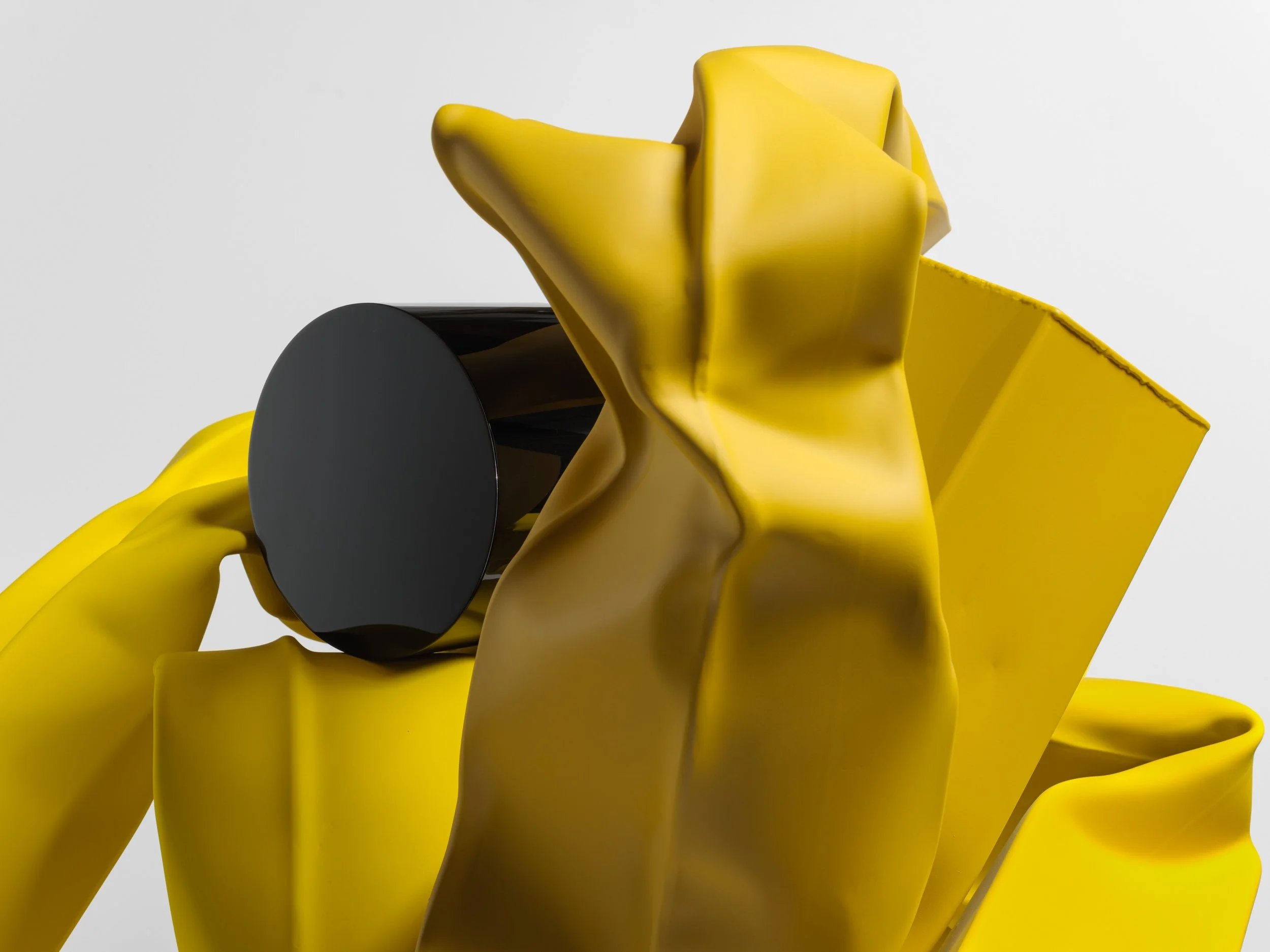
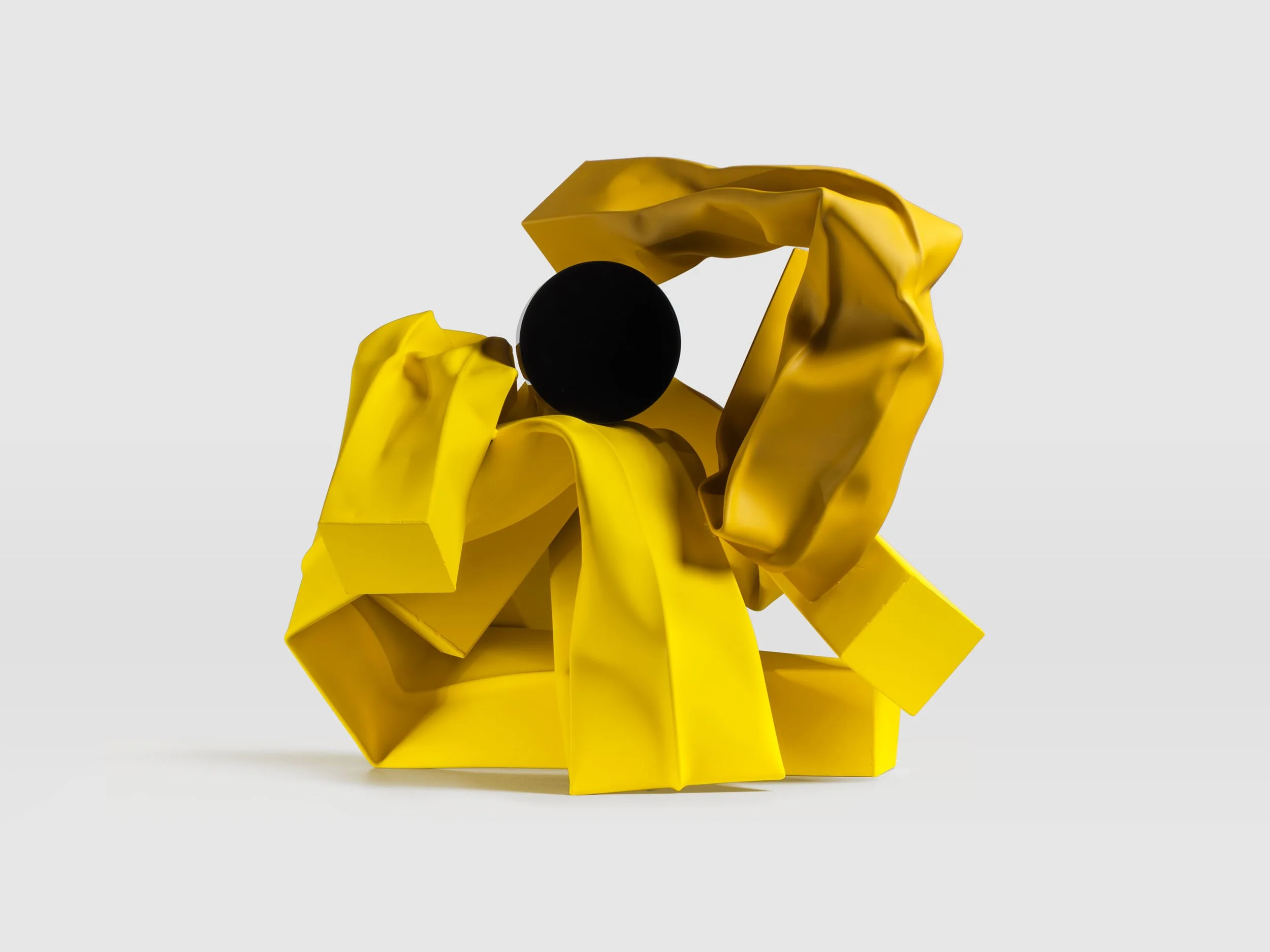
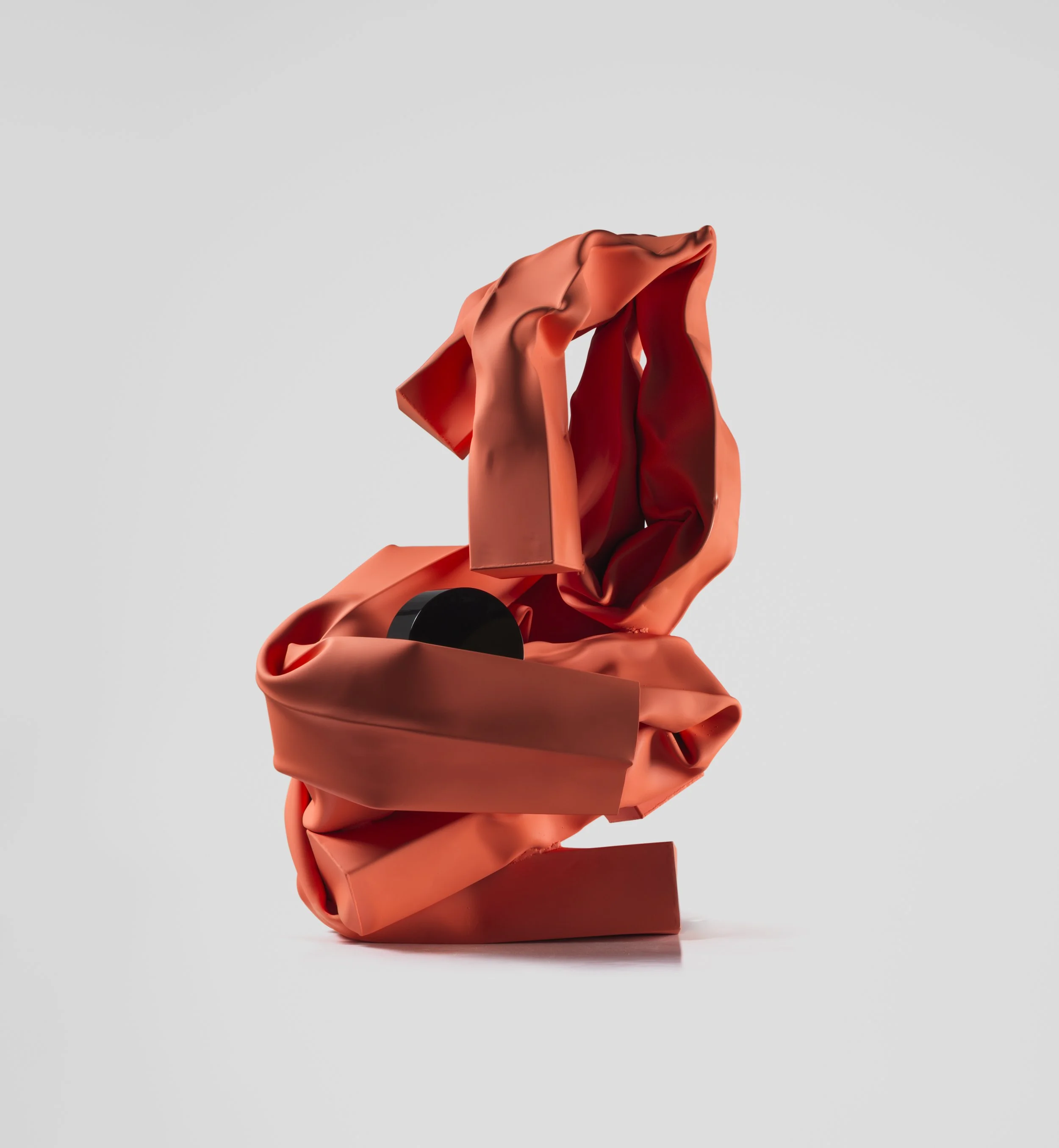
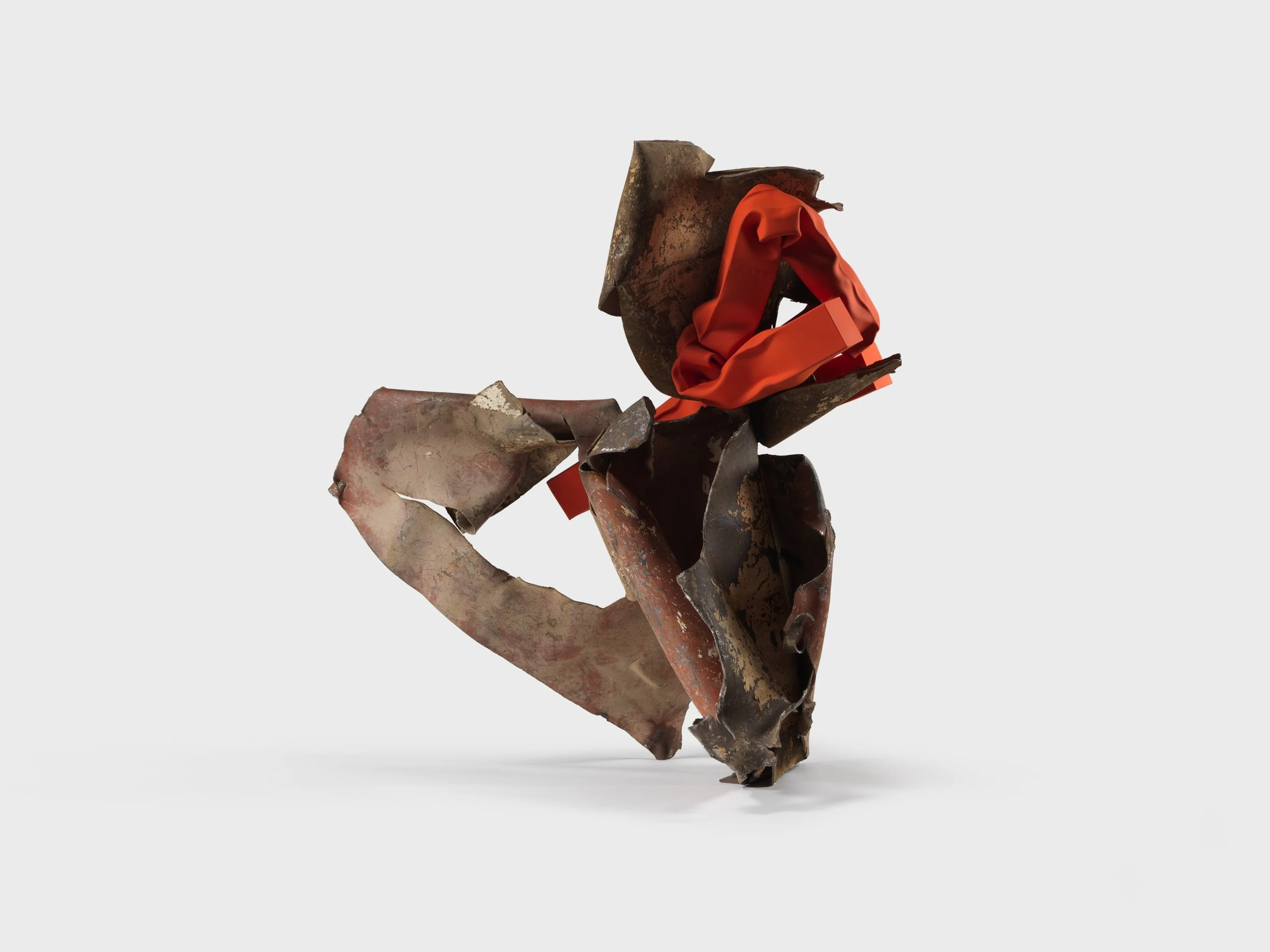
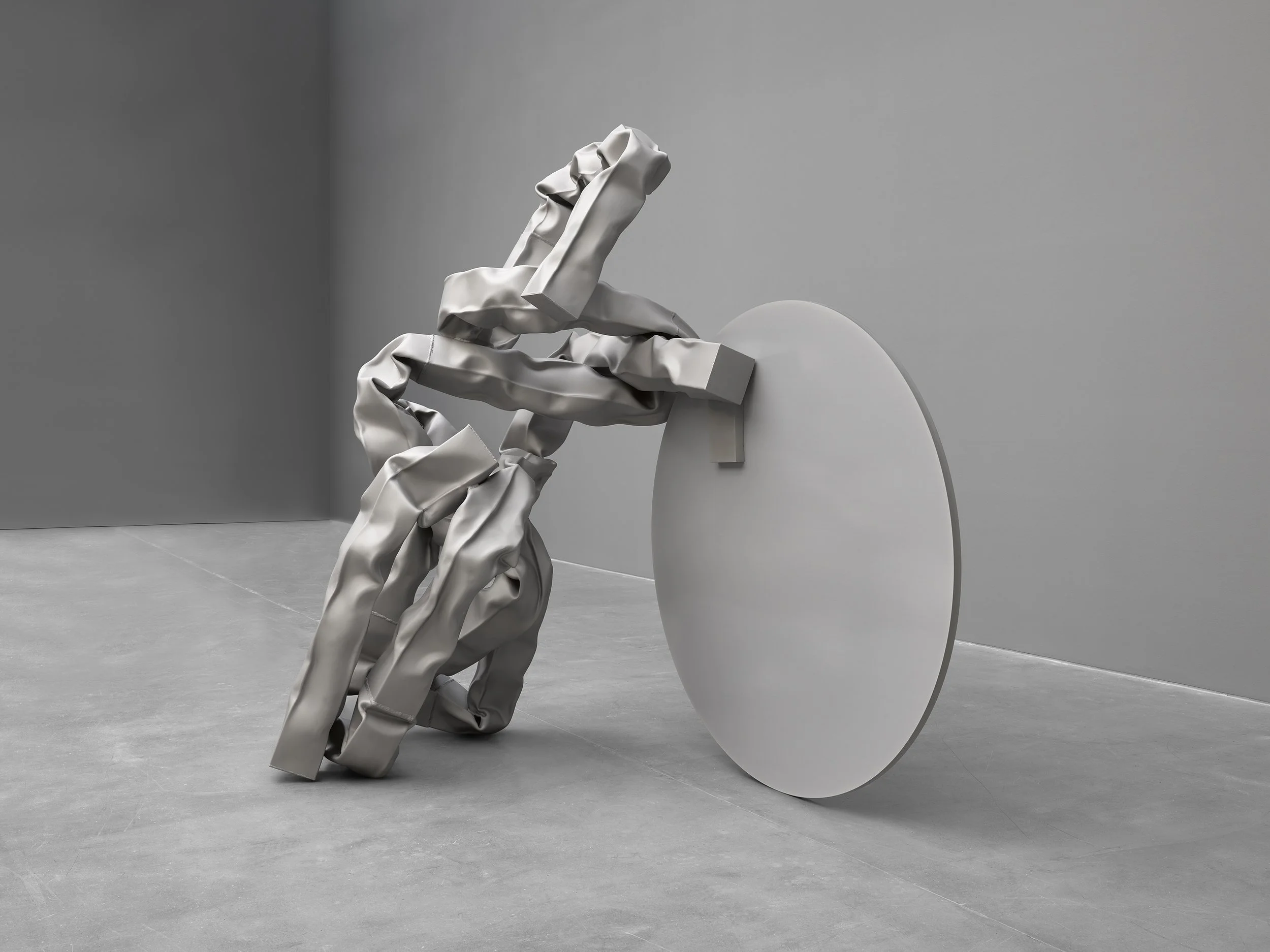
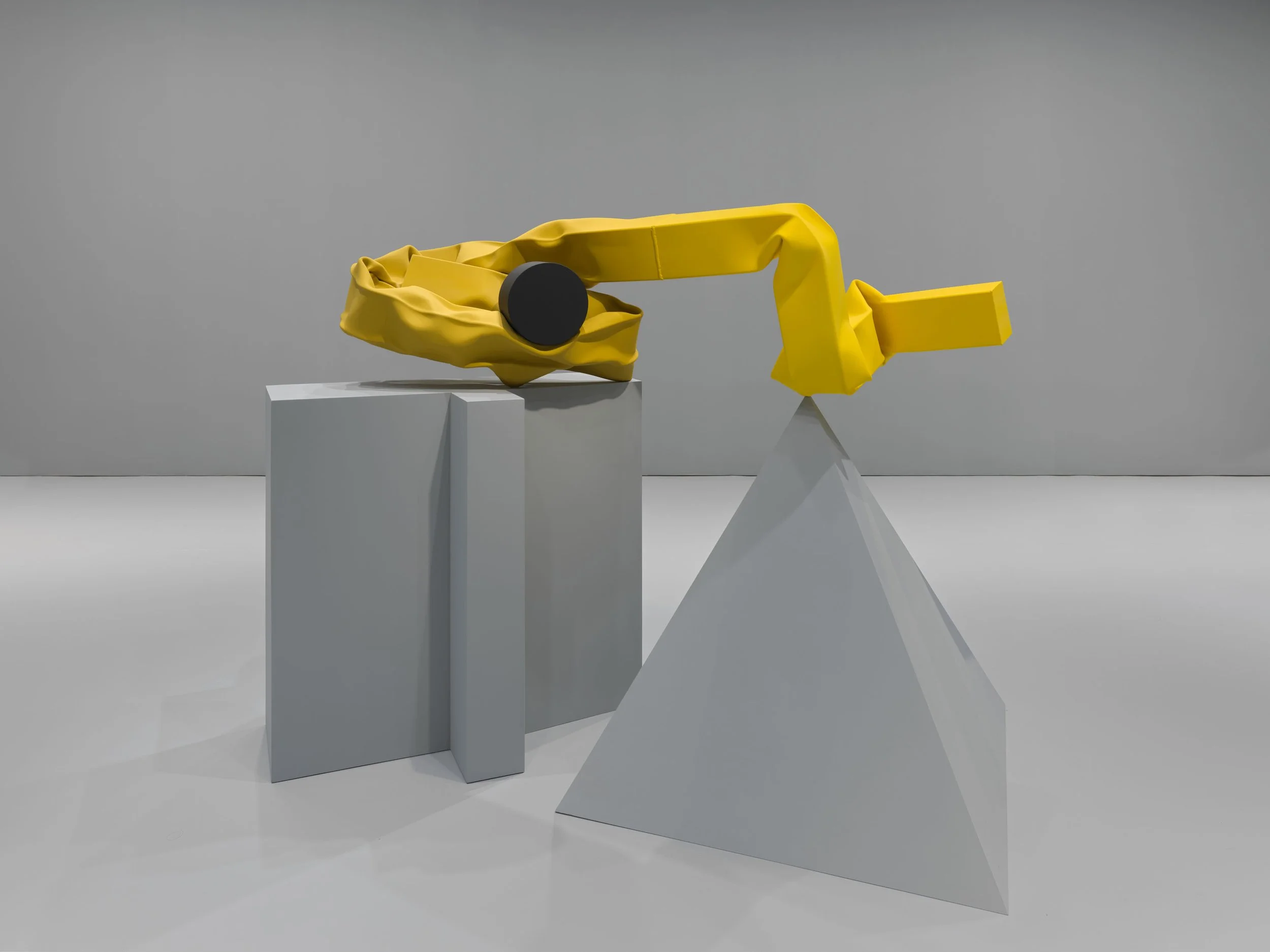
Today, however, Bove is best known for her monumental crushed metal sculptures — hunks of industrial steel distorted by hydraulic presses and finished with lush colors appropriated from modernist art (red from Alexander Calder, yellow from Willem de Kooning, mauve from Monet, and so on).
These crumpled and compressed forms are often offset by highly polished discs or shards of weathered metal. On a scale approaching that of Richard Serra, they recall John Chamberlain’s scrap heap abstractions, though their highly finished surfaces exude an unexpected softness, bringing to mind folds of drapery or even flesh.
In contradicting what we think we know about the nature of steel, Bove’s works encourage viewers to perceive the world less rigidly. “Maybe our grip on reality should be a little lighter … enabling us to see what is in front of us rather than only what we think we see,” she said. “I see my sculptures as having the same confidence as that of Serra and those guys, but I don’t have anything to prove. I’m not trying to dominate the viewer. I’m working with seduction.”
But what exactly is the nature of that seductive impulse?
While Bove’s Buddhism and interest in ancient spiritual philosophies may not be readily detectable in recent works, they are most certainly in the mix. In 2015, when the Berlin-based critic Martin Herbert visited an exhibition of her work in London, he noticed that it was “having an effect on both my mind and my body” to the point where he developed a “hazy hunch that [Bove] was genuinely aiming — among other things, at least — to transmit something in the direction of a meditative experience and the somatic benefits of the same, through the syntax of contemporary art, through compound equivocation.”
It turns out that Herbert, who was a self-described “neophyte in meditation” at the time, was on the money: Bove later conceded to him that this was indeed one of her ambitions for the work.
As she recently told Frieze magazine, when reading about Buddhism’s seven factors of awakening, she thought: “Yes, that’s what I’m trying to do. The first is mindfulness, and the second is investigation of phenomena. The latter is so key for this work, or my approach: I want things to be totally what they are, but for them to also trick or entice you, to hopefully bring more of your perception into the work and your interaction with the phenomenal world.”
Herbert’s incisive pocket-sized book, “Unfold This Moment” (2019), examines how Bove’s spiritual inquiries are intertwined with her artistic ones. It functions as the perfect primer for anyone interested in this aspect of her practice, focusing as it does on her longstanding engagement with mystical thought, spiritual philosophies and “the lineage of advanced art underwritten by concerns of the spirit.”
Photos courtesy of the Solomon R. Guggenheim Museum in New York
As such, it reflects Jonathan A. Anderson’s contention, in “The Invisibility of Religion in Contemporary Art”, that not only are religion and spirituality more visible in contemporary art today, they have become more “discussable,” which in turn is “prompting a critical reevaluation of [religion’s] general invisibility in the received histories of modernism.”
The extent to which Bove’s work is itself engaged with “concerns of the spirit” requires some unpacking. At the Guggenheim, things become clearer as you progress through the exhibition, which is presented in reverse chronological order. Starting with Bove’s recent sculptures on the museum’s lower ramps, you progress upward, leaving behind weighty steel abstractions to encounter delicate sculptural installations and the artist’s “bookshelf” works from the 2000s, in which old books and ordinary objects arranged on shelves become portals to the cultural zeitgeist of 1960s America.
These early works stemmed from Bove’s desire to understand the cultural context of her upbringing. Though she was born in Geneva in 1971, she was raised in Berkeley, California, where her parents had been immersed in the counterculture there; her mother was a self-taught Zen Buddhist, poet and gardener, while her father, though traditional in many ways, had experimented with psychedelics and studied art in Paris during the uprisings of 1968.
The hippie movement had once burned bright in Bove’s neighborhood and continued to smolder into the following decades. Peace signs protesting against the Vietnam War remained just outside of town up until the 1990s, along with regular sightings of kaftans, camper vans and burnt-out hippies. It is therefore not surprising to learn that Bove was taught to meditate at elementary school and later came to embrace Zen Buddhism.
After graduating from New York University, she produced a series of ethereal ink-on-paper drawings of models from the 1960s issues of Playboy magazine that she’d discovered beneath her parents’ bed (each included a rejection note for her mother’s poetry submissions). These almost imperceptible drawings of nude women — among them Sharon Tate, Bianca Jagger and Twiggy — have less to do with sexual liberation than the models’ enigmatic gazes and impenetrable interiority.
Throughout the 2000s, Bove’s interrogation of the ‘60s became more complex, routinely pointing to the long shadows cast by the counterculture and the esoteric spiritual ideas it fostered. In contrast to her recent use of industrial materials, these are typically made with found objects — furniture, shells, feathers, driftwood and paperback books spanning subjects ranging from philosophy to Eastern religions.
Sometimes only books were used, as in “Tower of the Prophet” (2001), a column comprising sixty-eight vintage copies of Kahlil Gibran’s “The Prophet” (1923). The book was enthusiastically consumed by the hippies who fell in love with its spiritual and philosophical wisdom pertaining to topics such as freedom, pleasure, self-knowledge, friendship, love, joy, sorrow, religion and death.
Bove collected the books from thrift stores and was intrigued to find that their previous owners had often underlined the text in exactly the same places: an indication of conformity over individual expression. Her tower exposes the contradictions of the counterculture, revealing the mass-produced text to be part of the capitalist system the hippies aspired to transcend.
That so many copies were discarded perhaps speaks to the disillusionment of those who experimented with alternative lifestyles. Bove’s shelf-based works are thus monuments to abandoned ideals; as New York Times critic Holland Cotter wrote in 2003, they form “a social document of a particular, complicated moment in American culture when a short-lived, sky-high utopianism was starting to crash and burn.”
In the mid-2000s, Bove broadened her approach beyond these overt cultural references, creating floor-bound dioramas incorporating a variety of objects that resemble miniature stage sets or Zen gardens. In “The Night Sky Over Berlin, March 2, 2006, at 9 p.m.” (2006), small plexiglass cubes and concrete blocks of varying configurations are juxtaposed with driftwood and a large peacock feather – objects embedded with social and cultural histories and, for Bove, ones charged with specific personal resonances.
Suspended above the assemblage, a cluster of dangling brass rods is aligned so that its arrangement mirrors exactly the position of the stars above the gallery on the date and time referenced in the work’s title. Here, Bove points us not only towards the past but also to the present, which itself has already become the past.
As Herbert noted, in reminding us that cultural moments, as with the alignment of the stars, are temporal, the work also highlights the idea “that life, in the Buddhist sense, is change.” As Bove has said, it was primarily “an attempt to bring things into the immediate present moment.”
For the 54th Venice Biennale in 2011, Bove arranged seashells, silver mesh, driftwood, peacock feathers, chunks of polystyrene, and electric lamps on a large stage-like platform. The work’s title, “The Foamy Saliva of a Horse,” refers to an anecdote about the ancient Greek painter Apelles, who, frustrated by his struggle to paint the foam around a horse’s mouth, angrily threw a sponge at his picture that serendipitously left a mark producing precisely the desired effect.
But, as Herbert observes, a Google search of the title might also lead you to a book called “After Buddhism,” which links the story of Apelles to the concept of ataraxia, a state of serene, unshakable calm. Although rooted in Western philosophy, it is often compared to Buddhist liberation. Thus, he suggests, “a viewer correlating that with the enigmatic blockade of Bove’s work might arrive at a sense of balance.”
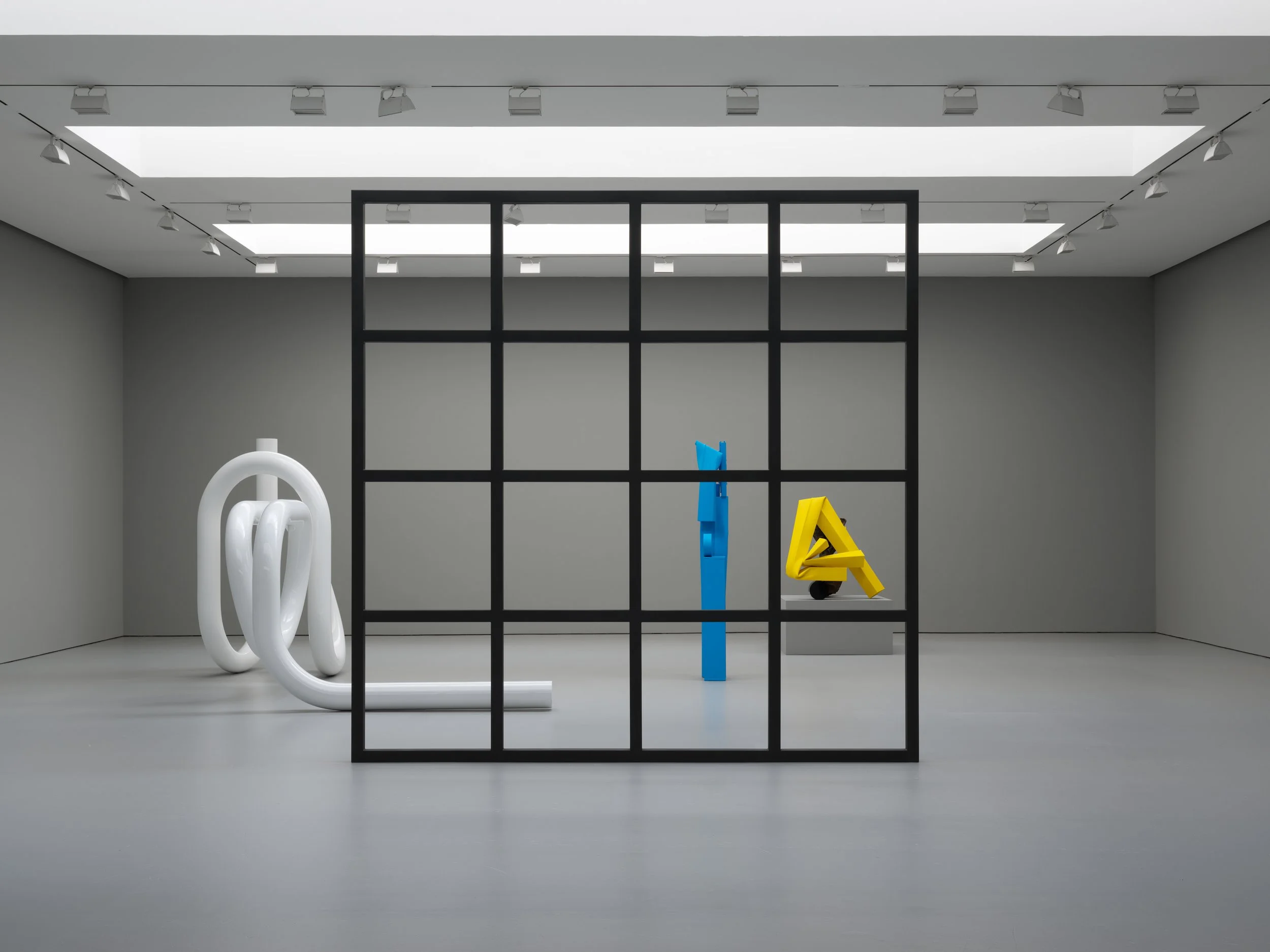
Herbert’s book provides insights into the veiled, esoteric underpinnings of several of Bove’s works in her Guggenheim show. One of these is “The Equinox” (2013), an installation that assembles seven sculptural elements into a unified whole. Displayed on a low plinth, its constituent parts range from petrified wood to a seashell sculpture, a beaded curtain to a decaying mattress, and a gleaming white “glyph” sculpture of the type she had started producing the previous year (these are composed of tubular steel, their looping forms generated through a set of strict parameters: half and quarter circles combined with straight sections, all sharing the same cylindrical diameter and curving radius.)
On one level, this is Bove playing with collage — the joining of disparate elements into a charged whole, where the heightened tension between materials and objects generates unexpected meanings. As she has said: “The friction of a collage is the reverse of the stage magician’s misdirection. It prompts us to give extra attention to ordinary objects that are typically invisible within plain sight.”
But there is more going on here, for the installation’s elements are carefully arranged according to the pattern of “sephiroth” — the nodal points on the tree of life, the central mystical symbol in Kabbalah. For example, a steel I-beam sculpture sits at the “Chesed” point (relating to loving kindness) while the abject mattress is positioned at the “Malkuth” point, representing the material world and the bridge between the physical and spiritual realms.
Bove learned about Kabbalah through the work of Lionel Ziprin, a poet and Kabbalist whose influence on the avant-garde of the 1950s and 1960s is only now being understood. Ziprin cultivated a vibrant creative network and worked with artists including Harry Smith, whose midcentury abstractions had partly grown out of his own occult studies.
Both figures have been of sustained interest to Bove, who has increasingly sought to evoke, albeit obliquely, the notion of correspondences between the earthly and the spiritual in her art.
As Herbert writes, Bove has been sending into the cultural mainstream “esoteric spiritual traditions, guised as supremely elegant if jolie laide arrangements of sculpture … secret knowledge, if you like, returned to the world under the rubric of contemporary art.”
For her Guggenheim show, Bove has developed a new series of anodized aluminum wall panels inlaid with geometric shapes such as circles and diamonds. These works have formal affinities with Wassily Kandinsky’s painting “Several Circles” (1926), which is on display in the museum. For Kandinsky, abstraction was a way of communicating spiritual ideas, and he described the circle as a form that “points most clearly to the fourth dimension.”
Bove has long been interested in circles, incorporating them into many of her sculptures. While they sometimes act as formal counterpoints to her crushed steel forms, they also suggest portals leading to unseen dimensions. In her colorful collage sculptures, they appear as giant checkers, or, as she calls them, “polka dots”, a descriptor that she admitted was intended “to protect the paranormal, my belief that they’re actually this real otherness, opening a paradigm that’s — again — a wound in reality.”
For Bove, her polka dot discs are “actually mandalas,” the symbolic meditational aids used in Hinduism and Buddhism that represent the universe, sacred spaces, or the journey to enlightenment.
Disks appear throughout her Guggenheim installation, most notably in the vertical column of six highly polished aluminum forms that rise through the rotunda, bisecting the horizontal bands of the ramps. These were originally created as elements in a group of temporary sculptures commissioned for the facade of the nearby Metropolitan Museum of Art, where they reflected traffic and passersby on New York’s Fifth Avenue. Now the giant mirrors — each one five feet in diameter — reflect and reconfigure the patterns of Frank Lloyd Wright’s architecture.
Wright saw “infinity and completeness” in the form of the circle, and the Guggenheim’s spiral rotunda with its distinctive geometries and open sight lines makes it an apt setting for Bove’s art. Its first director, Hilla Rebay, described it as a “temple of spirit,” designed to provide a luminous encounter with art and architecture. As Bove has said, “moving through the Guggenheim, you go through a process of enlightenment: you pass from gross to fine and from darkness to light.”
The exhibition, like Bove’s practice, is in part concerned with creating a context for exploring presentness. In the Buddhist sense, this is the practice of anchoring one’s awareness in the present moment. As Herbert contends, Bove’s art thus offers “something akin to a meditative experience for people who might otherwise find such things too ‘woo-woo’.”
But her work is not “purely coded mysticism,” nor can it be reduced to “Buddhism through the backdoor.” Rather, we find Buddhist concerns continually overlapping with the rationalist legacies of modernism: the mystical in dialogue with the secular and the cerebral.
Bove certainly harbors radical ambitions for what her art can do to a viewer’s mind and body, providing that they, like her, are open to stepping beyond the purely intellectual to entertain an embodied way of engaging with the world.
“Carol Bove” is at Guggenheim Museum in New York now through Aug. 2.
David Trigg is a writer and art historian based in the U.K. He is the host of the “Exhibiting Faith” podcast. You can find him on Instagram @davidtriggwriter.