
Native Peoples, Christianity And Empire In Colonial America
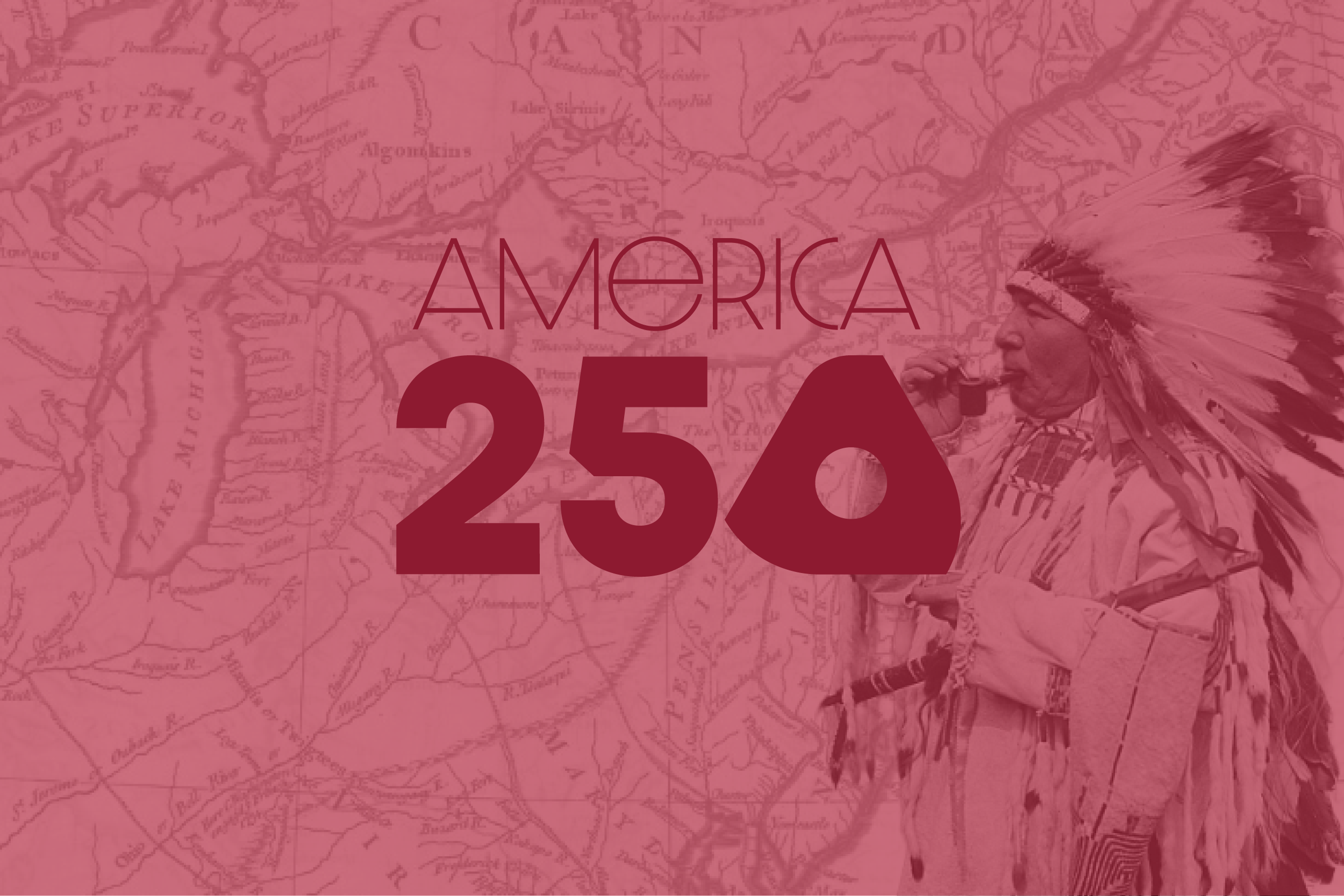
Treaties made and broken. An intricate and unstable web of alliances, sometimes with the Crown, sometimes with the colonists, often between tribes (there were more than eighty east of the Mississippi at the time of the American Revolution). Promises made, many broken.
When it comes to interactions between Christian colonists and native tribes, there is not one story, there are many — and likely a number of them are lost to time, as many native tribes ended up displaced from the lands on which they had resided, and were compelled to start new communities hundreds and in many cases thousands of miles from where they had originated.
The history includes a lot of armed conflict (as in the Sullivan campaign, an attempt to break the power of the Haudenosaunee confederacy that left villages burned to the ground, crops destroyed, and thousands dead). Imported diseases like smallpox decimated many Native American communities. And always, underneath, there was the colonist’s thirst for land west of the Appalachian Mountains, a rationale for so much of what was to come.

Real People. Real Reporting. Donate to Religion Unplugged now through August 17 and your gift will be doubled.
The narrative of Christian missions in the 13 colonies (let alone the long history of Spanish missions in the Southeast) is hard to understand without recognizing, say scholars, how deeply, in many cases, it was intertwined with the colonists’ desire to bend the destiny of this new land to their will. One example of this conflation is the 1620 Charter of New England (ultimately revoked in favor of encouraging individual colonies), in which King James I authorized the colonization of North American lands between certain latitudes.
The charter includes these telling phrases (with its original spelling): “As We trust to his Glory, Wee may with Boldness goe on to the settling of soe hopefull a Work, which tendeth to the reducing and Conversion of such Sauages as remaine wandering in Desolacion and Distress, to Civil Societie and Christian Religion, to the Inlargement of our own Dominions …”
In colonies like Connecticut, said historian Ryan Carr, “some got along with the English, some hated them, and some needed to work with people who could represent them in London, and defend them against the Colony [of Connecticut], which wanted their land.”
Tribes weighed whether staying neutral or aligning with one of the contending sides would protect their lives, their livelihoods, and their lands. Relationships with missionaries and local clergy, inevitably, also became part of that broader picture.
Some Native American communities, like the Narragansett, heard in the revivalistic rhetoric of the First Great Awakening, and the colonist’s emphasis on self-determination and individual rights, an invitation to seize the moment and embrace the possibility for themselves.
Any attempt to understand attempts to convert Native Americans should be viewed in light of the existence of “dozens and dozens of not just nations and tribes, but also communities within them,” said Linford Fisher, an associate professor at Brown University, and author of multiple books on colonial interactions with Native communities, including “The Indian Great Awakening: Religion and the Shaping of Native Cultures in Early America.”
The French and Indian War (and its aftermath)
In the wake of the French and Indian War, said Carr, the British had done a lot to protect native lands from colonists, barring settlement west of the Appalachian Mountains. Carr is a lecturer at the Center for American Studies at Columbia University and the author of “Samuel Occom: Radical Hospitality in the Native Northeast,” a study of the Christian convert who himself became a minister.
Though the ideals of the revolutionaries were, in principle, attractive to Native people, many believed that if the colonies “got independence from Britain, they could be very aggressive towards Native lands. That would be worse, in a lot of ways, than living under British colonization,” he said.
Indigenous people, he added, were well aware of the desire some colonists (including prominent ones like Thomas Jefferson and George Washington) for expansion, “and they were not very optimistic about it.”
Attempts to evangelize native communities go back to the 16th-century, and the early days of colonial settlement, say scholars of that period. The first complete Bible printed in the Western Hemisphere in 1663, translated into the language of the Wampanoag, was the product of work by Massachusetts Bay missionary John Eliot, with significant help from members of the Wampanoag tribe, including Wawaus (also known as James Printer, who was a Nipmuc scholar).
When Christian missionaries, clergy and evangelists engaged Native Americans, their motives could also be complicated, say some scholars. Some Protestants, who held the Pope to be the Antichrist, were “worried that the Native Peoples of America would be won over by a false religion,” said Rachel Wheeler, a professor of religious studies.
Persecuted for their faith in England, the Puritans who settled in North America thought “they could get religion right” in the new colonies, she said.
King Philip’s War, (Philip, whose Native name was Metacomet, was a Wampanoag chief) also known as the Great Narragansett War, was waged from 1675-76 in the southern New England colonies. Sparked, at least in part, by the murder of a Native convert to Puritanism, it offered a window into how challenging relationships between the immigrant colonists and indigenous people could be. Though the Narragansett had tried to stay neutral, hundreds of tribal men, women and children (and many English soldiers and settlers) died.
Colonists as evangelists
In this case, said scholar Mack Scott, a member of the Narragansett tribe, colonists assumed that neither the converted members nor unconverted ones could be trusted.
“Many colonists imagined that their self-ascribed roles as evangelicals placed them atop a divine hierarchy, one in which they lorded over Native peoples,” he said. “These perceptions … led to conflict as Indigenous peoples refused to embrace a subordinated role in their own land, no matter how ardently the newcomers professed that it was God’s will.”
In the course of that war, said Wheeler, roughly one-quarter of the Native American villages in the area were decimated.
“That puts a halt to some of the missionizing. It really doesn’t take off again until the First Great Awakening,” she added.
Though there were significant and bloody conflicts between colonists and Native Americans, there were also opportunities for dialogue and attempts to find common ground.
Scott directs undergraduate studies for the Native American indigenous studies concentration at Brown University. He noted that traditional tribal faith and Christianity have some common beliefs, including the idea that there is a creator and that there is a divine force working in the world.
“In the indigenous peoples of New England, there is something called manitou,” he said. “Manitou could be evidence of the divine in a positive or negative way. It’s very similar to ideas about the Holy Ghost or the devil’s ability to play a role in people’s lives.”
Tribal spirituality focused less on doctrine and hierarchy, and more on an individual’s connection to the divine, said Scott. When the First Great Awakening erupted, and evangelists emphasized an individual’s connection to the divine, the similarities between the spirituality of the New England tribes and colonial faith became clearer, he said.
After the devastation of King Philip’s war and the ongoing loss of land to settlers, the Narragansett found a way to ride the waves of evangelical enthusiasm that swept through the colonies.
“Christianity in the mid-18th century offers the (Narragansett) community an opportunity to take power back,” Scott said.
Community members started to challenge the authority of chiefs who had been exploited by colonists, choosing to establish their own church in Rhode Island.
Prominent among Christian converts in Rhode Island was the preacher Samuel Niles, who converted to Christianity during the First Great Awakening and served many Native communities.
“He’s doing evangelism within the community, but also incorporating traditional Narragansett ideas and beliefs,” said Scott, who said that there was an “explosion of interest in Christianity at that time among the Narragansett. Before that, there were very much anti- Christianity.”
But even that interest had a purpose, he pointed out: creating a community in which people can “do all these things to ensure and secure a future for themselves.”
Another well-known Native American convert was Samson Occom. He also became a Christian during the First Great Awakening and was eventually ordained a Presbyterian minister. A member of the Mohegan tribe descended from the famous leader, Uncas, “may have been curious about these meetings and wanted to know more,” said Carr.
But Occom’s story is also illustrative of the challenges some native people faced in their relationships with English colonists. A student of Congregational minister Eleazer Wheelock, Occom, one of the first published Native writers in the colonies, became a champion for a school dedicated to educating indigenous children. For approximately two years, he traveled around the British Isles, preaching and fundraising for the school – only to find out, upon his return, that Wheelock and others had relocated the school to New Hampshire, and turned it into an educational institution for white students (it became Dartmouth College).
Occom and others eventually moved to upstate New York, where they formed, along with members of the Oneida tribe, the Brothertown community (now located in Wisconsin).
It wasn’t until 2022 that Dartmouth returned Occom’s papers to his tribe.
Converts like Occom and Niles were well-known, even in the 18th century. But Native Americans who embraced Christian practices, whether offered by Moravians, Anglicans, Congregationalists or other groups, had many different reasons for doing it.
“Sometimes it’s very strategic and political,” said Fisher. “Sometimes it’s coming out of the first Great Awakening. I think there’s a version of what you might call genuine faith, but what comes out of that is an indigenized Christianity which looks very different, for all kinds of reasons.”
Many groups avoided a highly doctrinal, black and white structure, incorporating indigenous ideas within the context of Christian practices. Protecting the land was also central to their faith practices, as were rituals that focused on the importance of community, said Fisher.
What effect did these attempts to win souls among indigenous people have in the long run?
The verdict is mixed. It’s likely, said Fisher, “that way more native people did not believe, did not practice Christianity, than did.” Many Europeans, he said, believed that native peoples didn’t have a faith, or cultural practices.
“That’s not true,” he added. “It just didn’t come in a form Europeans thought was legible and legitimate.”
That desire to assimilate tribal communities extended well beyond evangelicals, he noted.
Thomas Jefferson, not a traditional Christian in any form, said Fisher, also believed that native people “should be sort of civilized and wrapped into American society.”
Frontier communities less exposed to missionaries frequently remained more traditional in their practices, though there were traditionalist factions on the East Coast, as well. “Some divisions persist to this day,” Fisher said. “These religious splinterings and factions have deep, deep roots, back to the colonial era.”
There remain Native Americans who practice Christianity, often integrating it with indigenous traditions. But the legacy of the conflicts between tribes and settlers, massive displacement of native people in the eighteenth and nineteenth centuries, and ongoing examination of the role of faith-based residential schools in forcibly converting native children continue to weigh heavily on communities grappling with hundreds of years of equivocal history.
Even today, said Fisher, “there’s a huge movement to undo evangelization and Christianization, and return to more traditional practice.”
It is hard to separate, Fisher said, those efforts to win souls from the desire of settlers to assimilate indigenous people, reduce their need for land, their presence on the land, and the likelihood of them fighting back. While the calculus is complicated, he said, “there is definitely always a political edge to evangelization. I don’t know that it has, or ever will be, otherwise.”
Whether Native Americans converted “under duress, whether they embraced it or not, there has always been an admiration for the aspiration of Christianity,” said Lisa Dellinger, a member of the Chickasaw nation, and a visiting professor at Iliff School of Theology,” but we have never not seen the cruel and deliberate ways in which the church itself betrayed its own aspiration, especially toward native people.”
Notably, said Scott, the Narragansett story, among others, illuminates the ways in which “native people could be active participants in this American saga, instead of just passive victims, overridden by colonialism.”
Elizabeth Eisenstadt Evans is a freelance writer whose work has appeared in Religion News Service, National Catholic Reporter, Sojourners, Christian Century, The Washington Post and Philadelphia Inquirer.