
Mormons Becoming A Bit More Liberal, Less Religious
There’s an episode in the first season of Hulu’s “Secret Lives of Mormon Wives,” where half of the show’s reality TV cast are unceremoniously disinvited from their friend’s baby blessing party.
Their alleged transgression? Not being Mormon enough.
One woman’s partner brought alcohol to a gathering earlier in the season (drinking alcohol is strictly forbidden by The Church of Jesus Christ of Latter-day Saints) and shared it with some of the women while hanging out in a devout family’s hot tub.
Read More: The LDS Church Has A Retention Problem
Others who were excluded from the event were left to wonder what they did wrong: Did they dress too immodestly? Not go to temple enough? Was it because they got divorced — which is technically allowed by Latter-day Saint leaders, but highly discouraged?
The show producers cheekily labeled the 2024 episode, “The Book of Saints & Sinners,” but they were hitting on a larger cultural trend that has been growing in Utah and throughout the Mormon world. For decades, members of the LDS Church have have grown less religious by some measures, according to a new study from Pew Research Center released on Tuesday.
The wide-ranging study included interviews with 565 people who currently identify as Latter-day Saints (414 lifelong church members and 151 converts), as well as 316 former LDS members.
The examples of the “soft-swinging” lifestyle of some of the young Mormon women in “Secret Lives” are surely extreme, and when the show came out, the church itself published commentary stating, “[media] portrayals often rely on sensationalism and inaccuracies that do not fairly and fully reflect the lives of our Church members or the sacred beliefs that they hold dear.”
Yet some of the less-sensational sub-themes of the show are showing up in the data, including issues like navigating women’s empowerment and increased earning potential, and the reality TV stars questioning or rejecting the religious traditions they grew up with.
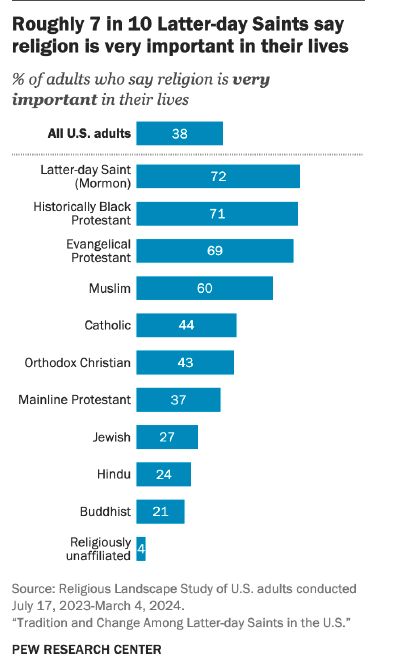
Off-screen, Mormons as a group remain among the most religious and most politically conservative of all religious groups in America; the study finds “some indications of change” within the church.
Compared with 2007, Latter-day Saints (also called Mormons) are now:
— 14 percentage points less likely to say they believe in God or a universal spirit with absolute certainty
— 11 percentage points less likely to say religion is very important in their lives
— 9 points less likely to say they pray daily
“This generally aligns with a decades-long, nationwide pattern in which Americans, on the whole, have become less religious,” the study’s authors wrote. “For instance, 58% of Americans said in the 2007 [Religious Landscape Study] that they prayed daily. By the 2023-24 RLS, that share had dropped to 44%.”
Mormons make up about 2% of the United States population, and despite their growing cultural influence (“The Book of Mormon” musical premiered on Broadway in 2011; and Momtok, the group of Mormon moms turned social-media influencers, gained global fame in 2022), they are losing church members. In 2007, the retention rate was 70%. Now, it is 54%, according to the study.
The church’s retention rate is “among the lowest of all the religious groups analyzed” in Pew’s larger study. About three-quarters of people who were raised Jewish or Muslim, for example, have retained their childhood religious identity in adulthood.
The loss seems to be driven by women under 50. About two-thirds of older women raised in the church still identify as Latter-day Saints now, compared with about half of younger women.
That retention problem is exemplified on “Secret Lives”, where a few of the reality TV show cast members, mostly in their 20s and 30s, stopped attending services at their local temple for a variety of reasons, including concern that they will face judgment from leadership and other members about their more liberal lifestyle choices.
The church has recently made moves to appease young women. Last year, it notably started offering new sacred garments, which practicing Mormons must wear under their clothing, that allow women to show their shoulders and wear a wider variety of clothing. The expanded wardrobe announcement was received with joy — and shopping sprees — but it left many Mormon women wondering why it took the all-male leadership 200 years to change their minds.
Another point of conversation among the “Secret Lives” cast members was both the empowerment and awkwardness of being the breadwinner in their relationships with their husbands. Mormons have long held traditional values around gender roles, but that seems to be changing. According to Pew, “A growing percentage of church members say that having more women in the workforce is a change for the better.”
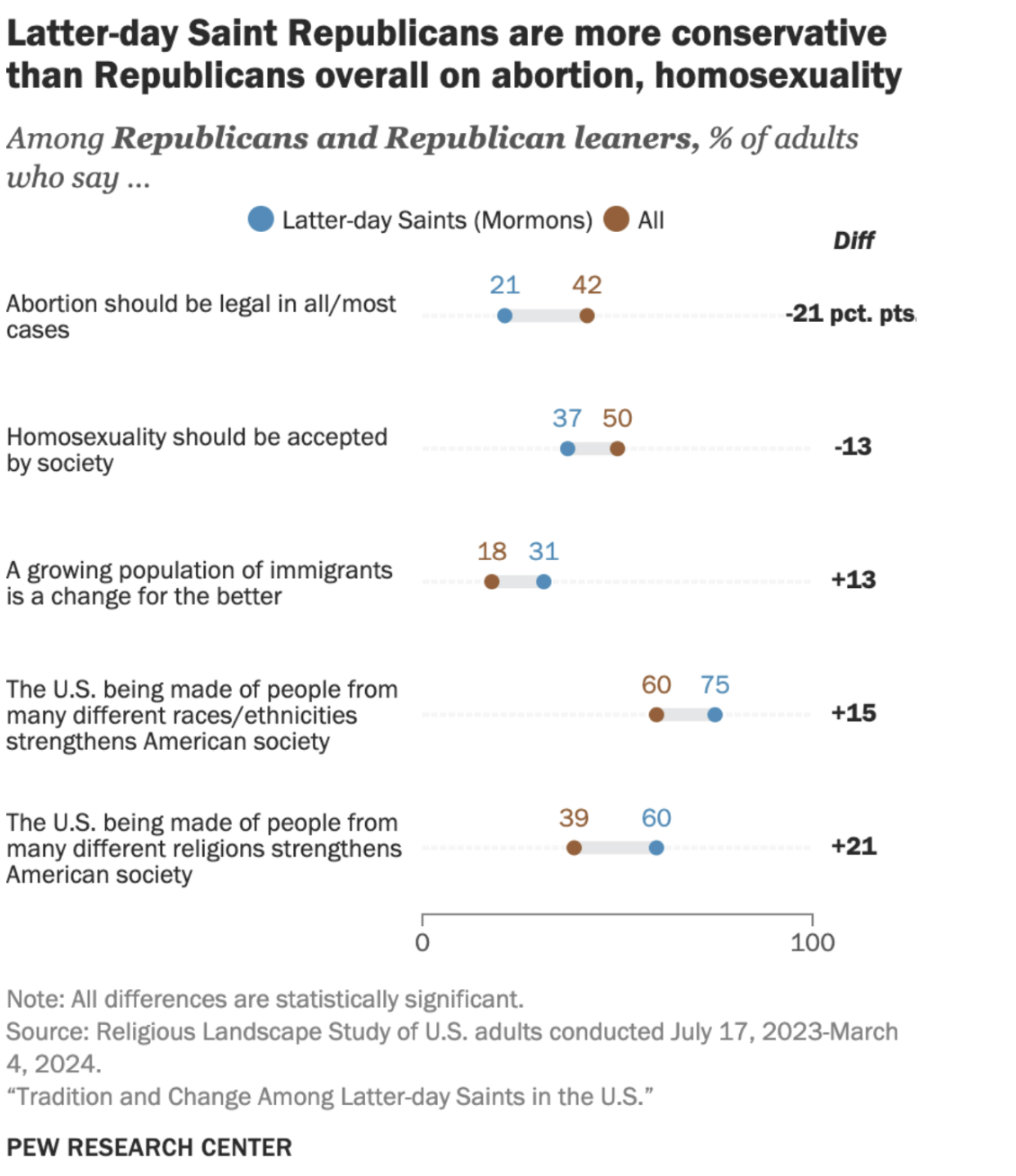
Pew said the average Mormon men and women are becoming more liberal on some topics too, despite still heavily associating with the Republican Party, according to Pew.
Mormons today have become almost twice as accepting of homosexuality as they were in 2007 and Mormon Republicans are more likely than Republicans overall to support immigration and having a multi-ethnic, multi-racial country with religious diversity.
Cassidy Grom is the managing editor of Religion Unplugged. Her award-winning reporting and digital design work have appeared in numerous publications.