
Young Evangelicals Say Home And Smartphones Have Shaped Their Faith
Evangelical young adults have had varied experiences in their faith journeys. They’ve been formed by church, home and other factors, including their smartphones and social media.
A Lifeway Research study of evangelical young adults highlights what influenced their walk with Jesus growing up and what their faith looks like today.
The survey includes more than 1,300 18- to 29-years-olds who identify as Protestant or nondenominational Christians, have evangelical beliefs and have attended religious services at least once a month at some point in their lives.
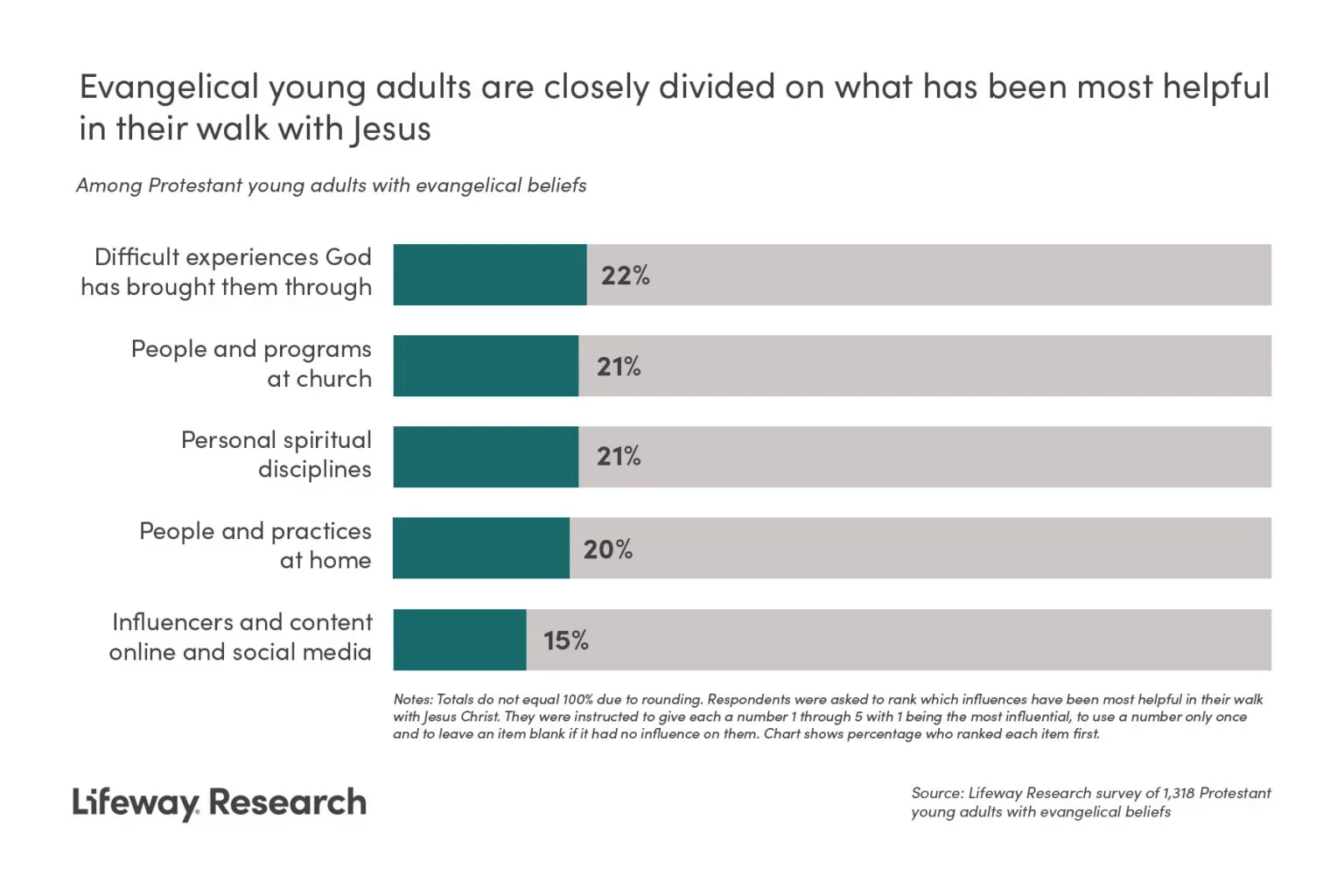
When asked what has been the most helpful in their Christian walk, 22% say difficult experiences God has brought them through. Just as many point to people and programs at church (21%), personal spiritual disciplines (21%) and people and practices at home (20%). Another 15% say influencers, content online and social media have helped them the most.
“God has used many avenues to draw young adults to Him. The beauty of conversion and spiritual growth is in the details of one person’s journey. That can get lost when we examine 1,300 stories, but the larger trends can help us understand and engage the next generation on an individual level,” said Scott McConnell, executive director of Lifeway Research.
First faith experiences
Two in 3 evangelical young adults (64%) say they know the age at which they gave their life to Christ. Among those who know, 83% say it happened before they turned 20, including 24% who say it occurred before they turned 10 and 59% who point to an age from 10 to 19.
They were possibly able to make that decision early in life because 89% say the gospel was clearly explained to them before they finished elementary school.
“The research shines a clear and bright spotlight on the crucial importance of Kids and Student Ministry in the church,” said Chuck Peters, director of NextGen ministry at Lifeway. “Statistically speaking, if we don’t reach the Next Generation before they leave high school, they may not be reached.”
Evangelical young adults who have given their lives to Christ had a wide variety of salvation experiences. More than a quarter (28%) say it happened slowly over time as they came to understand and want to give their life to Jesus. Slightly fewer (22%) followed friends or family toward Jesus first and then slowly began to understand what it meant to give their life to Jesus.
Another 18% understood the gospel long before they responded to Jesus but questioned whether they wanted to give Him their life. Around 1 in 6 (17%) say they went very quickly from not understanding or having no interest to wanting to give their life to Jesus. Almost 1 in 7 (15%) feel they have always been headed in this direction.
When asked to name three life-shaping experiences that happened before giving their life to Christ, evangelical young adults often point to the Bible and church. Almost half (47%) say they believed the Bible’s teaching. Around 2 in 5 say they attended and participated in church (43%) and trusted people who taught the Bible (38%).
Close to 1 in 3 point to having good relationships with Christian adults (34%), a personal crisis or difficult time (33%) and feeling they belonged at church (31%). More than 1 in 4 say their journey involved having good relationships with Christian peers (28%). Fewer ran away from God (22%) or explored non-Christian paths (21%).
When asked to describe in their own words what God used to help them give their life to Jesus, the most common responses are difficult situations or hard times (12%), friends or people in their lives (12%), family (10%) and Scripture (9%).
Others mention faith (6%); God’s presence, His voice or signs from Him (6%); understanding grace or recognizing the need for a Savior (6%); a new purpose in life or direction (6%); God’s love (5%); prayer (5%); church ministries (5%); and hope or peace (5%).
“We may think our kids will hear a gospel presentation at Vacation Bible School, camp or a Christian concert, but we can’t afford to save the gospel for special occasions,” said Peters.
“We need to normalize equipping every leader and every parent to have gospel conversations with kids. It’s time for us to think of the gospel less as a presentation and more as a conversation. Young people need the opportunity to hear, process, understand and ask questions before being asked to respond. Gospel engagement with Gen Z and Alpha needs to be in the context of an authentic conversation.”
Church’s role
As evangelical young adults think back to their formative years, those who attended church growing up recognize the importance of their congregations and church leaders.
In terms of people who were influential in helping them grow and mature in their walk with Jesus, most (57%) include the lead pastor at their church. Half (49%) call out a Sunday School teacher.
Slightly fewer mention a youth minister (44%) or other adult youth leaders (42%). Around a third highlight a friend their age (36%), students a few years older than them (32%), a children’s minister (32%) and a music ministry leader (32%). Around a quarter (27%) say other children’s ministry leaders. Just 3% say none of these were influential in their faith journey.
When asked what made that person or people at church so influential, most say their passion for seeking God (59%), their explanations of what the Bible said (56%), their example of living out their faith (55%), that they were present and approachable (54%) and their interest and care for them (53%). Around 2 in 5 (42%) say their questions made them think, and a third (35%) say they mentored them for several weeks at least.
“Relationships with godly adults in the church are highly significant factors in the spiritual development of young people,” said Peters. “Without question, the consistent influence of discipleship-minded adults is crucial to reaching the next generation. It’s not the lesson you lead or how good a teacher someone is that stands out as the primary difference maker. It’s the relational investment of committed, consistent, connected, Christ-like adults who care about kids.”
Evangelical young adults also say several programs were impactful in their spiritual walk. Half (48%) say weekly church worship services had an impact on their journey with Christ. Around 2 in 5 include weekly small group Bible studies (40%), prayer meetings (38%) and youth group social activities (37%).
A third point to the importance of youth worship services (35%), youth large group Bible study teaching (34%) and Vacation Bible School (33%). Close to 3 in 10 call out a retreat, conference or discipleship weekend (30%), being mentored by a leader for several weeks (29%) and children’s church (28%). Around a quarter mention camp (26%) or a mission trip (26%).
Outside of programs, other church experiences made a lasting impact. Half valued help processing how the Bible applies to life (52%), relationships with peers who are following Christ (51%) and relationships with adults who are following Christ (50%).
Slightly fewer say watching how adults and families from church live out their faith (47%), getting answers to their questions (46%) and support from people at church during a hard time (46%). Around 2 in 5 (42%) say serving at church was among the most impactful experiences.
“Even at the same church, different people and experiences can be the one that makes a significant impact on the spiritual journey of a child,” said Peters. “This makes it important for everyone in the church to support these efforts. Regular teaching from the Bible that is consistently reflected in the lives of others at church and genuine relationships create the type of church environment young adults say helped them coin their journey with Christ.”
Home’s role
Almost all evangelical young adults (96%) say someone in their home growing up was very influential in helping them grow in their walk with Jesus. Three in 4 (75%) call out their mom. Two in 3 (66%) say their dad. Around half (53%) mention a grandparent, while a quarter (25%) say a sibling and 8% another family member. Just 4% say no one at home influenced them toward spiritual maturity.
Within the home, several influences helped young adults mature in their faith. Most say praying together at home (55%) and someone teaching them to trust and obey God (53%) were important. Half mention reading the Bible together (51%) and hearing stories of God’s faithfulness (50%).
Slightly fewer remember discussing spiritual truths (47%), seeing trust in God during struggles (45%), playing worship music (43%) and seeing a family member’s example (43%).
When asked what they would recommend parents emphasize today as they influence their kids’ journeys to and with Jesus, evangelical young adults are most likely to say praying together (54%).
Around half say reading the Bible together (52%), encouraging their kids to have a personal relationship with God (51%), having open and honest conversations (51%), being kind and loving toward others (50%), being living examples of trusting God in all things (50%) and teaching how to apply biblical truth to real-life situations (48%).
Slightly fewer point to attendance and involvement at church together (45%). Almost 2 in 5 (38%) recommend not pushing their kids and having patience with their faith journey.
“People at home have a significant impact on kids following Christ. Parents and grandparents who practice their faith in Jesus Christ together with their kids are highly influential in that child’s personal growth in their walk with Him,” said McConnell.
Hard times and software
While 22% say God bringing them through difficult circumstances has had the most impact on their faith, 9 in 10 (91%) say God has used at least one hard time or struggle to draw them to Him.
More than a third say God used loneliness (38%), mental health challenges and/or depression (37%) and the consequences of their own sin (35%). Around 3 in 10 include trauma (30%), a broken relationship (29%), financial struggles (29%), the death of a loved one (28%) and a physical health challenge (27%). A quarter select addiction (26%) and bullying (23%), while 17% say their parents’ divorce.
Other issues that could be a hindrance or help on their spiritual journey are smartphones and social media. Most evangelical young adults recognize there are pluses and minuses.
When asked about ways those technologies have helped their walk, around half point to easy access to a Bible app (53%), listening to sermons or Bible teaching (51%), Bible verse posts or notifications (51%) and helping them share their faith (49%).
Slightly fewer say they’ve been able to find like-minded Christians (47%), see examples of people following Christ (47%) and follow Christian influencers (46%).
They also recognize downsides of their smartphones and social media. Almost half (47%) say the technology distracts them. Around 2 in 5 highlight an addiction and spending too much time (42%), keeping them from Bible reading and prayer (41%), tempting them to want more stuff (39%) and stoking unhealthy comparisons to others (37%).
Many also note the negative impact on their faith from listening to non-Christian influencers (35%), pornography (31%) and angry reactions to divisive content (30%). Just 6% say none of these have hindered their Christian walk.
“Teaching children discernment in their use of technology and social media is essential. Smart phones give access to things that help and things that hinder one’s walk with Jesus Christ,” said McConnell. “Open conversations, biblical truth and loving relationships need to directly address the use of smart phones when access is given to students.”
Faith today
Evangelical young adults have broad desires to walk faithfully, but that doesn’t always work out practically.
Half (52%) typically attend a worship service at their church at least four times a month, including 28% who attend more than four times. Around 1 in 5 say they attend three times (19%) or twice (18%). Few say they attend once (7%) or not at all (5%) in a typical month.
Almost all evangelical young adults (98%) say the truths in the Bible impact their decisions each day. Yet 54% agree they spend very little time thinking about what the Bible says outside of church. Less than half (46%) disagree, including a third (35%) who strongly disagree.
“Interacting with the Bible is still far-and-away the most significant factor in developing a dedicated walk with God,” said Peters. “We need to continue to get Bibles into the hands of our young people and to get our young people into their Bibles.”
Still, most have put their faith into action. Around 3 in 5 say they currently serve in ministries or projects that serve people in their community outside their church (61%) or have regular responsibilities at their church (59%).
When asked what style of church they think is most helpful for the faith of people their age and younger, evangelical young adults point to relational, relevant and biblical services. Most say Bible-focused sermons (53%) are helpful.
Almost half say programming for every age group (48%) and addressing relevant topics (46%). Around 2 in 5 believe the most helpful type of service is one with a worship attendance of fewer than 250 people (43%) and one that is relational, where everyone knows everyone (40%).
Around the same percentage of evangelical young adults say the most helpful is one with lots of production for the worship service (38%) and one that is more liturgical (37%).
The fewest (29%) believe a church with a worship attendance of 250 people or more is most beneficial for helping people their age and younger with their walk with Jesus.
“Many young adults with evangelical beliefs still have room to grow in their participation in a local body of believers, their engagement in spiritual disciplines and allowing the Bible to impact their worldview,” said McConnell. “But their faith journey thus far was greatly helped by many believers who showed them the love of Christ as they were growing up.”
For more information, view the complete report.
Aaron Earls is the senior writer at Lifeway Research.