
Churchgoers Trust God’s Involvement In Their Lives, But Many Admit Doubts
When facing difficult circumstances, most churchgoers still trust in God’s love and provision. Some, however, begin to question God’s character and involvement in their lives, and their number has grown in recent years.
Lifeway Research’s State of Discipleship revealed exercising faith as one of eight signposts that measure characteristics evident in believers who are progressing in their spiritual maturity. The average churchgoers scores 71.6 out of 100 for exercising faith, placing it fourth.
“The thought of measuring someone’s faith in God with more than one question might surprise people, but you can trust God in one area of your life and not another,” said Scott McConnell, executive director of Lifeway Research. “It is as if churchgoers are saying, ‘Sure, I trust God, except when I don’t.’ Understanding those exceptions will help church leaders encourage growth in people’s faith.”
Times of doubt
Thinking about their own lives or the lives of others, churchgoers tend to trust God’s involvement. Around a quarter, however, admit doubt can creep in. And doubting has become more prevalent among churchgoers over the last decade and a half.
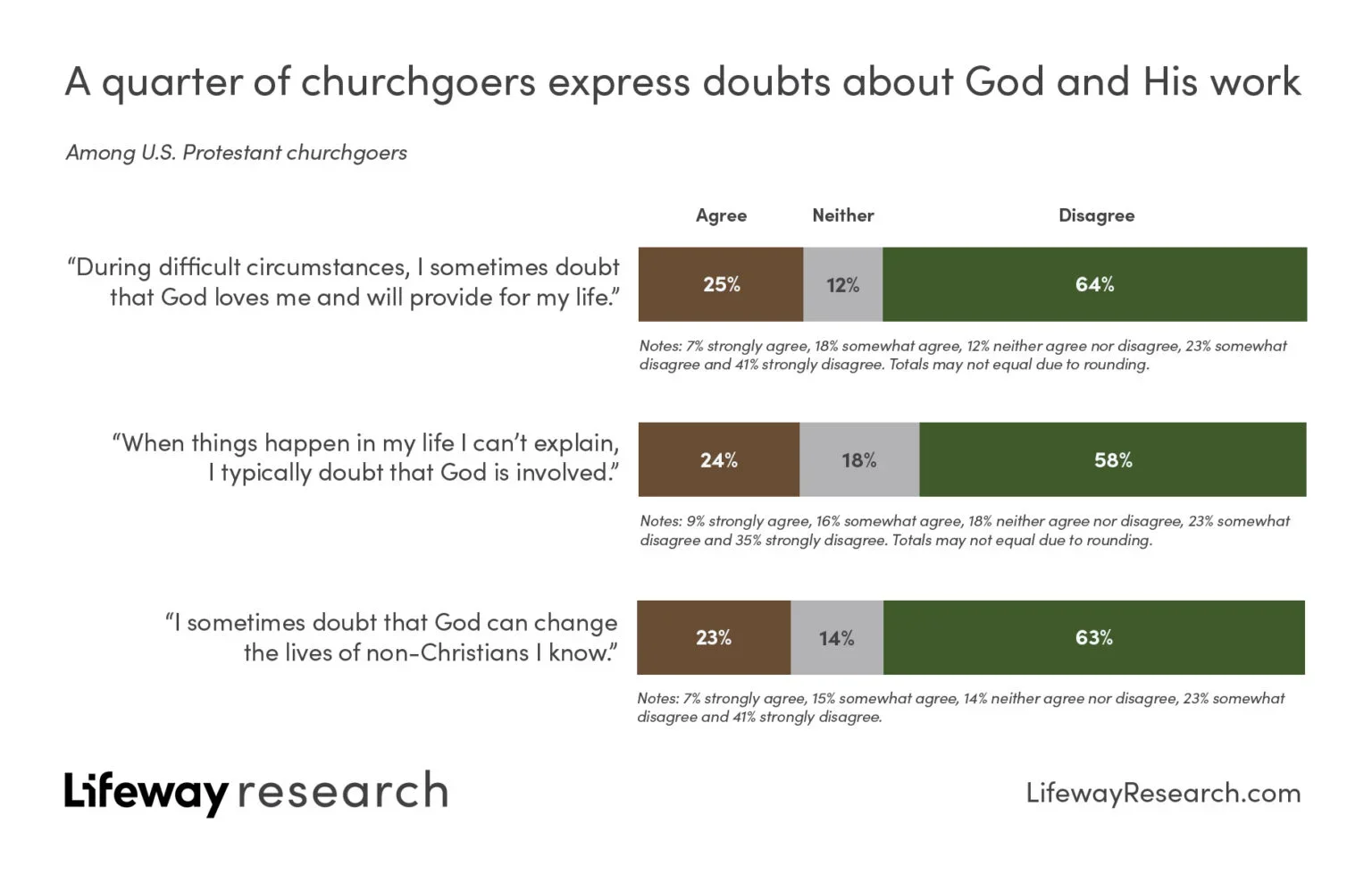
Currently, 25% of U.S. Protestant churchgoers say that during difficult circumstances, they sometimes doubt God loves them and will provide for their lives. Almost two in three (64%) disagree, and 12% neither agree nor disagree.
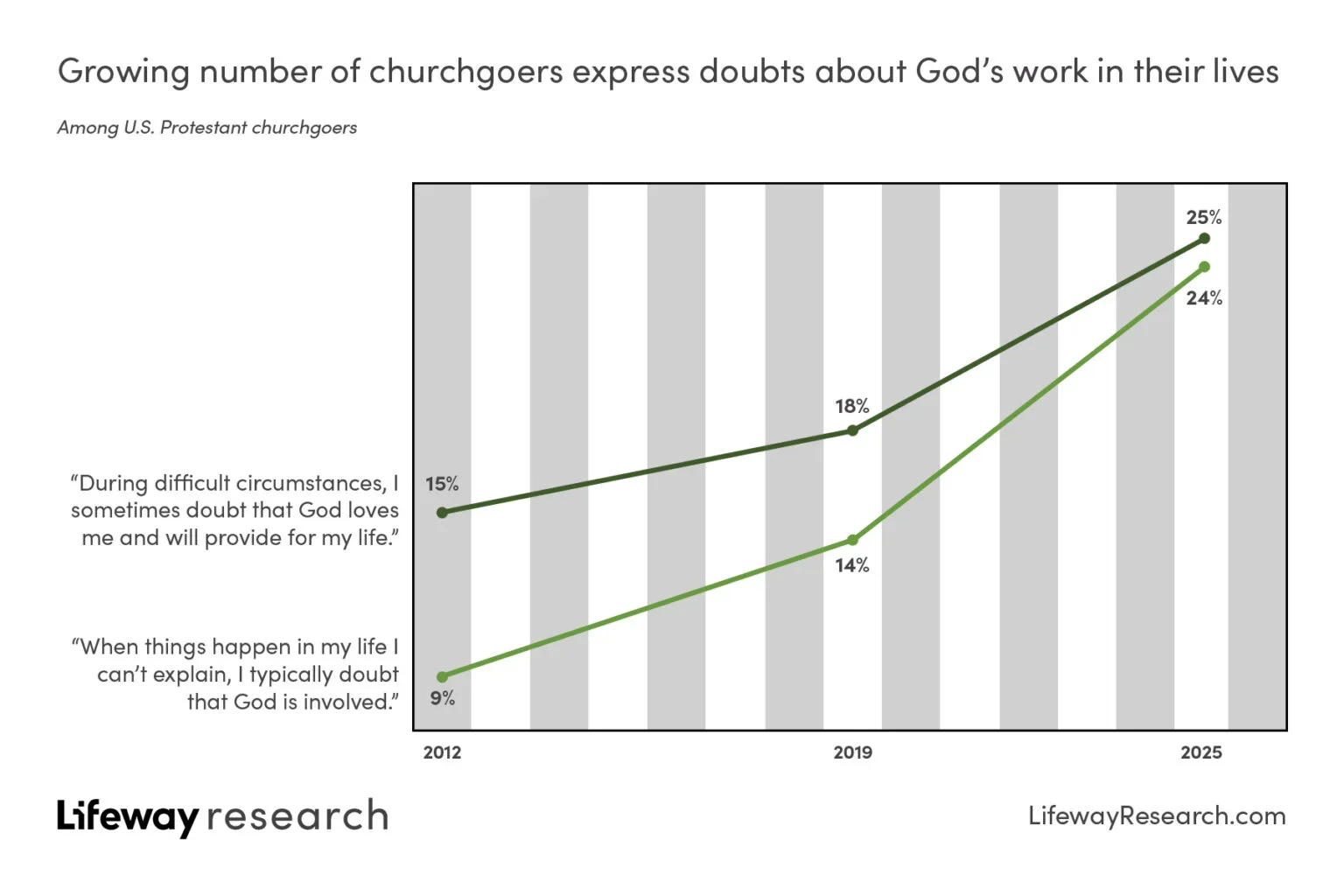
Doubting God’s love and provision has become more pervasive among churchgoers in the last 14 years. In a 2012 Lifeway Research study of discipleship, 15% said they had those doubts in difficult circumstances, while 78% disagreed. Seven years later, 18% expressed doubts and 71% disagreed in a 2019 Lifeway Research discipleship study.
Similarly, around a quarter of today’s churchgoers (24%) say they typically doubt God is involved when things happen in their lives they can’t explain. Almost three in five(58%) disagree, and 18% aren’t sure.
Those doubts have also grown more common. In 2012, 9% agreed and 80% disagreed. By 2019, 14% agreed and 70% disagreed.
“Many of the assessment questions that have been asked repeatedly reveal improvements among churchgoers over time, but that is not the case with exercising faith. Doubts among churchgoers have become more common,” said McConnell. “Whether those are momentary doubts or more intensive thoughts of deconstruction, a growing number of churchgoers need help understanding and depending on the care and character of God.”
Growing doubt among U.S. Protestant churchgoers is not limited to God’s work in their own lives. An increasing number say they aren’t sure about His power in the lives of others.
Around one in four (23%) say they sometimes doubt God can change the lives of non-Christians they know. Almost two in three (63%) disagree, and 14% neither agree nor disagree.
This too has grown steadily in the past decade and a half, more than doubling from the 11% who agreed in 2012. In 2019, 17% expressed doubt about God’s ability to work in the lives of those outside their faith.
“It is healthy to acknowledge our doubts, but it is also beneficial to not stay there. This is exemplified in the Gospel of Mark when the father asks Jesus, ‘Help my unbelief!’ (Mark 9:24, CSB). The father didn’t want his unbelief to keep his son from being healed. Many churchgoers who question Jesus’ power to save those they know would be wise to do the same,” said McConnell.
Isolated faith
Another aspect of the exercising faith discipleship signpost is a recognition of an individual believer’s impact on others and their need for God.
Almost one in five U.S. Protestant churchgoers (18%) say sins that only affect them are not as harmful as other sins. Two in three (66%) disagree, and 16% aren’t sure.
Fewer (13%) believe they don’t need God’s help very often. More than three in four (77%) reject this idea, and 9% neither agree nor disagree.
“One description of the opposite of a life of faith, would be a life of sin. Almost one in five churchgoers justify private sins signaling room to grow in exercising faith,” said McConnell. “It is also worth noting that more churchgoers acknowledge their need for God’s help than believe he can or cares enough to help.”
For more information, view the complete report and visit LifewayResearch.com/Discipleship.
Aaron Earls is the senior writer at Lifeway Research.