
Most Protestant Churchgoers Confess Sins Weekly
Most churchgoers try to avoid sin before it happens and seek to confess it afterward. For many, confession is a regular part of their faith.
The joint action of obeying God and denying self is one of eight signposts that seek to measure characteristics evident in believers progressing in spiritual maturity in Lifeway Research’s State of Discipleship study. On a scale of zero to 100, the average U.S. Protestant churchgoer scores 75.1 on this signpost, ranking it second.
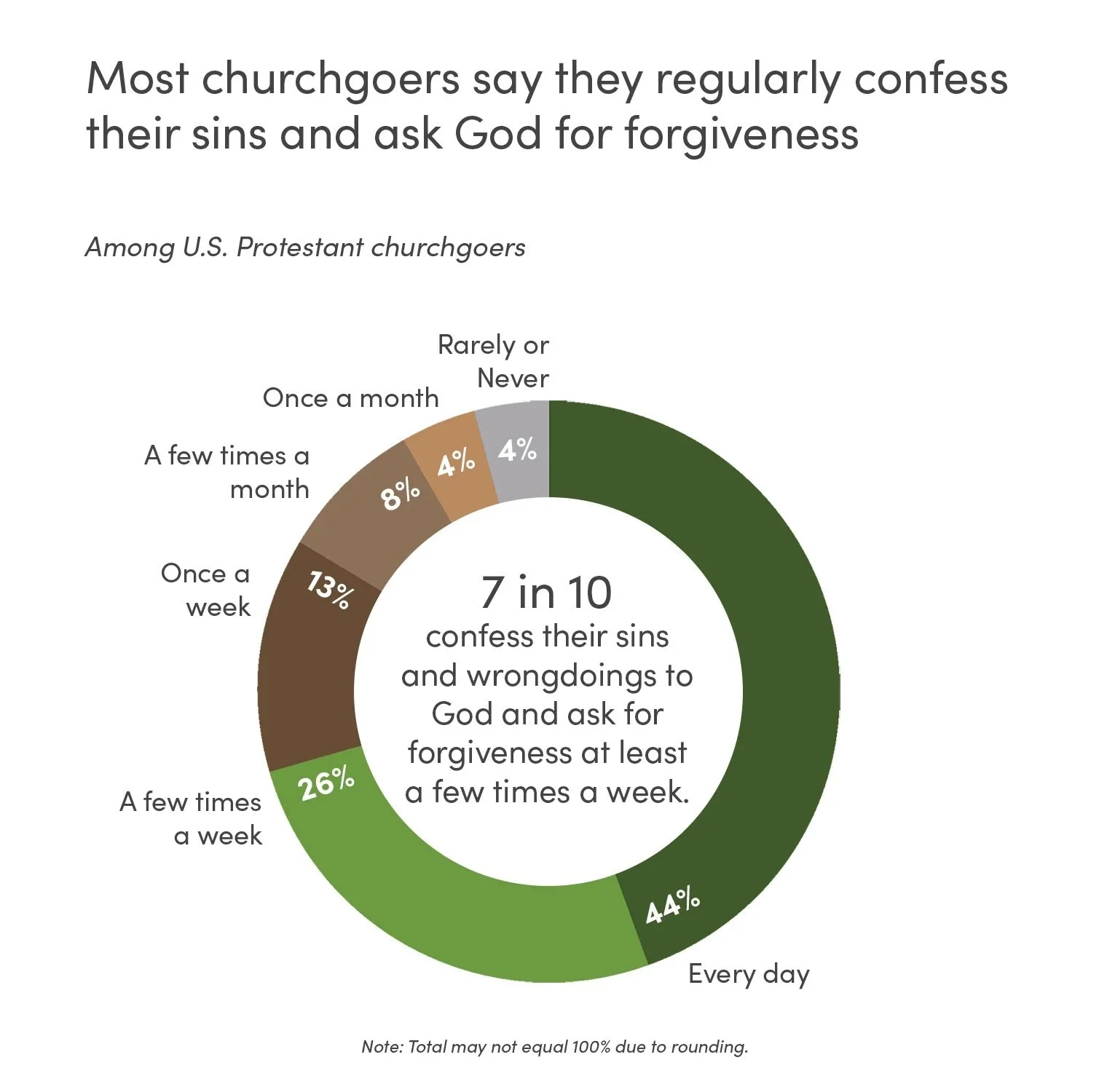
As part of that attribute, most churchgoers say they confess their sins and wrongdoings to God and ask for forgiveness at least a few times a week.
More than two in five (44%) confess to God every day, while a quarter (26%) do so a few times a week. Fewer say they ask for forgiveness once a week (13%), a few times a month (8%) or once a month (4%). Few churchgoers say they rarely or never confess sins (4%).
In a 2012 Lifeway Research study, 39% of Protestant churchgoers confessed their sins to God and asked for forgiveness every day, 27% did so a few times a week, 27% confessed between once a week and once a month and 8% said it happened rarely or never.
“The confession of sins to God is counter-cultural,” said Scott McConnell, executive director of Lifeway Research. “Today, many people in America want to set their own moral compass, but we see large numbers of churchgoers agreeing with God that they crossed His moral boundaries and acknowledge His authority in their lives.”
Attitude toward sin
When it comes to sin, most U.S. Protestant churchgoers try to avoid possible temptations but are ready to confess mistakes to God and turn from them moving forward.
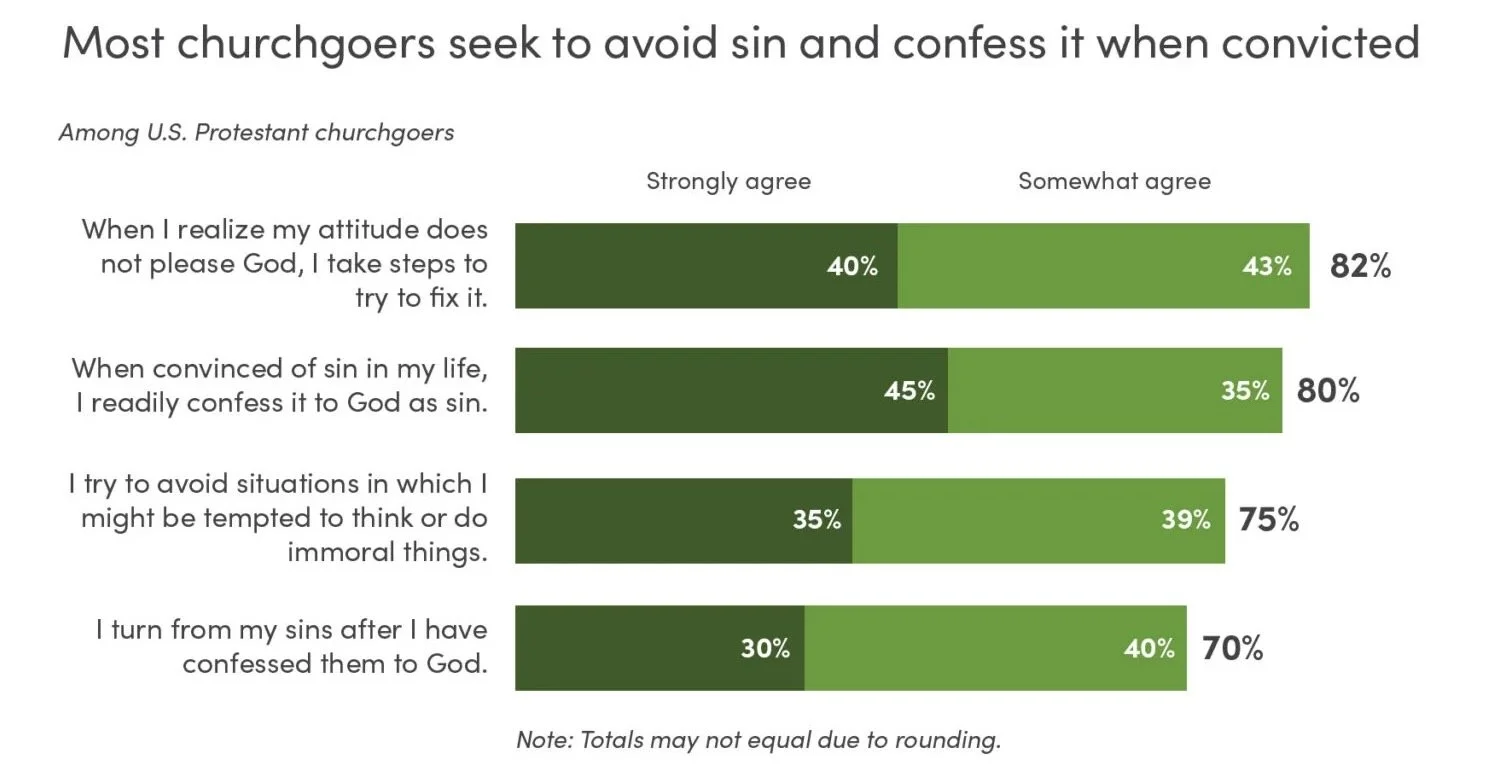
Three in four (75%) say they try to avoid situations in which they might be tempted to think or do immoral things, including 35% who strongly agree and 39% who somewhat agree. One in 10 (10%) disagree, while 15% neither agree nor disagree.
Those levels have remained consistent for more than a decade. In a 2019 Lifeway Research study, 77% said they worked to avoid tempting situations, and 73% said so in 2012.
“It is likely that people who have no intention of avoiding immoral temptations are less inclined to attend or continue attending church,” said McConnell. “This consistent high level of trying to avoid temptation among churchgoers fits with a proactive posture of being engaged in the tenets of their faith.”
If they are convinced of sin in their lives, four in five U.S. Protestant churchgoers (80%) readily confess it to God as sin, with 45% strongly agreeing. Just 7% disagree, and 13% say neither.
After they have confessed sins to God, seven in 10 (70%) say they turn from them, including 30% who strongly agree. Around one in 10 disagree (9%), while around twice as many (21%) neither agree nor disagree.
Beyond even their actions, 82% of churchgoers say they take steps to fix their attitude when they realize it doesn’t please God, including 40% who strongly agree and 43% who somewhat agree. Only 4% disagree, and 13% say neither. In 2012, 81% agreed and 4% disagreed.
“These questions on obedience among churchgoers reflect widespread desire to obey God but also acknowledge that they regularly have sins to confess. Churchgoers are not perfect people, but most are actively confronting these shortcomings,” said McConnell.
Life of obedience
While confession and avoiding temptations are common, U.S. Protestant churchgoers may be slightly less likely to say they are taking proactive or preparatory steps to follow Jesus.
Almost three in five (57%) say they sacrifice their goals to please and honor Jesus, with 23% strongly agreeing and 34% somewhat agreeing. Close to one in six (16%) disagree, while more than a quarter (27%) say neither.
More churchgoers (78%) are ready to work in any job God wants them to have, including 42% who strongly agree and 36% who somewhat agree. Few (6%) disagree, and 16% neither agree nor disagree.
“Obeying God may require an individual to give up their own desires or goals. While a majority of churchgoers agree they are good with this exchange, this denial of self is the weakest response in this signpost, with fewer than 1 in 4 completely on board with such sacrifice,” said McConnell.
When considering their life, more than two in three (68%) churchgoers say they live as if they exist to praise and glorify God, with 32% strongly agreeing and 36% somewhat agreeing. One in 10 (11%) disagree and twice as many (22%) say neither. In 2019, 66% agreed, 10% disagreed and 24% weren’t sure.
“For churchgoers, obeying and wanting to quickly return to obedience are related to finding meaning in glorifying God,” said McConnell. “The Bible says obeying God brings Him glory. While there is room for 2 in 3 churchgoers to grow in this lifestyle, most acknowledge this purpose in their lives.”
For more information, view the report and visit LifewayResearch.com/Discipleship.
Aaron Earls is the senior writer at Lifeway Research.