
Advent Calendars Go From Religious To Secular To Big Business This Christmas Season
NEW YORK — There was a time when an Advent calendar meant a cardboard picture of a snowy village, 24 little windows and, if you were lucky, a tiny piece of chocolate behind each one.
Today, it could mean anything from a a calendar with a collection of beauty products costing upwards of hundreds of dollars to a selection of craft beers, speciality cheeses, luxury perfumes or even miniature power tools.
The humble Advent calendar has undergone a remarkable transformation in recent years, shedding much of its religious identity to become one of the more lucrative and inventive products of the Christmas shopping season.

Advent comes from the Latin word “adventus,” which means arrival. The traditional Advent season invites Christians into four weeks of reflection awaiting the arrival of God in Jesus.
What was once a way for Christians to mark the days leading up to Christmas Day has evolved into a billion-dollar global business, with retailers and brands increasingly treating the countdown as a chance to sell products, attract new customers and generate considerable social media attention.
The scale of this opportunity is reflected in market forecasts. Research compiled by Accio, a business-to-business platform, estimated that the global Advent calendar market could grow from $1.32 billion in 2024 to $2.47 billion by the year 2033.
The origins of the tradition are considerably more modest. Advent calendars developed from Christian customs in Germany among Lutherans, where families marked the period before Christmas with religious images, candles and other daily rituals. Commercial printed calendars appeared in the early 20th century, initially featuring biblical scenes.
“The variety of Advent calendars is endless, and they are available online, in bookstores, and even in some grocery stores,” noted Sybil MacBeth, author of “The Season Nativity.” “The ‘old-fashioned,’ meaning 20th century and earlier versions, are made of paper and often include pictures of Santa Claus, the manger, or winter weather. Most calendars have 24 little paper doors; behind each is a picture or a Bible passage.”
Chocolate eventually became the familiar reward marking the 24-day calendars — transforming the calendar into a popular children's treat. But for decades, the concept remained largely confined to confectionery and toys.
The breakthrough into the adult market came more recently as retailers began to recognize that the appeal was not necessarily about chocolate or religion. It was about anticipation, surprise and the pleasure of receiving a small gift each day.
One of the significant turning points came in 2014, when British luxury department store Liberty introduced a beauty Advent calendar containing mini cosmetics, skincare and perfumes. Its success helped establish a new category, prompting other retailers and beauty companies to follow.
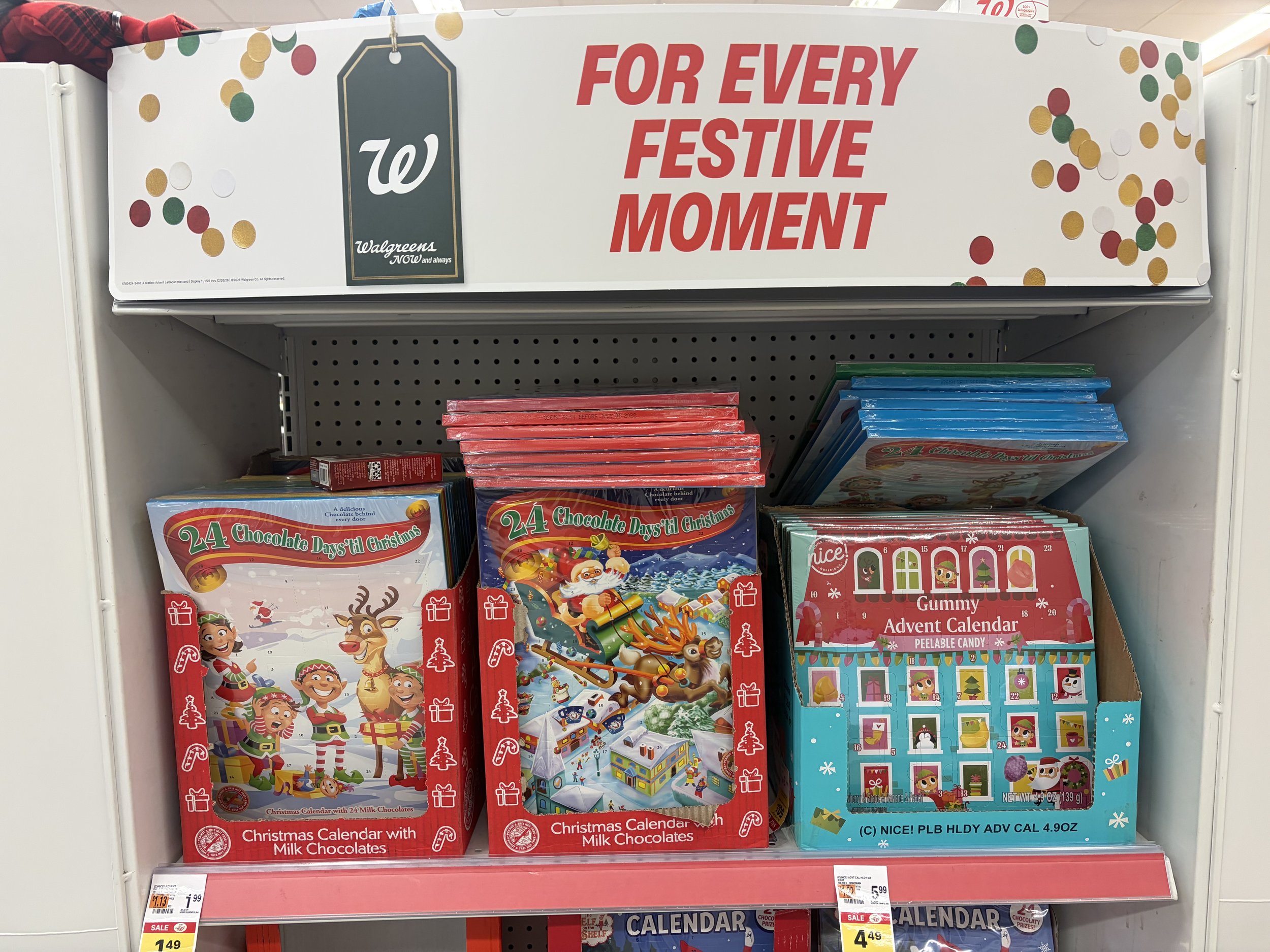
Advent calendars have become a big business. (Photo by Clemente Lisi)
Existing products in smaller sizes
The economics are very attractive. A calendar allows companies to package existing products, often in smaller sizes, into a premium gift set. Consumers get the excitement of discovering several products, while brands gain an opportunity to introduce shoppers to items they might not otherwise have purchased.
It is also a particularly effective marketing tool. A customer who discovers a new perfume or skincare product behind one of the tiny doors might subsequently purchase the full-sized version.
This concept has spread far beyond beauty. There are now calendars catering to coffee drinkers, wine enthusiasts, gardeners, DIY hobbyists, pet owners and practically every conceivable consumer interest. Lego has expanded its offering across several themes, while food brands have embraced everything from speciality jams and hot sauces to cheese and other gourmet items.
Michaels, the arts and crafts retail chain, has made creativity easier this holiday season with its “Countdown to Craftsmas” Advent calendar. It has been billed as a family-friendly screen-free project.
“The best part of the holidays is the time spent creating together, and we want to make that easy for everyone,” said Heather Bennett, President and Chief Customer Officer at Michaels. “Countdown to Craftsmas gives families a simple project to make together every day, and with our biggest deals of the year, it’s more affordable than ever to make something meaningful for the people you love.”
The food category is particularly appealing. Danish confectionery company Lakrids by Bülow began selling adult-focused liqurice Advent calendars in 2011, initially producing just 1,000. By 2025, the company said its annual production reached approximately 300,000.
For smaller brands, Advent calendars can provide a relatively unusual way to introduce products to consumers. They can also accommodate experimental flavors and limited-edition items that might not justify a permanent place in a company’s product range.

Social media apps like TikTok have pushed the popularity of Advent calendars. (Unsplash photo)
Power of social media
At the same time, social media has accelerates the trend. Advent calendars are ideally suited to Instagram, TikTok and YouTube, where influencers and everyday users post daily reveals and unboxing videos. The result is effectively 24 separate opportunities for brands to appear in customers’ online feeds.
The marketing cycle often begins months before December. Retailers increasingly announce their calendars as early as August or in early fall, with waiting lists and pre-orders helping build anticipation. Some of the most sought-after products sell out before the Christmas countdown has even begun.
The Advent calendar business is not without risks. Consumers have become increasingly discerning about the value of the contents and brands have faced criticism when expensive ones contain disappointing selections of inexpensive accessories or samples.
Kim Kardashian’s Skims, for example, recently offered customers refunds for its $148 Advent calendar after it was widely criticized on social media. The accessories the calendar promised were billed as “12 days of fun surprises” — but then mocked online for the quality of its contents, such as hair clips and keychains.
Skims saod that “for some, the calendar didn't meet expectations” and that the company has “personally contacted every customer” to offer them full refunds.
There is also the danger of market saturation. With so many brands competing for attention, simply putting 24 products in a decorative box is unlikely to guarantee success. Nevertheless, the underlying appeal remains powerful. In an era of online shopping, rising living costs and increasingly crowded Christmas retail markets, Advent calendars offer something relatively distinctive: A product that combines gifting, entertainment, discovery and a daily experience.
Clemente Lisi serves as executive editor at Religion Unplugged.