
Need A Lawyer? How This Nun Might Help You Out.
In Kenya, you may often encounter religious sisters in classrooms, hospitals or churches. But Sister Immaculate Muthoni occupies a different space. She is a Catholic nun and a practicing lawyer of the High Court of Kenya, working within the country’s formal legal system while drawing firm limits around the kinds of cases she will handle.
Muthoni is a member of the Little Sisters of St. Francis, a Catholic religious congregation of nuns. She is also trained in law and admitted to the Kenyan Bar. In interviews, she has said her legal work focuses on civil matters, mediation and legal aid, areas she said she believes allow her to serve clients without compromising her religious vows.
Those vows also shape what she refuses to do. Muthoni said she does not handle divorce proceedings, murder trials or certain criminal cases — explaining that representing such matters would conflict with the moral and religious commitments.
READ: Christian Ministry Prevails In Challenge To Ordinance Restricting Donation Boxes
She has bluntly described the tension, saying that preaching family unity while arguing divorce cases in court would amount to a contradiction.
“I don’t do matters which contradict my faith,” she recently said. “I don’t do divorce matters, I don’t do criminal matters.”
This position places her at an unusual intersection of faith and professional life. The legal profession is built on the assumption that personal belief should not obstruct access to justice. Muthoni’s practice challenges that assumption by asserting that conscience can legitimately limit professional scope.
Muthoni said she does not frame her refusals as activism or protest. Instead, she presents them as boundaries.
“If you go and kill somebody, please don’t come looking for me,” she said. “If you want to divorce your wife, do not come and look for Sister Immaculate. I will not help you divorce … I will be preaching water and drinking wine.”
Muthoni has emphasized that she does not oppose the law itself nor seek to impose religious doctrine on the courts. Rather, she chooses not to personally argue cases she believes would place her in moral conflict.
That approach has practical consequences in a country where legal representation is often scarce. Legal aid remains limited, despite constitutional guarantees. In that context, any refusal by a qualified advocate can raise questions about who ultimately bears the cost.
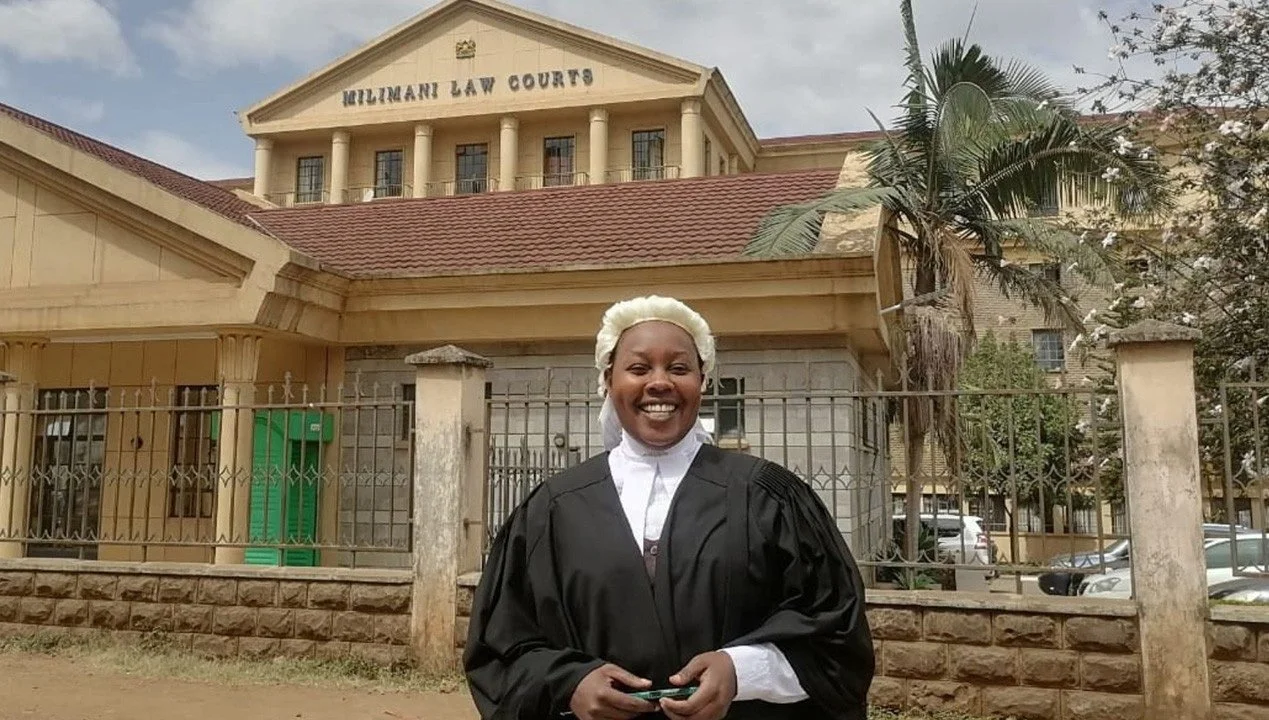
Sister Immaculate Muthoni (Photo courtesy of Vatican News)
Muthoni’s selective practice is neither illegal nor unethical. Attorneys routinely specialize, declining cases outside their expertise or comfort. From this view, her decisions fall within the discretion already exercised by lawyers who choose commercial law over criminal defense or mediation over litigation.
Critics, however, see a difference between specialization and moral refusal. Some legal scholars argue that when lawyers decline entire categories of cases for ethical reasons, it risks fragmenting access to justice along moral or ideological lines. The concern is about precedent: What happens if conscience-based refusals become widespread?
“Legal representation should not be denied to people who are unable to afford legal services, or whose cause is controversial or the subject of popular disapproval … a lawyer has a professional responsibility to accept a fair share of unpopular matters or indigent or unpopular clients,” noted a commentary on Model Rule obligations.
Muthoni’s professional roles extend beyond private advocacy. She has served as a legal officer at the Catholic University of Eastern Africa, where she earned her law degree and her work has included legal training, mediation and institutional advisory roles. She has also been involved in legal education and capacity-building, particularly within church-linked institutions.
That institutional positioning matters a lot. Muthoni does not operate at the margins of the legal system. She is trained, credentialed and widely recognized within it. Her refusals can therefore be seen not as acts of disengagement, but as negotiated limits from inside the profession.
The presence of religious sisters in professional legal roles is not entirely new in Kenya, but it remains rare. Nuns have historically been prominent in education and health sectors, aligned with caregiving and service. Law, by contrast, is adversarial, procedural and very often combative. A nun navigating that terrain unsettles conventional expectations about both religious life and legal practice.
In both public remarks and in interviews, Muthoni has explained that her choices are personal and vocational rather than programmatic. She maintains that it is possible to remain fully within the legal profession while acknowledging limits imposed by faith.
Muthoni told TV47 Kenya in a recent interview that there are other nuns in Kenya who have pursued law as well. One such nun is Prof. Dr. Rev. Sr. Leonida Katunge, who became one of the first nun‑advocates admitted to the bar. Beyond Kenya, we have American sisters such as Simone Campbell, a Catholic nun and lawyer who has worked in legal advocacy and social justice, and Kate Kuenstler, a canon lawyer whose work helped secure lay rights in the Catholic Church.
“Religious life grounds me in prayer, resilience and compassion,” Muthoni said. “Law gives me the platform to act on those values. Together, they complement one another to bring real transformation.”
Joseph Maina is a Kenyan journalist. He holds a Bachelor of Arts degree in journalism and media studies from the University of Nairobi. For the past decade, he has served as a correspondent for various print and digital publications in his native Kenya, Rwanda and South Africa.