
Inside Malta’s Sacred Heritage: St. Paul, Caravaggio And A Christian Legacy
VALLETTA, Malta — For travelers drawn not just to the sun and sea, Malta also offers a chance to go back in time. Nowhere in Europe does Christianity feel so rooted than on this small archipelago in the Mediterranean Sea situated halfway between Italy and North Africa.
With a population of 574,000 spread over three islands measuring just 122 square miles, Malta is the world’s 10th-smallest country by area and the ninth-smallest by population. Maltese is the official language, although English is widely spoken. A member of the European Union, the island was first inhabited in 6500 BCE.
Malta’s location has historically given it great strategic importance. A series of conquerors — from the Phoenicians, Carthaginians, Greeks and Romans during antiquity; Arabs, Normans and Spanish in the Middle Ages; and later the French and British — reveal a rich and multi-cultural history. One constant in Malta’s history, however, is Christianity – specifically Catholicism – that started with a shipwreck in the year 60 CE.
READ: How Matcha Culture Reshaped Japan’s Way Of Tea
The ship was carrying 276 — including a prisoner who was the Apostle Paul — in an event described in Acts 27-28. The boat ran aground in a storm (in what is today known as St. Paul’s Bay) that led to the Christianization of Malta and eventually Europe. Nearby St. Paul’s Grotto is a cave where the apostle is believed to have lived and preached. Entering the grotto today, one feels less like a tourist and more like a pilgrim.
From these early origins, the island’s faith was forged, largely through conflict. After a series of conquests, the Knights of St. John, who arrived in 1530, left an indelible mark. The Knights were part-warriors, part monks, who served as defenders of Christendom against Ottoman expansion. Nowhere is their legacy more powerfully expressed than in Valletta, the fortress capital they built in 1565.
At the heart of Valletta stands St. John’s Co-Cathedral, plain on the outside and shockingly opulent inside. The church, consecrated in 1578, was designed by the Maltese architect Girolamo Cassar, who designed several of the more prominent buildings in Valletta. During the 17th century, the interior was redecorated in the Baroque style by Mattia Preti and various other artists.
The interior of the church is considered to be one of the finest examples of high Baroque architecture in Europe. The floor is a mosaic of marble tombstones — each commemorating a knight — and the walls are adorned with gold, carved stone and a series of painted scenes.
In 1831, Sir Walter Scott, the Scottish novelist and poet, called the cathedral a “magnificent church, the most striking interior ever seen.”
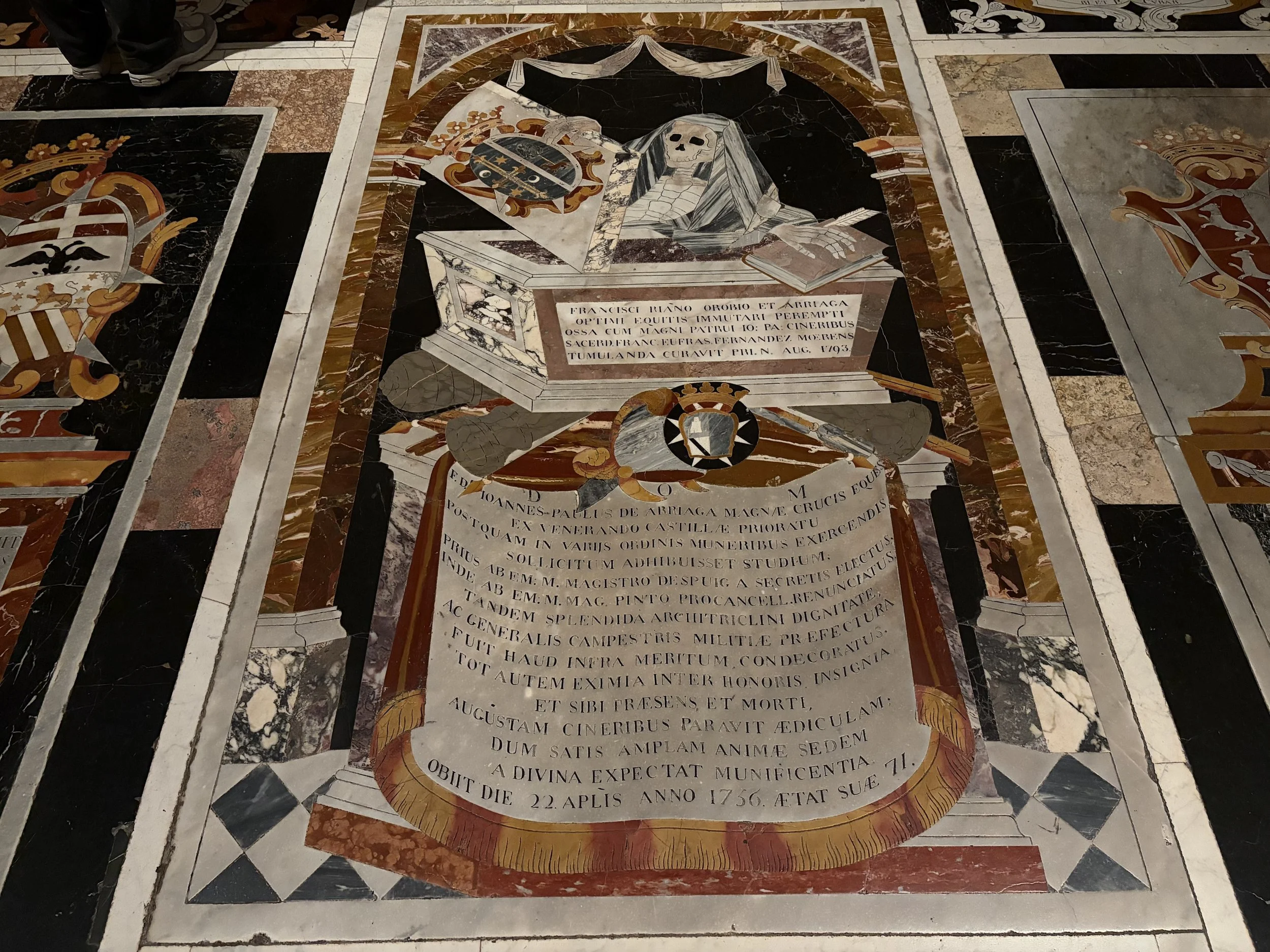
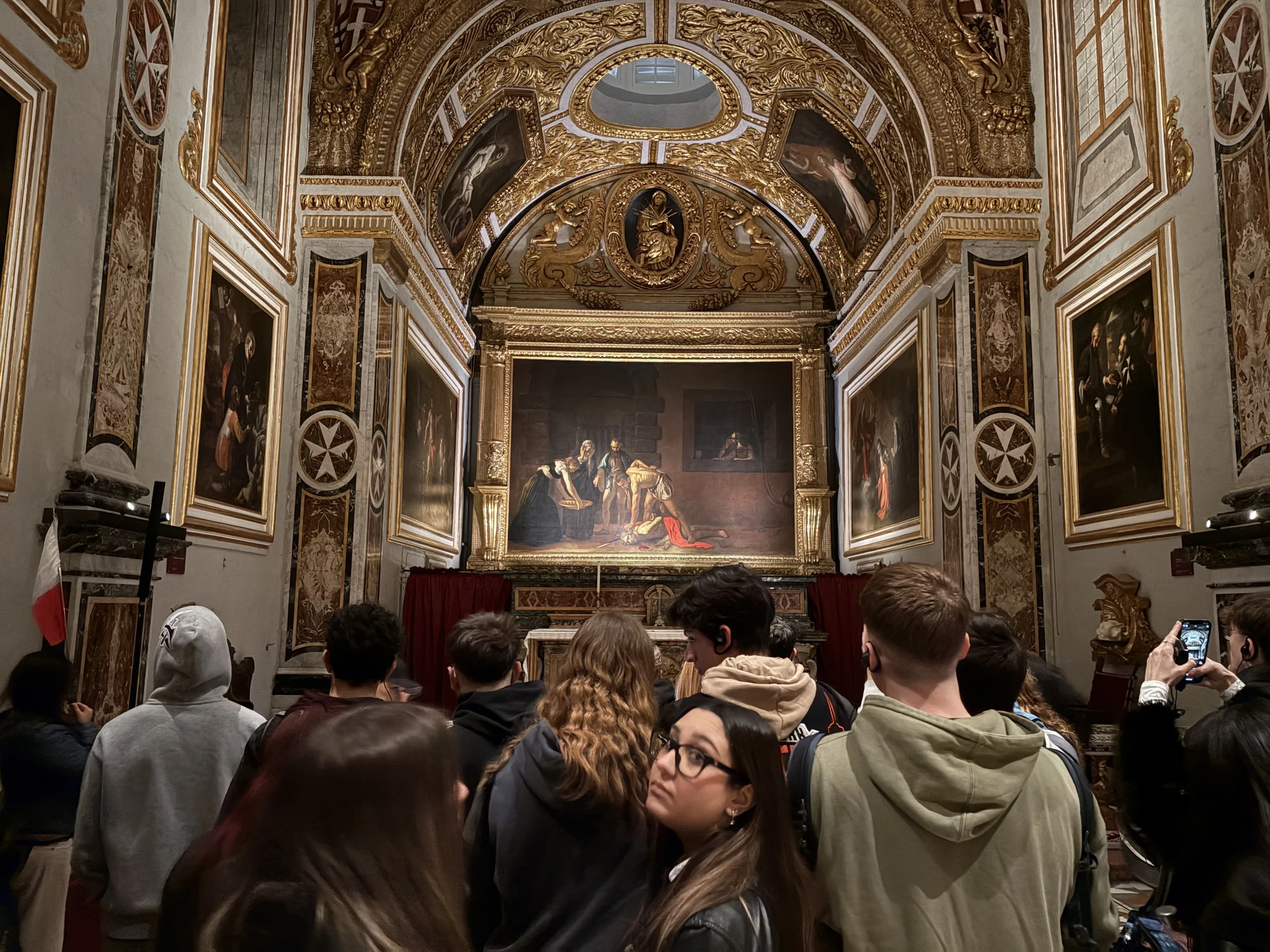
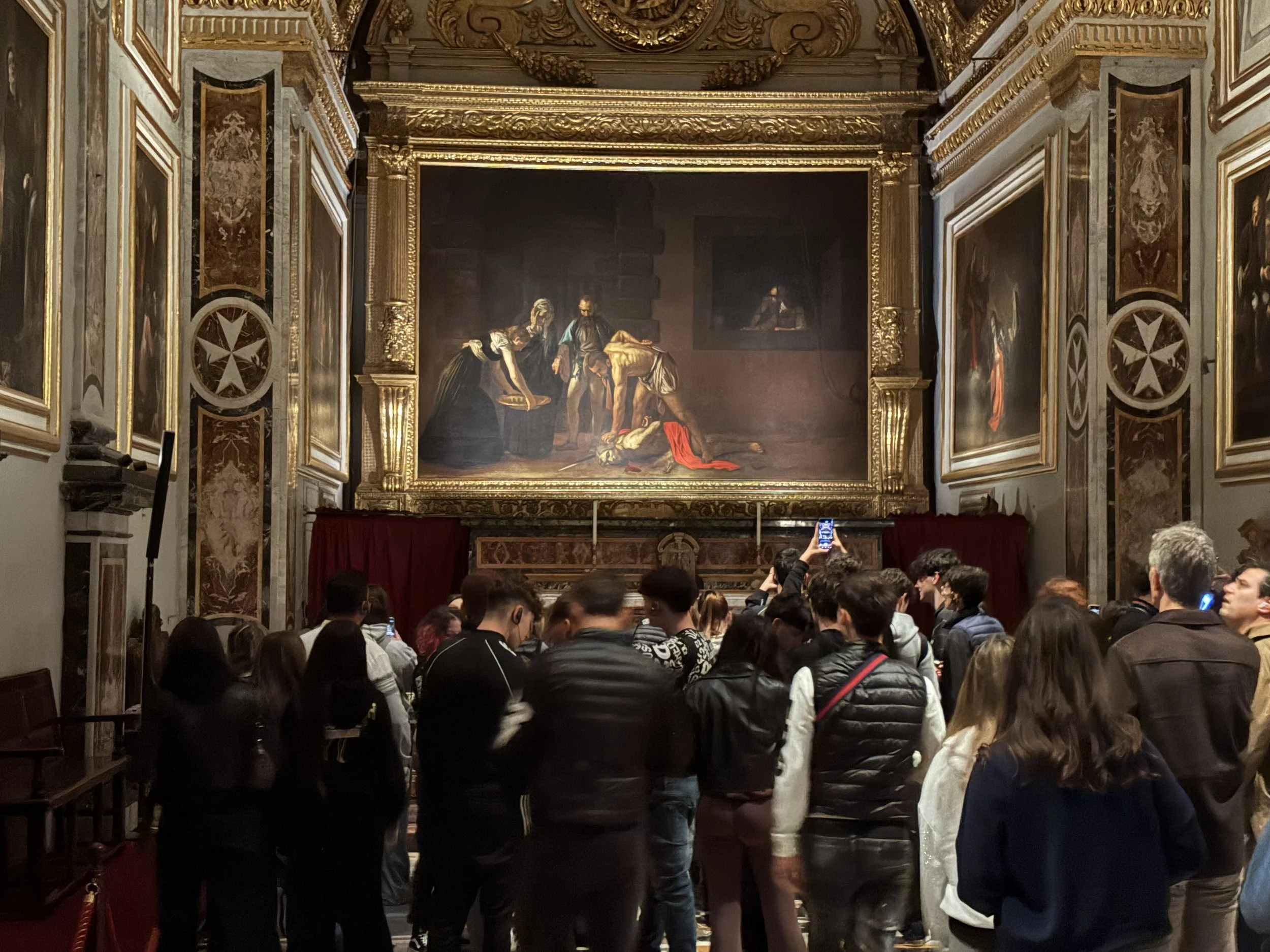
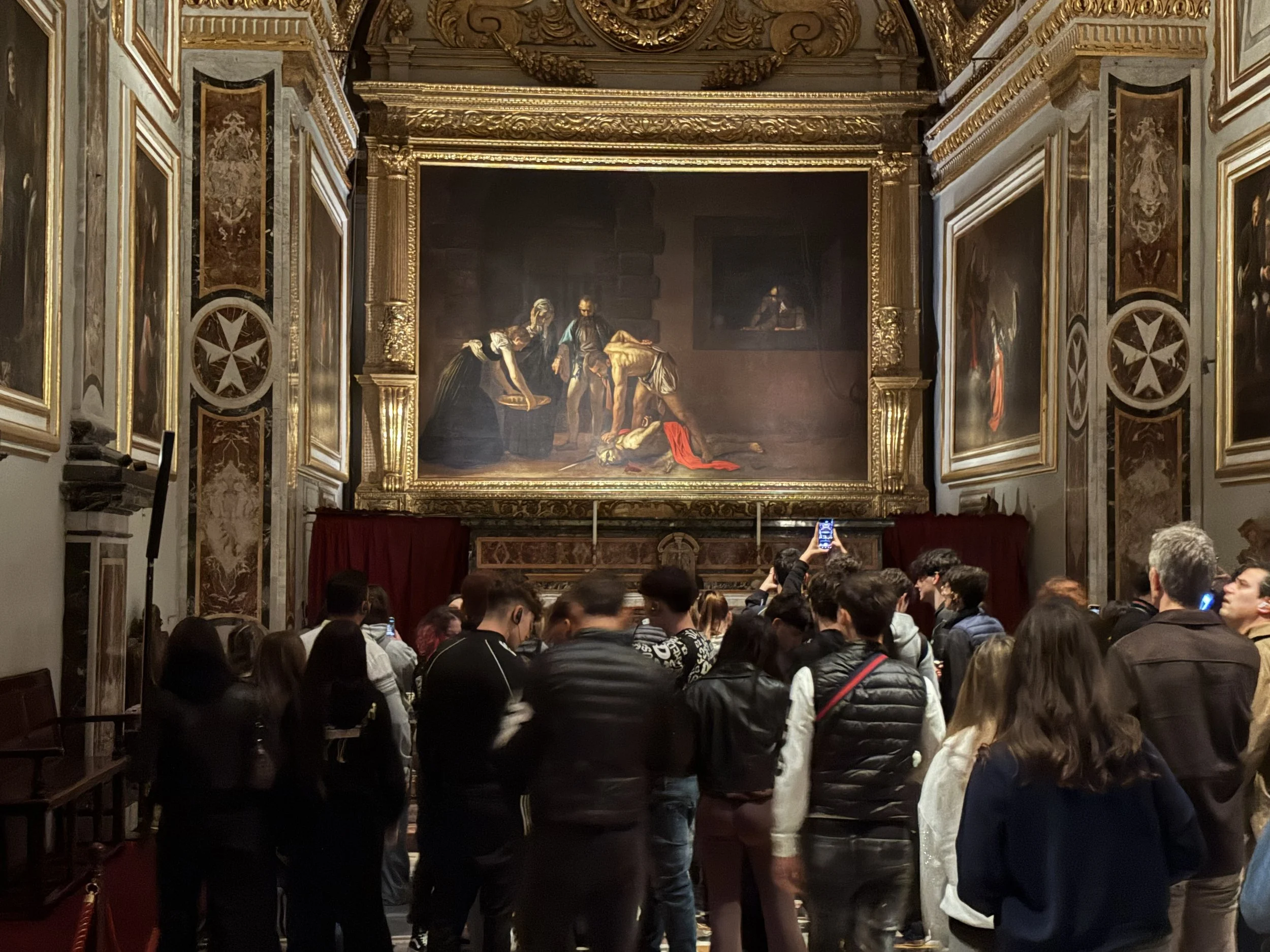
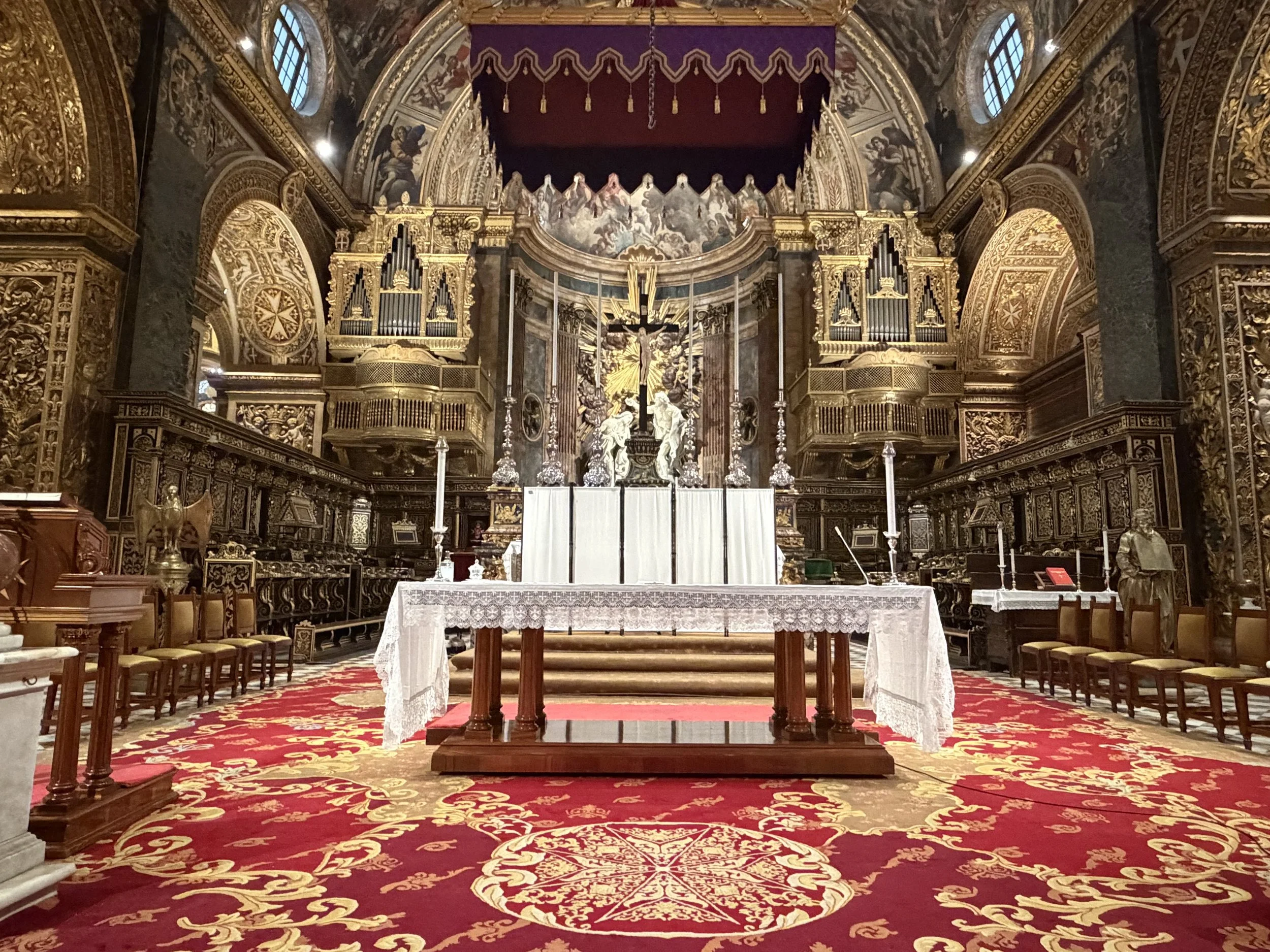
Photos by Clemente Lisi
Caravaggio’s masterpiece in exile
Hanging inside the oratory is “The Beheading of St. John the Baptist,” the largest canvas Caravaggio ever painted and the only one he ever signed. Painted in 1608 during the artist’s exile in Malta, the work is brutal. Caravaggio, dealing with his own demons, gives us a moment of raw violence.
The artist also painted “Saint Jerome Writing.” In 1984, it was stolen from the cathedral after the canvas was cut out of the frame. The painting was recovered two years later after a series of negotiations between the thieves and Father Marius J. Zerafa, then the Director of Museums in Malta. A full account of the theft and its successful recovery is noted inside the cathedral through a series of newspaper accounts.
Caravaggio had arrived in Malta a fugitive after having killed a man in Rome, followed by a stop in Naples. He was taken in by the knights, but later was arrested for a violent altercation with a high-ranking official. The Italian artist escaped from Fort St. Angelo and was expelled. He fled to Sicily where he died in 1610, yet the painting remains one of the greatest religious artworks in Europe.
Beyond Valletta, the island unfolds as a constellation of churches and cathedrals. Malta is often said to have more churches per square mile than any other country in the world. That statistic is debatable, but the impression is undeniable. While St. Paul’s arrival links Malta to the early church, Caravaggio’s genius shows just how powerful this belief has been over the centuries.
Together, they allow visitors today to see and feel how faith remains important and why Malta may be the most underrated Christian destination in the world.
Clemente Lisi is executive editor at Religion Unplugged.