
A Russian Orthodox Church Rises From The Ice In Antarctica
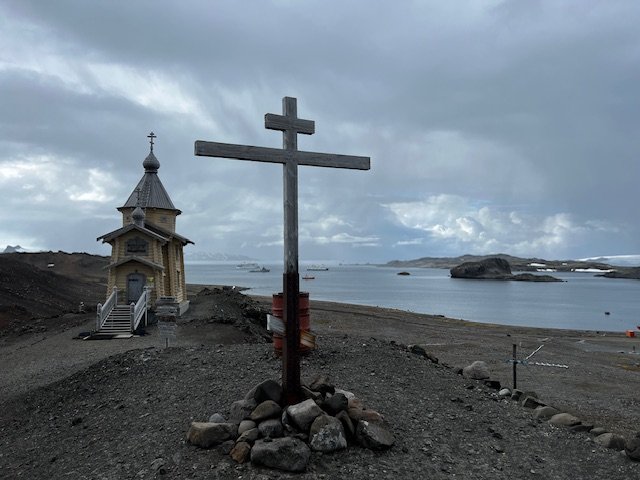
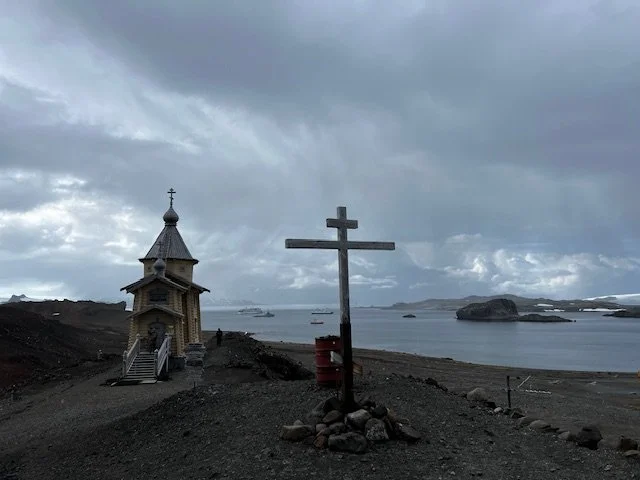
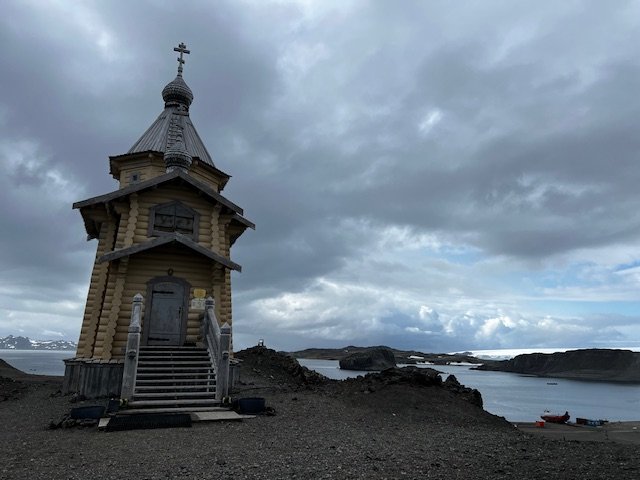
KING GEORGE ISLAND, Antarctica — A 22-year-old Russian Orthodox church attracts visitors like no other place on Antarctica’s King George Island, which lies in the Drake Passage located some 500 miles south of Cape Horn.
The idea of building an Orthodox church in Antarctica was first announced in 2000. Two years later, the Holy Trinity Church was built in traditional Russian style in the village of Kyzyl-Ozek, in the Altai Republic in Southern Siberia.
Its journey to Antarctica began in 2003, when it was dismantled, transported to the port of Kaliningrad, shipped on the Russian research vessel Akademik Sergey Vavilov and finally rebuilt on King George Island.
READ: Trump’s Greenland Obsession Overlooks A Spiritual Iceberg
The 50-foot tall wooden church was consecrated on Feb. 15, 2004, during the day of the Presentation of the Lord Jesus in the Temple, one of the most important celebrations in the Orthodox calendar. The church received the blessing of Alexy II, who was the patriarch of Moscow and all Russia at the time.
“I was impressed to see a church so well taken care of in such a remote place. It's very beautiful,” said José Miguel Respaldiza, a Chilean real estate developer who, at age 66, visited Antarctica for the first time in January.
The largest of the South Shetland Islands, King George Island is considered the gateway to Antarctica. It houses an airport and some 10 national research stations, one of them, Bellingshausen, Russia’s northernmost Antarctic station.
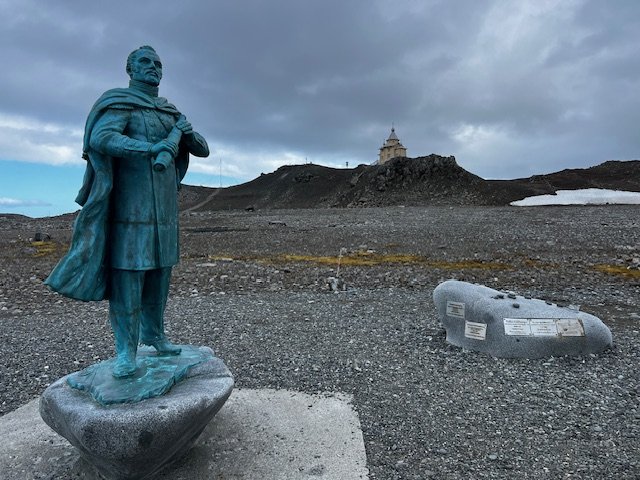
Built in 1968, it was named after Fabian Gottlieb von Bellingshausen, a Russian explorer and naval officer who rose to the rank of admiral.
Photos by Graciela Ibáñez
He and Mikhail Lazarev, a Russian commander who also became an admiral, are credited with discovering Antarctica, a 5.5 million-square-mile continent, in 1820. The Bellingshausen research station takes care of the church, which is a quarter of a mile up a hill, overlooking the Fildes Bay, where ships, yachts and vessels from all over the world arrive.
Carmen Bücher, a 58-year-old radiologist from the city of Concepción, arrived at King George Island as part of a medical operation with the Chilean Navy in February.
“I didn't expect to find something so beautiful at the end of the world,” Bücher said. “Nothing was missing. I found the attention to detail and the decor breathtaking. How can something so refined exist among penguins?”
The construction was financed through donations to a charitable fund called “Church in Antarctica.” Built with cedar from Siberia according to the design of architects Piotr Anisiforov and Svetlana Rybak, the church sits on a reinforced concrete base, where it is stabilized by steel chains inside. These chains allow it to withstand winds of up to 90 mph.
Antarctica is known as the place with the strongest winds on Earth. Katabatic winds on King George Island originate when cold, dense air above the island’s interior ice cap rushes downhill to the coastal areas. These sudden gusts of wind can force the suspension of air traffic and create rough sea conditions.
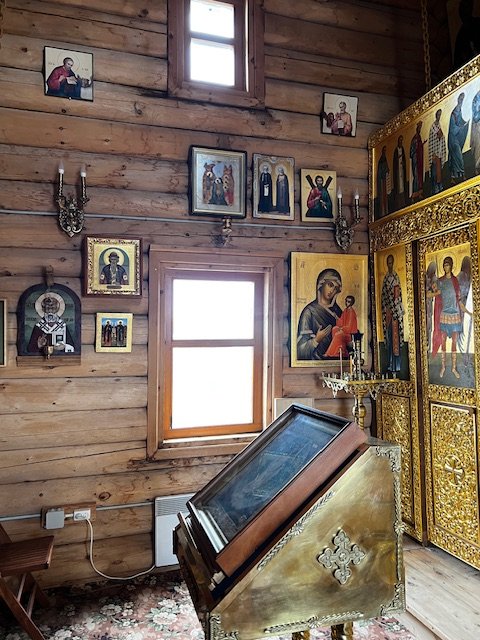
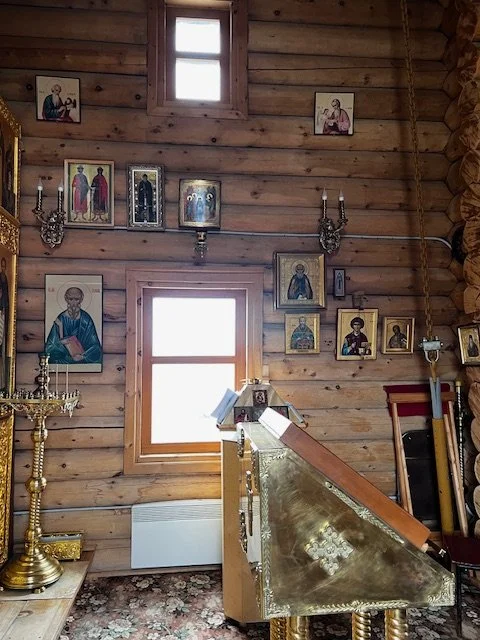
“I was struck by how welcoming it was despite its remote location; there was even heating,” said Respaldiza.
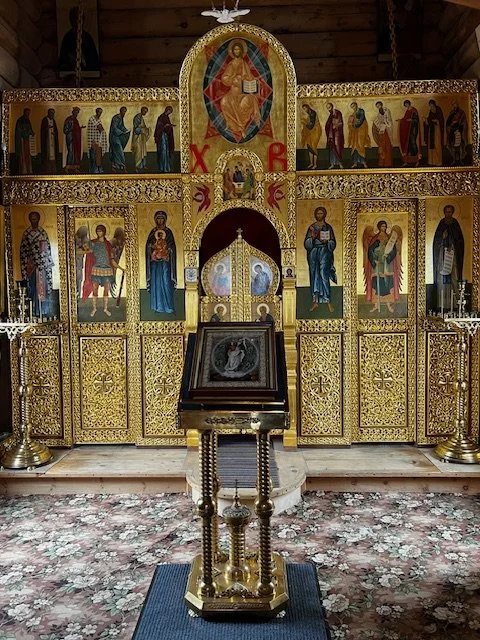
The church displays traditional Eastern Orthodox religious elements with ornate icons of the Virgin Mary, Jesus and the Apostles. It can accommodate 20 to 30 people.
Holy Trinity is not the only church on King George Island. About half a mile away, in the Chilean village Villa Las Estrellas, is the Catholic chapel Saint Mary Queen of Peace, built by the Chilean Air Force in a modified shipping container in the late 20th century. The temple was renovated in 2014. Updates included the construction of a new bell tower and the reinforcement of the church entrance's foundations.
Antarctica has been a continent of dreams for sailors, writers, scientists and expeditioners. “Antarctica is the most extraordinary place one can imagine, and the attraction it exerts on those who visit it can well change the course of their lives,” wrote the Chilean diplomat and historian Óscar Pinochet de la Barra in his book “Chilean Antarctica,” first published in 1944.
“Antarctica is the only continent that has never seen war. When a man sets foot on it, he instinctively puts aside his prejudices and pride and lives with that humble tolerance and respect for others, his brothers, something that is not known in the rest of the world,” he added.
Like Pinochet de la Barra, others have been captivated by this continent, an attraction that has boosted tourism in recent decades. The number of visitors to Antarctica increases every year. They arrive mainly by plane from Punta Arenas or on cruise ships from Ushuaia.
Amid the breathtaking views and windy conditions, tourists are impressed and comforted by a small Orthodox church built on the other side of the world.
Graciela Ibáñez is a journalist with a Master of Arts from Columbia Journalism School, where she graduated in 2008. She works as a professor of journalism at Universidad Gabriela Mistral and at Universidad Viña del Mar in Chile. She covers Chile for foreign media outlets, including TRT World, Americas Quarterly and The Art Newspaper. She worked as a reporter for Dow Jones Newswires and REDD Intelligence in Santiago and for Debtwire in New York City. She graduated with a Bachelor of Arts from Universidad Adolfo Ibáñez in Viña del Mar.