
⛪️ Southern Baptists Push Back On ‘Woke’ Leaders And Women Pastors 🔌

Weekend Plug-in 🔌
Editor’s note: Every Friday, “Weekend Plug-in” meets readers at the intersection of faith and news. Click to join nearly 10,000 subscribers who get this column delivered straight to their inbox. Got feedback or ideas? Email Bobby Ross Jr.
• • •
In the hallways of the Southern Baptist Convention’s annual meeting in Orlando, Florida, this week, at least one kid was spotted wearing Mickey Mouse ears.
No one seemed to mind — or notice, according to the Godbeat colleague who told me about it.
What a difference nearly three decades makes.
In 1997, Southern Baptists launched a high-profile boycott of the Walt Disney Co. over what church leaders called the company’s “anti-Christian and anti-family direction.” The action lasted eight years, ending in 2005.
In 2010 — the last time before this week that the SBC conducted its annual meeting in the home city of Walt Disney World — the past boycott remained fresh in many people’s minds.
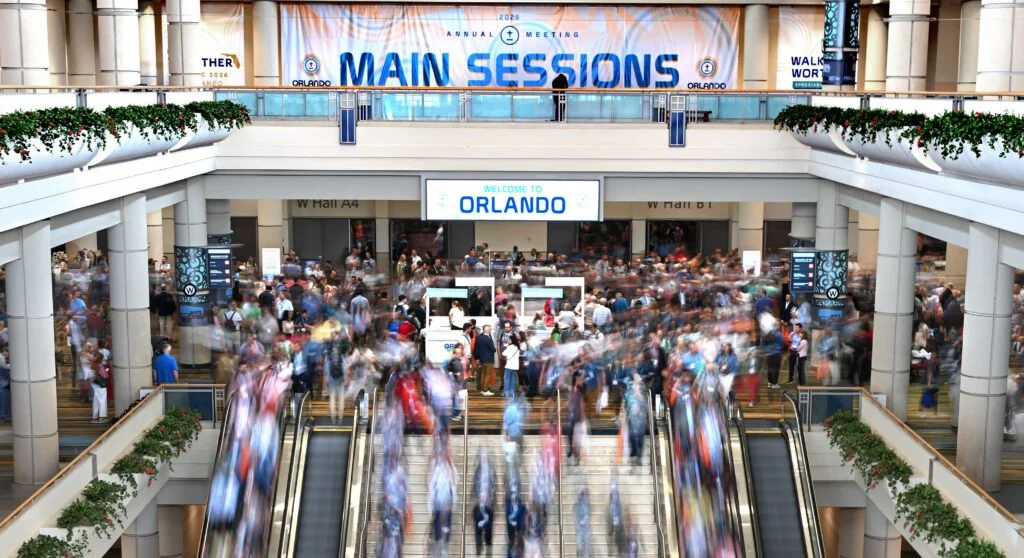
Southern Baptists gather this week in Orlando, Florida, for their annual meeting. (Photo by Roy Burroughs/Baptist Press)
But as Southern Baptists gathered Tuesday and Wednesday in the Theme Park Capital of the World, the previous controversy seemed long forgotten. Wiley Drake, the pastor who championed the boycott, died earlier this year at age 82.
The only Disney mention I noticed in news coverage of the 2026 meeting was longtime Alabama religion writer Greg Garrison’s note that “many Southern Baptist families will make a vacation of it.”
And the official SBC meeting app even listed available theme park discounts, including one for Walt Disney World.
• • •
MAGIC KINGDOM ADVENTURES notwithstanding, the SBC made plenty of real news while in Central Florida.
The two biggest headlines: The SBC moved forward on banning churches with women pastors and elected a right-wing president concerned the denomination has become too woke and liberal.
Veteran Associated Press religion writer Peter Smith covered his first SBC annual meeting in 2000, when the denomination also met in Orlando and passed a statement of faith holding that only men could serve as pastors.
A quarter-century later, Smith — again on the scene — offered this update:
ORLANDO, Fla. (AP) — Thousands of Southern Baptists overwhelmingly voted Wednesday to advance a formal ban on women pastors in the nation’s largest Protestant denomination, sending a clear message that men alone should preach to these conservative evangelical congregations.
The amendment would tighten existing restrictions in the Southern Baptist Convention, which already has a faith statement opposing women pastors.
The vote was 6,028 to 2,026 — a 3-to-1 margin — which easily exceeded the required two-thirds majority. It will require a similar two-thirds vote at next year’s meeting to become part of the constitution.
Frank Lockwood, religion editor for the Arkansas Democrat-Gazette, covered his first SBC annual meeting in 2010 in Orlando and was back for the latest gathering.
Lockwood’s story on Wednesday’s vote provided this helpful context:
Though it began in the South, the Southern Baptist Convention has spread across the country. During the last three decades of the 20th century, it enjoyed steady growth at a time when mainline Protestant denominations were in decline. Since 2006, however, the convention has lost nearly 4 million members, falling from 16,306,246 to 12,331,954.
Mainline Protestant congregations long ago began ordaining women as pastors. The Assemblies of God, which has Arkansas roots, evangelical doctrine and more than 3.1 million U.S. adherents, has long affirmed women in ministry.
The Roman Catholic Church only ordains men to the priesthood, a stance it shares with the Orthodox Church.
Liam Adams, religion writer for The Tennessean, followed the vote remotely from Nashville and noted the opposition by at least one group:
Baptist Women in Ministry, an advocacy group aligned with a more moderate Baptist denomination and that has fought the SBC's push to ban women pastors in recent years, condemned the June 10 vote. The organization had paid for a billboard in Orlando in advance of the SBC annual meeting that pushed back against Mohler's proposal.
"Convention votes do not decide who is called to pastor, preach, or minister. Convention votes do not dictate whose callings churches can affirm. Convention votes do not determine women’s value to God or the church," Baptist Women in Ministry said in a news release. "Women and girls, within the SBC and outside of it, deserve empowering messages which celebrate that women are made in God’s image and worthy of equal treatment and opportunity."
See additional coverage by The Oklahoman’s Carla Hinton and USA Today’s Marc Ramirez.
• • •
LIKE AP’S SMITH and the Arkansas Democrat-Gazette’s Lockwood, Religion News Service national reporter Bob Smietana is a regular at SBC annual meetings.
Smietana reported on his first one in 2008 and has made it to about a dozen in all, including the 2010 event in Orlando.

Religion writers Peter Smith, Frank Lockwood and Bob Smietana pose for a photo while covering the Southern Baptist Convention’s annual meeting in Orlando, Florida. (Photo provided by Bob Smietana)
Among his multiple stories this week, Smietana detailed the rise of the SBC’s newest president:
ORLANDO, Fla. (RNS) — A Florida pastor who has argued that the nation’s largest Protestant denomination has become too woke and liberal was elected president of the Southern Baptist Convention on Tuesday (June 9).
Willy Rice, senior pastor of Calvary Church in Clearwater, Florida, received 5,217 votes — 57% of the votes cast. His opponent, Josh Powell, lead pastor of Taylors First Baptist Church in South Carolina, received 3,821 votes, or 42%.
Rice’s election is a triumph for critics who claim that the denomination has lost its way in recent years. He has alleged that the SBC’s sexual abuse crisis was more hoax than reality and said that the denomination’s leaders had followed the culture more than the Bible.
As regular Weekend Plug-in readers may recall, the SBC’s response to sex abuse was a major focus of its meetings in 2021 in Nashville and 2022 in Anaheim, California. The issue remained a topic of discussion — but to a lesser degree — in 2023 in New Orleans, 2024 in Indianapolis and 2025 in Dallas.
New York Times religion writer Ruth Graham, who also traveled to Orlando, talked to Rice:
In an interview on Tuesday evening, Mr. Rice characterized his victory as an affirmation that many rank-and-file pastors feel that the denomination’s leaders do not always represent their values.
“I don’t think it’s hostility, I don’t think it’s some great open revolt,” he said. “But there’s been an erosion of institutional trust.”
He referred specifically to the denomination’s attempts to toughen its approach to sexual abuse in church settings, which he described as a well-meaning movement that had ended in expensive lawsuits, false or unproven accusations, and distrust.
“With a lot of social justice movements, there’s a legitimate concern, a true injustice, yet when activists begin to drive the agenda, sometimes there’s an overreach,” he said.
In a related story, The Tennessean’s Adams explained that the convention “denounced political violence and discriminatory immigration enforcement in resolutions that excluded certain hardline positions, which a more politically right-wing faction embraces.”
Before the meeting, Religion News Service’s Smietana produced an excellent takeout on the immigration issue, headlined “Meet the pastors who support the ICE raids.”
Also worth a read: Former Christianity Today journalist Kate Shellnutt reflected on not covering the SBC meeting for the first time in eight years.
Inside The Godbeat
One of the week’s most fascinating religion stories involves the Mormon church’s Christian identity — or not.
I found Associated Press religion writer Deepa Bharath’s coverage helpful.
Her lede:
The Pentagon’s revision to its list of Christian religions this week has reignited a nearly 200-year-old debate: Is The Church of Jesus Christ of Latter-day Saints a Christian denomination?
Most Latter-day Saints do see themselves as Christians. But there are many prominent Christian clergy and scholars who disagree, citing core differences in how they view God and the Trinity and revere a scripture that is not part of the two-testament Christian Bible.
Utah U.S. Senators Mike Lee and John Curtis, both Republicans and Latter-day Saints, challenged the Pentagon’s exclusion of their faith from its list of Christian religions. It was part of the Department of Defense’s recent effort to significantly pare down a list of more than 200 religious affiliations that troops could choose from, deleting categories such as atheists, Unitarian Universalists, pagans and Wiccans.
Read more coverage from the Washington Post’s Michelle Boorstein and Sammy Westfall.
The Final Plug
Over the past few years, I’ve traveled to San Diego, Los Angeles and Detroit to report on why Major League Baseball teams host faith nights.
Last year, I covered the Texas Rangers’ first Faith and Family Night. That event required fans to buy a special ticket, but the Rangers’ second faith day on June 18 will be open to all fans at the game that afternoon.
Happy Friday, everyone! Enjoy the weekend.
Bobby Ross Jr. writes the Weekend Plug-in column for Religion Unplugged and serves as editor-in-chief of The Christian Chronicle. A former religion writer for The Associated Press and The Oklahoman, Ross has reported from all 50 states and 20 nations. He has covered religion since 1999.