
Brazilian World Cup Veteran Silas Shares His Story Of Faith And Purpose
NEW YORK — For much of his life, Paulo Silas Pereira was known for what he did with a ball at his feet. In Brazil, where soccer is as much an identity as a sport, he rose from humble beginnings to the rarefied air of the FIFA World Cup.
These days, Silas, as he is commonly known, is preparing for the upcoming World Cup as a broadcaster. In doing so, his focus has shifted from goals and tactics to something far more personal: Telling the story of his life and Christian faith.
Silas will be traveling across North America to provide World Cup commentary for ESPN in Brazil while also promoting the English-language release of his memoir, “Beyond Success: One Athlete's Outstanding Pursuit of Goals, God and Glory.” First published in Portuguese as “Além Do Sucesso” in 2024, the book traces a life that began on the edge of poverty in the city of Campinas and unfolded across four continents as a pro soccer player.
READ: Hulk Hogan And The Price Of Becoming A Myth
“It was about 10 to 15 years ago that I had the idea to write [the book]. I was part of a group in Brazil called Athletes of Christ,” Silas recalled. “I [later] connected with publishers, and eventually we launched ‘Beyond Success’ in Portuguese two years ago, and now also in English, to share this message with everyone.”
That career would take him from local fields in Brazil to clubs in Europe. Along the way, he achieved what few players ever do: Represent Brazil on the world’s biggest stage. By playing for his country at the 1986 and 1990 World Cups, Silas became one of fewer than 500 men to wear the iconic canary yellow jersey at soccer’s premier competition. Those tournaments, Silas said, remain etched in his memory — not just as professional milestones, but as defining human experiences.
Silas, 60, who played as a central midfielder, recalled two games during a recent interview at a New York hotel near Times Square. At the 1986 World Cup in Mexico, Brazil faced France in the quarterfinals. The marathon game ended 1-1. France advanced after winning 4-3 in a penalty-kick shootout.
“It was extremely hot, very intense,” Silas recalled. “Being on the field, receiving the ball and realizing the magnitude of the moment — that stays with you forever.”
Four years later, Brazil played South American rivals Argentina in the round of 16 at the World Cup. The game, still remembered for its tension and missed chances (three Brazil shots hit the post), ended 1-0 for Argentina.
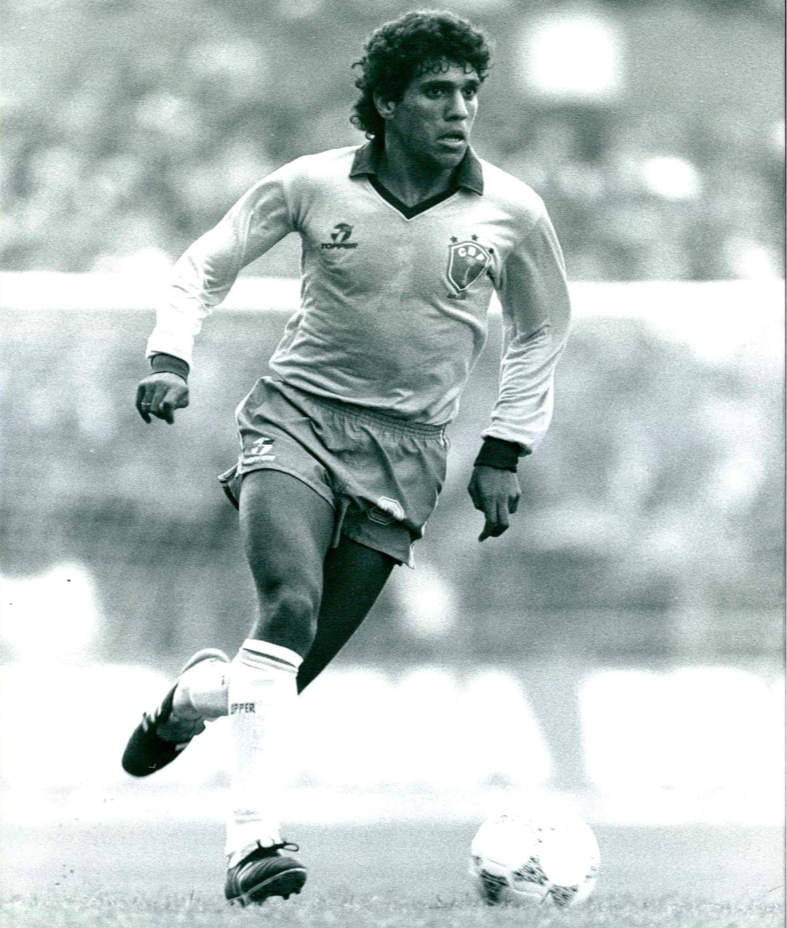
Silas played for Brazil and the 1986 and 1990 World Cup. (International Magazine Services photo archive)
“We hit the post multiple times. Coming into the game late [as a sub], trying to change the outcome, it was intense,” Silas added. “And playing against Maradona was special. We later became friends.”
Yet for all the pressure that comes with international soccer, Silas insisted the most important forces in his life were formed far from the stadium lights. Born into an evangelical family, he was one of nine children. His early years were marked by profound loss: His mother died when he was just five and his father at 19 at the start of his professional career.
“It wasn’t easy growing up,” he said. “But what my father taught us was values and faith in God. It helped us stay grounded. That foundation shaped everything: Family, marriage and life.”
Faith, in fact, is the through line of “Beyond Success,” published by Harvest House Publishers. Dubbed “the most well-known Christian in Brazil” and known as being “a fervent reader of the Bible,” Silas has long been open about how belief sustained him through the volatility of professional sports.
Whether navigating dressing room dynamics, media scrutiny or the expectations of millions of fans, he credits his spiritual life with keeping him steady.
“Faith has always been central for me,” he said. “Being in church, surrounded by people of faith — pastors, friends, family — kept me grounded. Even during my playing career, with all the travel, I tried to stay connected. For me, faith is like winning a trophy — more valuable than anything else.”
At its core, the book is less about soccer than priorities. Silas lays out a hierarchy that guided his life: God first, then family, health and using one’s abilities to help others. It’s a philosophy shaped not just by triumphs, but by the challenges that followed his playing days.
After retiring, Silas spent 11 years as a manager, a role he described as far more demanding than being a player.
“As a coach, you manage around 30 players, deal with staff, directors, fans and the media,” he said. “It’s a lot of pressure and you spend much time away from family.”
In Brazil, he noted, coaching comes with relentless expectations and little patience. “You might sign a contract for a year, but if results don’t come quickly, you’re replaced. That instability makes it hard to build something long-term,” he said.
Eventually, Silas left coaching and transitioned into being a TV pundit — a move he had been considering even before leaving the sidelines. The change offered not just stability, but a better balance with family life.
As a commentator and author, Silas finds himself in a new spotlight. He also brings a seasoned perspective to Brazil’s current national team. Asked about his country’s chances of winning the upcoming World Cup that will be co-hosted by the U.S., Canada and Mexico, he offered a measured assessment.
“There is strong talent, especially in the attack,” he said. “But there are concerns with injuries, and the defense is not very strong. The team has potential, but success depends on many factors coming together at the right time.”
Throughout his life — whether on the field, on the sidelines as a coach or in a TV studio — Silas said he has viewed his success as a way to reach others.
“We always talk about using our position as athletes not just for success, but to help others,” he added. “That’s part of the message of the book.”
You can read this story in Spanish here.
Clemente Lisi serves as executive editor at Religion Unplugged.