
Exhibit Honors Renowned Evangelist Who ‘Touched Tens Of Thousands Of Lives’
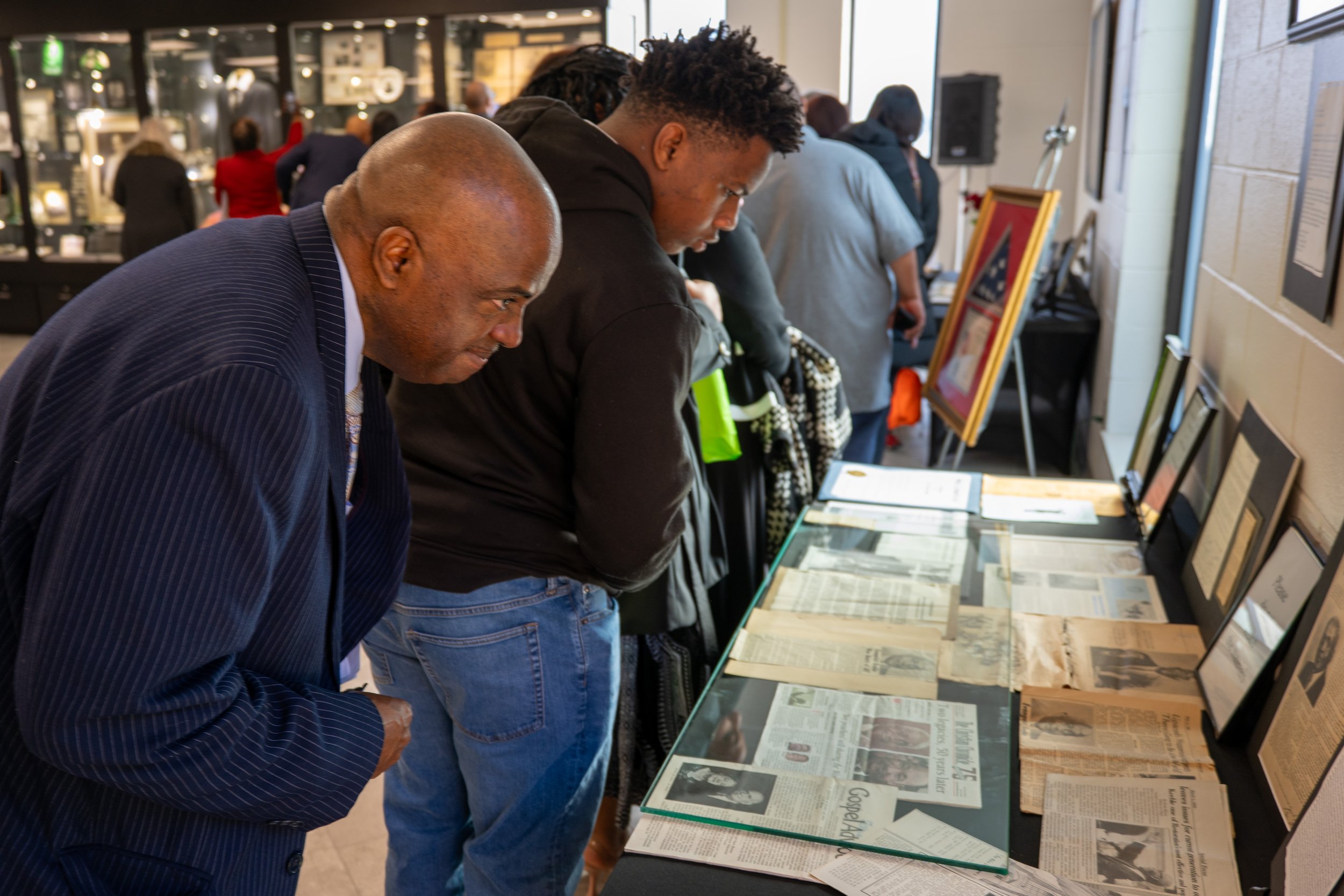
Minister and historian Edward J. Robinson, left, visits the new Marshall Keeble exhibit at the Jackson Street Church of Christ in Nashville, Tennessee. (Photo by Ted Parks)
NASHVILLE, Tenn. — For Marshall Keeble, traveling all over the South — and beyond — to preach during the Jim Crow era of racial segregation brought challenges.
For one, the renowned evangelist needed to make sure he had food and water to sustain him at a time of Whites-only public fountains and restaurants.
Nearly six decades after Keeble’s 1968 death, hundreds of Christians lined up Sunday at Nashville’s Jackson Street Church of Christ — where the son of former slaves preached his first sermon in 1897 — to see a new exhibit honoring his legacy.
READ: Remembering Marshall Keeble’s Faith — And His Humor
After exploring the extensive collection of photos, news clippings, sermon soundbites and other Keeble artifacts, each person received a tangible reminder of the Black preacher’s experience.
The reminder came in the form of a brown paper lunch sack.
Each sack contained cheese and crackers, a banana, a cookie and a small bottle of water along with a note about Keeble’s favorite food: a fried pork chop nestled between two slices of soft white bread.
“These simple foods tell a powerful story,” the note explained. “They reflect the realities of travel during segregation, but they also reveal the quiet strength and preparation that made Brother Keeble’s ministry possible. With nothing more than a paper sack, the word of God, and unwavering faith, he crossed thousands of miles and touched tens of thousands of lives.”

Organizers prepared special lunch bags for the first visitors to the new Marshall Keeble exhibit. (Photo by Ted Parks)
Keeble was ‘what he preached’
Before the exhibit’s opening, 515 men, women and children filled Jackson Street’s lower auditorium and balcony for the church’s first worship assembly of 2026.
“We set aside this day because brother Keeble would always be home and preach at Jackson Street in the month of January,” minister Christopher Jackson said.
Jackson Street expanded a smaller Keeble display as the church completed a nearly $1 million building renovation. Construction required members to meet in a school for about three months.
With the support and encouragement of church leaders, Keeble’s great-granddaughter Gwen Cummings spearheaded the effort to recognize the loved one she knew fondly as “Pop.”
“I know that this man was exactly what he preached,” said Cummings, 75, whose husband, Dr. Clinton Cummings Sr., serves as one of Jackson Street’s four elders. “He was a good man, humorous and full of life, and he loved the Lord.”
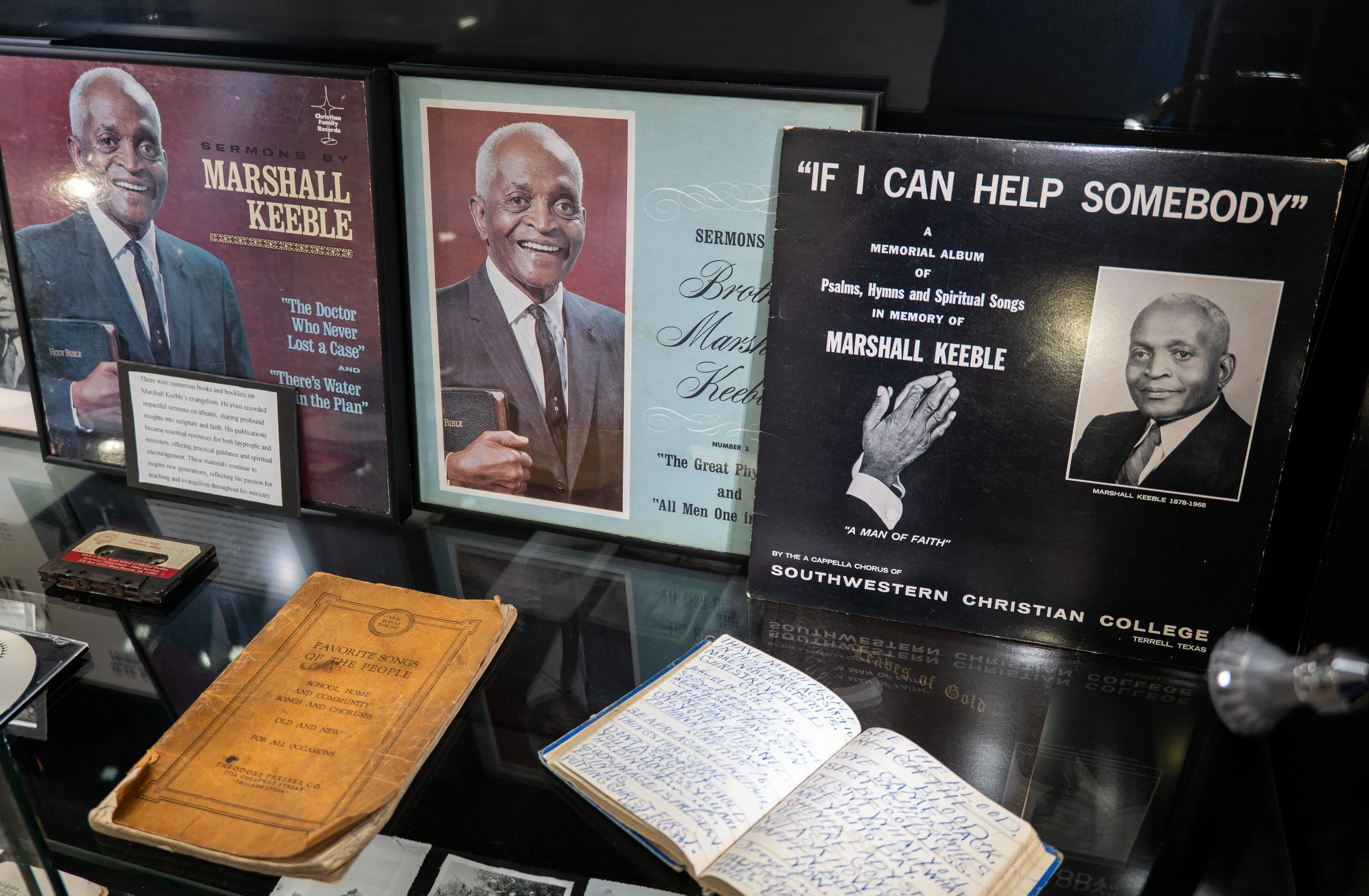
The new exhibit showcases writings, sermons and other artifacts of the late Marshall Keeble. (Photo by Ted Parks)
‘Show Us How You Do It’
In a full-time ministry career spanning 54 years, Keeble baptized an estimated 25,000 to 50,000 people and planted between 250 and 300 Churches of Christ, minister and historian Edward J. Robinson said.
Only God knows the exact numbers, said Robinson, author of “Show Us How You Do It: Marshall Keeble and the Rise of Black Churches of Christ in the United States, 1914-1968.”
Keeble served as president of the Nashville Christian Institute from 1942 until its closing in 1967. Many of the fellowship’s most influential Black leaders got their start as “boy preachers” — NCI students who traveled with Keeble to gospel meetings and delivered short messages before he spoke.
Among those students: Fred Gray, who’d later serve as the first civil rights attorney for Martin Luther King Jr. and represent Rosa Parks, the Black seamstress who refused to give up her Montgomery, Ala., bus seat to a White man in 1955.
“It’s so amazing how God used Keeble,” Robinson told the Jackson Street church as he taught Bible class and then preached before the new exhibit’s opening.
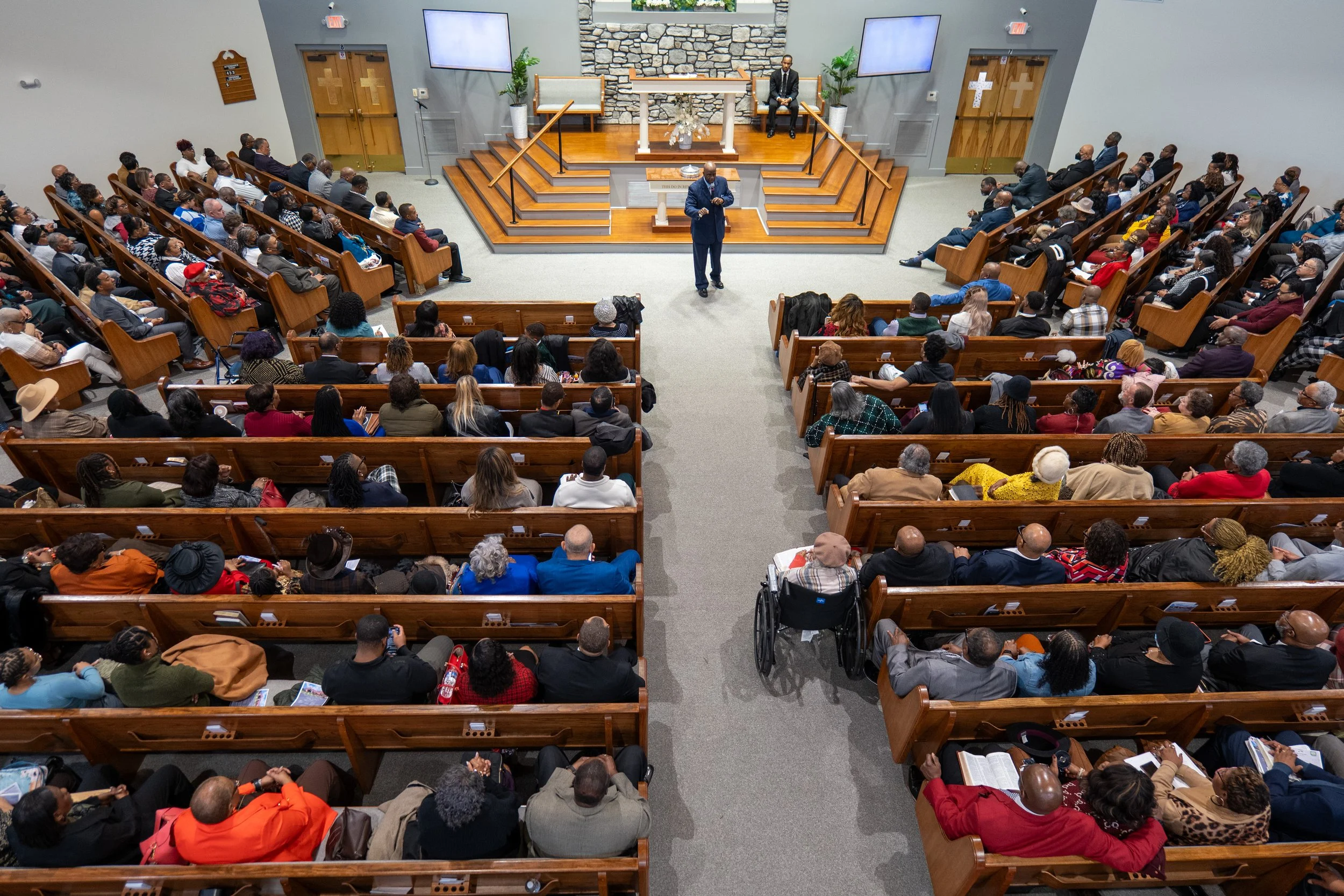
Minister and historian Edward J. Robinson preaches at the Jackson Street Church of Christ in Nashville, Tennessee, before the new exhibit’s opening. (Photo by Ted Parks)
“We don’t worship brother Keeble,” the guest speaker emphasized. “We worship the God who used brother Keeble. I want to make sure that’s clear, all right?”
But Robinson said the impact of Keeble — who preached to Black and White audiences alike and showed humility and humor as he adhered to the racial mores of his day — can’t be overstated.
Keeble relied on Black Christian mentors such as former slaves S.W. Womack and Alexander Campbell (not the key Restoration Movement figure but an African American preacher) and White supporters such as A.M. Burton, a deep-pocketed benefactor who was a key founder of Nashville’s Central Church of Christ.
Robinson’s Keeble biography — “Show Us How You Do It” — references a group of White ministers who sought the Black preacher’s tips on leading souls to Jesus.
“Here are guys during the Jim Crow era asking a Black man, a Black minister, to give them advice in terms of how they could be more effective as ministers and preachers,” Robinson told The Christian Chronicle. “So for that reason and many other reasons, not only are Black Christians standing on the shoulders of Keeble and other giants, but a lot of our White brothers and sisters are as well.”

Attendees visit during the opening of the Marshall Keeble exhibit. (Photo by Ted Parks)
Spiritual descendant of Keeble
Robinson serves as the minister for the North Tenneha Church of Christ in Tyler, Texas.
That congregation traces its roots to a 1935 open-air meeting preached by Keeble. The meeting resulted in 60 baptisms.
Beyond that connection, Robinson’s own family came to faith through the Seminary Heights Church of Christ in his hometown of Jacksonville, Texas. Luke Miller, a Keeble protégé, planted that congregation. Robinson’s wife, Toni, is the daughter of the late minister Jefferson Caruthers Sr., one of Keeble’s former boy preachers.
Robinson characterizes himself as a spiritual descendant of Keeble and said countless other members of Churches of Christ fall into that same category.
It’s important, in his view, to acknowledge such history.
“We definitely miss out on so much information when we just focus on Acts 2:38 and just skip all the way to the present,” Robinson said. “There are intervening years and centuries that we must give attention to, because whether we realize it or not, we’re all indebted to our spiritual foremothers and forefathers.”
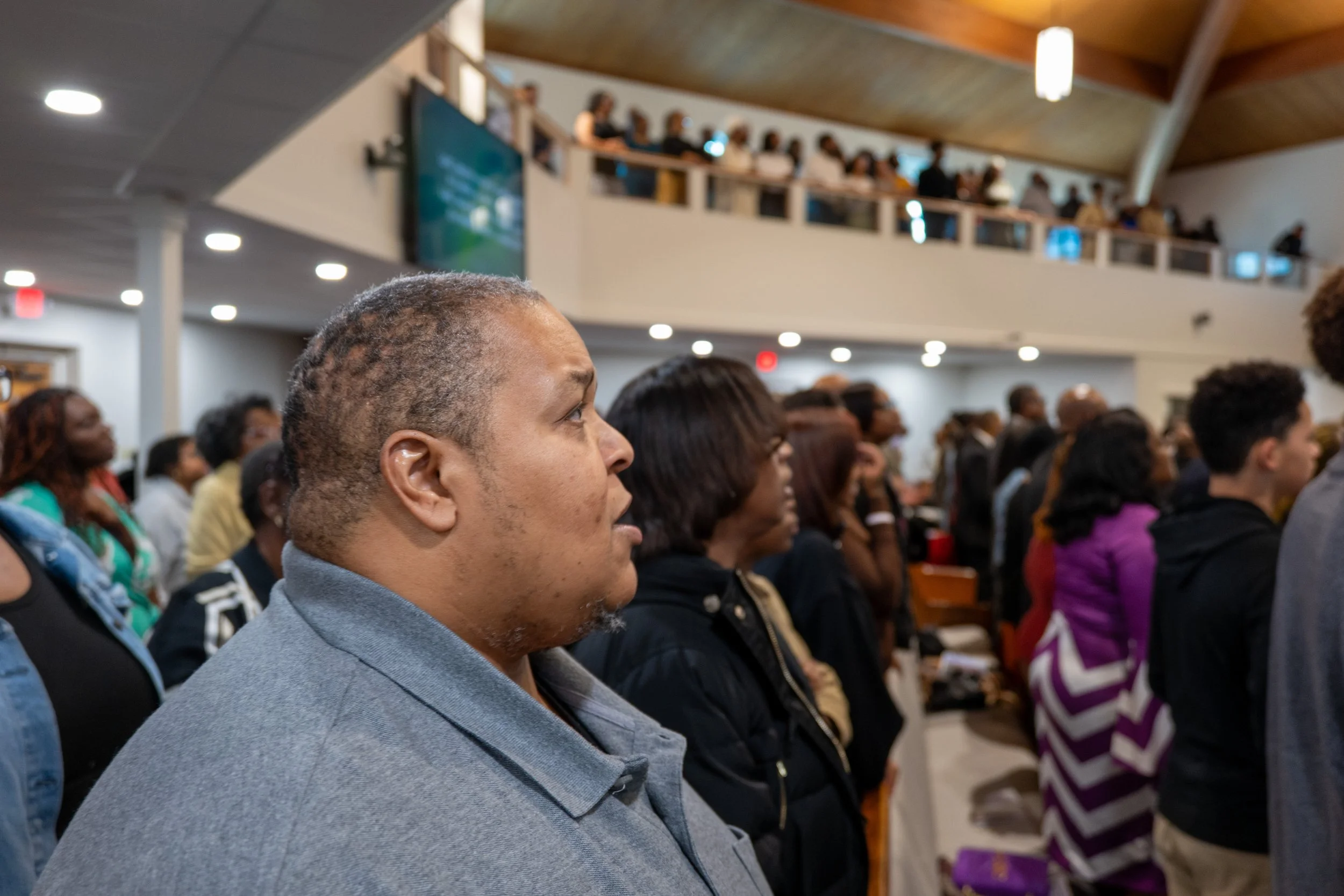
Members and guests stand to sing at the Jackson Street Church of Christ in Nashville, Tennessee. (Photo by Ted Parks)
Keeble’s ‘really wild’ history
Darla Whitaker, a 59-year-old nurse, has worshiped at Jackson Street for 35 years. Her husband, Stephen, serves as a deacon.
Whitaker helped Cummings with the exhibit and enjoyed learning more about Keeble’s history.
“When I started reading about the impact that he had — and they estimated that he was responsible for bringing 20,000, 30,000, 40,000 people to Christ — that was really wild,” Whitaker said.
Keeble managed to transcend race despite the obstacles that he faced, said Whitaker, who met the evangelist’s late second wife, Laura Keeble, before she died at age 108 in 2007.
Keeble married Laura — who was 20 years younger than him — in 1934 after the 1932 death of his first wife, Minnie, a Fisk University graduate.
It’s extraordinary, Whitaker said, “to know that he started out with a seventh-grade education, and his first wife taught him to read … and he went on from that and was able to baptize so many people.”
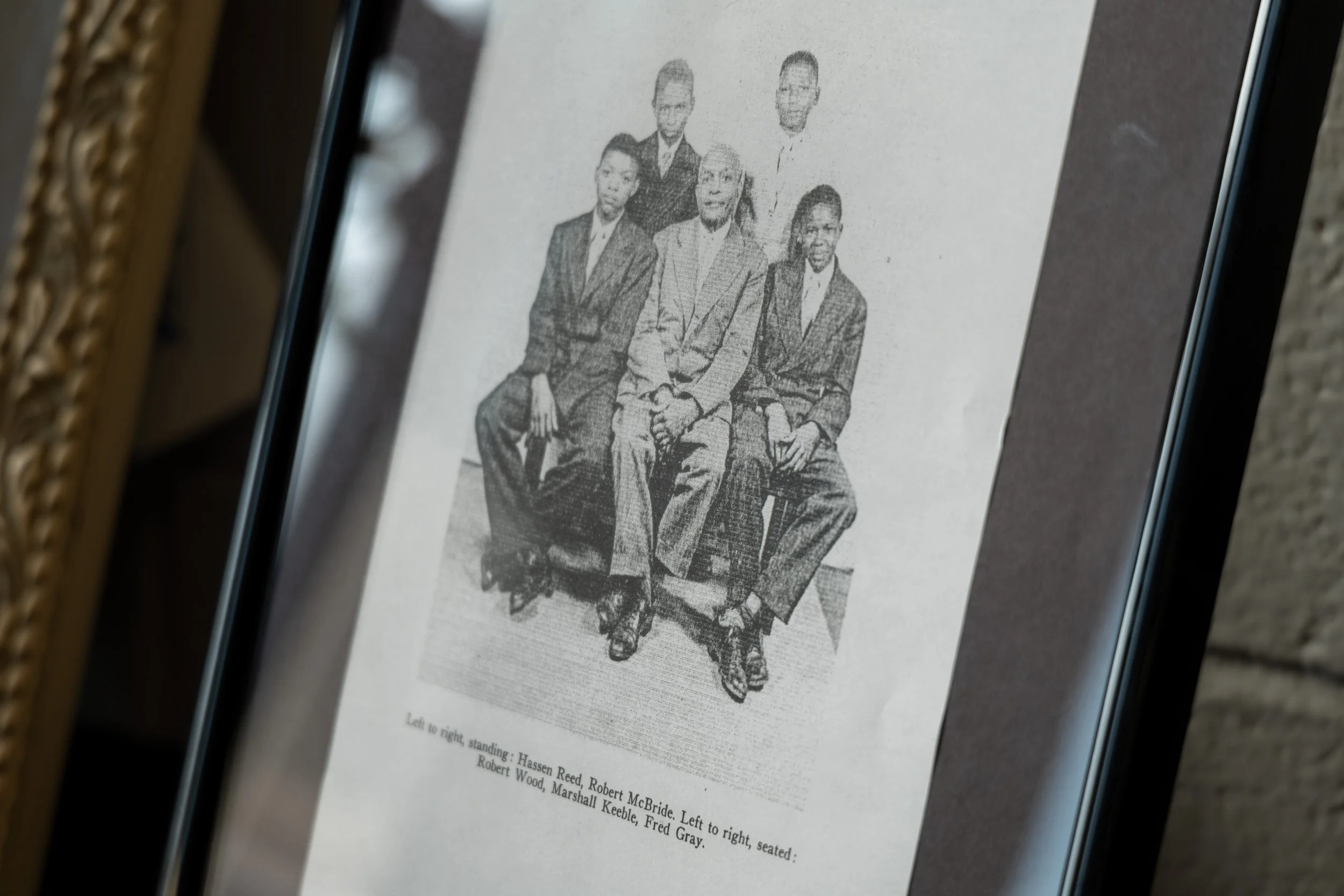
A picture displayed at the exhibit shows Marshall Keeble, front center, with four of his “boy preachers,” including Hassen Reed and Robert McBride, both standing, and Robert Wood and Fred Gray. (Photo by Ted Parks)
‘His whole mission’
More than 20 Nashville-area ministers came to honor Keeble’s legacy.
They and Keeble family members enjoyed a buffet lunch afterward at nearby Swett’s Restaurant. The menu featured fried chicken, mashed potatoes, macaroni and cheese and other favorite foods of Keeble.
Oglesby L. Jackson Sr., an elder of the Courtland Avenue Church of Christ in Quitman, Georgia, traveled 500 miles to attend the exhibit’s opening.
“I was so overwhelmed by it,” said Jackson, the father of Christopher Jackson, Jackson Street’s preacher.
The 81-year-old farmer and Vietnam veteran has fond memories of Keeble and his boy preachers sharing the Gospel during annual trips to southwest Georgia.
All the traveling evangelist required, the older Jackson recalled, was a seat at the back of a bus, a little brown bag for his lunch and a place to stay with someone of good character.
“No matter how hard it got, no matter what was going on in the world, Keeble was always concerned about souls,” the Georgia man said. “I never heard him say one thing political. He was always about ‘The Bible is right’ and ‘Jesus said this in order to get to heaven.’
“His whole mission was … trying to help as many other people as possible to make it to heaven.”
Bobby Ross Jr. writes the Weekend Plug-in column for Religion Unplugged and serves as editor-in-chief of The Christian Chronicle. A former religion writer for The Associated Press and The Oklahoman, Ross has reported from all 50 states and 20 nations. He has covered religion since 1999.